Should You Treat Back Pain at Home or Get an MRI? Red Flags That Change the Plan

Key Takeaways
- Most back pain improves without urgent testing when there are no warning signs.
- MRI is not usually the first test for uncomplicated back pain.
- Numbness, weakness, fever, trauma, or bladder/bowel changes can change the plan.
- A clear history and exam often guide next steps more than imaging does.
- Traveling for care is most helpful when symptoms are persistent, severe, or complex.
Back pain is common, and most episodes improve with simple self-care and time. Some warning signs, however, suggest the need for prompt medical assessment and sometimes imaging such as an MRI.
Overview
Back pain often arrives without warning and without a single obvious cause. A strained muscle, stiff joints, poor sleep posture, a long flight, or a sudden lift can all trigger discomfort that feels dramatic but settles with time and gentle care.
The important decision is not simply whether the pain exists, but whether its pattern suggests a routine strain or something that needs imaging. MRI is excellent for looking at soft tissues, discs, nerves, and the spinal cord, yet it is not always the right first step. In many people, the safest and most useful approach begins with a careful history, a physical examination, and watching how the pain evolves over days to weeks.
That approach matters even more for international patients. Someone may be deciding whether to rest at home, seek local evaluation, or travel for a more detailed workup. The goal is to avoid unnecessary scans when recovery is likely, while still recognizing the red flags that deserve prompt attention.
Symptoms
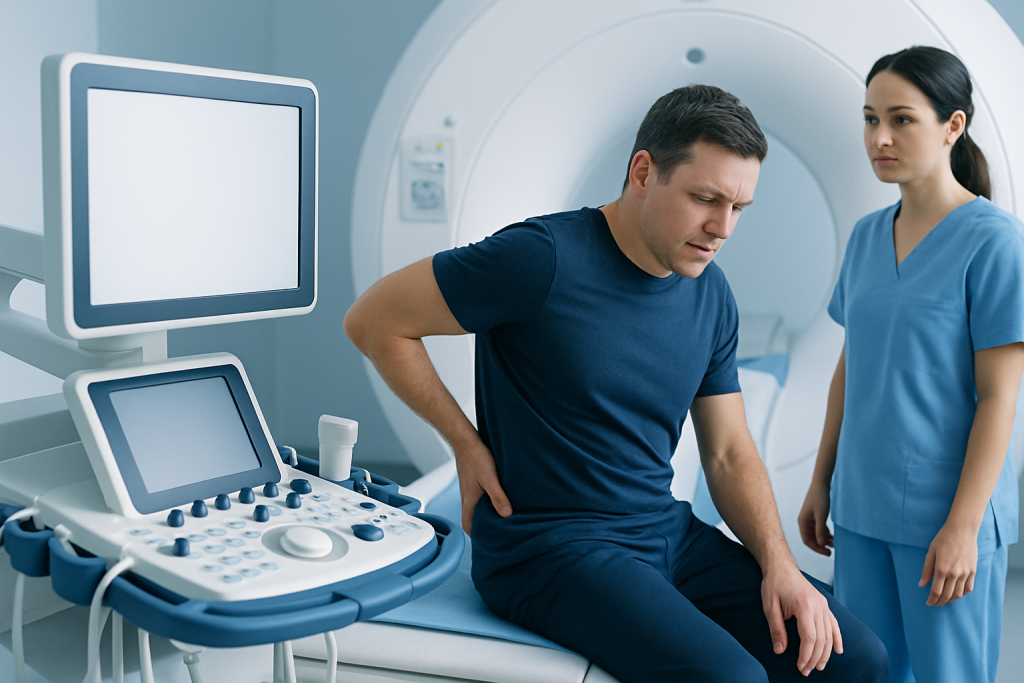
Back pain can feel sharp, dull, burning, tight, or deep and aching. It may stay in one area or spread into the buttock, hip, or leg. Many uncomplicated episodes are worse with movement and better with rest, heat, or changing position.
What changes the level of concern is not only the pain itself, but what travels with it. Radiating pain down one leg can suggest nerve irritation, while pain that is constant, severe at night, or unrelated to movement may deserve closer assessment. Stiffness alone is common, but stiffness plus weakness, numbness, fever, or unexplained weight loss is a different conversation.
- Pain after lifting, twisting, or a long period of sitting often points to mechanical strain.
- Pain that shoots below the knee may suggest nerve involvement.
- Pain with loss of balance, leg weakness, or trouble walking should be evaluated promptly.
- Pain with bladder or bowel changes is a medical warning sign.
It can help to notice how the pain behaves during the day. Does it ease after walking? Is it worse when coughing or sneezing? Does it wake the person from sleep? These details often guide the next step more than the pain score alone.
Causes & Risk Factors

Most back pain is mechanical, meaning it comes from the muscles, joints, ligaments, discs, or posture-related strain rather than a dangerous internal disease. Everyday triggers include repetitive bending, carrying heavy bags, prolonged desk work, poor core strength, and deconditioning after inactivity or illness.
Some factors make back pain more likely or more persistent. Older age, prior back injury, smoking, obesity, low physical activity, and jobs that involve frequent lifting can all contribute. Stress and poor sleep can also amplify pain signals, making a mild strain feel more intense.
Less common but important causes include spinal fractures, inflammatory conditions, infections, tumors, and nerve compression. These are not the usual explanation for back pain, but they are exactly why red flags matter: they help separate everyday pain from pain that needs imaging or specialist care.
- Recent trauma, especially a fall or car accident
- History of cancer, infection, or immune suppression
- Use of long-term steroid medication
- Osteoporosis or other bone-weakening conditions
- Progressive leg weakness or changes in sensation
Diagnosis
A good back pain evaluation starts with questions that sound simple but are clinically powerful: When did the pain begin? What makes it better or worse? Does it travel anywhere? Are there numbness, weakness, fever, or changes in urination or bowel control? The answers help a clinician decide whether the pain is likely to improve with conservative care or whether more testing is needed.
For many people, a physical examination is enough to identify a strain, joint irritation, or probable nerve compression. The doctor may check posture, range of motion, reflexes, strength, walking pattern, and sensation in the legs. In uncomplicated cases, imaging is often deferred because early scans frequently show age-related changes that are common and not necessarily the source of pain.
MRI becomes more useful when the story suggests a problem that a scan can clarify, such as suspected nerve compression, infection, fracture, tumor, or spinal cord involvement. It may also be ordered when symptoms are not improving as expected, when surgery is being considered, or when the findings of the exam do not match the degree of pain.
Sometimes other tests are appropriate. X-rays may help look for a fracture or structural change. Blood tests may be used if infection or inflammation is suspected. The best diagnostic path depends on the pattern, not on imaging alone.
Treatment Options
For uncomplicated back pain, treatment often begins close to home. Short-term rest from aggravating movements, gentle walking, heat or cold therapy, and gradual return to activity are common first steps. Many people do better when they keep moving in a comfortable way rather than staying in bed for long periods.
Pain-relief medicines may be recommended depending on the person’s health history, but medication choices should be discussed with a clinician, especially for people with stomach, kidney, heart, liver, or bleeding concerns. If the pain is tied to muscle spasm, nerve irritation, or inflammation, the treatment plan may include physical therapy, posture training, or specific exercises to restore mobility and strength.
When the pain is caused by a more serious condition, treatment changes accordingly. A fracture may need bracing or procedural care; an infection may need urgent treatment; significant nerve compression may require specialist input. This is one reason MRI is sometimes ordered: not because the scan is always necessary, but because it can guide a different and more specific plan.
For international patients, treatment planning should also consider timing, follow-up access, and recovery logistics. A clear diagnosis can help determine whether care can continue at home or whether specialist management, rehabilitation, or procedural treatment should happen before travel back.
Prevention & Self-care
Most everyday back pain responds best to habits that reduce strain and improve resilience. Regular movement, sensible lifting technique, strengthening of the core and hips, and attention to workstation setup can all help. Even small changes, such as standing up during long flights or using a supportive chair cushion, may reduce recurring discomfort.
Self-care is usually most effective when it is steady rather than extreme. Gentle stretching, walking, heat, and staying hydrated can support recovery. Sleep position matters too; some people feel better with a pillow under the knees when lying on the back or between the knees when lying on the side.
- Keep activity light but consistent during recovery.
- Avoid sudden heavy lifting until pain settles.
- Use backpacks and luggage that distribute weight evenly.
- Build strength gradually after a flare-up, not all at once.
- Seek guidance before starting exercises if pain shoots down the leg.
Home care is reasonable when the pain is mild to moderate, clearly linked to strain, and slowly improving. It is less suitable when the pain is persistent, worsening, or accompanied by warning signs. In those cases, self-care should be paired with medical review rather than used as the only plan.
When to See a Doctor
Medical evaluation should not be delayed if back pain follows significant trauma, such as a fall or motor vehicle accident. It is also important to seek prompt care if there is fever, unexplained weight loss, a history of cancer, or a weakened immune system, because these features broaden the possible causes.
Back pain deserves urgent attention when it is accompanied by new leg weakness, numbness in the groin or inner thighs, difficulty walking, or loss of bladder or bowel control. Those symptoms can indicate nerve or spinal cord involvement and should be assessed quickly.
A doctor should also be consulted when the pain lasts longer than expected, keeps returning, wakes the person from sleep, or prevents normal daily activity. If the pain does not improve with reasonable home care, an MRI or another test may become more appropriate after the examination.
For people who are trying to decide whether to travel for care, a useful rule is this: stable, improving back pain can often wait; changing, unexplained, or neurologically linked pain should be reviewed before making travel plans. Acibadem Health Point’s multidisciplinary specialists and JCI-accredited hospitals can evaluate and treat back pain for international patients when a more detailed workup is needed.
Frequently asked questions
01Can back pain be treated at home first?
Yes, many episodes of back pain can be managed at home when the pain follows a clear strain and there are no warning signs. Gentle movement, heat or cold, and avoiding heavy lifting are often enough at first. If the pain is not improving or changes in character, a medical review is a better next step.
02Does every back pain problem need an MRI?
No, MRI is not usually the first test for routine back pain. It is most helpful when symptoms suggest nerve compression, infection, fracture, tumor, or another problem that imaging can clarify. A clinician’s exam and the symptom pattern often guide the decision.
03What are the biggest red flags in back pain?
Fever, recent trauma, unexplained weight loss, cancer history, leg weakness, numbness in the groin, and changes in bladder or bowel control are important warning signs. Pain that is severe at night or steadily worsening also deserves attention. These features should prompt timely medical evaluation.
04How long should someone wait before seeing a doctor?
If the pain is mild, clearly related to strain, and improving, a short period of self-care is reasonable. If the pain lasts more than a few weeks, keeps returning, or interferes with daily life, it should be assessed. Earlier review is appropriate if any red flags are present.
05Can an MRI find the exact cause of pain?
MRI can show many structures in the spine, but it does not always identify the true source of pain by itself. Some findings are common even in people without symptoms, so the scan must be interpreted in context. That is why history and physical examination remain essential.
06Should international patients travel for back pain evaluation?
Travel may make sense when symptoms are persistent, complex, or linked to neurological warning signs and a detailed workup is needed. It is less appropriate for back pain that is clearly improving and uncomplicated. A doctor can help decide whether care should happen locally first or after travel.
This article is for general information only and is not a substitute for professional medical advice. Please consult a qualified doctor about your individual situation.
Medical weight-loss options in Turkey — costs & eligibility
JCI-accredited · board-certified surgeons · reply within 24h
Add us as a Preferred Source to see more of our trusted health content across Google Search, AI Overviews and Discover.