Pediatric Scoliosis: When Observation Is Enough and When Treatment Changes

Key Takeaways
- Pediatric scoliosis may be mild, stable, or progressive, so treatment depends on the child’s growth and curve behavior.
- Observation is often appropriate when the curve is small and not worsening, especially in children who are still growing.
- Bracing is usually considered for moderate curves in children who are still growing, while surgery is reserved for selected cases.
- A child with uneven shoulders, a visible rib hump, or a changing posture should be evaluated by a qualified specialist.
- Regular follow-up matters because scoliosis decisions are often made over time rather than at a single visit.
Pediatric scoliosis is a sideways curvature of the spine that is often first noticed during growth. Many children only need careful observation, while others benefit from bracing or surgery depending on age, curve size, and how quickly the spine is changing.
Overview
Pediatric scoliosis means the spine curves sideways instead of growing in a straight line. In many children, the change is mild and is discovered during a routine school check, a sports physical, or when a parent notices that clothing no longer hangs evenly.
What makes scoliosis in children different from scoliosis in adults is growth. A child’s spine may remain stable for years, or it may change as the body grows quickly during childhood and adolescence. That is why the main question is often not simply “Does the child have scoliosis?” but “Is the curve likely to stay steady or progress?”
For families traveling from another country, this distinction matters because care is usually based on serial measurements rather than a one-time decision. A specialist may recommend observation first, then adjust the plan if the curve changes during follow-up.
Symptoms and Early Signs
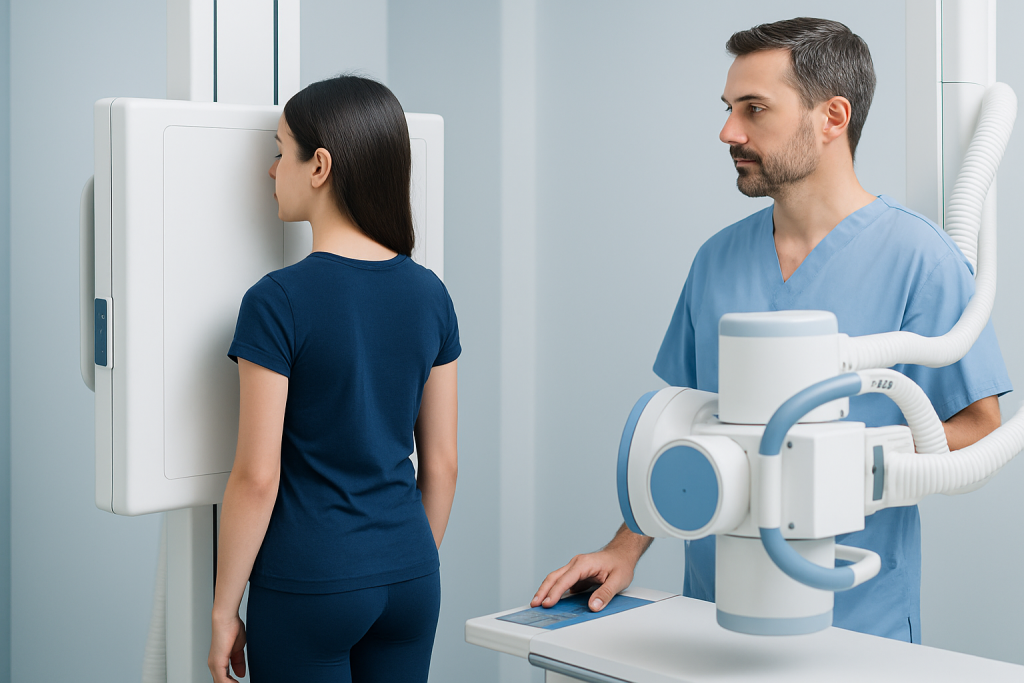
Many children with scoliosis have no pain and feel completely well. The first clues are often visual rather than physical. A parent may notice one shoulder sitting higher than the other, one hip appearing more prominent, or the head leaning slightly to one side.
Other common signs include a waist that looks uneven, one shoulder blade that sticks out more, or a rib hump that becomes visible when the child bends forward. Clothing may twist on the body or hang unevenly. Some children also seem to stand with a slight list, even though they are trying to stand straight.
Pain is not the most typical early symptom in children, so its absence does not rule out scoliosis. When pain is present, especially if it is severe or accompanied by weakness, numbness, or trouble walking, a doctor should assess the child more carefully because another cause may need to be considered.
Causes & Risk Factors
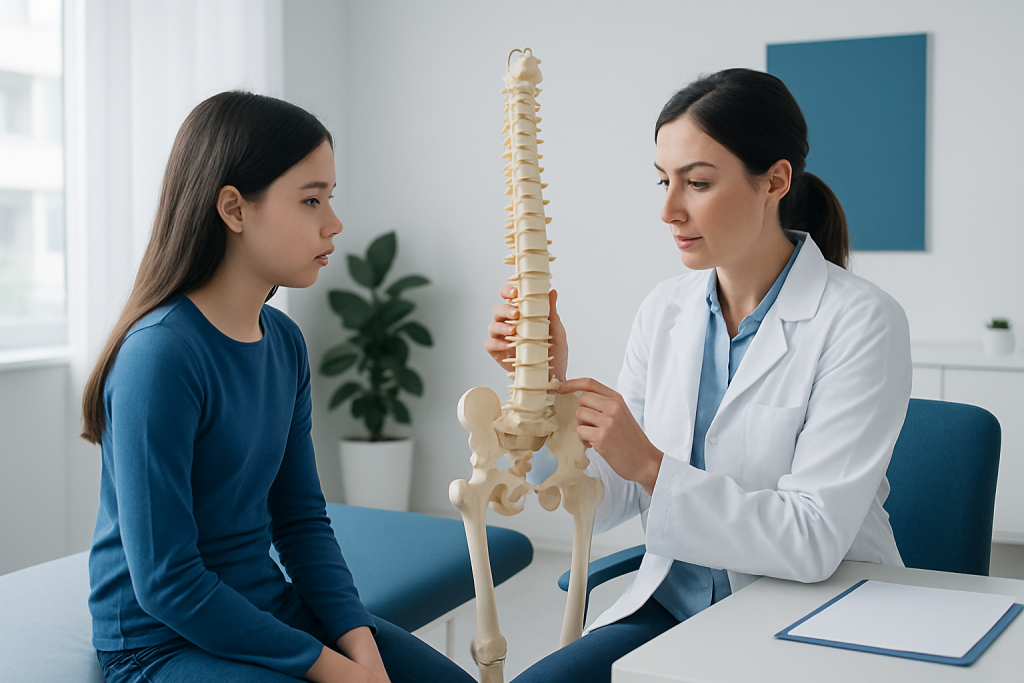
Most pediatric scoliosis is idiopathic, which means no single clear cause is found. This is especially common in adolescents. In idiopathic scoliosis, the spine begins to curve during growth, but the exact reason the curve starts is not always known.
Some children have scoliosis related to differences in how the vertebrae formed before birth, neuromuscular conditions that affect muscle control, or syndromes that influence connective tissue and growth. In those situations, scoliosis may be part of a larger medical picture and may need closer monitoring.
Certain factors make scoliosis more likely to be noticed or to progress, including rapid growth during puberty, being younger when the curve is discovered, and family history. Girls are more likely than boys to have curves that become significant enough to need treatment, although scoliosis can affect any child.
- Family history of scoliosis
- Growth spurts, especially during adolescence
- Diagnosis at a younger age
- Underlying neuromuscular or congenital conditions
- Female sex for curves that are more likely to progress
Diagnosis
Diagnosis begins with a careful history and physical examination. A clinician looks at posture, shoulder and hip symmetry, leg length, and the shape of the back while the child bends forward. This exam helps the doctor see whether the curve is structural and how it affects the body.
X-rays are usually used to confirm scoliosis and measure the Cobb angle, which describes the degree of spinal curvature. The same images can also help the specialist understand the curve pattern and whether the bones are still growing. In some children, follow-up X-rays are scheduled at intervals so the team can compare changes over time.
Additional imaging or tests may be needed if the curve pattern is unusual, if symptoms suggest a more complex condition, or if there are signs of nerve or muscle involvement. For international patients, having imaging and reports organized before travel can make specialist review smoother and help the care team plan the next steps efficiently.
Treatment Options
Treatment is not determined by the word “scoliosis” alone. It depends on the child’s age, remaining growth, curve size, curve location, and how quickly the curve is changing. In many children, especially those with small and stable curves, observation is enough.
Observation usually means scheduled follow-up visits and repeat imaging at appropriate intervals. The purpose is to watch for progression during growth. If the curve stays small and stable, active treatment may never be needed.
Bracing may be recommended for children who are still growing and whose curves are in a range where the brace can help slow progression. A brace does not usually straighten the spine permanently, but it can be useful in keeping a curve from becoming larger while growth continues. Surgery is considered when curves are larger, continue to progress, or create a significant risk of future problems. The goal of surgery is to correct and stabilize the spine, not to make every spine perfectly straight.
For families arranging care from abroad, treatment often includes planning around school, travel, and follow-up schedules. A specialist may discuss whether the child can continue observing at home, needs brace fitting, or would benefit from a more comprehensive treatment plan during the same care episode.
- Observation: best suited to small, stable curves in growing children
- Bracing: used to reduce the chance of progression in selected growing children
- Surgery: reserved for curves that are larger, worsening, or likely to cause lasting issues
Prevention & Self-care
Most pediatric scoliosis cannot be prevented because its exact cause is often unknown. Even so, families can play an important role by noticing subtle body changes early and keeping follow-up appointments. Early recognition helps the care team decide whether observation is still the safest path.
Home care is usually practical and supportive rather than restrictive. Children who are observed only need normal activity unless their clinician advises otherwise. If a brace is prescribed, success often depends on comfort, skin care, and a routine that makes wear time manageable for the child and family.
Helpful steps can include:
- Watching for uneven shoulders, hips, or waistline changes
- Keeping all scheduled follow-up visits and X-rays
- Encouraging regular activity as advised by the doctor
- Supporting brace use if one is prescribed
- Noticing pain, fatigue, or changes in walking and reporting them promptly
Families recovering after surgery or coordinating brace care across borders may need a clear plan for wound care, activity limits, and return visits. Written instructions and a contact pathway for questions can make follow-up much easier after returning home.
When Observation Is Enough — and When Treatment Changes
Observation is often enough when the curve is small, the child is growing normally, and repeat exams show that the spine is not changing quickly. In these situations, the most appropriate care may be careful tracking rather than immediate treatment. This can feel surprising to families, but in scoliosis, not every curve needs active intervention.
Treatment changes when the curve begins to progress, when the child is still in a major growth phase, or when the curve reaches a level where later problems become more likely. A brace may become the next step for a growing child with a moderate curve, while surgery may be discussed if the curve is large or continues to worsen despite non-surgical care.
Doctors also change the plan if the child develops symptoms that suggest the scoliosis is affecting function, if posture becomes more unbalanced, or if imaging shows a pattern that requires closer attention. In other words, the treatment threshold is not fixed; it moves with the child’s growth and the curve’s behavior.
When to See a Doctor
A doctor should evaluate any child with a new or changing spinal asymmetry, especially if a parent notices uneven shoulders, a prominent shoulder blade, or a rib hump when the child bends forward. A routine evaluation can confirm whether the issue is scoliosis or another postural difference.
Children should be seen sooner if the curve seems to be changing quickly, if back pain is persistent or severe, or if there are neurological symptoms such as weakness, numbness, coordination problems, or changes in walking. These symptoms do not always mean something serious, but they do warrant prompt assessment.
Families seeking a second opinion or specialized treatment can benefit from a pediatric orthopedic team experienced in growth-related spine care. Acibadem Health Point’s multidisciplinary specialists and JCI-accredited hospitals diagnose and treat scoliosis for international patients with coordinated evaluation and follow-up planning.
Because scoliosis decisions are often made over months rather than minutes, timely specialist input can help families understand whether continued observation is safe or whether the care plan should change.
Living With Follow-up: A Practical View for Families
One of the hardest parts of pediatric scoliosis is that it may not require immediate action, yet it still requires attention. Families often need reassurance that “watching” is not the same as “doing nothing.” Observation is an active plan when it is supervised by a clinician who understands the child’s growth pattern.
For children who travel for care, the follow-up plan should be simple enough to continue after returning home. Parents may want copies of imaging reports, the next recommended review date, and a clear explanation of what change would trigger a brace or surgical discussion. That information helps local doctors and the specialist team stay aligned.
Children generally do best when scoliosis care fits into everyday life rather than interrupting it. Good communication, realistic expectations, and regular reassessment make it easier to choose the right moment to stay the course or to change treatment.
Frequently asked questions
01Is pediatric scoliosis always a reason for treatment?
No. Many children with small, stable curves only need observation. Treatment is usually considered when the curve is growing, the child is still developing quickly, or the curve reaches a size where progression is more likely.
02Does scoliosis in children cause pain?
Often it does not, especially in early or mild cases. Pain can happen, but if it is significant or comes with weakness, numbness, or walking changes, the child should be evaluated promptly.
03How often does a child need follow-up for scoliosis?
The schedule depends on age, curve size, and growth stage. Some children are reviewed every few months, while others are seen less often if the curve is stable.
04Can exercise or sports fix scoliosis?
Exercise is good for general health and may help a child stay strong and flexible, but it does not usually straighten a structural spinal curve. A doctor can advise which activities are appropriate for the child’s specific situation.
05When is a brace used for pediatric scoliosis?
Bracing is usually considered for growing children with moderate curves that may worsen over time. The brace is meant to help slow progression, not to cure scoliosis on its own.
06When should parents seek a second opinion?
A second opinion can be helpful if the curve is progressing, if the treatment plan is unclear, or if the family is deciding between observation, bracing, and surgery. It can also be useful when coordinating care across different countries or healthcare systems.
This article is for general information only and is not a substitute for professional medical advice. Please consult a qualified doctor about your individual situation.
Joint and spine care in Turkey — expert assessment & treatment
JCI-accredited · board-certified surgeons · reply within 24h
Add us as a Preferred Source to see more of our trusted health content across Google Search, AI Overviews and Discover.