Lip Flip Before and After: What to Expect

Key Takeaways
- A lip flip usually creates a softer, more defined upper lip rather than a large change in lip volume.
- Results develop gradually over several days and are typically temporary.
- The before-and-after look depends on lip shape, smile pattern, and injector technique.
- Mild swelling, tenderness, or asymmetry can happen early and often settles.
- Choosing a qualified clinician matters for both natural-looking results and safety.
A lip flip is a subtle cosmetic procedure that uses small amounts of botulinum toxin to relax the upper lip and create a fuller-looking smile. Understanding the before-and-after timeline helps patients know what changes are realistic, how results develop, and when to seek expert advice.
Overview
A lip flip is a small cosmetic treatment designed to change how the upper lip looks when a person smiles or speaks. It is usually done with botulinum toxin injected into the muscles around the upper lip, which relaxes the area just enough for the lip to roll slightly outward. The goal is not to add volume in the way a filler does, but to create the impression of a fuller, softer upper lip.
For many people, the real question is not simply what a lip flip is, but what it looks like before and after treatment. The answer depends on anatomy, smile dynamics, and the skill of the clinician. Some people notice a modest but attractive improvement in lip show, while others find that a lip flip pairs well with other treatments such as dermal fillers if more change is desired.
Because the procedure is temporary and relatively quick, it is often considered by patients who want to test a subtle enhancement before committing to a longer-lasting option. In an international-patient setting, that can be helpful for travelers who want a low-downtime procedure with a clear plan for review and follow-up.
What Changes Before and After a Lip Flip
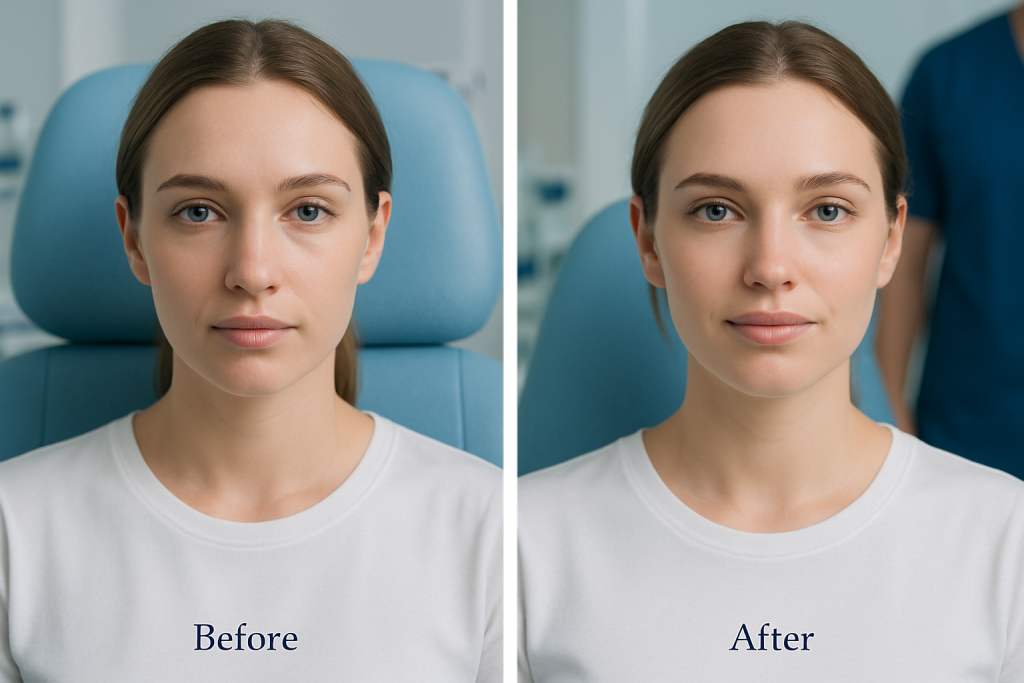
Before treatment, the upper lip may appear thin, disappear when smiling, or turn inward when the mouth is at rest. After a lip flip, the upper lip may look slightly more visible and the smile may appear balanced, especially when the person smiles widely or speaks. The change is usually delicate, which is why photos taken before and after are often the best way to judge the result.
The transformation is not immediate. Some people notice early softening within a few days, but the full effect generally takes time to settle. During this period, the lip may feel different when sipping from a straw, whistling, or pronouncing certain words. Those changes are usually mild and reflect the muscle relaxation that makes the lip flip work.
A realistic before-and-after comparison should focus on harmony rather than dramatic enlargement. A natural result may show a slightly more pronounced upper lip border, a gentler smile line, and less gum show in some cases. The best outcomes are often the ones that do not look obviously treated.
Who May Consider a Lip Flip

A lip flip may suit adults who want a subtle improvement without adding filler volume. It is often requested by people whose upper lip seems to disappear when they smile, or by those who want the lip to look a little more defined at rest and in photographs. Some patients also choose it as a first step before considering more extensive lip enhancement.
Not everyone is a good candidate. People who already have difficulty moving their upper lip, who need strong mouth function for speaking professionally, or who are looking for a dramatic enlargement may want to discuss other options. A careful consultation helps determine whether a lip flip alone is likely to match the patient’s goals.
International patients often benefit from a pre-travel review of expectations, including whether the timing of the procedure fits with a holiday, work trip, or social event. Since the results are temporary, it can be useful to plan around important events and consider how follow-up will be arranged after returning home.
Causes & Risk Factors for an Underwhelming Result
When a lip flip seems less noticeable than expected, the reason is often anatomy rather than a problem with the treatment itself. Lip thickness, muscle strength, dental display, and the natural shape of the mouth all affect how much change is visible. A lip flip works best when the goal is subtle refinement, not structural enlargement.
Technique also matters. The injector must place the treatment carefully so that the upper lip relaxes without causing excessive weakness. If the amount used is too small, the change may be minimal; if it is too strong for the patient’s needs, speech or drinking may feel awkward for a short period.
- Very thin upper lips
- Strong smile muscles
- Unrealistic expectations of size increase
- Inexperience with aesthetic injectables
- Previous asymmetry in the mouth or smile
These factors do not mean a person cannot have a good result. They simply highlight why consultation, facial assessment, and conservative planning are important before treatment.
Diagnosis and Consultation
A lip flip does not require medical testing, but it does require a thoughtful facial assessment. During consultation, the clinician usually studies the lips at rest and while smiling, checks for symmetry, and asks what the patient hopes to change. This is the stage where “before and after” goals are made concrete.
Good planning often includes looking at photographs or discussing examples of results that feel natural to the patient. The clinician may explain what the treatment can and cannot do, including the fact that a lip flip changes lip position more than lip size. That discussion helps avoid disappointment later.
For patients traveling from another country, a clear consultation also helps with logistics. It can be useful to understand the expected follow-up window, the typical duration of results, and whether a review visit is advisable before the patient leaves the city.
Treatment Options
The lip flip procedure itself is usually straightforward and brief. After cleaning the area, the clinician places a small number of injections around the upper lip to relax selected muscles. The treatment is often completed during an outpatient visit and does not usually require anesthesia beyond a topical comfort measure, if used by the clinic.
Some patients combine a lip flip with dermal filler, especially if they want both shape and volume. Others prefer the lip flip alone because it offers a subtler effect. The right approach depends on the individual’s facial proportions, desired outcome, and tolerance for temporary changes in lip movement.
After treatment, the lip may look almost unchanged at first. That is normal. As the muscle relaxes over the next few days, the upper lip may appear slightly more everted, and the final look can be assessed more reliably after the treatment has settled.
Prevention & Self-care
Self-care after a lip flip is usually simple. Patients are generally advised to follow the specific instructions they receive from their clinician, which may include avoiding unnecessary pressure on the area for a short time and staying mindful of how the mouth feels when eating or speaking soon after the procedure. Gentle habits can help the treatment settle comfortably.
It is also useful to avoid judging the result too early. The first day or two may not reflect the final appearance. Taking a photo before treatment and another after the full effect has developed can make it easier to see the difference objectively, rather than relying on memory.
People who travel soon after the procedure should keep their aftercare plan practical and portable. That may mean scheduling treatment with enough time before flights, events, or meetings, and knowing how to contact the clinic if questions arise after departure. A calm, planned approach is usually the best form of “prevention” for avoidable worry.
When to See a Doctor
Patients should contact their clinician if the expected effect does not appear after the usual settling period, or if one side of the upper lip looks noticeably different from the other. Mild early unevenness can happen, but persistent asymmetry deserves a review so the outcome can be assessed properly.
Medical advice is also appropriate if there is significant difficulty speaking, drinking, or moving the mouth, or if any reaction seems more than mild and short-lived. While serious problems are uncommon, any treatment involving injections should be followed with the understanding that questions can arise after the appointment.
For international patients, it is wise to know in advance how follow-up will work from abroad. Acibadem Health Point’s multidisciplinary specialists and JCI-accredited hospitals diagnose and treat cosmetic concerns like these for international patients, with structured support before and after travel when needed.
Frequently asked questions
01How long does a lip flip take to show results?
Results usually begin to appear gradually over several days as the treated muscles relax. The final look is often easier to judge after the treatment has fully settled.
02Does a lip flip make the lips bigger?
A lip flip does not add volume in the same way filler does. It changes how the upper lip sits, which can make it look slightly fuller and more visible.
03Is a lip flip painful?
Most people describe the procedure as brief and mildly uncomfortable rather than painful. The sensation depends on individual sensitivity and the clinician’s technique.
04How long do lip flip results last?
The effect is temporary and gradually wears off over time. The exact duration varies from person to person and depends on how the body responds to the treatment.
05Can a lip flip and filler be done together?
Yes, they can sometimes be combined when a patient wants both shape and volume. A clinician can explain whether that approach is suitable based on facial balance and treatment goals.
06What are common side effects after a lip flip?
Mild swelling, tenderness, or temporary unevenness can occur. These effects are usually short-lived, but any persistent or concerning symptom should be checked by a clinician.
This article is for general information only and is not a substitute for professional medical advice. Please consult a qualified doctor about your individual situation.
Explore treatments in Turkey — costs, top hospitals & a free quote
JCI-accredited · board-certified surgeons · reply within 24h
Add us as a Preferred Source to see more of our trusted health content across Google Search, AI Overviews and Discover.