

Knee Pain After Injury: What Swelling, Locking, and Instability Usually Suggest

Key Takeaways
- Swelling after a knee injury often signals inflammation, bleeding inside the joint, or soft-tissue damage.
- Locking can suggest a meniscus tear or a loose fragment inside the joint.
- Instability or a 'giving way' sensation may point to ligament injury, especially involving the ACL or collateral ligaments.
- A careful history, physical examination, and imaging when needed help determine the cause and severity.
- Early evaluation is helpful if the knee cannot bear weight, looks deformed, becomes very swollen, or cannot fully straighten.
Knee pain after an injury can range from a mild strain to a more significant ligament, cartilage, or bone problem. Swelling, locking, and a sense that the knee is giving way can help point toward the structures that may be involved and guide next steps.
Overview
A knee injury can be straightforward, such as a temporary sprain after a twist, or it can involve a deeper problem in the ligaments, cartilage, tendons, or bone. Because the knee is a weight-bearing joint with several moving parts, symptoms often reveal more than pain alone. Swelling, locking, and instability are especially useful clues.
For someone deciding whether to rest at home, see a local clinician, or arrange care while traveling, these symptoms matter because they often reflect the kind of tissue that has been injured. A swollen knee after a fall is not the same as a knee that catches when bending, and both differ from a knee that feels unreliable on stairs. Understanding those patterns can make the next step clearer.
Most knee injuries improve with time and appropriate care, but some need prompt evaluation to prevent ongoing damage. The goal is not to guess the exact diagnosis from symptoms alone, but to notice which signs suggest a simple strain and which signs deserve imaging, bracing, rehabilitation, or orthopedic review.
Symptoms: What Swelling, Locking, and Instability Usually Mean
Swelling is one of the most informative signs after knee trauma. Rapid swelling within a few hours may suggest bleeding inside the joint, which can happen with ligament injuries, fractures, or patellar dislocation. Swelling that develops more gradually may be more consistent with inflammation from a meniscus injury, sprain, or overuse after the initial trauma.
Locking means the knee gets stuck and cannot fully bend or straighten. True locking can point to a torn meniscus, a loose piece of cartilage or bone, or another mechanical blockage inside the joint. Some people describe a similar feeling that is actually pain-related stiffness rather than a true physical block, so the exact description matters.
Instability often feels like the knee is giving way, buckling, or failing to support weight as expected. This can occur with anterior cruciate ligament (ACL) injury, collateral ligament sprain, significant meniscus damage, or muscle weakness after swelling and pain limit normal movement. A loud pop at the time of injury, followed by swelling and instability, often raises concern for a ligament injury.
- Swelling suggests inflammation or fluid in the joint.
- Locking suggests a mechanical problem inside the knee.
- Instability suggests loss of structural support or poor control around the joint.
Kidney Pain Location: Causes and When to Seek Care" class="ahp-ilk">Pain location can add more clues. Pain along the joint line may occur with meniscus injury, pain on the outside or inside of the knee can be seen with collateral ligament strain, and pain below the kneecap may involve the patellar tendon or nearby structures. Still, symptoms overlap, so a proper exam remains essential.
Causes & Risk Factors

Knee pain after injury commonly follows a twist, direct blow, sudden stop, awkward landing, or fall. Sports such as football, skiing, basketball, and running place the knee under rapid changes in direction, which can strain the ligaments or pinch the meniscus. A simple trip on stairs or a slip in the bathroom can also create enough force to injure the joint.
Ligament injuries are more likely when the knee rotates while the foot stays planted. ACL injuries often happen with pivoting or landing from a jump, while medial or lateral collateral ligament injuries may result from a blow to the side of the knee. Meniscus tears are common when the knee twists under load, especially if the joint was already vulnerable from age-related wear.
Some people have a higher chance of lingering symptoms after injury. Prior knee injuries, weak thigh or hip muscles, poor balance, joint hypermobility, and returning to activity too soon can all contribute. Body weight, work demands, and the type of sport or occupation can also affect recovery, but they do not determine the diagnosis on their own.
Less commonly, swelling and mechanical symptoms may reflect fracture, patellar dislocation, infection, inflammatory arthritis, or a flare of an older knee condition after the new injury. A clinician looks for those possibilities when the story does not fit a routine sprain or when the knee behaves in an unexpected way.
Diagnosis
Diagnosis begins with a detailed history of how the injury happened, where the pain is felt, whether a pop was heard, how fast swelling appeared, and whether the knee has locked or given way. These details help the clinician decide which structures are most likely involved and whether urgent imaging is needed.
A physical examination may include checking swelling, tenderness, range of motion, ability to bear weight, and specific stability tests for the ligaments. The clinician may also compare both knees to judge whether motion, alignment, or joint laxity is unusual. Because pain and swelling can limit testing, the first exam sometimes gives only part of the answer.
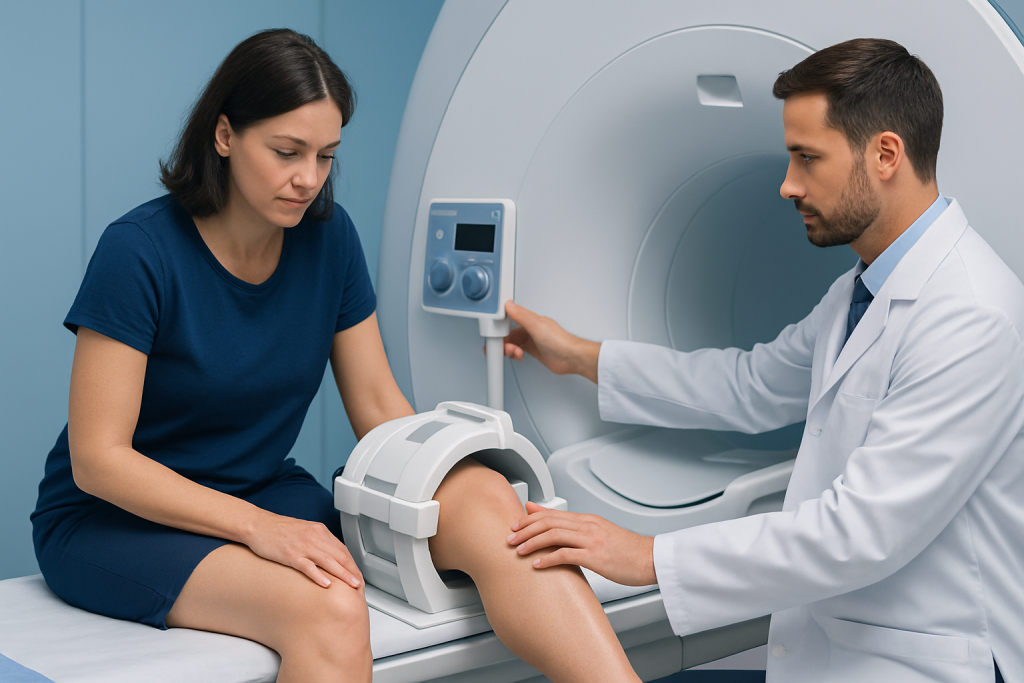
X-rays are often used when a fracture, dislocation, or significant bone injury is possible. An MRI may be recommended when ligament, meniscus, cartilage, or tendon damage is suspected, especially if the knee locks, repeatedly gives way, or fails to improve as expected. In some settings, ultrasound or other imaging may help assess fluid, tendon injury, or surrounding soft tissue.
For international patients, diagnosis is sometimes built in stages: initial assessment, imaging, treatment planning, and then recovery follow-up after returning home. Clear records and imaging reports are useful, because knee injuries often need continuity of care even when the first visit takes place abroad.
Treatment Options
Treatment depends on the exact injury, the amount of swelling, and whether the knee remains stable and functional. Many mild sprains and bruises improve with protected rest, temporary activity changes, ice, compression, elevation, and gradual return to movement. Short-term support with a brace or crutches may be used when walking is painful or unstable.
Physical therapy is often an important part of recovery. It focuses on reducing swelling, restoring motion, rebuilding strength in the quadriceps, hamstrings, and hips, and retraining balance so the knee can support daily activities safely. Even when surgery is not needed, rehabilitation can make the difference between a knee that merely calms down and one that becomes reliable again.
Some injuries need procedural or surgical treatment. A torn ACL may require reconstruction in active patients or in those whose knees are repeatedly unstable; a meniscus tear may sometimes be repaired or trimmed; and a displaced fracture or loose body may need orthopedic intervention. The decision is individualized and depends on age, activity goals, injury pattern, and overall joint health.
Pain relief is usually part of the plan, but it should be guided by a clinician, especially if there are other medical conditions or if surgery may be considered. The purpose of medication is to support safe movement and rehabilitation, not to mask worsening symptoms. If the knee remains swollen, locked, or unstable, treatment should be reassessed rather than simply continued unchanged.
Prevention & Self-care
After the first injury, the knee benefits from calm, consistent care. Reducing activity that triggers pain, using ice for short periods, and elevating the leg can help ease swelling. Compression may be helpful if advised, provided it does not cause numbness, increased pain, or color change in the foot.
As symptoms improve, gentle movement is usually preferable to prolonged immobility. Controlled exercises, guided by a clinician or physical therapist, help prevent stiffness and muscle loss. Returning too quickly to running, jumping, or pivoting is one of the most common reasons a knee that was improving starts hurting again.
Longer-term prevention focuses on joint support. Strong hips and thighs, good landing technique, balanced training, proper footwear, and a sensible warm-up can reduce the chance of another injury. People with a history of knee trauma may also benefit from sport-specific rehabilitation before resuming intense activity.
- Use swelling as a cue to slow down, not as a challenge to push through.
- Protect the knee during the early phase of healing, then rebuild motion and strength gradually.
- Follow a clinician’s return-to-activity advice rather than relying only on pain level.
When traveling for treatment, it helps to keep copies of imaging, clinic notes, and rehabilitation instructions. That makes follow-up easier if symptoms continue after returning home and gives another clinician a clear picture of what has already been tried.
When to See a Doctor
Medical evaluation is important when knee pain follows an injury and the knee swells rapidly, looks deformed, cannot bear weight, or cannot fully straighten. These signs can indicate a fracture, dislocation, major ligament tear, or a displaced meniscus or cartilage fragment.
It is also wise to seek care if the knee keeps locking, gives way repeatedly, or remains swollen and painful after several days of appropriate self-care. Even when symptoms are not severe, persistent instability can increase the risk of falls and further damage.
Anyone with fever, redness, marked warmth, or severe pain out of proportion to the injury should be evaluated promptly, because these features can suggest infection or another urgent problem rather than a routine sprain. If the symptoms are interfering with work, travel, or daily movement, a clinician can help determine whether conservative care is enough or whether orthopedic assessment is needed.
Acibadem Health Point’s multidisciplinary specialists and JCI-accredited hospitals diagnose and treat knee injuries for international patients, with coordinated care that can include imaging, orthopedic review, and rehabilitation planning.
Frequently asked questions
01Does swelling after a knee injury always mean something serious?
Not always, but swelling is an important clue. It can happen with a minor sprain, but rapid or large swelling may point to bleeding inside the joint, a fracture, or a significant ligament injury. A clinician can help interpret the timing and pattern of swelling.
02What is the difference between locking and stiffness?
Locking usually means the knee physically gets stuck and will not move through its full range. Stiffness feels tight or painful, but the joint can still move with effort. True locking is more concerning for a mechanical problem inside the knee.
03Why does my knee feel unstable after an injury?
Instability can happen when a ligament is stretched or torn, or when pain and swelling make the muscles around the knee work poorly. It may also follow meniscus damage or a patellar dislocation. Repeated giving way should be evaluated rather than ignored.
04Can a meniscus tear heal on its own?
Some small tears may improve with time, rest, and rehabilitation, while others keep causing locking, pain, or swelling. The best approach depends on the tear’s location, size, and whether the knee is mechanically blocked. Imaging and an orthopedic exam help guide that decision.
05Is it safe to keep walking on an injured knee?
That depends on the injury. If the knee is only mildly sore and remains stable, gentle walking may be acceptable, but if there is major swelling, instability, or inability to bear weight, it is better to limit walking and seek assessment. Pushing through a significant injury can prolong recovery.
06When is an MRI needed after knee trauma?
An MRI is often considered when ligament, meniscus, or cartilage injury is suspected, especially if symptoms do not match a simple sprain or do not improve as expected. It is not needed for every knee injury, but it can be very helpful when the knee locks, gives way, or remains swollen.
This article is for general information only and is not a substitute for professional medical advice. Please consult a qualified doctor about your individual situation.
Joint and spine care in Turkey — expert assessment & treatment
JCI-accredited · board-certified surgeons · reply within 24h
Add us as a Preferred Source to see more of our trusted health content across Google Search, AI Overviews and Discover.


