How Doctors Decide If a Cancer Is Early, Local, or Advanced

Key Takeaways
- Staging describes the size of a cancer and whether it has spread beyond its original site.
- Early cancer is generally confined to a small area, while local cancer has grown nearby but not to distant organs.
- Advanced cancer means the disease has spread farther from where it started, but treatment may still be very effective.
- Doctors use scans, biopsies, surgery findings, and pathology reports to assign a stage.
- The stage helps guide treatment, follow-up, and the timing of future checks, including for patients traveling from another country.
Cancer staging helps doctors describe how far a cancer has spread and choose the safest, most effective treatment plan. The terms early, local, and advanced are part of that conversation, but they do not tell the whole story on their own.
Overview
When a cancer diagnosis is first discussed, one of the most important questions is not only what type of cancer it is, but how far it has spread. Doctors use staging to answer that question in a structured way. Staging helps translate many test results into a clearer picture that can guide treatment planning.
The words early, local, and advanced are broad ways of describing stage. They are helpful for understanding the general situation, but they do not replace the full medical staging system. Two people may both hear “early cancer” and still have very different treatment needs depending on the cancer type, grade, and location.
For patients, especially those considering care in another country, staging is often the thread that connects the first biopsy report to the treatment discussions that follow. It helps teams compare findings across imaging, pathology, and surgery so they can recommend a plan that is realistic, timely, and tailored to the individual.
What Doctors Mean by Early, Local, and Advanced
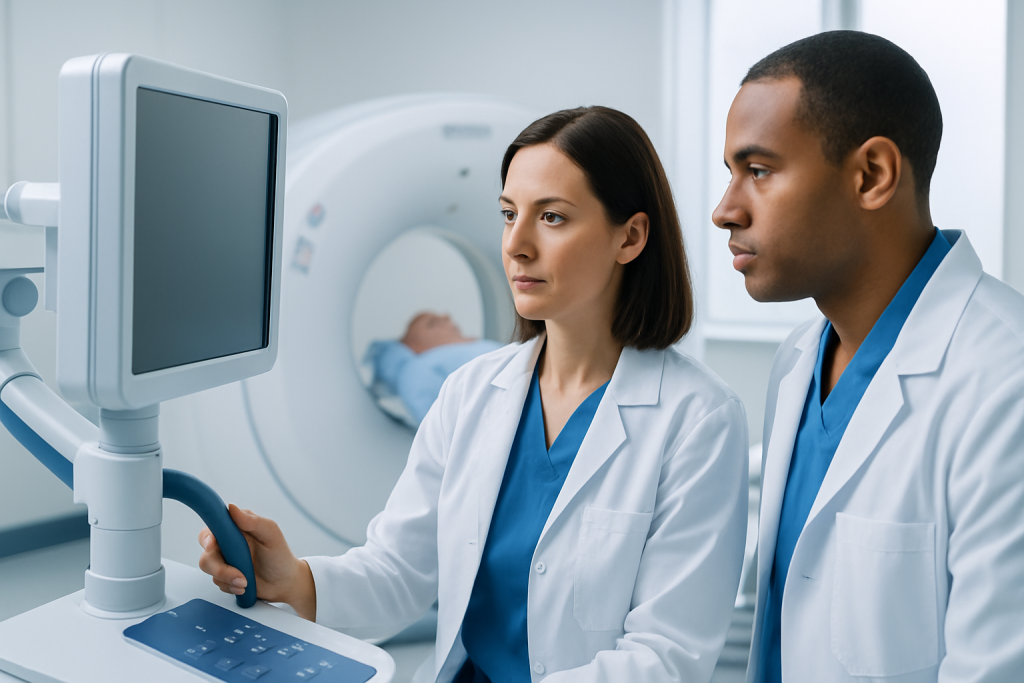
Early cancer usually means the cancer is small, limited to the original organ or tissue, and has not yet invaded deeply or spread to lymph nodes or distant sites. In some cancers, this may also include pre-cancerous or very early invasive disease, depending on the medical definitions used for that cancer type.
Local cancer means the disease is still centered where it began, but it may be larger or have grown into nearby tissue. It may remain entirely contained in one region of the body and still be treated with surgery, radiation, medication, or a combination of these approaches.
Advanced cancer generally refers to cancer that has spread beyond the original area. That spread may involve nearby lymph nodes, surrounding structures, or distant organs. The term can sound alarming, but it does not automatically mean that treatment has no value; many advanced cancers can still be treated to control disease, reduce symptoms, and sometimes achieve long periods of stability.
How the Staging System Is Built

Most cancers are staged with some version of the TNM system. “T” describes the primary tumor, including its size and how deeply it has grown. “N” looks at whether nearby lymph nodes contain cancer cells, and “M” indicates whether the cancer has spread to distant organs.
These details are then grouped into stage numbers or categories, often from stage 0 through stage IV. In general, lower stages mean less spread, while higher stages mean more spread. However, the exact meaning differs by cancer type, which is why one stage label cannot be interpreted the same way for every cancer.
Doctors may also use words such as localized, regional, or metastatic. Localized disease stays in the original area. Regional disease has moved to nearby lymph nodes or tissues. Metastatic disease means the cancer has reached distant parts of the body.
Symptoms and Clues That Lead to Staging
Staging does not begin with symptoms alone. Many cancers are found during evaluation for a lump, bleeding, pain, a persistent cough, unexplained weight loss, or another change that prompts testing. In some cases, a cancer is discovered by screening before symptoms are obvious.
Symptoms can suggest where a cancer is active, but they do not reliably show how far it has spread. That is why doctors use a combination of physical examination, imaging, lab tests, and tissue sampling. A person may feel well and still have a cancer that has spread, while another person may feel unwell from a tumor that remains in one place.
For patients arranging care from abroad, a clear symptom history is valuable because it helps the team understand when changes began and whether they have progressed over time. Even small details can support more accurate staging and treatment planning.
What Causes Cancer to Be Early or Advanced
Cancer becomes early or advanced based on its biological behavior and the time at which it is found. Some cancers grow slowly and remain localized for a longer period. Others invade nearby tissue or spread early, even when the primary tumor is still relatively small.
Risk factors can affect the chance of developing cancer, but they do not determine stage by themselves. Age, family history, smoking, infections, hormone exposure, inherited gene changes, environmental exposures, and prior radiation are among the factors that may influence cancer risk for certain types of cancer.
Because cancer behavior differs widely, doctors look at both the disease itself and the person’s overall health. A cancer may be technically early, yet still require careful planning if it is in a delicate location. A more advanced cancer may still respond well to therapy if the body can tolerate treatment and the disease biology is favorable.
How Doctors Confirm the Stage
Staging usually starts after a biopsy or surgery confirms the diagnosis. Pathologists examine tissue under a microscope to define the cancer type and assess features such as grade, depth of invasion, and whether cancer cells are present at the margins.
Imaging studies are often used next. CT, MRI, PET, ultrasound, and bone scans can help show the tumor’s size and whether lymph nodes or distant organs are involved. Blood tests may also provide clues, although they rarely stage a cancer on their own.
Sometimes the most accurate stage is not known until surgery. A surgeon may remove a tumor and nearby lymph nodes, and the pathology report then gives the most detailed assessment. This is one reason treatment plans may change slightly after the first operation or after a complete set of results becomes available.
- Clinical stage: based on exams, imaging, and biopsy before treatment
- Pathologic stage: based on tissue examined after surgery
- Restaging: reassessment if cancer returns or changes after treatment
Treatment Options and Why Stage Matters
Stage helps doctors decide which treatments are most likely to help and which combination makes the most sense. Early cancers are often treated with surgery alone or surgery followed by radiation or medication, depending on the cancer type. Some early cancers may also be treated with localized procedures or carefully selected drug therapies.
Local cancers may need more than one approach. For example, surgery may be combined with radiation, chemotherapy, hormone therapy, targeted therapy, or immunotherapy. The goal is to remove or control the disease in the area where it is found and lower the chance of recurrence.
Advanced cancers are treated differently from one another, but the plan often focuses on systemic therapy that can travel through the body. This might include chemotherapy, targeted therapy, immunotherapy, hormone therapy, radiation for symptom relief, or surgery in selected situations. A treatment plan is not only about shrinking a tumor; it also considers comfort, function, and daily life, including the practical realities of follow-up after international travel.
For some patients, a care team may recommend a short, coordinated treatment window followed by return visits for monitoring. That approach can be especially helpful when treatment is organized across borders, because it keeps the stage information, pathology, and follow-up plan aligned from the start.
What Patients Can Do Before and After the Diagnosis
A clear stage depends on complete information, so patients can help by bringing prior scans, pathology reports, medication lists, and any records from previous hospitals. If care is being sought in another country, it is especially useful to have digital copies of reports and images, not only summaries.
After the stage is explained, it may help to ask what the label means for this specific cancer type, whether more tests are needed, and whether the stage might change after surgery. Patients should also ask about the treatment timeline, expected recovery, and whether follow-up can be coordinated with doctors at home.
Self-care during this period is practical rather than dramatic: keep appointments, note new symptoms, maintain nutrition and hydration as advised, and communicate clearly about pain, fever, or side effects. Support from family or a companion can make travel, consultations, and decision-making easier.
When to See a Doctor
A doctor should be consulted promptly if there is a new lump, unexplained bleeding, persistent pain, a long-lasting cough, difficulty swallowing, unexplained weight loss, or any symptom that does not improve. These signs do not always mean cancer, but they do deserve medical evaluation.
People who already have a cancer diagnosis should contact their oncology team if symptoms change, treatment side effects become difficult to manage, or there are concerns about infection, dehydration, or worsening weakness. If a patient is traveling for care, it is wise to know which hospital contact to use after returning home and how urgently any new symptom should be reviewed.
At Acibadem Health Point, multidisciplinary specialists and JCI-accredited hospitals diagnose and treat cancer for international patients, with attention to coordinated evaluation and follow-up. The most useful next step is usually a conversation with a qualified doctor who can interpret the stage in the context of the specific cancer, the available test results, and the patient’s overall health.
American Cancer Society
National Cancer Institute
World Health Organization
Union for International Cancer Control (UICC)
American Joint Committee on Cancer (AJCC)
Frequently asked questions
01Is early cancer always easy to treat?
Not always. Early cancers are often more treatable because they are smaller and less spread out, but the exact treatment depends on the cancer type, location, and a person’s overall health. Some early cancers still need more than one type of treatment.
02Does advanced cancer mean there is no hope?
No. Advanced cancer means the disease has spread beyond its original site, but many people still benefit from treatment. The goal may be cure in some situations, or control and symptom relief in others, depending on the cancer and response to therapy.
03Why do doctors sometimes change the stage after surgery?
Surgery can provide more complete information than scans alone. When the pathologist examines removed tissue and lymph nodes, the stage may be confirmed or adjusted based on those findings.
04Can imaging alone tell the whole stage?
Usually not. Imaging is very helpful, but doctors often need biopsy results, pathology, and sometimes surgical findings to assign the most accurate stage. Different tests answer different parts of the question.
05What is the difference between local and regional cancer?
Local cancer stays in the original organ or tissue. Regional cancer has spread to nearby lymph nodes or surrounding structures, but not to distant organs. The treatment plan often changes once the disease moves from local to regional.
06If I am traveling abroad for cancer care, what should I bring?
It is best to bring pathology reports, scan images, laboratory results, a medication list, and any notes from prior doctors. Having complete records helps the oncology team stage the cancer accurately and avoid repeating tests unnecessarily.
This article is for general information only and is not a substitute for professional medical advice. Please consult a qualified doctor about your individual situation.
Oncology care in Turkey — second opinion and treatment plan
JCI-accredited · board-certified surgeons · reply within 24h
Add us as a Preferred Source to see more of our trusted health content across Google Search, AI Overviews and Discover.