Facelift Surgery: Benefits, Risks, and Recovery Timeline

Key Takeaways
- A facelift can improve sagging along the cheeks, jawline, and neck, but it does not stop the aging process.
- Good candidates are usually healthy adults with realistic expectations and specific concerns about facial laxity.
- Recovery is gradual, with swelling and bruising improving over the first few weeks and final results taking longer to settle.
- As with any surgery, facelift procedures carry risks such as bleeding, infection, scarring, and temporary numbness.
- A detailed consultation, clear aftercare instructions, and careful follow-up are important for a safe result.
Facelift surgery, also called rhytidectomy, is designed to refresh visible signs of facial aging by tightening deeper tissues and smoothing sagging skin. Understanding the expected benefits, limits, risks, and recovery timeline helps patients make informed, realistic decisions.
Overview
Facelift surgery is one of the best-known procedures in aesthetic plastic surgery, but it is often misunderstood. It is not a single “tightening” step that erases age. Rather, it is a surgical approach used to reposition deeper facial structures, reduce looseness in the lower face and neck, and create a smoother transition along the jawline.
People usually consider a facelift when skin and soft tissue changes begin to feel out of proportion with how they see themselves on the inside. That may happen after weight changes, repeated sun exposure, genetics, or simply the passage of time. Some patients want a subtle restoration; others want a more noticeable change. A surgeon’s role is to explain what is realistic for each face, not to apply a one-size-fits-all solution.
For international patients, the decision often includes more than the operation itself. It also involves choosing a surgeon, planning travel, arranging time for recovery away from home, and understanding what follow-up may look like once the patient has returned to another country. Those practical details matter just as much as the technical side of surgery.
Symptoms and Signs That People Commonly Notice

Facelift surgery does not treat a disease, so it is not guided by symptoms in the medical sense. Instead, it is often considered when a person notices age-related changes in the face that are becoming difficult to ignore. These changes may include lax skin around the cheeks, deeper folds near the mouth, jowls along the jawline, or a less defined angle between the jaw and neck.
Some people also notice that makeup no longer sits the way it used to, photographs show heaviness in the lower face, or the neck looks more aged than the rest of the face. For many, the concern is not about looking “different,” but about looking tired or less refreshed than they feel.
It is helpful to think of these changes as part of a spectrum. Mild concerns may respond better to non-surgical treatments, while more advanced sagging is more likely to benefit from surgery. A qualified plastic surgeon can help distinguish between skin-related changes, fat redistribution, muscle laxity, and volume loss, because each requires a different strategy.
Causes & Risk Factors
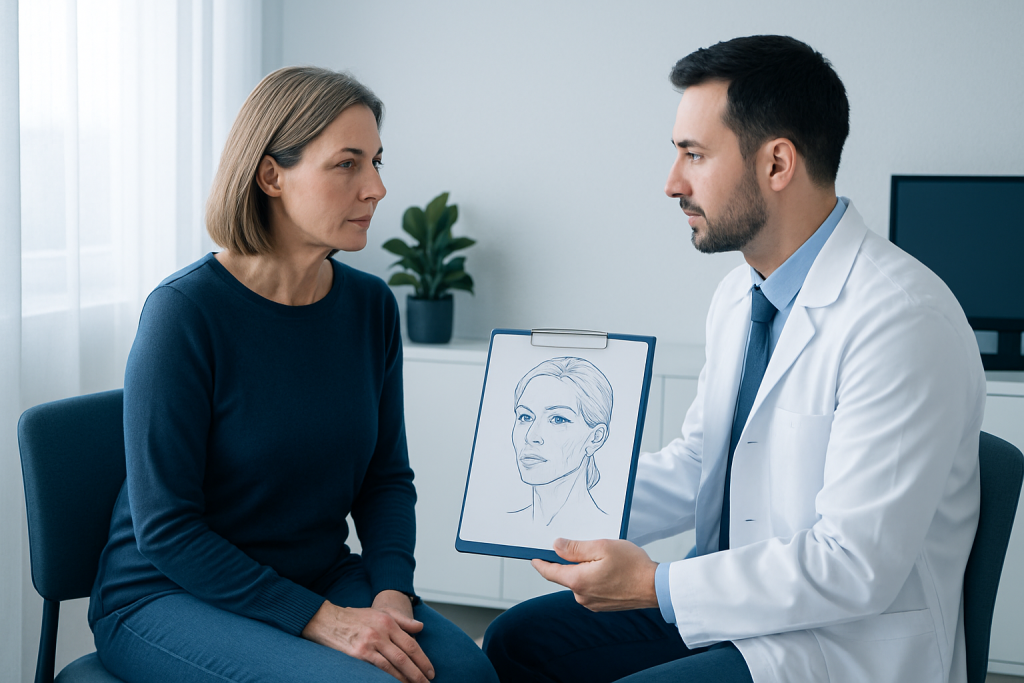
The main reason people seek facelift surgery is the natural aging process, which affects the skin, fat pads, connective tissue, and muscle support in the face and neck. Over time, collagen and elasticity decrease, facial fat shifts, and gravity becomes more visible in areas that once had sharper contours. These changes vary widely from person to person.
Several factors can make facial aging appear earlier or more pronounced. Sun exposure, smoking, repeated weight fluctuation, and some genetic patterns can all contribute. A person with a strong family tendency toward jowling or neck laxity may notice these changes sooner than someone else of the same age.
Risk factors for surgery-related complications are different from the causes of aging. They may include smoking, uncontrolled medical conditions, poor wound healing, a history of keloid scarring, blood-thinning medications, or previous facial surgery. During consultation, the surgeon usually reviews medical history carefully because safety and healing are central to planning.
Diagnosis and Preoperative Evaluation
There is no laboratory test that “diagnoses” the need for a facelift. Instead, the evaluation is based on a detailed consultation, facial examination, and discussion of goals. The surgeon looks at skin quality, degree of laxity, facial symmetry, the neck profile, and whether volume loss or drooping is the main concern.
Good planning also includes a broader health review. The surgeon may ask about medications, allergies, previous procedures, smoking, clotting issues, and conditions such as diabetes or hypertension. If needed, additional testing may be arranged to make sure anesthesia and surgery are appropriate.
For international patients, preoperative evaluation often needs to be especially organized. It is important to share accurate photos, medical records, and a clear timeline for travel and recovery. Patients should also ask how follow-up will be handled once they leave the country, including whether local care may be needed for suture removal or wound checks.
Treatment Options
Facelift surgery is not one single technique. Surgeons may tailor the operation depending on the patient’s anatomy and goals. Some approaches focus mainly on the lower face and jawline, while others extend to the neck or include deeper tissue repositioning for a more structural result. The best plan depends on where the aging changes are most visible.
Commonly, a facelift is performed under anesthesia in a hospital or accredited surgical setting. Incisions are usually placed where they can be concealed as much as possible, often around the ear and hairline. Through those openings, the surgeon lifts and repositions deeper layers, removes or redistributes tissue as needed, and then closes the skin with careful attention to tension and contour.
It is also important to understand what facelift surgery can and cannot do. It can improve sagging and sharpen facial definition, but it does not change bone structure, stop future aging, or fully replace treatments for skin texture, pigmentation, or fine lines. Some patients combine surgery with eyelid procedures, fat grafting, or non-surgical treatments, but that decision should be individualized rather than automatic.
Benefits
The main benefit of facelift surgery is a more rested and lifted appearance in the lower face and neck. Many patients appreciate a clearer jawline, less visible jowling, and a smoother relationship between the face and neck. When well planned, the result usually looks more like the person’s own face than a different face altogether.
There is also an emotional side to the benefit. Some patients report feeling more comfortable in social settings, more confident on video calls, or less distracted by their reflection. These changes are personal and should be viewed as quality-of-life outcomes rather than promises of happiness or transformation.
The most natural-looking results tend to come from restraint. A facelift that respects facial expression, preserves individual features, and avoids excessive tightness is usually more satisfying over time than one that tries to make the face look artificially small or pulled. This is why technique and aesthetic judgment matter so much.
Risks and Possible Complications
Like any surgery, facelift procedures carry risks. Common temporary effects include swelling, bruising, tightness, numbness, and mild discomfort. These are expected parts of healing for many patients and usually improve gradually.
Less common but more important complications can include bleeding, infection, fluid collection, delayed wound healing, visible scarring, skin healing problems, and asymmetry. There is also a small risk of injury to facial nerves, which can affect movement or sensation. In many cases, if this occurs, the change is temporary, but sometimes it takes longer to recover.
General anesthesia and surgery also involve broader medical risks, especially for people with chronic illnesses or certain medication histories. This is why a facelift should never be viewed as a simple beauty treatment. It is an operation that requires careful screening, safe facilities, and clear postoperative instructions.
Recovery Timeline and Self-care
Recovery from facelift surgery is gradual, and it helps to think in stages rather than expecting a quick return to normal. In the first several days, rest is usually the main priority. Swelling, bruising, and a sense of tightness are common, and the head is often kept elevated to support healing.
During the first one to two weeks, many patients feel well enough for light daily activities but still look visibly swollen or bruised. Follow-up visits are used to check healing, remove dressings or sutures when appropriate, and make sure there are no concerns with the incision sites. Travel shortly after surgery may be possible in some cases, but only when the surgeon feels it is safe.
Over the next few weeks, swelling continues to fade and the face begins to look more settled. Some numbness or firmness can last longer, and final refinement may take several months. Helpful self-care generally includes following wound-care instructions, avoiding smoking, protecting the skin from sun exposure, and postponing strenuous exercise until the surgeon gives approval.
Patients who are recovering away from home should plan for practical support. That may include arranging a companion for the first days, keeping medications and documents organized, and understanding which symptoms require prompt medical review. Good recovery is not only about comfort; it is also about monitoring the healing process carefully.
When to See a Doctor
A consultation with a qualified plastic surgeon is appropriate when facial aging changes are causing concern and non-surgical options no longer seem sufficient. It is also the right time to seek medical advice if a person wants to understand whether their goals are realistic, whether they are a good surgical candidate, and how different techniques compare.
After surgery, patients should contact their doctor promptly if they notice increasing pain, significant one-sided swelling, persistent bleeding, fever, worsening redness, drainage from the incision, or sudden changes in facial movement. These signs do not always mean something serious, but they deserve professional assessment.
For patients traveling internationally, it is especially wise to choose a team that can provide clear preoperative planning and reliable postoperative communication. Acibadem Health Point’s multidisciplinary specialists and JCI-accredited hospitals diagnose and treat facelift concerns for international patients, helping support care before, during, and after the trip.
Frequently asked questions
What does facelift surgery actually improve?
A facelift mainly improves sagging in the lower face and neck, such as jowls, loose skin, and a less defined jawline. It can make the face look fresher and more rested, but it does not stop aging or remove every sign of time.
Is a facelift the same as a neck lift?
No. A facelift focuses on the face, especially the cheeks, jawline, and lower face, while a neck lift addresses neck laxity and contour. The two procedures are sometimes combined when both areas need improvement.
How long does facelift recovery usually take?
The first week or two usually involves the most swelling, bruising, and rest. Many people return to light activities within a few weeks, while final settling of the tissues can take several months.
Will facelift scars be noticeable?
Surgeons place incisions in areas where they can be hidden as much as possible, often around the ear and hairline. Scars usually fade over time, but healing varies from person to person and depends partly on skin type and aftercare.
Who is a good candidate for facelift surgery?
Good candidates are usually healthy adults with visible facial laxity and realistic expectations about what surgery can achieve. A surgeon also considers smoking status, medical history, and whether the patient can safely undergo anesthesia and recovery.
Can facelift surgery be combined with other treatments?
Yes, some patients combine facelift surgery with eyelid surgery, neck surgery, or fat grafting if their concerns are broader than the lower face alone. The best combination depends on individual anatomy and the surgeon’s assessment.
References
- American Society of Plastic Surgeons
- American Board of Plastic Surgery
- Mayo Clinic
- Cleveland Clinic
- National Health Service
This article is for general information only and is not a substitute for professional medical advice. Please consult a qualified doctor about your individual situation.
Explore treatments in Turkey — costs, top hospitals & a free quote
JCI-accredited · board-certified surgeons · reply within 24h
Add us as a Preferred Source to see more of our trusted health content across Google Search, AI Overviews and Discover.