Deadlift: Benefits, Proper Form and Safety

Key Takeaways
- The deadlift is a full-body lift that relies on good hip hinge mechanics and a neutral spine.
- Most deadlift-related problems come from poor technique, loading too quickly, or ignoring pain signals.
- The exercise can be modified for different fitness levels with tools such as kettlebells, trap bars, or blocks.
- A warm-up, gradual progression, and recovery days matter as much as the lift itself.
- Persistent back pain, numbness, or weakness after lifting should be evaluated by a doctor or physiotherapist.
The deadlift is a foundational strength exercise that trains the hips, legs, back, and grip in one coordinated movement. With proper technique and sensible progression, it can support everyday function and athletic performance while reducing the chance of strain.
Overview
The deadlift is one of the clearest examples of strength training that mirrors real life. It teaches the body how to lift a load from the floor using the hips, legs, trunk, and upper back together, which is why it appears in many training plans for athletes, older adults, and people rebuilding general fitness.
Its value is not only about building muscle. When performed well, the deadlift reinforces posture awareness, trunk stability, and the ability to move efficiently through the hips. That combination can support daily activities such as picking up luggage, moving boxes, or lifting a child without overloading the lower back.
At the same time, the movement deserves respect. The deadlift is not complicated in theory, but it is unforgiving when rushed. A safe approach depends on learning the hinge pattern, choosing an appropriate variation, and progressing at a pace the body can absorb.
How the Movement Works
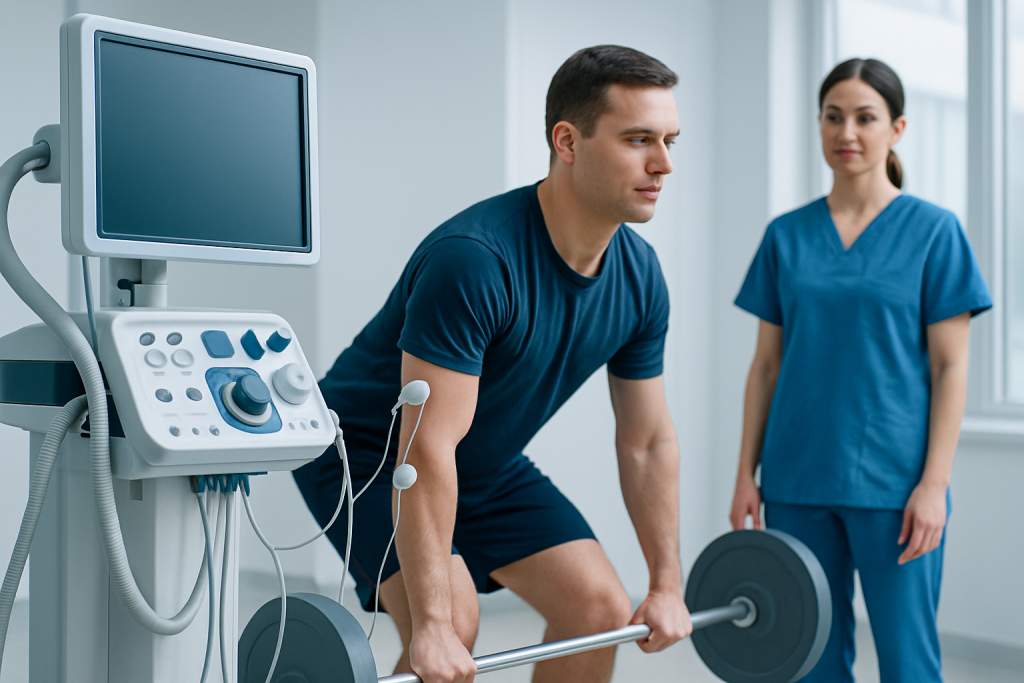
A deadlift begins with a simple idea: push the floor away while keeping the load close to the body. The hips move back, the knees bend enough to lower the torso, and the spine stays long and controlled rather than rounded or aggressively arched. The bar or weight then travels vertically as the hips and knees extend.
Several muscle groups share the work. The glutes and hamstrings help extend the hips, the quadriceps assist in the initial drive, and the back muscles help maintain position. The grip, forearms, and core also contribute, which is why the exercise often feels demanding even when the load looks modest.
Good deadlifting is less about force alone and more about coordination. The lift becomes safer when the person can brace the trunk, keep the weight near the shins and thighs, and finish standing tall without leaning backward at the top.
Benefits and Common Uses

Many people choose the deadlift because it is efficient. One movement can train a large portion of the body, making it useful in strength programs that need to balance time, practicality, and results. It also has a strong carryover to lifting tasks outside the gym, especially when the goal is to learn how to protect the back while handling weight.
For athletes, the deadlift can support power development and posterior-chain strength. For non-athletes, it can help improve confidence with lifting mechanics and build the capacity needed for everyday tasks. In rehabilitation settings, a modified version may be used when a clinician wants to rebuild tolerance to hinging, loading, and controlled effort.
People often appreciate that there is no single deadlift style. The movement can be adjusted with dumbbells, kettlebells, a trap bar, elevated plates, or blocks to reduce range of motion and make the exercise more approachable. That flexibility is one reason it appears in both performance training and general conditioning.
Common Technique Errors
Most deadlift problems start before the weight leaves the ground. Rounding the lower back, setting the hips too low or too high, and letting the weight drift away from the body can all place unnecessary stress on the spine and hips. A lift that feels awkward at the start is often a sign that the setup needs adjustment rather than more effort.
Another frequent issue is jerking the bar off the floor. A smoother start usually works better than a sudden tug, because the body can stay organized and the load can rise in a controlled path. Breath-holding too late, losing the brace, or overextending at the top can also reduce control.
- Bar or weight starts too far from the shins
- Rounded back during setup or lift-off
- Shoulders dropping behind the bar
- Locking out by leaning back instead of standing tall
- Adding load faster than technique can support
These faults are common, especially for beginners. They are usually corrected through coaching, lighter loads, and repeated practice rather than through forceful cueing.
Who Is at Higher Risk of Injury
Anyone can strain themselves if the load is excessive or the movement is poorly controlled, but some factors raise the risk. A history of back pain, limited hip mobility, weak trunk endurance, poor sleep, and sudden changes in training volume can all make the body less tolerant of heavy lifting.
Injury risk is also influenced by context. Someone lifting after a long flight, a busy work period, or a break from training may not be as prepared as they think. For international patients traveling for care, fatigue, unfamiliar equipment, and altered routines can matter just as much as the exercise itself when returning to activity.
Older adults, beginners, and people recovering from musculoskeletal problems often do better with supervised progressions. In those cases, the goal is not to avoid the deadlift entirely, but to choose a version and load that match current capacity.
How It Is Evaluated and Taught
When a doctor, physiotherapist, or qualified trainer assesses deadlift performance, the focus is usually on movement quality rather than on a single number on the bar. They may watch the setup, the breath and brace, the path of the weight, and how the person feels during and after the lift.
For people with pain, the assessment may include questions about when the symptoms started, whether pain spreads into the leg, and whether certain positions make it better or worse. Sometimes the issue is not the deadlift itself but an underlying problem such as hip stiffness, disc irritation, or a previous strain that has not fully settled.
If there is persistent discomfort, a clinician may recommend a brief period of modified training, targeted exercises, or imaging only when the history and exam suggest it is useful. Most deadlift-related concerns are evaluated clinically first, because movement patterns and symptom behavior often provide the clearest clues.
Safe Training and Self-care
The safest deadlift plan is one that builds slowly. Starting with a light load, practicing the hip hinge, and using a variation that allows good positioning can help the body adapt. Many people benefit from learning the movement with a coach before adding substantial weight.
Recovery matters. Muscles and connective tissues respond best when training is paired with rest, hydration, adequate protein, and sensible spacing between sessions. A sore lower back after an unusually hard workout may simply mean the tissues need time, but sharp pain or pain that worsens with each set deserves attention.
Practical self-care also includes the basics that are easy to overlook:
- Warm up with gentle mobility and a few lighter practice sets
- Keep the load close to the body
- Stop a set when form begins to break down
- Use shoes and a surface that feel stable
- Avoid testing maximum lifts when fatigued or rushed
For people lifting as part of a return-to-activity plan, consistency usually matters more than intensity. A well-tolerated, repeatable pattern often brings better long-term progress than occasional heavy attempts.
When to See a Doctor
Medical advice is appropriate if back pain after deadlifting is severe, does not improve with rest, or keeps returning every time the person trains. Numbness, tingling, weakness, pain traveling below the knee, or loss of bladder or bowel control should be assessed promptly.
It is also wise to seek evaluation when the pain started with a clear pop, the person cannot stand up straight, or there is swelling, bruising, or a visible deformity. These signs do not always mean a serious injury, but they deserve an examination rather than guesswork.
People who plan to resume lifting after an injury may benefit from a guided return-to-exercise program. Acibadem Health Point’s multidisciplinary specialists and JCI-accredited hospitals can help international patients diagnose and manage musculoskeletal problems with coordinated care when needed.
Frequently asked questions
01Is the deadlift safe for beginners?
Yes, when the load is light and the technique is taught carefully. Beginners often do best with a coach, a trap bar, dumbbells, or raised weights so they can learn the hip hinge without forcing range of motion. The lift becomes safer when the person progresses gradually and stops before form breaks down.
02Does deadlifting always hurt the lower back?
No. A well-performed deadlift should challenge the muscles without causing pain. Some normal effort or next-day soreness is common, but sharp pain or pain that keeps getting worse is not something to push through.
03Which deadlift variation is easiest to learn?
Many people find the trap bar, kettlebell, or elevated deadlift easier than a barbell from the floor. These versions can reduce the technical demands and make it simpler to keep the torso well positioned. The best option depends on the person’s body, mobility, and training goal.
04How can someone tell if they are using too much weight?
If the back rounds, the bar drifts away from the body, the lift becomes a jerk, or breathing and bracing fall apart, the load is likely too heavy for current technique. A weight that allows control through the entire set is usually the better choice. Progress is more reliable when the person adds load only after repeated clean reps.
05Should someone deadlift if they already have back pain?
It depends on the cause and severity of the pain. Some people with back pain can continue training with a modified program, while others need temporary rest and evaluation first. A doctor or physiotherapist can help decide whether the movement should be adjusted, delayed, or replaced for a time.
06What helps after a deadlift-related strain?
Mild strains often improve with relative rest, gentle movement, and a gradual return to activity. Ice or heat may offer comfort, but the main goal is to avoid aggravating the area while staying as active as symptoms allow. Persistent or worsening symptoms should be checked by a clinician.
This article is for general information only and is not a substitute for professional medical advice. Please consult a qualified doctor about your individual situation.
Joint and spine care in Turkey — expert assessment & treatment
JCI-accredited · board-certified surgeons · reply within 24h
Add us as a Preferred Source to see more of our trusted health content across Google Search, AI Overviews and Discover.