Carotid Arteries: Anatomy and Function
Key Takeaways
- The carotid arteries supply blood to the brain, face, and neck.
- Atherosclerosis is the most common cause of carotid narrowing.
- Carotid disease may cause no symptoms until a stroke or TIA occurs.
- Ultrasound and other imaging tests help doctors assess blood flow and narrowing.
- Treatment may include lifestyle changes, medicines, or procedures to restore blood flow.
The carotid arteries are major blood vessels in the neck that deliver oxygen-rich blood to the brain. When they become narrowed or blocked, the risk of stroke can rise, so understanding symptoms, testing, and treatment choices matters.
Overview
The carotid arteries are two large blood vessels on each side of the neck. Their main job is straightforward but vital: they carry oxygen-rich blood from the heart toward the brain. Because the brain depends on a steady blood supply, even a partial blockage in these arteries can have serious consequences.
Carotid artery disease usually develops slowly, often over years. Fatty deposits called plaques can build up inside the artery wall, narrowing the passage for blood flow. In some people, the plaque surface can become unstable and release tiny fragments or trigger a clot, which may travel to the brain and cause a transient ischemic attack (TIA) or stroke.
Many people first hear about carotid artery disease during a routine exam or after another health problem leads to imaging. That can be unsettling, especially for international patients who may be trying to understand test results from a distance. A clear explanation of what the arteries do, what the scans mean, and what can be done next helps turn a confusing finding into a manageable care plan.
Symptoms
Carotid artery narrowing often causes no symptoms at all. This is one reason the condition can remain hidden until it is found on a scan or until a TIA or stroke occurs. When symptoms do appear, they are usually related to reduced blood flow to the brain or a small clot that has broken free.
Heart Attack Warning Signs: Symptoms and When to Seek Help" class="ahp-ilk">Warning signs of a TIA or stroke can appear suddenly and should always be taken seriously. They may include:
- Sudden weakness or numbness on one side of the body
- Difficulty speaking or understanding speech
- Vision changes, including loss of vision in one eye
- Dizziness, loss of balance, or trouble walking
- Sudden severe headache, especially if unusual for the person
Some people notice brief, temporary symptoms that resolve within minutes or hours. Even if the symptoms go away, they still deserve prompt medical evaluation because a TIA can be an early warning sign of a future stroke. Persistent neck pain is not a typical sign of carotid artery disease, so other causes should also be considered if pain is the main complaint.
Causes & Risk Factors
The most common cause of carotid artery disease is atherosclerosis, a gradual buildup of plaque made from cholesterol, fat, calcium, and other substances. Over time, this process can make the artery wall stiff and the channel narrower. The same underlying process can affect the arteries that supply the heart and legs, so carotid disease may be part of a broader vascular picture.
Risk tends to rise when vascular health has been under strain for years. Important factors include:
- High blood pressure
- High LDL cholesterol
- Smoking or tobacco exposure
- Diabetes
- Older age
- Family history of vascular disease
- Obesity and physical inactivity
Less commonly, carotid problems may be linked to artery dissection, inflammation, or prior injury. These causes are handled differently from atherosclerosis, which is why the doctor’s assessment must connect the imaging findings with the person’s overall history, symptoms, and exam.
Diagnosis
Diagnosis usually begins with a medical history and physical examination. A doctor may listen over the neck for a bruit, a sound that can suggest turbulent blood flow through a narrowed artery. However, not all carotid narrowing creates an audible bruit, so imaging is often needed even when the exam is quiet.
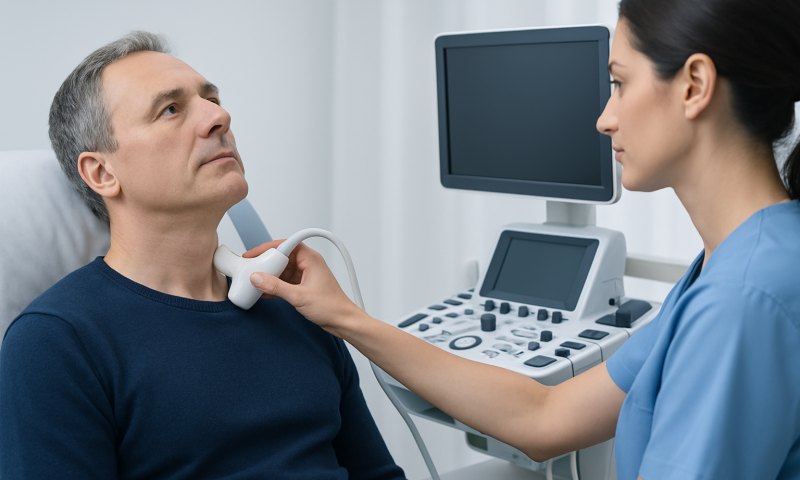
Carotid duplex ultrasound is the most common first test. It uses sound waves to show the artery structure and the speed of blood flow, helping estimate the degree of narrowing. Depending on the situation, a doctor may also order CT angiography or MR angiography to look more closely at the arteries supplying the brain and neck.
If a TIA or stroke is suspected, the workup may expand quickly to protect brain tissue and prevent another event. This can include brain imaging, heart rhythm testing, and blood tests to look for contributing conditions. For patients traveling from another country, it is helpful to keep copies of previous scans, medication lists, and reports, since those details can shorten the path to a clearer diagnosis.
Treatment Options
Treatment depends on how narrow the artery is, whether symptoms have occurred, and the person’s overall risk profile. For some patients, the best approach is careful medical management aimed at stabilizing plaque and lowering the chance of stroke. For others, a procedure may be recommended to improve blood flow more directly.
Medical treatment commonly focuses on reducing vascular risk. A doctor may recommend lifestyle changes and medicines to control blood pressure, cholesterol, and diabetes, along with antiplatelet therapy when appropriate. These measures do not remove plaque, but they can help reduce the chance of clot formation and slow further progression.
When narrowing is significant or symptoms have already appeared, procedures may be considered. Carotid endarterectomy removes plaque through a surgical incision in the neck. Carotid artery stenting uses a small mesh tube placed inside the artery to keep it open. The best option depends on anatomy, the degree of narrowing, surgical risk, and the person’s full medical picture.
Patients often have practical questions about recovery, especially if they are planning treatment away from home. The team should explain how long hospitalization may be needed, what follow-up imaging is expected, and how to coordinate return travel safely. A well-organized plan matters just as much as the procedure itself.
Prevention & Self-care
Carotid artery disease is closely tied to overall cardiovascular health, so prevention overlaps with heart-healthy living. The most useful habits are often the same ones that help protect the brain, heart, and kidneys at the same time. Small changes, practiced consistently, can make a meaningful difference.
Helpful self-care steps include:
- Stopping smoking and avoiding secondhand smoke
- Following a diet that supports healthy cholesterol and blood pressure
- Staying physically active as advised by a clinician
- Taking prescribed medicines consistently
- Managing diabetes, blood pressure, and cholesterol regularly
- Keeping follow-up appointments and repeat scans when recommended
For international patients, self-care also includes staying organized. Bringing a translated medication list, understanding warning signs before flying, and knowing which doctor to contact after returning home can reduce stress. If recovery or monitoring is needed after a procedure, clear written instructions are especially valuable when care continues across borders.
When to See a Doctor
Medical evaluation is important if a person has had any sudden neurologic symptoms, even if they resolved quickly. Brief weakness, facial droop, speech difficulty, or vision loss can signal a TIA and should be assessed urgently. The same applies if new symptoms develop after a known carotid artery diagnosis.
People with risk factors such as smoking, diabetes, high blood pressure, or high cholesterol may benefit from a review if they have never been checked for vascular disease or if a clinician has heard a neck bruit. A doctor can decide whether imaging is appropriate and whether preventive treatment should be started or adjusted.
For those seeking care abroad, timely evaluation can still be coordinated smoothly. Acibadem Health Point’s multidisciplinary specialists and JCI-accredited hospitals diagnose and treat carotid artery disease for international patients, helping them move from testing to treatment and follow-up with a coordinated plan.
Frequently asked questions
01What is the carotid artery?
The carotid arteries are the major blood vessels on each side of the neck that carry blood to the brain. They are essential for delivering oxygen and nutrients needed for normal brain function.
02What causes carotid artery disease most often?
The most common cause is atherosclerosis, which is the gradual buildup of plaque inside the artery wall. This can narrow the vessel and reduce blood flow to the brain.
03Can carotid artery disease exist without symptoms?
Yes. Many people have no warning signs until the narrowing is found on imaging or until a TIA or stroke occurs. That is why risk-factor control and appropriate screening can matter.
04How is carotid narrowing usually checked?
Carotid duplex ultrasound is often the first test because it is noninvasive and shows both the structure of the artery and blood-flow speed. CT angiography or MR angiography may be used for a more detailed view.
05Does every carotid artery blockage need surgery?
No. Some cases are managed with medicines and risk-factor control, especially when narrowing is mild or the person has no symptoms. A procedure may be considered when the narrowing is significant or symptoms have already occurred.
06What should someone do if stroke symptoms appear suddenly?
They should seek emergency medical care right away, even if the symptoms improve. Sudden weakness, speech trouble, facial droop, or vision loss can be signs of a TIA or stroke and need urgent evaluation.
This article is for general information only and is not a substitute for professional medical advice. Please consult a qualified doctor about your individual situation.
Joint and spine care in Turkey — expert assessment & treatment
JCI-accredited · board-certified surgeons · reply within 24h
Add us as a Preferred Source to see more of our trusted health content across Google Search, AI Overviews and Discover.