





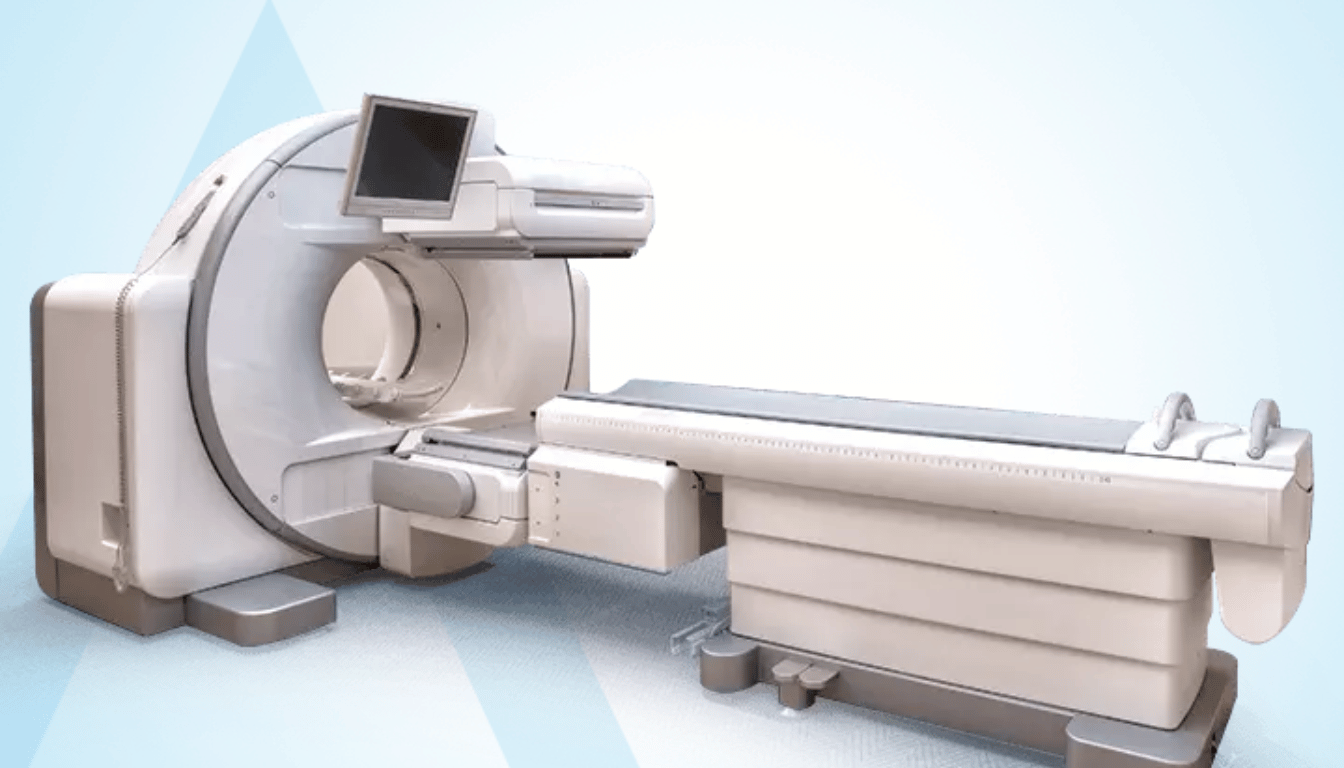
ACIBADEM Spect CT
ACIBADEM Spect CT is a leading edge in nuclear medicine imaging. It merges two powerful tools into one system. This gives doctors a clear view inside the body, helping them find health issues early.
The ACIBADEM facility is equipped with this advanced technology. It shows their commitment to excellent patient care. SPECT CT is essential in modern healthcare, providing detailed images for treatment plans.
ACIBADEM Spect CT can capture both function and structure. This opens new doors in medical diagnosis. It’s changing the face of healthcare.
Understanding ACIBADEM Spect CT Technology
SPECT CT technology combines nuclear medicine and CT scans. It gives detailed views of how organs work and their structure. This method is a strong tool for diagnosing many health issues.
Basic Principles of SPECT CT Imaging
SPECT CT uses special tracers to see how organs and tissues function. The CT part adds clear images of the body’s layout. Together, they give a full picture of the body’s structure and function.
Integration of Nuclear Medicine and CT Scanning
By mixing nuclear medicine and CT scans, doctors can pinpoint problems more accurately. This mix-up boosts diagnosis by showing both how the body works and its structure in one go.
Advanced Detection Systems and Components
Today’s SPECT CT machines have the latest detectors and software. These work together to make high-quality images. They also cut down on radiation exposure.
| Component | Function | Benefit |
|---|---|---|
| Gamma Camera | Detects gamma rays from radioactive tracers | Captures functional imaging data |
| CT Scanner | Produces X-ray images of body structures | Provides anatomical context |
| Image Fusion Software | Combines SPECT and CT data | Creates detailed 3D images for accurate diagnosis |
SPECT CT technology is a big leap in imaging. It combines nuclear medicine with CT scans. This gives doctors deep insights into how diseases work and how organs function.
The Evolution of Nuclear Medicine Imaging
Nuclear medicine imaging has grown a lot from the 1950s. It has changed how we diagnose and care for patients. At first, it used simple gamma cameras to find radioactive tracers in the body.
Then, in the 1970s, SPECT came along. It allowed for 3D images of where these tracers were. The 1990s brought PET, which was even better at showing what was happening at a molecular level.
The 2000s saw SPECT and CT combined. This was a big step forward. It mixed the best of both worlds, giving doctors more accurate information.
| Era | Technology | Key Advantage |
|---|---|---|
| 1950s-1960s | Basic Gamma Cameras | First 2D nuclear imaging |
| 1970s-1980s | SPECT | 3D imaging capabilities |
| 1990s | PET | Improved sensitivity |
| 2000s-Present | SPECT/CT | Fusion of functional and anatomical data |
Today, nuclear medicine imaging keeps getting better. New tech, like better detectors and algorithms, and new medicines are making it more precise. These changes help doctors find and treat diseases more accurately.
How SPECT CT Revolutionizes Diagnostic Accuracy
SPECT CT has changed medical imaging by combining two types of data. It brings together functional and anatomical information. This new technology helps doctors see a patient’s health in a detailed way.
Fusion Imaging Benefits
ACIBADEM Spect CT combines nuclear medicine scans with CT images. This mix lets doctors see how organs work and their structure at the same time. Patients get faster diagnoses and treatments that are more precise.
Enhanced Anatomical Precision
The CT part of SPECT CT gives detailed information about body structures. This detail helps doctors find exactly where problems are. They can tell similar-looking tissues apart more easily.
Improved Disease Localization
By combining SPECT’s functional imaging with CT’s detailed anatomy, disease location gets much better. This is key for catching diseases early and accurately. It’s vital for conditions like cancer and heart disease.
| Aspect | Traditional Imaging | SPECT CT |
|---|---|---|
| Image Type | Single modality | Fused functional and anatomical |
| Diagnostic Accuracy | Moderate | High |
| Disease Localization | Limited | Precise |
| Treatment Planning | General | Targeted |
Applications in Cardiovascular Diagnostics
SPECT CT is key in heart health checks. It uses advanced imaging to spot heart issues early. This helps doctors manage these problems well.
Myocardial Perfusion Studies
These studies look at blood flow to the heart. SPECT CT takes detailed images of the heart at rest and under stress. It finds blocked arteries that could lead to heart attacks.
Coronary Artery Assessment
SPECT CT scans show if coronary arteries are narrowed or blocked. This info helps doctors decide on treatments like stents or bypass surgery.
Cardiac Function Evaluation
Doctors use SPECT CT to check how well the heart pumps blood. It shows the heart’s size, movement, and how well it pumps. This helps diagnose heart failure and other heart issues.
| Cardiovascular Diagnostic Application | SPECT CT Advantage |
|---|---|
| Myocardial Perfusion | Detects reduced blood flow to heart muscle |
| Coronary Artery Assessment | Identifies narrowed or blocked arteries |
| Cardiac Function | Measures heart pumping efficiency |
SPECT CT has big advantages over old heart tests. It combines detailed images of the heart with its function. This gives doctors a full view of heart health. It helps make better treatment plans for heart disease patients.
Advanced Cancer Detection and Staging
SPECT CT is key in finding and staging cancer. It combines nuclear medicine and CT scans to show tumors and their spread clearly. This helps in spotting small lesions and tracking cancer growth.
In finding tumors, SPECT CT is a top choice. It uses nuclear medicine to light up active cells and CT scans for detailed views. This combo helps doctors find cancer early, leading to better treatment results.
For staging cancer, SPECT CT is unmatched. It can tell:
- Tumor size and location
- How far cancer has spread
- If lymph nodes are involved
- If cancer has reached distant parts
This detailed info helps doctors plan the best treatments. SPECT CT’s role in care is huge, leading to more focused treatments and better survival chances.
| Aspect | SPECT CT Advantage |
|---|---|
| Lesion Detection | Identifies tumors as small as 4-5 mm |
| Staging Accuracy | Up to 95% accurate in determining cancer stage |
| Treatment Planning | Guides precise radiotherapy and surgical interventions |
| Patient Outcomes | Can improve 5-year survival rates by up to 15% |
As imaging for cancer gets better, SPECT CT stays at the top. It offers detailed, functional, and anatomical views in one scan. This makes it a vital tool in fighting cancer.
Neurological Applications and Brain Imaging
SPECT CT is key in studying the brain and understanding neurological conditions. It gives doctors the tools they need to diagnose and treat patients effectively.
Brain Perfusion Analysis
SPECT CT shows how blood flows in the brain. It helps find areas with low blood flow, which could mean stroke, tumors, or other issues. Doctors can then target these areas for treatment.
Dementia Assessment
SPECT CT is great for diagnosing dementia. It can tell the difference between Alzheimer’s and other types of dementia. This helps doctors start treatment early.
Epilepsy Focus Detection
SPECT CT is precise in finding where seizures start in the brain. This is vital for surgery planning. It helps neurosurgeons know exactly where to operate, leading to better surgery results.
| Neurological Application | SPECT CT Benefit | Clinical Impact |
|---|---|---|
| Brain Perfusion Analysis | Reveals blood flow patterns | Identifies areas of reduced blood supply |
| Dementia Assessment | Shows characteristic activity patterns | Differentiates between dementia types |
| Epilepsy Focus Detection | Locates seizure foci precisely | Improves surgical planning and outcomes |
Comprehensive Bone Scan Capabilities
SPECT CT technology has changed bone scans in nuclear medicine imaging. It gives deep insights into bone health, better than old scans. SPECT CT scans combine function and anatomy, showing the full picture of bone conditions.
These scans are great at finding bone problems. They can spot fractures, infections, and cancer spread very well. For people with osteoporosis, arthritis, or sports injuries, SPECT CT scans help doctors make better treatment plans.
| Condition | SPECT CT Advantage |
|---|---|
| Fractures | Precise location and extent |
| Infections | Early detection and spread assessment |
| Metastases | Improved lesion detection and characterization |
| Osteoporosis | Detailed bone density analysis |
| Arthritis | Joint inflammation and damage evaluation |
SPECT CT in bone scans leads to more accurate diagnoses. This means doctors can make better treatment plans. It helps doctors take care of patients’ bone health better by giving them all the information they need.
Molecular Imaging Through Radioactive Tracers
SPECT CT imaging uses molecular imaging with radioactive tracers. These tracers help see how the body works. They are key in diagnosing and tracking many health issues.
Types of Radiopharmaceuticals
Radiopharmaceuticals are special compounds with radioactive parts. They are made for different parts of the body. For instance, technetium-99m is used for bone scans. Iodine-123 is often used for thyroid imaging.
Tracer Distribution Analysis
After injection, the tracers move through the body. Their path shows how organs work and if there are diseases. Advanced software makes detailed maps of these activities. This helps doctors find problems accurately.
Safety Protocols and Considerations
Working with radioactive materials needs careful safety steps. Patients get the right amount of dose to keep radiation low but image quality high. Medical teams follow strict rules for handling and disposing of these substances.
They also check equipment and train staff regularly. This keeps safety standards high.
Molecular imaging with radioactive tracers gives deep insights into the body. As technology gets better, SPECT CT will give even clearer and more precise information.
Patient Preparation and Procedure Guidelines
Getting ready for an ACIBADEM Spect CT scan is important for good results. Don’t eat or drink for 4-6 hours before. Also, talk to your doctor about any medicines you’re taking.
On the day of your test, wear comfy clothes without metal parts. First, you’ll get a small injection of a radioactive tracer. Then, you’ll wait 30-60 minutes for it to spread before the scan starts.
During the scan, you’ll lie on a table that moves through the scanner. The whole thing takes about 30-45 minutes. It’s painless, but you might feel a bit uncomfortable lying there for a long time.
After the scan, you can go back to your usual activities. Drink lots of water to help get rid of the tracer. Your doctor will get the results in a few days and talk about them with you later.
- Fast for 4-6 hours before the exam
- Wear comfortable clothes without metal
- Expect the procedure to last about an hour
- Stay hydrated after the scan
Radiation Safety and Dose Management
In nuclear medicine imaging, safety is key. SPECT CT combines radioactive tracers with precise imaging. But, it needs careful radiation exposure management. Hospitals follow strict protocols and use advanced technologies to keep patients and staff safe.
Exposure Control Measures
Imaging centers use top-notch equipment to cut down radiation doses. They use lead shielding, timed exposures, and optimized scan protocols. Staff wear dosimeters to track their exposure, making sure it’s safe.
Risk Assessment Protocols
Doctors check the risk and benefits before a SPECT CT scan. They look at the patient’s age, medical history, and why the scan is needed. This careful check makes sure the scan’s benefits are greater than the risks.
Patient Protection Standards
Hospitals follow the ALARA principle – As Low As Reasonably Achievable – with radioactive tracers. They adjust doses based on patient size and scan type. They take extra care with children and pregnant women.
| Protection Measure | Description | Impact |
|---|---|---|
| Dose Optimization | Tailoring tracer amounts to patient needs | Reduces unnecessary exposure |
| Advanced Detectors | High-sensitivity imaging equipment | Allows for lower radiation doses |
| Staff Training | Regular safety education programs | Ensures proper handling and protocols |
By using these measures, nuclear medicine imaging places a high value on safety. It also provides vital diagnostic information.
Clinical Benefits and Treatment Planning
SPECT CT technology offers big advantages in patient care. It uses advanced imaging to help doctors make better decisions. This is true in many areas, including cancer treatment.
In cancer care, SPECT CT is very important. It helps doctors find tumors and see how they spread. This information lets them use treatments that are more precise, which can make treatments safer and more effective.
For heart patients, SPECT CT gives doctors important details. They can see how blood flows and how well the heart works. This helps them decide on the best treatments, like angioplasty or bypass surgery, for each patient.
Neurological conditions also get a boost from SPECT CT. It helps doctors map brain activity. This is useful for diagnosing conditions like epilepsy and dementia. It helps doctors choose the right treatments and track how the disease changes over time.
| Medical Field | SPECT CT Benefits | Impact on Treatment |
|---|---|---|
| Oncology | Precise tumor localization | Targeted radiation therapy |
| Cardiology | Detailed heart function analysis | Personalized surgical planning |
| Neurology | Brain activity mapping | Tailored medication strategies |
SPECT CT combines anatomy and function to help doctors make treatment plans that fit each patient. This leads to better care and results in many medical fields.
Latest Technological Advancements in SPECT CT
ACIBADEM Spect CT is leading the way in molecular imaging. New technologies have made diagnosis more accurate and comfortable for patients. These changes cover software, hardware, and how images are processed.
Software Innovations
New software algorithms make image reconstruction better. They cut down scan times and improve image quality. Doctors can now spot small changes in tissue function early on.
This leads to quicker disease detection and better treatment plans. It’s a big step forward in healthcare.
Hardware Improvements
New detectors in SPECT CT systems are more sensitive. This means scans are faster and less uncomfortable for patients. Improved collimators also make images clearer and lower radiation doses.
These upgrades result in sharper images and more accurate diagnoses. It’s a win for both doctors and patients.
Image Processing Enhancements
Advanced processing techniques create clearer, more detailed images. They reduce noise and artifacts, showing fine structures better. Color-coded overlays and 3D rendering help doctors see complex anatomical relationships.
| Advancement | Benefit |
|---|---|
| Iterative Reconstruction | Reduced radiation dose, improved image quality |
| Solid-State Detectors | Higher sensitivity, better energy resolution |
| AI-Assisted Analysis | Faster interpretation, enhanced diagnostic accuracy |
These technological leaps in ACIBADEM Spect CT lead to more precise diagnoses and tailored treatments. Patients enjoy shorter scan times and lower radiation exposure. Doctors have powerful tools for better care.
Quality Assurance and Image Optimization
Quality assurance is key in nuclear medicine imaging for accurate diagnoses. SPECT CT systems are checked often to keep standards high. Technologists follow strict rules for patient setup and scan settings. These steps are essential for clear, detailed images.
Image optimization is vital in functional imaging. Advanced algorithms improve image quality. Radiologists adjust these settings to focus on specific areas. This makes small lesions or subtle issues more visible.
Staff training is ongoing to keep up with new techniques. Regular workshops cover the latest in SPECT CT technology. This ensures imaging professionals can use these systems to their fullest.
| Quality Assurance Measure | Impact on Image Quality |
|---|---|
| Daily system calibration | Ensures consistent image output |
| Patient positioning protocols | Reduces motion artifacts |
| Optimized scan parameters | Enhances image resolution |
| Advanced reconstruction algorithms | Improves lesion detection |
By focusing on these quality measures, healthcare providers offer top-notch nuclear medicine imaging. This dedication to excellence leads to more accurate diagnoses and better care for patients.
Future Perspectives in Nuclear Medicine Imaging
Nuclear medicine imaging is on the verge of big changes. Scientists are developing new radiopharmaceuticals. These will make molecular imaging even more precise.
Artificial intelligence is set to revolutionize SPECT CT scans. Smart computers will help doctors spot tiny details they might miss. This could lead to faster and more accurate diagnoses for patients.
Research teams are pushing the limits of SPECT CT technology. They’re creating machines that can take clearer pictures while using less radiation. This means safer scans for patients and better results for doctors.
As nuclear medicine imaging evolves, it promises to transform healthcare. From finding cancer to studying brain activity, these tools will give doctors powerful new ways to help patients. The future of medical imaging looks bright, with SPECT CT leading the way.
FAQ
What is ACIBADEM Spect CT?
ACIBADEM Spect CT is a cutting-edge medical imaging tool. It combines Single Photon Emission Computed Tomography (SPECT) with Computed Tomography (CT). This gives detailed views of both how the body works and its structure in one scan.
How does SPECT CT differ from traditional imaging methods?
SPECT CT is more accurate than old methods like X-rays or CT scans alone. It mixes SPECT’s functional images with CT’s detailed views. This gives a fuller picture than traditional scans.
What are the main applications of SPECT CT?
SPECT CT is used in many areas. It helps with heart health, finds and tracks cancer, studies the brain, and does bone scans. It’s also used in molecular imaging.
Is SPECT CT safe?
Yes, SPECT CT is safe. It uses a little radiation, but safety rules and dose control keep risks low. This ensures patients are protected.
How long does a SPECT CT scan take?
Scan times vary. They can be from 30 minutes to several hours. This depends on the study being done.
Do I need to prepare for a SPECT CT scan?
Yes, you might need to prepare. Your doctor will tell you what to do. This could mean eating certain foods, taking or avoiding medicines, or not doing certain activities.
What are radioactive tracers used in SPECT CT?
Radioactive tracers, or radiopharmaceuticals, are used. They are substances that give off small amounts of radiation. They help highlight certain parts of the body, allowing for detailed images of how it works.
Can SPECT CT detect early-stage cancers?
Yes, SPECT CT is great at finding cancers early. It combines images to spot small tumors and changes in tissue that other scans might miss.
How does SPECT CT aid in cardiovascular diagnostics?
SPECT CT is key for heart health checks. It shows how well the heart works, blood flow, and artery health. It’s perfect for studying the heart’s blood flow and function.
What advancements have been made in SPECT CT technology recently?
New SPECT CT tech has better detectors, faster scans, and new image tools. These updates mean clearer images, less radiation, and more uses for the tech.