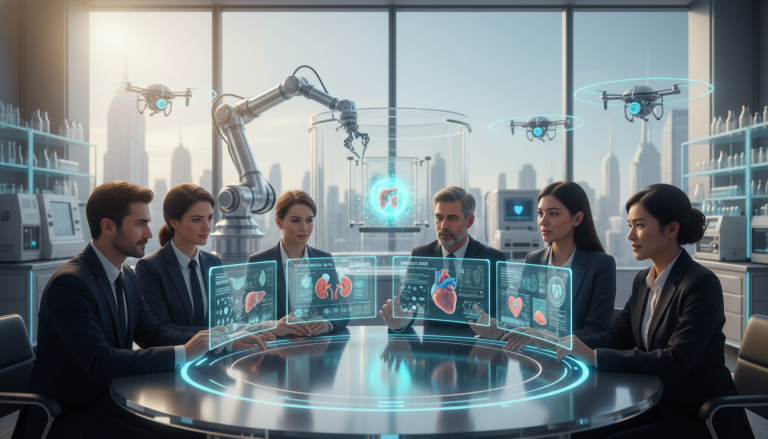

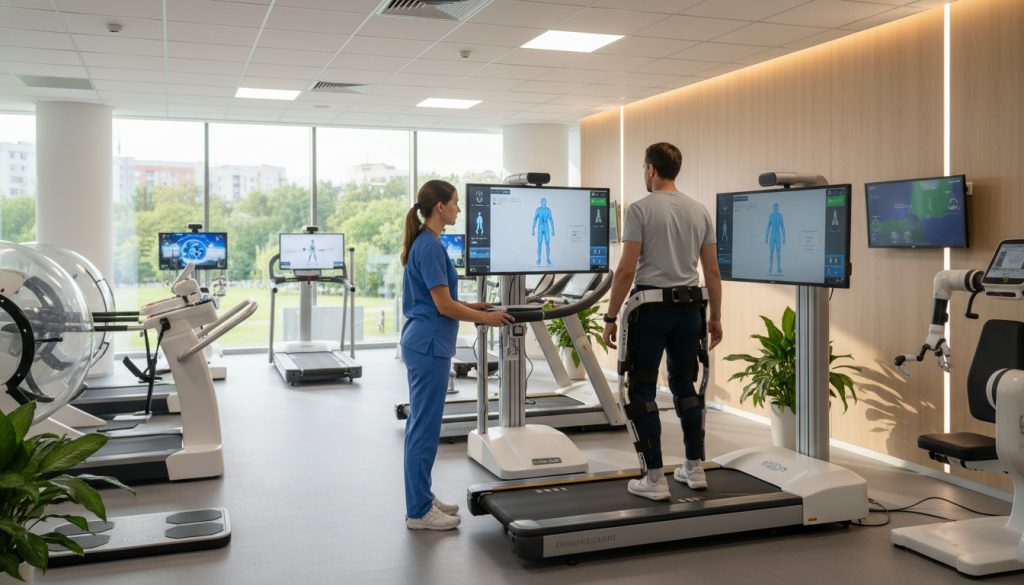
Modern medicine is changing fast with new digital tools. At our place, we focus on keeping patients safe and giving them top-notch recovery treatment. We use the latest tech to make sure each person gets care that’s both personal and meets the world’s best medical standards.
We put the latest tech into every neuro rehabilitation plan. We know catching problems early is key to success. That’s why finding neuropathy early is a big part of what we do. This helps our experts create support plans that help people move better.
We think mixing human skills with robotic help makes healing safer. Our team works hard to create lasting healthcare solutions. We aim to keep raising the bar for quality and trust in healthcare worldwide.
Key Takeaways
- Integration of digital tools enhances patient safety and clinical outcomes.
- Personalized care plans are essential for effective recovery treatment.
- Early diagnostic screening significantly improves long-term mobility results.
- Advanced technology supports both patients and medical professionals.
- Our facility maintains international standards for excellence in care.
The Evolution of Neuro Rehabilitation in the Modern Era
Physical therapy has changed a lot over the years. It used to be based on simple exercises and manual techniques. Now, it’s all about using technology and data to help patients.
Today, doctors have tools like high-resolution imaging and biometric tracking. These tools help them see and track patient progress in ways they couldn’t before. This means they can find and fix specific problems more accurately.
Now, neuro rehabilitation focuses on what each patient needs. Instead of one-size-fits-all plans, doctors use feedback to make treatments better. This way, patients get the best care possible.
Smart technology has changed healthcare a lot. We’re always looking for new ways to help patients. By combining technology and human skills, we’re making a big difference in how people move and live.
Understanding the Mechanics of Advanced Rehabilitation
The foundation of modern recovery is built on biomechanical analysis and neurological science. Our teams study how the body moves to create highly effective treatment pathways. This careful method ensures every step is based on data, not guesses.
We combine human physiology with mechanical support for lasting patient success. Our experts look at gait, joint movement, and muscle activity to find neurological issues. This helps us tailor therapy to fix the root of mobility problems.
Technology plays a big role in our care. Advanced rehabilitation tools give patients instant feedback, speeding up recovery. Our focus on science means patients get the best accurate and responsive support today.
| Mechanical Principle | Physiological Goal | Clinical Outcome |
|---|---|---|
| Biomechanical Analysis | Identify Deficits | Precision Targeting |
| Neuro-Feedback Loops | Enhance Plasticity | Faster Recovery |
| Kinetic Load Balancing | Restore Symmetry | Improved Mobility |
| Adaptive Resistance | Muscle Re-education | Functional Strength |
Our approach mixes old-school therapy with new tech. We keep working to improve these methods. Our goal is to help every patient reach their best level of independence. With consistent clinical excellence, we lead the way in advanced rehabilitation.
Robot Assisted Therapy: Precision in Motion
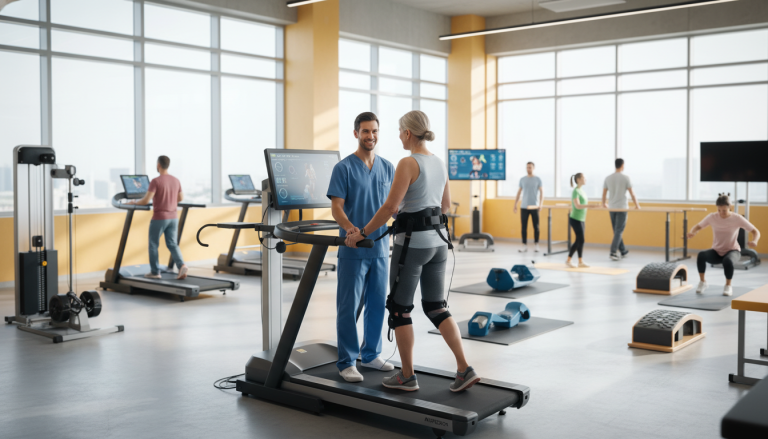
Robot assisted therapy is a big step forward in neurological rehabilitation. It brings advanced devices into our care plans. This helps patients follow a structured and highly effective path to recovery.
This technology is key to our modern care. It ensures every patient gets the best care possible.
These systems are great because they offer repetitive, intense movements. This is essential for stimulating neural plasticity. It lets the brain make new connections and recover movement better than old methods.
We focus on precision in every robotic treatment. We know each patient’s journey is unique. So, we adjust the therapy to fit their specific goals. This personalized approach makes each session more effective.
Robot assisted therapy helps us achieve our clinical goals. We keep improving our methods to stay safe and effective. Our goal is to help patients gain independence and improve their lives with advanced technological support.
Enhancing Balance Therapy Through Virtual Reality
Advanced simulation technology is changing balance therapy for the better. Virtual reality creates a safe space for people to practice balance and coordination. This is without the risks of traditional therapy settings.
This method lets doctors watch how patients are doing in real-time. They can also make the challenges harder or easier. Patients often say they feel more involved when they see their progress in digital scenarios.
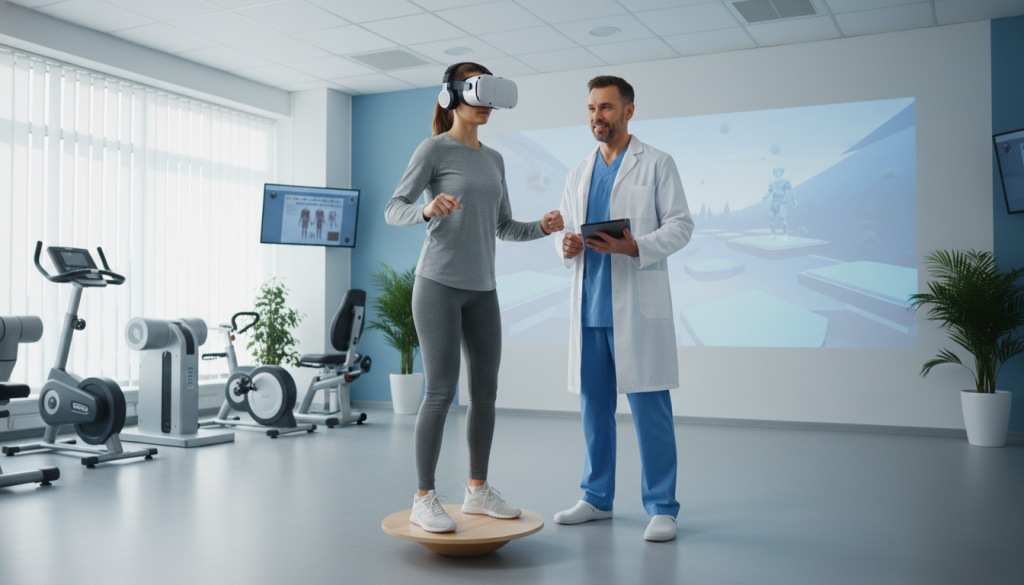
The big plus of this tech is it makes therapy safer. It lets patients try new things without worrying about falling. This builds their confidence and helps them get better faster.
Here’s a comparison of old-school therapy and the new tech:
| Feature | Traditional Therapy | VR-Enhanced Balance Therapy |
|---|---|---|
| Safety Level | Moderate | High (Controlled Simulation) |
| Patient Engagement | Standard | High (Immersive Experience) |
| Data Tracking | Manual Observation | Automated Precision Metrics |
| Recovery Speed | Baseline | Accelerated |
We’re all about giving patients the best balance therapy out there. With virtual reality, we’re making therapy better and more effective. This helps patients stay mobile for a long time.
The Impact of Technology on Stroke Recovery
Our institution uses the latest technology to improve stroke recovery programs. We use digital health tools to create a more responsive environment. This helps us meet the unique needs of every patient.
Early intervention is key to successful rehabilitation. Our advanced monitoring systems let us track progress in real-time. We can then adjust treatment plans right away. This approach leads to better outcomes for our patients worldwide.
We think a team effort is vital for long-term success. Our programs mix physical therapy with cognitive exercises. We use data to guide our medical team. This mix of human skill and digital innovation helps patients make lasting health gains.
| Feature | Traditional Methods | Tech-Enabled Recovery |
|---|---|---|
| Monitoring | Manual observation | Real-time digital tracking |
| Intervention | Delayed adjustments | Immediate, data-backed changes |
| Stroke Recovery | Standardized protocols | Highly personalized plans |
| Patient Data | Paper-based records | Integrated cloud analytics |
Our move to tech-enabled stroke recovery shows our commitment to excellence. These advanced tools help patients regain their independence with more confidence. We’re always working to improve our tools to meet the needs of modern neurological rehabilitation.
Integrating Orthopedic Rehab with Neurological Support
We combine orthopedic rehab with neurological support in a unique way. We know that patients often face many challenges after injuries or surgeries. By linking these two areas, we help both physical and neural recovery happen together.
Multidisciplinary teams are key to our approach. Our experts work together every day. They watch how muscle and nerve healing affect each other. This teamwork helps avoid setbacks and speeds up recovery.
Good orthopedic rehab means understanding how the body adapts to nerve damage. When a patient strengthens a limb, our therapists adjust the effort to protect the nerves. This balance is vital for lasting independence.
| Recovery Feature | Traditional Model | Integrated Model |
|---|---|---|
| Team Coordination | Siloed Departments | Unified Multidisciplinary |
| Treatment Focus | Isolated Systems | Holistic Synergy |
| Orthopedic Rehab | Standardized Protocols | Neurologically Informed |
| Patient Outcome | Variable Progress | Optimized Recovery |
We’re dedicated to giving comprehensive care that meets all patient needs. By merging these fields, we make recovery safer and more predictable. Our goal is to ensure every patient gets the best care based on the latest research.
Patient Mobility and the Rise of Smart Monitoring
Improving patient mobility needs a mix of real-time data and medical knowledge. Our place uses advanced smart monitoring systems to track physical progress accurately. These tools help us monitor every movement for a safer recovery.
Wearable sensors connect the patient with our medical team. They collect detailed data on gait, balance, and movement during daily tasks. This continuous stream of information helps our experts understand each patient’s recovery path.
Data analytics are key in turning raw data into useful insights. When we watch patient mobility, we look for small changes or risks. This way, our team can adjust treatment plans to keep therapy safe and effective.
Our dedication to using technology for better care is our main goal. By using performance metrics, we offer a highly personalized experience that meets each person’s needs. Smart monitoring is a big step forward in managing and improving patient mobility for us.
Safety First: Mitigating Risks in Intensive Recovery
Safety is more than a rule; it’s our core promise to our patients. We follow strict safety protocols in every intensive recovery session. This way, patients can reach their limits without risking their health.
We follow all rules for using advanced medical tools. Each device gets frequent checks to work perfectly. This keeps our therapy area safe and reliable.
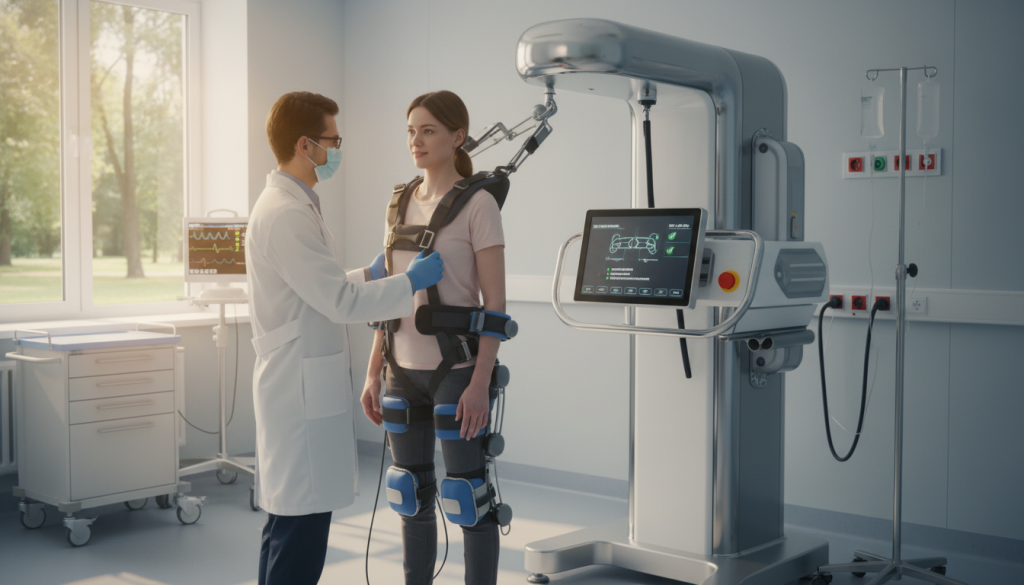
We aim for a mix of challenge and safety. Our teams watch patients closely, making changes as needed. This data-driven approach makes sure every step is safe and effective.
Here’s a list of key safety steps we take every day:
| Safety Category | Implementation Strategy | Primary Benefit |
|---|---|---|
| Equipment Integrity | Daily diagnostic testing | Prevents mechanical failure |
| Clinical Monitoring | Real-time vital sign tracking | Reduces physical strain |
| Staff Training | Bi-annual emergency drills | Ensures rapid response |
| Environment Control | Sanitized, hazard-free zones | Eliminates fall risks |
Our dedication to safety is key to who we are. We keep improving our methods with new tech. By focusing on patient protection, we create a safe place for healing.
Personalized Recovery Treatment Plans
Every patient’s journey is unique, needing a recovery treatment plan that changes with their progress. We move away from standard plans to give each person care that fits their medical history and goals. This focus on precision helps them reach long-term health more effectively.
Our method is based on data-driven customization for the best results. We use advanced tech to track changes in the body in real-time. This lets our teams adjust treatments as needed. It keeps the therapy at the right level for the patient’s abilities.
Our mix of clinical knowledge and modern tools offers a bespoke care experience like no other. Our experts use complex health data to create a detailed recovery treatment plan. It meets both immediate needs and future goals for independence. We think that when tech and human insight work together, patients can reach their best recovery.
The Psychological Benefits of Tech-Enabled Mobility
We focus on the whole person, not just their physical health. When people start neuro recovery, they often feel overwhelmed. We use advanced tech to give them a sense of control and hope.
Turning therapy into games makes it fun and interactive. Patients find themselves more motivated as they tackle challenges. This dynamic approach makes therapy less boring.
Seeing their progress helps patients feel a sense of accomplishment. Real-time data shows them how far they’ve come. This makes them feel more connected to their care team.
We think a positive mind is key to good health. When patients see their own data, they stick to their plans better. This emotional resilience is a big part of our strategy for success.
We aim to improve both body and mind. By focusing on both, we’re setting new standards in neuro recovery. Our goal is to give every patient the support they need on their journey to mobility.
Overcoming Barriers to Advanced Mobility Treatment
Getting top-notch medical care shouldn’t be hard because of where you live or how far you are from a hospital. Many patients face big challenges when looking for mobility treatment. These include tough insurance rules and being far from the best medical centers.
We work hard to remove these barriers for our patients. We focus on making sure everyone can get the care they need, no matter who they are or where they live. This is what we call equitable access.
We’ve made our referral process super easy for patients. This means less waiting and quicker starts in advanced rehabilitation programs. It’s all about making things smoother for you.
We also reach out to people all over the world. We work with international partners to share knowledge and help more people. This way, mobility treatment isn’t just for some; it’s for everyone.
We’re all about doing great work and making sure everyone is included. We keep improving how we work to give you the best comprehensive support for advanced rehabilitation. We’re here for you, every step of the way.
Future Trends in Neuro Recovery Technology
Innovation is key as we move forward in medical progress. We aim to lead in neuro rehabilitation by focusing on patient results and long-term health. Our goal is to keep our methods up-to-date with the latest science.
We keep investing in research and development to stay ahead. This helps us make neuro recovery better and easier to get. We think the future of medicine is combining data and caring for patients.
We’re working hard to build a strong healthcare system. We’re getting ready for future patient needs by updating our facilities with advanced digital monitoring tools. This ensures our neuro rehabilitation programs can handle tough medical issues.
Looking to the future, we’re all about using technology to help patients heal. We’re making our neuro recovery methods faster and better for everyone. Our team is excited to set a high standard that will help communities for years!
Advancing the Future of Patient-Centered Mobility Support
Modern healthcare needs a shift to integrated systems that focus on each person’s journey. Our vision is to blend advanced robotics with deep empathy to change recovery standards. We aim to improve patient mobility through innovation and scientific research.
We’re committed to more than just current success. We invest in lasting infrastructure to keep mobility treatment available for all. Our goal is to create a culture of excellence, empowering medical teams worldwide to make a difference.
Check out our resources on patient mobility to learn more about our approach. Our team works hard to improve safety and effectiveness in mobility treatment. We’re here to support your journey toward better health and freedom!
FAQ
Q: How does advanced rehabilitation technology improve patient outcomes?
A: Advanced tools like Hocoma’s Lokomat or Tyromotion systems bring precision to mobility treatment. This focus on excellence leads to safer, more effective treatments. It helps patients recover faster and more safely.
Q: What distinguishes robot assisted therapy from traditional physical therapy?
A: Robot assisted therapy uses high-tech devices for precise, repetitive movements. This is key for neuro recovery. It ensures each treatment is tailored to the patient’s needs, boosting neural plasticity.
Q: How does technology impact stroke recovery?
A: Technology helps with early intervention and tracking progress. Our stroke recovery programs use smart sensors for real-time monitoring. This leads to better outcomes and confidence for our patients.
Q: How is balance therapy enhanced through virtual reality environments?
A: Virtual reality simulations create a safe space for patients to practice balance. It reduces fall risks and boosts confidence. Patients face real-world challenges under expert supervision.
Q: Can orthopedic rehab be integrated with specialized neurological support?
A: Yes. We combine orthopedic rehab with neuro recovery for patients with complex conditions. Our teams work together to heal muscles and brains, providing a complete recovery path.
Q: What role does smart monitoring play in managing patient mobility?
A: Wearable sensors and data analytics track patient mobility in real-time. This allows our staff to adjust treatment plans for safety and effectiveness. It ensures every movement is safe and effective.
Q: How does the institution ensure safety during intensive recovery treatment sessions?
A: Safety is our top priority. We follow strict standards and use advanced technology to reduce risks. This protects patients while they push their limits during treatment.
Q: How are recovery treatment plans personalized for each individual?
A: We create personalized plans using advanced diagnostics and clinical expertise. We analyze data and medical history to tailor treatment to each patient’s goals. This ensures optimal care and independence.
Q: What are the psychological benefits of using tech-enabled neuro recovery tools?
A: Tech tools often include gamified elements that boost motivation. Seeing progress data improves mental health and encourages perseverance. Our approach focuses on both physical and emotional recovery.
Q: What future trends are emerging in the field of mobility treatment?
A: The future includes more artificial intelligence and sustainable healthcare. We invest in research to bring new tools to our patients. This keeps us at the forefront of medical innovation.