
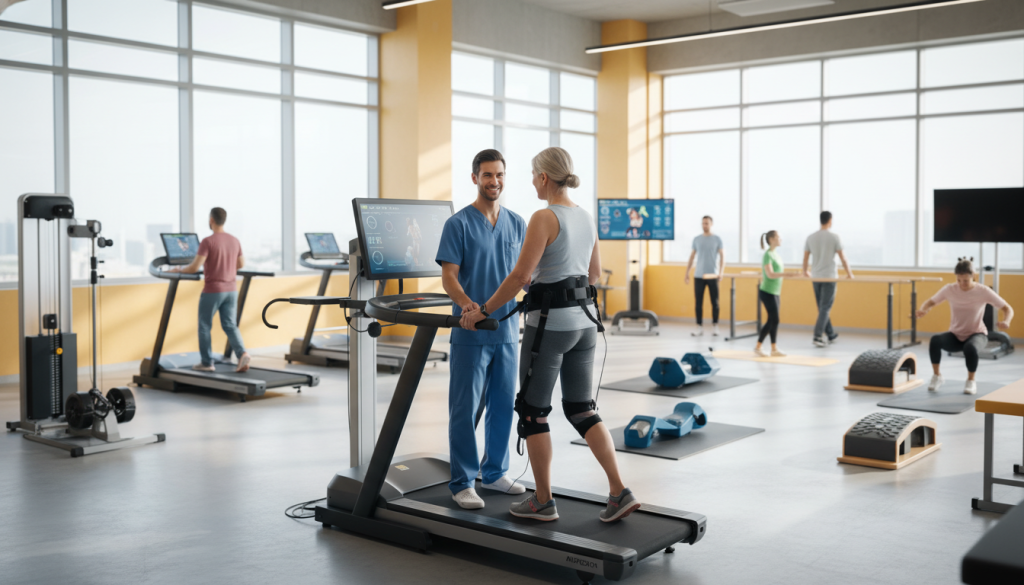
Modern healthcare is changing fast with new digital tools. Advanced physiotherapy solutions are making care more precise. This change lets us use data to guide recovery in new ways.
We focus on making sure each patient gets a care plan that fits them perfectly. We think innovation is the key to healing. With cutting-edge technology, we offer walking therapy that meets top medical standards.
This new tech lets our experts track progress very closely. Our advanced physiotherapy approach creates lasting healthcare solutions. We aim to blend technology and human skill for better patient care.
Key Takeaways
- Integration of digital tools enhances the precision of rehabilitation programs.
- Personalized care plans address the specific physiological requirements of each patient.
- Institutional commitment to innovation drives superior clinical outcomes.
- Modern walking therapy utilizes data to track and improve patient mobility.
- Sustainable healthcare infrastructure ensures long-term support for future generations.
The Evolution of Advanced Physiotherapy in the United States
Advanced physiotherapy has become key for patients with tough mobility issues across the country. Over the years, it has grown from simple manual treatments to advanced, data-focused methods. This change shows a big push for better patient results through precision medicine and new ideas in healthcare.
In the U.S., healthcare now focuses on proven methods that use the latest technology. This move away from one-size-fits-all plans lets doctors create care plans that match each patient’s needs. This way, every patient gets care that’s both scientifically backed and caring.
Keeping care top-notch means always learning and growing. Our places of learning know that medicine is always changing. By keeping up with new studies and training, our team uses the newest tools in advanced physiotherapy. This helps us serve our community better.
The table below shows how care has moved from old ways to new, tech-based methods in the U.S.:
| Methodology | Traditional Approach | Modern Standard |
|---|---|---|
| Assessment | Subjective Observation | Digital Gait Analysis |
| Treatment | Manual Exercises | Robotic-Assisted Therapy |
| Data Tracking | Paper Records | Real-Time Analytics |
The move to make advanced physiotherapy a standard part of care is a big step forward. We’re all about creating a place where new ideas meet clinical excellence. By going with these changes, we help our patients get back to moving freely and living independently.
Understanding the Role of Exoskeleton Rehabilitation in Modern Clinics
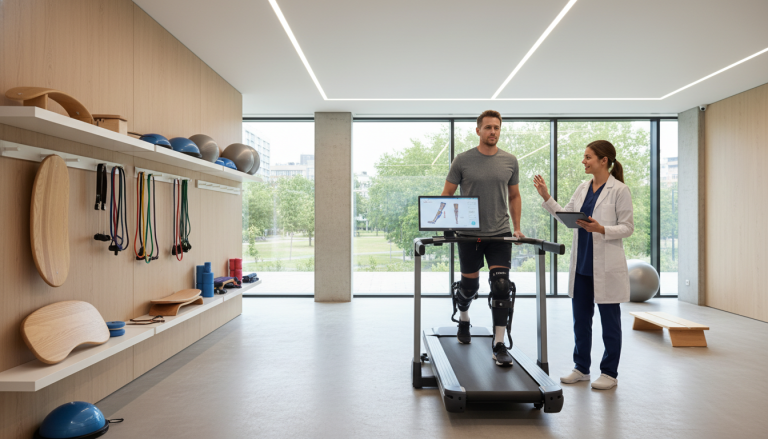
Exoskeleton rehabilitation is a big step forward in helping people move again. These advanced robotic systems are key for those with serious brain or body injuries. They offer precise mechanical support for activities that were once out of reach.
This tech’s main benefit is in high-intensity gait training. Old therapy methods can’t match the needed repetition for brain healing. Our robots make sure every step is done right, with optimal biomechanical alignment.
We’re all in on using this tech to improve patient care. With exoskeleton rehab, our teams can achieve world-class outcomes. Our focus on the latest engineering keeps us leading in medical innovation.
Integrating AI Therapy for Real-Time Gait Analysis
The world of physical recovery is changing fast. We’re using advanced tools to help patients get better. AI therapy brings a new level of precision to our care.
This technology lets our experts see how patients move in detail. It’s a big step forward.
We use smart algorithms to quickly analyze complex data. These systems spot small changes in how patients walk and stand. This immediate feedback helps our team make better choices for recovery.
This tech is powerful because it offers dynamic, responsive care. It changes treatment plans as needed, making care more personal. Every patient gets a plan that grows with them.
We’re all about using these digital tools to help people move better. They help us turn data into action, making care safer and more effective. This mix of human skill and AI is shaping the future of physiotherapy.
Personalized Care Strategies for Stroke Recovery
Effective stroke recovery needs a personalized plan. It combines new technology with caring clinical care. Every patient faces challenges in their own way. So, we create special rehab plans for each one.
Starting therapy early is key to success. Specialized therapy soon after a stroke helps the brain heal. It lets the brain make new paths, which helps regain lost skills.
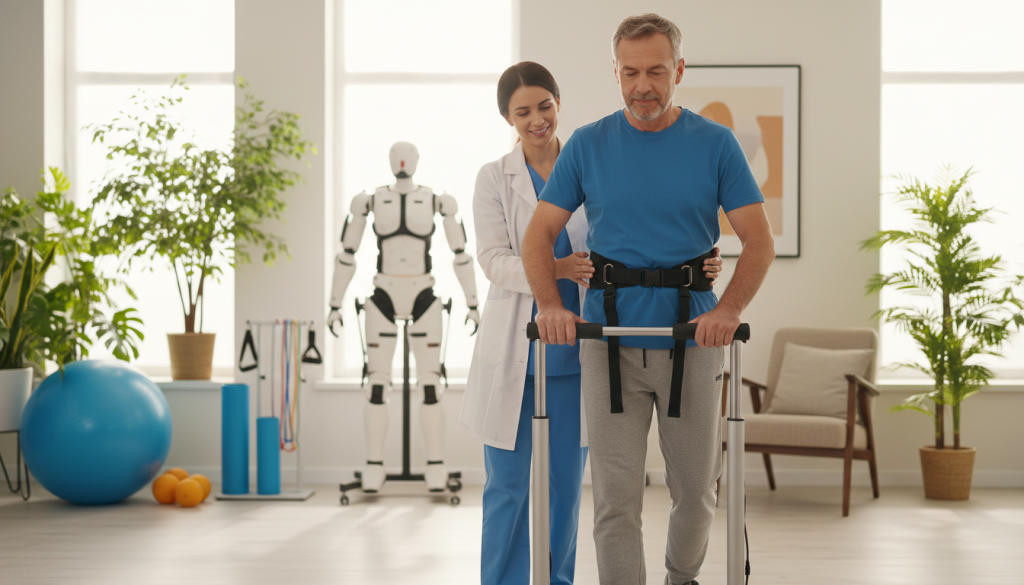
We use the latest adaptive technologies in stroke recovery. These tools give feedback in real time. This makes sure every movement is helpful. Our team uses science and cares deeply about patient comfort and happiness.
Here’s how we approach different stages of rehab. We make sure care is focused and consistent all the way through.
| Recovery Phase | Primary Focus | Technology Utilized |
|---|---|---|
| Acute Phase | Stabilization and Early Mobility | Passive Assistive Devices |
| Sub-Acute Phase | Neuroplasticity Stimulation | Robotic Gait Trainers |
| Chronic Phase | Functional Independence | AI-Driven Wearables |
We believe in a partnership between the doctor and the patient. Using data, we keep improving our care. This helps patients get the best results on their recovery journey.
Advancements in Spinal Rehab and Mobility Restoration
Recent breakthroughs in spinal rehab are changing how we help people with severe physical challenges. By mixing old-school clinical skills with new tech, medical teams now offer more targeted care. This means patients get help that fits their unique needs.
Our approach is built on using special therapy methods. We combine deep manual therapy with cutting-edge tech. This way, we can strengthen muscles and fix nerve paths for better movement.
Good spinal rehab needs a strong support system for lasting success. We use robots and physical exercises to help patients live more independently. Our aim is to make sure everyone gets a fair shot at moving freely again.
The main goal of modern spinal rehab is to improve life quality for our patients. We aim for results that let people move around with ease. Our commitment to top-notch care keeps us exploring new ways to help people.
The Impact of Advanced Rehabilitation on Sports Performance
Advanced rehabilitation is now key for athletes, not just for getting better after injuries. It helps athletes reach new heights in their performance. We give them the tools to beat their past records.
Using advanced tech, we understand how athletes move better. This makes every action more efficient. It lowers injury risks and boosts power in training.
Today’s sports rehab uses data to track how athletes recover. We look at how they walk and use their muscles. This lets us make recovery plans that work fast. Athletes get back to their best with unparalleled precision.
We want everyone to have access to top-notch care, not just pros. Our goal is to help all athletes reach their full ability. We mix medical care with sports strategies to help everyone move better.
The growth of sports rehab shows our goal to offer top healthcare. We mix medical skill with sports strategies. This lets everyone move with confidence and strength.
Data-Driven Decision Making in the Rehabilitation Center
At the heart of every successful rehabilitation center is a deep commitment to data analysis and clinical precision. We see recovery as a science, not just a guess. By tracking patient data, our teams understand how each person reacts to therapy.
This method helps us make treatment plans more precise. We watch how patients move, stretch, and use their muscles in real-time. This lets us tweak therapy to help them recover faster. Every session is designed to be effective and meaningful for the patient.
We believe in being open with our patients. We share their recovery progress with them, making them feel in control. For more information on health after treatment, we offer resources like kontrola posle lecenja vas put to support long-term health.
Our rehabilitation center uses advanced software to collect and analyze data. This helps our experts spot patterns in patient data. We use this knowledge to improve care while keeping it personal. By focusing on data, we aim to make every step towards recovery count.
Overcoming Barriers to Adopting New Rehab Technology
Introducing new rehab technology needs a mix of quick innovation and strict rules. Many places face big challenges when trying to update their setup. These issues include high costs, training needs, and fitting new tech with current records.
We tackle these problems by focusing on long-term patient outcomes. We do detailed studies to make sure new tools meet our safety standards. This careful method helps us avoid risks and get the most from our investments.
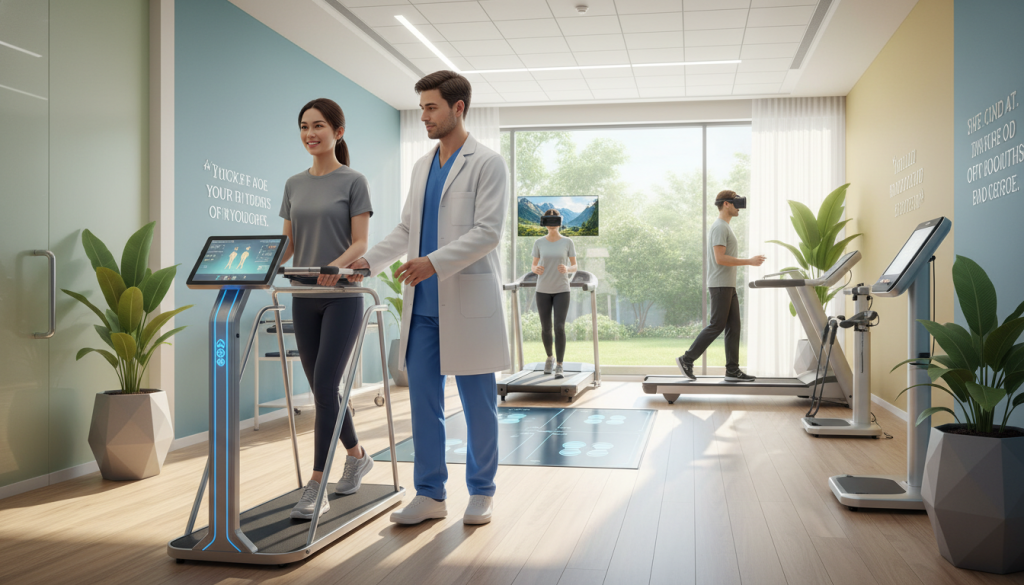
We always aim to improve and make things better. We think rehab technology should help our therapists, not make things harder for them. We listen to our staff and team to spot problems early and fix them before they affect patients.
The table below shows how we tackle common adoption barriers in healthcare:
| Barrier Type | Traditional Approach | Our Proactive Strategy |
|---|---|---|
| Financial Planning | Reactive budget allocation | Multi-year investment cycles |
| Staff Training | Ad-hoc workshops | Continuous certification programs |
| Regulatory Compliance | Manual oversight | Automated digital monitoring |
| System Integration | Isolated software silos | Unified data architecture |
By sticking to this disciplined framework, we keep our facilities up-to-date with the best tools. Our goal is to make sure rehab technology helps every patient on their path to recovery. We’re committed to a future where new ideas and safety go hand in hand.
Patient-Centered Design and the Future of Mobility
Modern healthcare is moving towards a model where patient mobility is key. We believe that real progress in medical engineering goes beyond just power or complex algorithms. It’s about focusing on the human experience, making sure every device meets the needs of the individual.
We believe technology should be easy to use, comfortable, and supportive. By putting the user first, we create solutions that meet both clinical needs and daily life. This way, we help patients on their recovery journey with prakticni saveti za negu bolesnika.
Innovation is only as valuable as the comfort it provides to those who need it most. We listen to feedback from patients and doctors to improve our designs. This ensures that patient mobility is smooth and respectful. Our designs are both advanced and compassionate.
We’re committed to a future where technology is a natural part of us. By staying true to our patient-centered design ethos, we make a real difference. We focus on improving patient mobility and invest in tools that make it happen for everyone.
Sustainability and Healthcare Excellence in Physiotherapy
We aim for a future where medical care and protecting the environment go hand in hand. We take our duty to create green spaces seriously. These spaces help our patients and the planet for years to come. By using energy-saving tech, we make sure advanced rehabilitation is both good for you and the planet.
We think that giving top-notch medical care and protecting the environment are the same goal. Our efforts cover everything from cutting down on waste to saving energy in our therapy rooms. This way, we offer exceptional care and keep our carbon footprint low.
Patients looking for special help, like fibromialgija terapije i tretmani for better health, can count on us. We always work to improve our methods. This ensures our advanced rehabilitation meets the world’s best standards. Our focus on being green keeps us at the forefront of healthcare, caring for both our patients and the environment!
Collaborative Care Models Between Therapists and Machines
The future of physical therapy is about working together. Skilled clinicians and advanced robotics will change how we help patients. By using rehab technology, we can make every movement more precise.
This teamwork means patients get better training than before. It’s hard to get this level of care from just manual therapy.
Machines help therapists by doing the hard work. They focus on the patient’s special needs. This way, therapists can use their time better.
The human touch is key in recovery. Therapists bring empathy, judgment, and motivation. These are things machines can’t do.
When we use rehab technology, care gets even better. It’s about using tools to help, not replace, therapists.
Our goal is to make therapy better, not just use technology. With these tools, we can track progress and change plans fast. This mix of human insight and machine reliability is what modern rehab is all about.
Regulatory Landscapes and Safety Standards for Walking Aids
Innovation in mobility needs strict safety standards and rules. We focus on exoskeleton rehabilitation with careful attention to patient safety. Our team works hard to follow all legal rules for medical robots.
We think institutional integrity starts with strict rules. Every device is tested thoroughly to meet safety standards. This builds trust with our patients and their families.
Our safety rules keep up with new technology. This makes exoskeleton rehabilitation safe and effective for improving mobility. Here’s what we promise for safety and following rules.
| Standard Category | Compliance Focus | Patient Benefit |
|---|---|---|
| Federal Safety | Rigorous Equipment Testing | Enhanced Reliability |
| Clinical Protocol | Standardized Operational Procedures | Consistent Care Quality |
| Data Privacy | Secure Information Management | Protected Personal Health |
Our commitment to these standards shows our goal for top-notch healthcare. We see following rules as key to caring for our patients. This way, we aim for a safer future for those needing mobility help.
Economic Implications of Personalized Walking Therapy
Investing in personalized walking therapy is a smart move for healthcare systems. It helps them save money in the long run. By focusing on what works best for patients, they can use their resources wisely.
At first, it might cost a bit to get the right technology. But, it pays off by saving money on long-term care. When patients get better faster, hospitals can handle more patients. This makes the whole system more efficient and cost-effective.
Using AI therapy makes treatment more precise and effective. It helps avoid the usual slowdowns in traditional therapy. This means patients get better faster and at a lower cost.
| Metric | Traditional Therapy | AI-Enhanced Therapy |
|---|---|---|
| Average Recovery Time | Extended | Optimized |
| Resource Utilization | High | Efficient |
| Long-term Cost | Elevated | Reduced |
| Patient Outcome | Standard | Superior |
We’re dedicated to making healthcare better and more affordable. By focusing on sustainable innovation, we keep our healthcare systems strong. This way, everyone can get the care they need without breaking the bank.
Transforming the Future of Patient Mobility Through Innovation
Modern medical progress opens new doors for those wanting to regain their independence. Our rehabilitation center leads the way with the latest in robotics and data-driven care. This keeps us ahead in the field.
We focus on the long-term health of everyone who comes to us. To improve patient mobility, we combine top-notch clinical care with the latest technology. Our team uses advanced tools to make recovery paths more precise and effective.
Our main goal is to build a lasting healthcare system for the next decades. We invest in systems that help our community stay physically well for years to come. This commitment makes sure quality care is available to those who need it most.
We look beyond today’s treatments to shape the future of medicine. We invite patients and partners to join us in this journey. Together, we’re creating a better future for restorative medicine through innovation and integrity.
FAQ
Q: How does new technology facilitate personalized care in walking therapy?
A: New tech lets our rehab center offer more than just one treatment for everyone. We use advanced tools to create plans that fit each person’s needs. This way, walking therapy meets the highest standards of care.
Q: What defines the evolution of advanced physiotherapy within the United States?
A: Physiotherapy in the U.S. has changed to focus on evidence and tech. Places like the Mayo Clinic and Shirley Ryan AbilityLab lead the way. They focus on keeping skills sharp and using the latest medical tools to help people move better.
Q: What is the specific role of exoskeleton rehabilitation in modern clinical settings?
A: Exoskeletons are key for helping people move again. They use robots from Ekso Bionics or ReWalk Robotics. This helps patients with big challenges to walk again and be more independent.
Q: How does AI therapy enhance real-time gait analysis?
A: AI therapy uses smart algorithms to track how people move. This lets our teams analyze gait in real time. They can then adjust treatments right away for better recovery.
Q: Which personalized care strategies are most effective for stroke recovery?
A: For stroke recovery, early action and smart rehab tech are key. We use science to help patients regain lost motor skills. This approach supports their journey to get better.
Q: What recent advancements have been made in spinal rehab and mobility restoration?
A: New spinal rehab includes special therapy and tech. These help patients with serious spinal injuries move better. Our goal is to help them regain full mobility.
Q: How does advanced rehabilitation impact professional sports rehab?
A: Advanced rehab in sports helps athletes recover faster and perform better. We use data like the Andrews Institute to make sure athletes are safe and at their best. This makes top care available to everyone.
Q: Why is data-driven decision-making essential for a modern rehabilitation center?
A: Making decisions based on data is key for top care. We track patient progress to improve treatments. This makes sure every step is aimed at helping patients get better.
Q: How does your institution overcome barriers to adopting new rehab technology?
A: We tackle tech adoption barriers by always improving. We follow FDA rules and encourage new ideas. This keeps our care safe and effective for patients.
Q: What is the philosophy behind patient-centered design in mobility technology?
A: Patient-centered design puts people first in making rehab tech. We aim for devices that are easy to use, comfy, and supportive. This way, our care is both new and caring.
Q: How do sustainability and healthcare excellence intersect in physiotherapy?
A: We focus on green care that’s good for patients and the planet. We use energy-saving tech and green practices. This shows that top care and caring for the earth go hand in hand.
Q: How do collaborative care models function between therapists and robotic machines?
A: Tech and therapists work together in our care models. This team effort makes treatments more consistent and effective. It keeps the human touch in every success story.
Q: What regulatory landscapes and safety standards govern walking aids?
A: Walking aids and robots must meet strict safety rules. We follow these to protect patients and build trust in our tech. This is key to our integrity.
Q: What are the economic implications of investing in personalized walking therapy?
A: Investing in advanced rehab may seem costly at first. But it saves money in the long run. Better care and faster recovery mean less money spent on chronic care.
Q: How is the future of patient mobility being transformed through innovation?
A: We’re shaping the future of mobility with constant innovation. Our goal is to give every patient the best care. This builds a strong healthcare future for all.