


Modern medical imaging has changed how we see our health. This technology is a key tool today. It lets us see inside our bodies without pain or harm.
It works by sending high-frequency sound waves. This diagnostic imaging method shows organs and tissues clearly. It’s called sonography and doesn’t use radiation or surgery.
We think knowing about your care is key to wellness. This ultrasound procedure is safe for everyone. We aim to give you the clarity you need for your next visit.
Key Takeaways
- Provides a non-invasive, radiation-free way to view internal body structures.
- Uses high-frequency sound waves to generate real-time images.
- Offers a safe and painless experience for patients during clinical exams.
- Helps doctors make accurate diagnoses by visualizing organs and soft tissues.
- Empowers patients through better understanding of their diagnostic procedures.
The Fundamentals of Ultrasound Technology
At the heart of modern medical diagnostics lies the fascinating science of sound. Unlike imaging methods that use ionizing radiation, ultrasound uses high-frequency sound waves. It helps us see inside the human body.
This starts when a special device sends sound pulses into the body. These waves travel through different tissues and bounce back. The machine catches these echoes to make a detailed, real-time map of the body.
Because it doesn’t use radiation, ultrasound technology is exceptionally safe for many patients. It’s great for looking at soft tissues like muscles, organs, and blood vessels. It gives us a clear view of hard-to-see structures.
Knowing how ultrasound works helps our patients feel more at ease. It lets us get accurate diagnostic insights without invasive procedures. Our focus on non-invasive care is key to our practice.
How an Ultrasound Machine Works
An ultrasound machine turns sound into sight. It uses electrical energy to send sound waves into your body. These waves bounce off organs and tissues, creating detailed images.
The probe sends high-frequency sound waves into your body. These waves bounce off structures and return to the device. The ultrasound machine then turns these echoes into clear images on the monitor.
Creating high-quality images is a precise task. The probe’s movements are carefully controlled. This advanced technology helps us provide accurate health information.
Here’s a breakdown of the main parts of the system:
| Component | Primary Function | Technical Role |
|---|---|---|
| Transducer Probe | Emits sound waves | Converts electricity to sound |
| Central Processing Unit | Analyzes echoes | Calculates distance and depth |
| Display Monitor | Visualizes data | Renders real-time images |
| Control Panel | Adjusts settings | Optimizes image clarity |
We want to make your experience with ultrasound more comfortable and clear. Knowing how an ultrasound scan works can make you feel more at ease during your next visit.
Clinical Applications of Diagnostic Imaging
Ultrasound is key in today’s diagnostic imaging. It’s used in many medical fields to give us clear, live views of the body. This method is safe because it doesn’t use harmful radiation.
We often check the liver, gallbladder, and kidneys with medical imaging. These scans help find problems like cysts or stones early. Finding issues early can lead to better treatment and outcomes.
Ultrasound is also important for heart checks. We use it to see how well the heart works and blood flows. It helps us do minimally invasive procedures like biopsies safely and with less pain.
| Clinical Specialty | Primary Application | Patient Benefit |
|---|---|---|
| Cardiology | Echocardiography | Heart function assessment |
| Gastroenterology | Abdominal scanning | Organ health monitoring |
| Interventional Radiology | Procedure guidance | Increased safety and accuracy |
| Obstetrics | Fetal development | Non-invasive monitoring |
We focus on diagnostic imaging to give each patient the best care. Using ultrasound and other medical imaging helps us keep our care top-notch. We’re committed to your health and well-being.
Preparing for Your Ultrasound Scan
We want your visit to be as smooth as possible. This starts with proper preparation for your ultrasound scan. By following a few simple guidelines, you help our clinical team get the most accurate and detailed images of your internal structures.
Preparation is a collaborative effort between you and our staff. Depending on the specific area being examined, we may provide unique instructions to ensure the best possible diagnostic outcome.
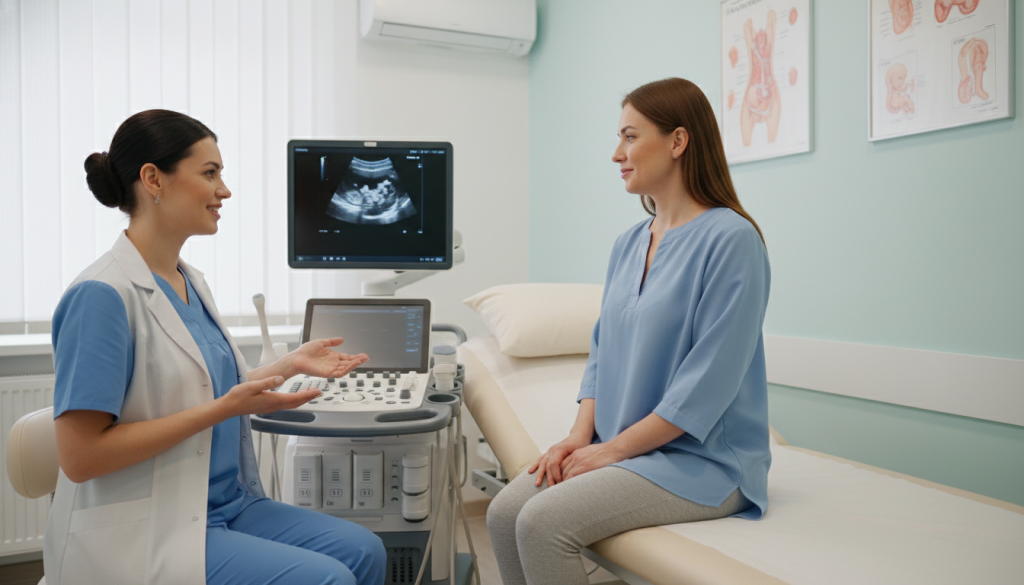
For many abdominal procedures, you might be asked to fast for several hours before your appointment. This helps reduce gas in the digestive tract. It can help make the ultrasound images clearer.
If you are scheduled for a pelvic or obstetric exam, we often request that you arrive with a full bladder. A full bladder acts as an acoustic window. It allows us to see pelvic organs more clearly by pushing the bowel out of the way.
We understand that medical appointments can sometimes feel overwhelming. Our goal is to reduce any pre-appointment anxiety. We provide clear, actionable steps before your ultrasound begins.
Please feel free to reach out to our office if you have questions about your specific instructions. We are here to support you. We want your ultrasound scan to be a comfortable and informative experience.
The Role of the Ultrasound Technician
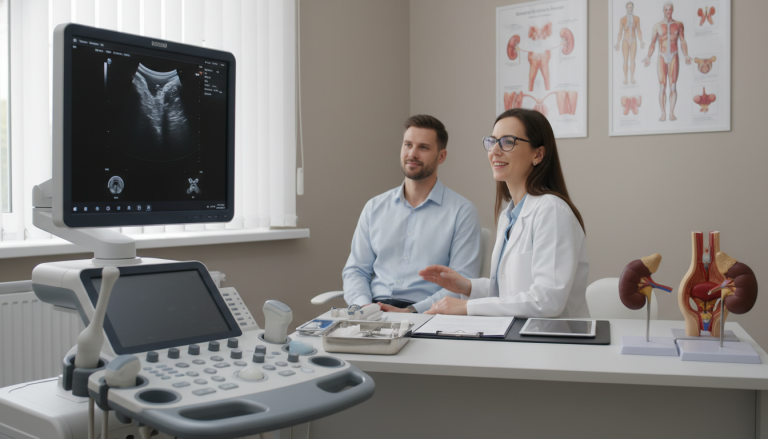
The ultrasound technician is key in the diagnostic process. They are also known as sonographers. These experts are more than just machine operators. They make sure every image is of the highest quality.
Your comfort is our main concern during your visit. We think a reassuring presence is as important as technical skills. Your technician will talk clearly, explaining each step. This helps you feel comfortable and informed during your ultrasound.
An ultrasound technician plays a critical role in your care. They use their skills to get the right images for doctors. This teamwork helps your healthcare team get the exact information they need for your care.
The work of these professionals connects advanced ultrasound tech with caring for patients. They mix technical skill with a caring approach. We’re proud to have dedicated experts who focus on your health and comfort.
Understanding the Ultrasound Probe and Transducers
The ultrasound probe is key in creating images of your body. It sends and receives sound waves. This lets us see inside without surgery.
Sound waves bounce off tissues and return to the probe. The probe then turns these echoes into images. Precision is key, so we choose the right transducer for your body.
During a session, your technician might change probes. This is because different body parts need different sound waves. Shallow areas need high frequency, while deeper areas need low frequency.
The table below shows how transducers are used for accurate results:
| Transducer Type | Primary Use | Frequency Range |
|---|---|---|
| Linear Array | Superficial structures like thyroid or veins | High (7-15 MHz) |
| Curved Array | Abdominal and obstetric imaging | Low (2-5 MHz) |
| Phased Array | Cardiac and deep thoracic imaging | Low (1-5 MHz) |
| Endocavitary | Pelvic or transvaginal examinations | Medium (5-9 MHz) |
Using the right ultrasound probe for each area ensures clear images. This technology is safe and effective. We use it to give you the best care.
Safety and Benefits of Ultrasound
Ultrasound technology is very safe and effective for seeing inside the body. It uses sound waves, not harmful radiation, to create clear images. This makes it a preferred choice for sensitive populations, like pregnant women and kids.
We make sure you’re comfortable and safe by using non-invasive methods. An ultrasound scan lets us see inside without cuts or downtime. This shows our dedication to your health and wellbeing.
One big plus of ultrasound is its real-time imaging. We can see organs move, blood flow, and heart valves work as they do. This helps doctors make quick, accurate decisions about your care.
Ultrasound is also very versatile in medicine. It’s great for routine checks or when we need to look closer at something. We think it’s key to giving you clear, safe ultrasound scan info. This helps you be more involved in your health.
Limitations of Ultrasound Technology
Ultrasound is a great tool for doctors, but it has its limits. We want to help you understand these limits. This way, you’ll know what to expect during your medical tests.
One big problem is the density of human tissue. Sound waves have a hard time going through bone. This means ultrasound technology can’t see things behind bones well. That’s why other tests are better for the brain or deep in the spine.
Another issue is air or gas in the body. When sound waves hit gas, like in the stomach, they get scattered. This makes it hard to see organs like the pancreas or deep in the belly. Physicians might have trouble getting a clear picture if there’s a lot of gas.
Because of these problems, we might suggest more tests to fully understand your health. Knowing these limits helps explain why sometimes, ultrasound is used with other tests. This way, doctors can get a complete picture of your health.
| Imaging Challenge | Impact on Quality | Clinical Solution |
|---|---|---|
| Dense Bone | Blocks sound waves | Use MRI or CT scan |
| Digestive Gas | Scatters signals | Patient fasting or repositioning |
| Deep Tissue | Signal attenuation | Adjust frequency settings |
Advancements in 3D and 4D Sonography
3D and 4D ultrasound technologies bring a new level of detail. Unlike 2D images, they show structures in 3D. This lets us see things from different angles with unprecedented clarity.
In obstetrics, these tools change how we watch babies grow. Parents see their baby in 3D, and doctors get a clearer view. This detail is invaluable for spotting important developmental signs early on.
3D and 4D sonography also help in complex diagnoses. They give a 3D view of soft tissues and blood vessels. This enhanced visualization helps doctors make more accurate diagnoses and plans.
We’re committed to using these top-notch technologies every day. By keeping up with ultrasound advancements, we offer the most precise care. Our focus on quality sonography shows our dedication to your health journey with the latest tools.
Interpreting Ultrasound Results
After your scan, you start to understand your health results. Remember, the images from your ultrasound are just part of the big picture of your health.
The technician doesn’t give you a diagnosis right away. They send the images to a skilled radiologist or doctor. This meticulous review process makes sure your results are very accurate.
See your diagnostic imaging report as a starting point, not the end. Your doctor will look at your report with your medical history in mind.
We suggest you make an appointment to talk about your report. Your doctor will use the ultrasound findings, your symptoms, and lab tests to give you a full health picture.
By doing this, you can ask questions and understand what your diagnostic imaging means. We want you to feel well-informed, supported, and confident in your health journey.
Comparing Ultrasound to MRI and CT Scans
When your doctor orders imaging, you might wonder why they chose one technology over another. Modern medical imaging offers several powerful ways to look inside the body. Each has unique strengths for different clinical needs.
Ultrasound is often the first choice for many diagnostic situations. It is highly portable and provides real-time results. It uses sound waves to create images, making it great for observing movement, like blood flow or a beating heart.
CT scans and MRIs are designed to capture detailed, cross-sectional views of internal structures. A CT scan uses X-rays to create rapid, high-resolution images of bones and organs. An MRI uses magnetic fields to provide exceptional detail of soft tissues. We choose the most appropriate medical imaging modality based on your specific symptoms and the area in question.
| Feature | Ultrasound | CT Scan | MRI |
|---|---|---|---|
| Primary Technology | Sound Waves | X-Rays | Magnetic Fields |
| Best For | Real-time movement | Bone and trauma | Soft tissue detail |
| Portability | High | None | None |
Choosing the right tool is a core part of our commitment to your care. While ultrasound offers unmatched convenience and immediate feedback, MRI or CT technology is sometimes needed for a precise diagnosis. We rely on our clinical expertise to ensure you receive the most accurate and effective diagnostic path for your individual health journey.
Pediatric and Obstetric Ultrasound Procedures
Imaging for kids and moms-to-be needs a caring touch. We make sure these tests are done gently and with care. This way, we get clear images without using harmful radiation.
For moms, an ultrasound scan is key for checking on the baby. Our team works hard to make these moments easy. We explain things clearly and support our patients emotionally.

We adjust our methods for kids who might feel scared or fidgety. Our team is great with kids of all ages. We use reassuring communication to help them relax during the test. This ensures every ultrasound is safe and well-done.
| Feature | Obstetric Focus | Pediatric Focus |
|---|---|---|
| Primary Goal | Fetal development monitoring | Organ and tissue diagnosis |
| Patient Comfort | Maternal relaxation techniques | Child-friendly distraction methods |
| Typical Duration | 20 to 45 minutes | 15 to 30 minutes |
| Procedure Type | Routine ultrasound scan | Targeted diagnostic imaging |
Emerging Trends in Portable Ultrasound
Portable devices are changing healthcare by bringing advanced tech to the bedside. This shift in ultrasound technology lets our clinicians do quick assessments without moving patients. It helps us give faster and more accurate care when it’s needed most.
The modern ultrasound machine has changed from a big, stationary unit to a small, handheld tool. These changes are transforming the patient experience by making imaging more accessible. Patients feel more comfortable when scans are done in their own room.
We think it’s key to bring advanced diagnostics to the point of care. This trend shows our ongoing mission to offer top-notch, accessible medical education and tech. By using ultrasound in daily practice, we keep quality care a priority.
Looking ahead, these tools will keep improving clinical outcomes. We’re committed to using the latest ultrasound advancements for better healthcare decisions. Every ultrasound machine we use is chosen to improve the care we give our community.
Conclusion
Modern medicine depends on tools that give us clarity and peace of mind. Ultrasound is a key tool for checking our internal health. It’s safe and works well for many needs.
Knowing about your diagnostic options can lead to better health results. This technology keeps getting better. It now offers clearer images and is easier to carry around for patients.
At Acıbadem Healthcare Group, we’re committed to helping you with your medical needs. Our team uses all the tools at our disposal to support your health. We want you to feel well-informed at every visit.
If you have questions about your care plan, please reach out. Your health journey is important, and it deserves the best care. We’re excited to work with you to reach your wellness goals.
FAQ
Q: What exactly is an ultrasound and why is it used in modern medicine?
A: An ultrasound is a key tool in medical imaging. It’s painless and non-invasive. At Acıbadem Healthcare Group, we use it to see inside the body. We send high-frequency sound waves into the body, which bounce off organs and tissues.
This creates real-time images. Our specialists can then check your health and find problems without surgery or radiation.
Q: How does ultrasound technology differ from other types of imaging like X-rays?
A: Unlike X-rays or CT scans, ultrasound technology uses sound waves, not ionizing radiation. It’s great for looking at soft tissues. This makes it safe for the abdomen, pelvis, and blood vessels.
Q: How does an ultrasound machine convert sound into a visual image?
A: The ultrasound machine turns electrical energy into sound waves. These waves go through the body and bounce off structures. The echoes are then turned into images.
This lets us see inside the body clearly. It’s how we understand complex conditions and get high-quality images.
Q: What are the most common clinical applications for diagnostic imaging?
A: Diagnostic imaging via ultrasound is very useful. We use it to check on fetal development and cardiac health. It also helps with minimally invasive procedures.
This ensures our specialists can target areas precisely. It helps in achieving better patient outcomes.
Q: Do I need to do anything specific to prepare for my ultrasound scan?
A: Preparation varies by the area being checked. For some scans, like gallbladder or abdominal ones, fasting is needed. For pelvic exams, a full bladder is required.
We give you clear instructions before your visit. This helps us get the best images possible.
Q: What is the role of the ultrasound technician during my appointment?
A: The ultrasound technician, or sonographer, is very skilled. They operate the equipment and make sure the images are top-notch. At our clinics, they support you during the scan.
They help translate clinical needs into images our doctors need for your diagnosis.
Q: Why does the technician use an ultrasound probe and what are transducers?
A: The ultrasound probe sends and receives sound waves. It has transducers that change based on what’s needed. This ensures the best images for each body part.
You might see the technician switch probes. This is to get the best view of what they’re looking at.
Q: Is an ultrasound scan safe for everyone, including children and pregnant women?
A: Yes, sonography is safe because it doesn’t use ionizing radiation. It’s great for obstetric care and pediatric procedures. We prioritize these safe methods at Acıbadem Healthcare Group.
Q: Are there any limitations to what ultrasound technology can see?
A: While very effective, ultrasound technology has its limits. It can’t see through dense bone or too much gas in the stomach. If these block the image, we might suggest other tests like an MRI or CT scan.
Q: What are the benefits of 3D and 4D sonography compared to traditional scans?
A: 3D and 4D sonography offer more detail than 2D scans. 3D imaging shows static views, while 4D imaging adds motion. These are great for obstetrics and complex heart checks.
Q: Who interprets my ultrasound results and when will I receive them?
A: A radiologist or specialized doctor analyzes your ultrasound scan. They’ll discuss the findings with your doctor. We aim to make sure you understand your results clearly and quickly.
Q: Why would a doctor choose ultrasound over an MRI or CT scan?
A: Doctors might choose ultrasound for its portability and real-time imaging. It’s good for soft tissues and blood flow. It’s also cost-effective and doesn’t keep patients in one place for long.
Q: How does Acıbadem Healthcare Group handle pediatric and obstetric ultrasound procedures?
A: We’re gentle and patient-centered in pediatric and obstetric care. Our team makes sure you and your child are comfortable. We use the latest sonography to monitor fetal development safely and compassionately.
Q: What are the benefits of emerging portable ultrasound technology?
A: Portable ultrasound and handheld devices are changing healthcare. They let our clinicians do quick checks right at the point of care. This speeds up diagnosis and treatment planning in urgent cases.
Q: How does Acıbadem Healthcare Group ensure the quality of its diagnostic imaging?
A: Acıbadem Healthcare Group focuses on world-class medical education and technology. We keep up with the latest in ultrasound technology. Our ultrasound technicians and doctors are trained in the newest techniques to support your health decisions.