

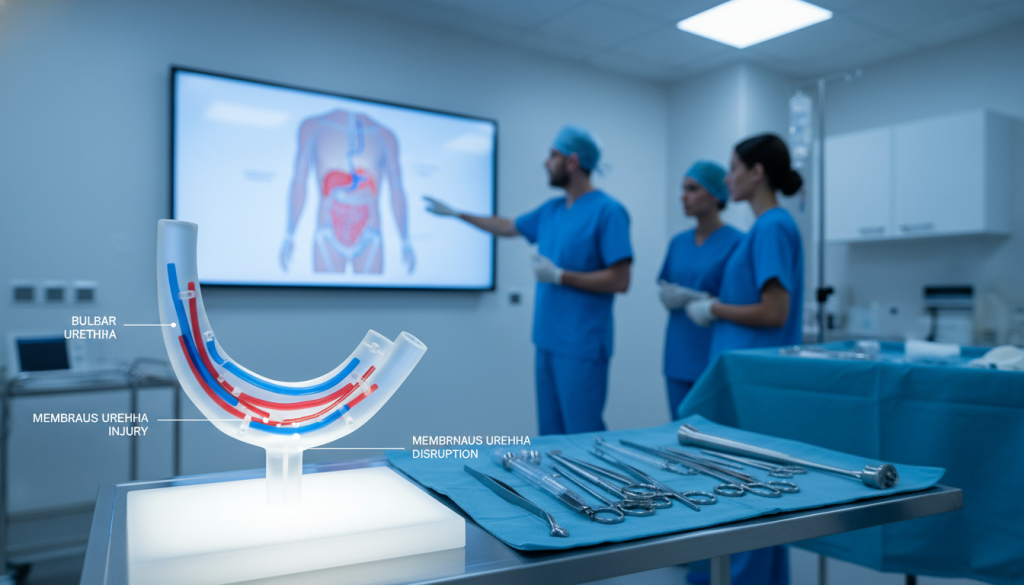
When we talk about Urethral Trauma, we mean damage to the tube that carries urine from your bladder. This tube is very delicate. It can get hurt from accidents, medical procedures, or too much pressure.
Recognizing the signs early is key to keeping your health safe. Knowing your body is the first step to getting better and staying well.
Getting timely medical help is critical to avoid serious problems with your urinary and reproductive systems. We want to help you understand your symptoms. This way, you can feel confident when you need to see a doctor.
Key Takeaways
- Urethral injuries involve damage to the tube that transports urine from the bladder.
- Prompt medical evaluation is essential to ensure proper healing and function.
- Ignoring symptoms can lead to long-term urinary or reproductive health challenges.
- Professional care provides the best path toward a full and healthy recovery.
- We are here to help you navigate your healthcare journey with expert guidance.
Understanding the Anatomy and Physiology of the Urethra
The urethra is a key part of our body, carrying urine out. Knowing its structure is key to handling any urethral injury. It’s a muscular tube that links the bladder to the outside, letting us control waste release. Because men and women have different anatomy, our treatment plans must match these differences.
In males, the urethra is longer and has two main parts: the anterior and posterior segments. The anterior urethra goes through the penis, while the posterior urethra goes through the prostate and pelvic floor. These parts are separated by the external sphincter, a muscle that controls urine flow.
For women, the urethra is shorter and directly connects the bladder to the outside. This simplicity lowers the risk of some injuries, but it’s just as important to handle urethral injury with care. Knowing these details helps us see how injuries or medical actions might affect the urinary system.
We divide these areas to better understand how they react to damage. Knowing exactly where a problem is helps us pick the best treatment for our patients. Below is a table that highlights the main differences between these areas to help you understand better.
| Region | Primary Function | Anatomical Context |
|---|---|---|
| Anterior Urethra | Urine and semen transport | Located within the penile shaft |
| Posterior Urethra | Bladder outlet control | Passes through the prostate gland |
| Female Urethra | Urine transport | Short, direct path to the exterior |
Our aim is to clearly explain how these parts work normally. When a urethral injury occurs, this knowledge helps us fix the problem and improve our patients’ lives. We’re committed to making these complex topics easy to understand, so you can make informed health choices.
Common Causes and Mechanisms of Urethral Trauma
We often see patients with significant urethral trauma. This can happen due to many reasons. Knowing these reasons is key because urethral damage can cause long-term problems if not treated quickly. By understanding how the injury happened, we can give you the right care.
High-impact events like car accidents or falls are common causes. These can lead to pelvic fractures. These fractures can put a lot of pressure on the urethra, causing damage.
Medical procedures can also cause injuries. For example, inserting a urinary catheter can lead to urethral damage if done wrong. We use careful techniques to avoid these problems.
Penetrating injuries, like gunshot wounds, are another type of trauma. These injuries need quick surgery. Our team works hard to understand the full extent of the injury to help you heal.
| Category of Injury | Primary Mechanism | Clinical Impact |
|---|---|---|
| Blunt Trauma | Pelvic fractures | High risk of urethral disruption |
| Iatrogenic | Difficult catheterization | Mucosal tearing or false passage |
| Penetrating | Sharp force impact | Direct tissue laceration |
| Straddle Injury | Direct perineal impact | Anterior urethral compression |
Recognizing Urethral Trauma Symptoms
Spotting urethral trauma symptoms is key to getting the right medical help. Your body sends out clear signals when it’s hurt. Quick action can stop serious problems and help you heal faster.
Blood at the urethral opening is a big warning sign. You might also find it hard to pee, even when you really need to. These signs are serious and should not be ignored.
Other signs include a lot of pain in the pelvic area. Swelling, bruising, or trouble peeing are also red flags. Seeking help right away is vital to fix the injury and keep your urinary system safe.
If you see any of these urethral trauma symptoms, see a specialist fast. At Acıbadem Healthcare Group, we’re here to help. If you think you’ve hurt your urinary system, go to the emergency room without delay.
Initial Assessment and Emergency Management
The first hours after an injury are key for urethral trauma management. When a patient comes to our facility, we aim to keep them stable and assess the damage. We use a calm, methodical approach to keep the patient comfortable and safe.
Handling the urinary tract with care is vital. We often avoid immediate catheterization in the early stages. Blindly trying to insert a catheter can cause more harm or turn a partial tear into a complete one.
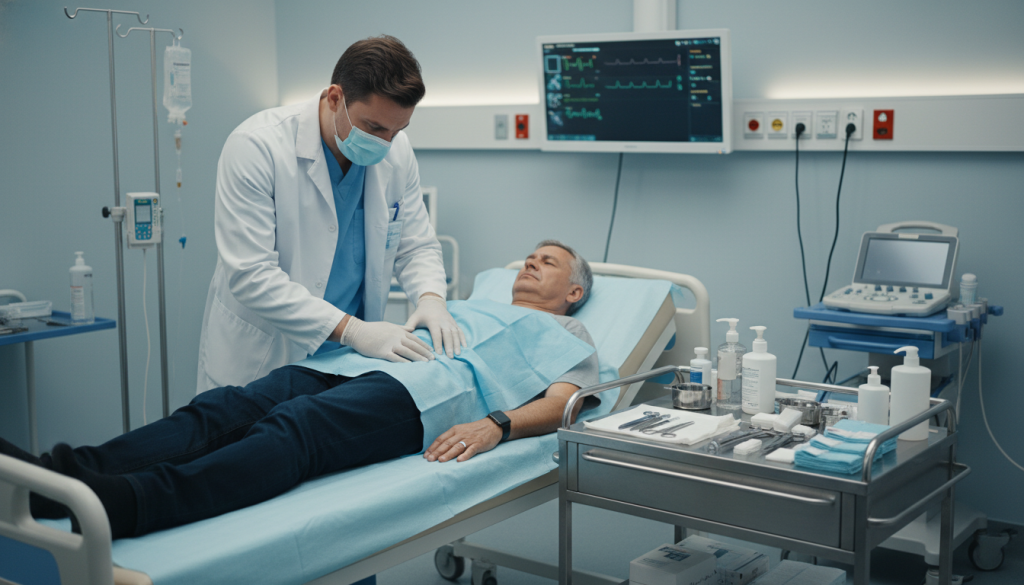
Our team follows evidence-based practices for every decision. By avoiding unnecessary procedures, we lower the risk of complications. This focus on safe, evidence-based care is the heart of our approach to urethral trauma management.
Clear communication with the patient is key in the early stages. We explain each step of the assessment to reassure and clarify. Our aim is to offer top-notch support and protect the urinary system from long-term damage.
Successful urethral trauma management relies on the medical team’s expertise and precision. We are committed to safeguarding the patient’s health through careful observation and timely interventions. By sticking to these principles, we strive for the best outcomes for our patients.
Diagnostic Imaging and Clinical Evaluation
When a patient shows signs of urethral trauma, we act fast. We use physical exams and advanced imaging for a urethral trauma diagnosis. This method helps us find out where and how bad the injury is.
Retrograde urethrography is key for seeing these injuries. We use a dye to see the urinary tract clearly. This helps us know if the injury is just a tear or a complete break.
We use these images to make a treatment plan just for you. A good urethral trauma diagnosis is key to getting better. Our team looks at the images to make sure the treatment fits your needs.
We also look at your medical history and symptoms. We make sure you understand your diagnosis and treatment. Our aim is to give you the best care that’s also reassuring.
Classification Systems for Urethral Injury
Understanding the severity of a urethral injury is key. We use standardized systems to grade these injuries. This helps our medical teams talk about the complexity of a case clearly.
These systems guide our clinical decisions. When we assess a patient, we look for specific markers. This tells us if simple catheterization is enough or if surgery is needed.
Systematic categorization is essential for tracking patient progress. It helps us compare data and keep our treatments up-to-date. Clear communication between our specialists and the healthcare team is vital.
These grading systems help us give reassuring and expert guidance to our patients. By breaking down complex trauma, we can explain the injury and healing steps clearly. We’re dedicated to using these tools for informed healthcare decisions.
Surgical Management of Anterior Urethral Trauma
When the part of the urethra outside the pelvis gets hurt, we need special surgery. This part, called the anterior urethra, can get injured in many ways. We aim to fix it so you can pee normally again without harming the surrounding tissues.
Our surgeons choose the right surgery based on the injury. For small cuts, a simple repair might do the trick. But for bigger problems, we might wait a bit to fix it. This helps the area heal better in the long run.
We work hard to prevent scar tissue from forming. Scar tissue can block the urethra. Using the latest surgery methods, we aim to improve your life. We decide whether to fix it right away or in stages, based on your case.
| Injury Severity | Primary Approach | Key Objective |
|---|---|---|
| Minor Laceration | Primary Repair | Immediate Alignment |
| Complex Trauma | Delayed Reconstruction | Stricture Prevention |
| Tissue Loss | Grafting Techniques | Functional Restoration |
We promise expert care for every patient. We believe in clear talk and careful planning for the best results. Our goal is to fix you so you can live your life without worry.
Surgical Management of Posterior Urethral Trauma
Dealing with injuries to the posterior urethra needs precision because of their close link to pelvic fractures. These injuries happen when strong forces hit the pelvic ring, putting the urinary system at risk. Treating these injuries well requires knowing a lot about both urology and fixing bones.
We use a staged surgical approach to help our patients heal the best way. First, we focus on keeping the patient stable and handling any urgent problems. This might mean putting in a suprapubic cystostomy to move urine away from the hurt area.
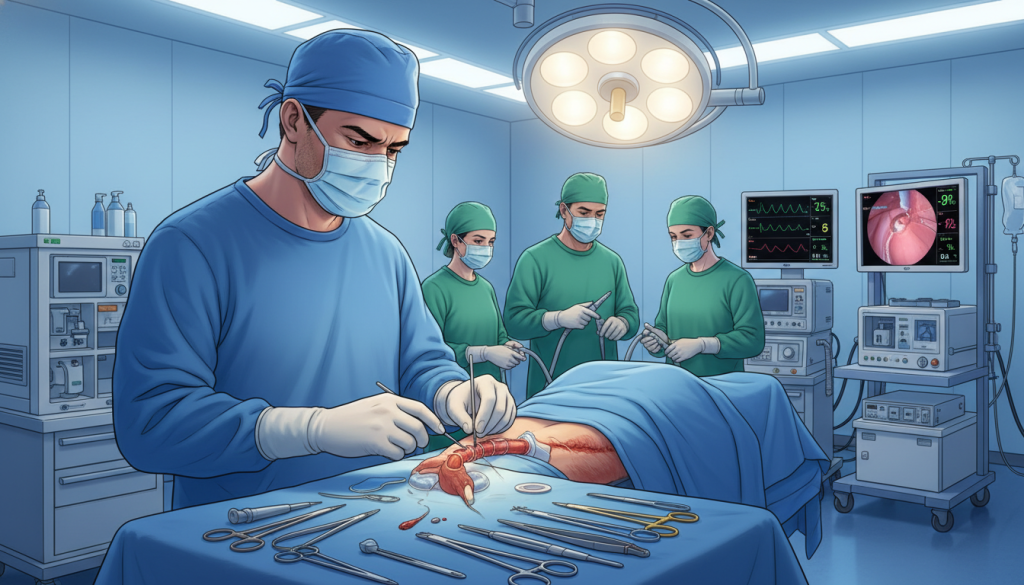
When the patient is stable, we start the definitive reconstruction phase. This part is planned carefully to let inflammation go down and tissues heal. Waiting for the right time makes the treatment more likely to succeed.
Our team works with meticulous care in these tough cases. We know every patient is different, so we adjust our surgery to fit each person. Our aim is to get your urinary system working right again and avoid long-term problems.
We use the latest tools and surgical techniques for urethral trauma treatment. We’re here to support you every step of the way. Our goal is to give you clear, expert advice to help you make smart choices about your health.
Urethral Trauma Complications and Long-Term Sequelae
Recovery often goes beyond the first surgery. Our main goal is to stabilize you right away. But we also watch for urethral damage that could lead to long-term health issues.
Knowing about urethral trauma complications helps us support you better. We can spot risks early and start treatments that help you recover faster.
One big issue is urethral strictures. These are scars that make the urethra narrower. This can really affect how you urinate. We keep a close eye on this to act fast if needed.
Other problems like erectile dysfunction or urinary incontinence can also happen. These issues are tough, but we can help manage them. We talk openly about these topics to help you feel better.
We make sure you know what’s going on and feel supported. By watching for urethral damage, we help keep your life quality up. Dealing with urethral trauma complications is a team effort. We’re here to help you every step of the way.
Pediatric Considerations in Urethral Injury
Pediatric urethral trauma needs a special approach for the best results. Children are growing, so we use techniques that fit their size and growth. This ensures their health and development are not harmed.
Dealing with a urethral injury can be tough for families. Our team works hard to offer gentle, effective management. We aim to reduce the trauma’s long-term effects on a child’s life.
Our main goal is to protect a child’s urinary and reproductive health. We use advanced, gentle methods to care for their delicate tissues. This way, they can get back to their normal life fast.
We focus on care that fits each child’s age. This helps them feel more confident during recovery. Our specialized pediatric care ensures every child gets the care they need. They can live a healthy, active life after a urethral injury.
The Role of Urethroplasty in Reconstruction
Urethroplasty is a key surgery to fix damaged urethral parts. It helps when trauma makes the urethra narrow or scarred. This surgery is a definitive solution to fix urinary issues. It helps patients feel better and regain confidence.
The main goal is to improve the patient’s life by ensuring smooth urine flow. Living with trauma’s lasting effects can be tough. Our goal is to give lasting, effective results. We choose the best surgery for each case.
We use advanced grafting techniques for the best results. These methods use healthy tissue to fix the damaged urethra. This way, we rebuild the urethra with care, making sure it works well and lasts long.
We aim for the highest quality by choosing safe grafts and surgical methods. We make sure each patient gets a reliable foundation for healing. Every patient is different, so we customize our approach for them.
| Feature | Benefit | Outcome |
|---|---|---|
| Advanced Grafting | Tissue Integration | Improved Durability |
| Precision Repair | Restored Flow | Enhanced Comfort |
| Long-term Focus | Reduced Recurrence | Better Quality of Life |
The success of urethroplasty comes from our skill and understanding of patient needs. We aim to help people overcome injury’s physical limits. Through these surgeries, we want to give them the freedom to live life without worry.
Psychosocial Impact and Quality of Life
The journey after an injury goes beyond the operating room. We focus on fixing physical issues but also know that urethral trauma complications affect mental health and body image. This can change a person’s quality of life.
Many patients feel anxious or stressed during recovery. Our approach includes psychosocial support to help them deal with these feelings. We aim to treat the whole person, not just the injury, for complete well-being.
It’s key to address the psychological side of recovery for lasting success. We encourage open talks to help patients feel confident again. Managing urethral trauma complications needs a team effort that focuses on both physical and emotional health.
The table below shows our support framework. It’s designed to boost patient recovery and improve their quality of life.
| Support Area | Primary Goal | Expected Outcome |
|---|---|---|
| Mental Health Counseling | Reduce anxiety and stress | Improved emotional stability |
| Body Image Support | Address self-esteem concerns | Increased patient confidence |
| Peer Support Groups | Foster community connection | Reduced feelings of isolation |
| Educational Resources | Empower informed decisions | Better treatment adherence |
Current Trends and Future Directions in Urethral Trauma Management
The world of urology is changing fast with new technologies. We’re working hard to improve urethral trauma management with advanced tools. These tools focus on making care more comfortable and successful for patients.
Now, we’re using less invasive methods in surgery. Robotic systems and high-tech imaging help us do complex repairs with more precision. This means less damage to tissues, which helps patients heal faster and stay in the hospital less.
Research is always evolving urethral trauma management. We’re looking into regenerative medicine and tissue engineering for better results with severe injuries. Our goal is to keep providing top-notch care to everyone we help.
| Feature | Traditional Surgery | Emerging Techniques |
|---|---|---|
| Incision Size | Large/Open | Minimally Invasive |
| Recovery Time | Extended | Accelerated |
| Precision | Standard | High-Definition Robotic |
| Tissue Impact | Higher | Minimal |
Conclusion
Understanding urethral trauma is key. Knowing your body and getting the right help is essential. Expert advice is vital for managing these injuries well.
Spotting symptoms early is important. Quick medical action can lead to better results. It also helps avoid serious problems later. Always seek professional help if you feel something’s wrong.
Getting a treatment plan that fits you is important. Everyone’s recovery is different. By staying informed and talking to your doctors, you help make your treatment better.
At Acıbadem Healthcare Group, we’re here to help you. We offer top-notch care for urethral trauma. Contact our specialists to talk about your health and start your recovery.
FAQ
Q: What is urethral trauma and why does it require immediate attention?
A: Urethral trauma is any injury to the tube that carries urine from the bladder. It’s a medical emergency because it affects both urine and reproductive functions. Quick action at Acıbadem Healthcare Group is key to avoid long-term problems like blockages or infections.
Q: How do the different parts of the urethra affect the type of urethral damage sustained?
A: The urethra is divided into two parts: the anterior and posterior. The injury type and treatment differ based on the part affected. Posterior injuries are deeper and often linked to pelvic fractures. Anterior injuries are in the outer parts.
Q: What are the most common urethral trauma causes?
A: High-impact events like car accidents or falls are common causes. Accidental injuries during medical procedures also happen. Blunt or penetrating trauma to the perineum can also cause damage.
Q: What are the primary urethral trauma symptoms I should look for?
A: Look for blood at the urethral opening, trouble urinating, and pelvic pain. Signs like a “high-riding prostate” or perineal bruising need immediate check-up by our specialists.
Q: How is urethral trauma diagnosis confirmed?
A: Retrograde urethrography is the best way to diagnose urethral trauma. It involves injecting dye into the urethra for X-ray imaging. This helps us see the injury and plan treatment.
Q: What is the standard approach to emergency urethral trauma management?
A: First, we stabilize the patient and ensure the bladder drains safely. We’re careful with catheterization to avoid making injuries worse. If needed, we might use a suprapubic cystostomy to bypass the injured area.
Q: What options are available for urethral trauma treatment and reconstruction?
A: Treatment depends on the injury’s location and severity. Minor tears might heal with drainage, but complex cases need urethroplasty. This surgery repairs the damaged area, sometimes using grafts.
Q: What are the possible long-term urethral trauma complications?
A: Complications include urethral narrowing, incontinence, and erectile dysfunction. These issues can greatly affect your life. We offer ongoing care and rehabilitation to manage these problems.
Q: How do we handle urethral injury cases in children?
A: Children’s cases need special care because their tissues are developing. Our pediatric urologists use gentle methods to avoid future growth issues. We aim to preserve the child’s future health.
Q: Does urethral trauma impact a patient’s mental and emotional wellbeing?
A: Yes, injuries can deeply affect mental health. Patients may worry about body image and intimacy. Our care includes emotional support and counseling for a complete recovery.