

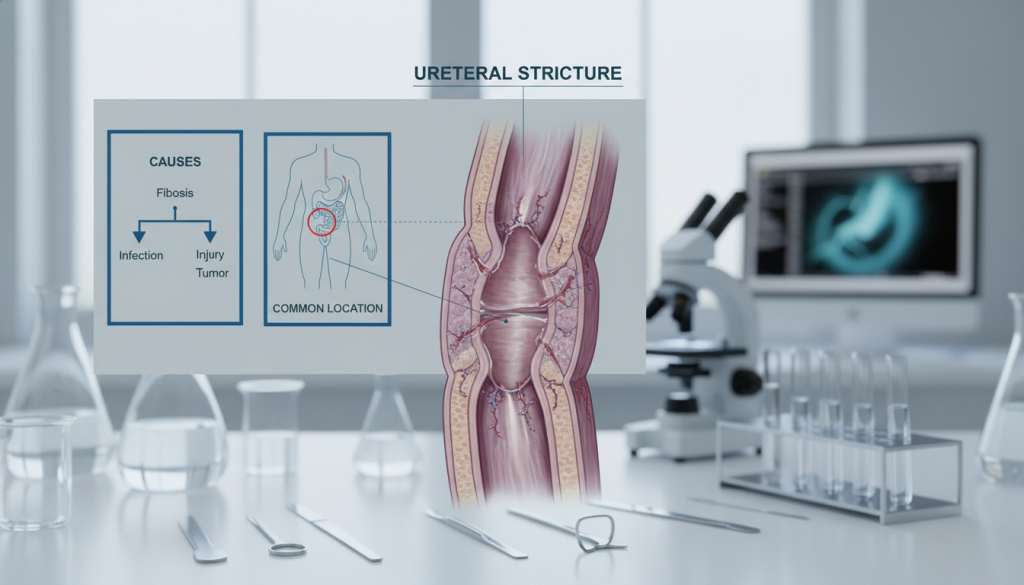
Ureteral Strictures is when the tube that carries urine from your kidney to your bladder gets narrower. This can stop waste from flowing properly. It might also harm your kidney if not treated.
At Acıbadem Healthcare Group, we think knowing about your health is the first step to getting better. Learning about these blockages helps you work with our doctors to improve your health.
We aim to give you clear, comforting info about this issue. We want to empower patients by teaching them about their health. This way, you get the help you need for your health in the long run.
Key Takeaways
- A narrowing of the tube between the kidney and bladder defines this condition.
- Left unaddressed, these blockages can negatively impact your kidney health.
- Early detection and professional medical guidance are vital for effective treatment.
- We prioritize a collaborative approach to help you make informed healthcare decisions.
- Accessible education is our primary tool for supporting your recovery and comfort.
Understanding the Anatomy and Physiology of the Ureter
Your kidneys have two thin tubes to move urine to the bladder. These tubes, called ureters, are muscular and vital for your urinary system. Maintaining these pathways is key for your health.
Urine doesn’t just flow passively through these tubes. Instead, the ureters use peristalsis to push urine down. This ensures urine gets to the bladder regularly, even against gravity.
The inside of each ureter has a special lining. This lining protects the muscle layers and helps urine flow smoothly. A healthy lining stops backflow, keeping kidneys safe from pressure and infection.
Knowing how the ureters work helps us see why they must stay clear. Any blockage can mess up the urinary system’s rhythm. Taking care of these structures helps your body drain kidneys well and stay healthy.
Defining Ureteral Strictures and Their Impact
Understanding ureteral strictures is key to keeping your kidneys healthy. A stricture is a narrowing of the ureter, the tube that carries urine from the kidney to the bladder. This narrowing blocks the normal flow of urine.
When the ureter is blocked, urine backs up into the kidney. This can cause the kidney to swell, a condition called hydronephrosis. If not treated, this can lead to kidney damage and pain.
Early detection is critical because strictures can worsen quickly. Spotting signs of blockage early helps us act fast to protect your kidneys. This can improve your life quality.
| Feature | Normal Ureter | Ureteral Stricture |
|---|---|---|
| Urine Flow | Unobstructed and steady | Restricted or blocked |
| Kidney Pressure | Low and stable | Elevated (Hydronephrosis) |
| Tissue Health | Optimal function | Risk of long-term damage |
| Clinical Status | Healthy | Requires medical evaluation |
Ureteral strictures are serious and need medical attention. Stay alert to your urinary health to catch problems early. We aim to give you the knowledge to make the best care choices.
Primary Causes of Ureteral Strictures
The causes of ureteral strictures are complex and need a detailed look. These narrow bands in the ureter can come from many sources. Knowing what causes them is key to keeping your urinary system healthy.
Iatrogenic factors are a big reason. These are problems that come from medical treatments. For example, during surgeries like stone removal, the ureter can get hurt. This can lead to scar tissue and Ureteral Strictures.
Other causes include external injuries and treatments. Radiation for pelvic cancers can cause inflammation and scarring. Physical injuries to the abdomen or pelvis can also harm the ureter.
We watch for conditions that can narrow the ureter. Kidney stones or endometriosis can cause long-term inflammation. Spotting these issues helps us give better care to each patient.
| Category of Cause | Specific Example | Impact on Ureter |
|---|---|---|
| Iatrogenic | Ureteroscopy | Scar tissue formation |
| Traumatic | Pelvic injury | Structural damage |
| Inflammatory | Endometriosis | Chronic tissue irritation |
| Therapeutic | Radiation therapy | Fibrotic changes |
Recognizing the Symptoms of Ureteral Strictures
Knowing the symptoms of ureteral strictures helps you get medical help early. Your body sends clear signals when urine flow is blocked. Paying attention to these signs is key to good care.
Flank pain is a common sign, felt in the side or back. It can be dull or sharp, depending on the blockage. The pain’s intensity can change over time.

Changes in urination habits are also signs. Needing to urinate more often or urgently is a sign of stress. Seeing blood in your urine is a critical warning sign that needs quick medical attention.
Some people get recurring urinary tract infections that don’t go away with antibiotics. These infections are often linked to Ureteral Strictures. Stagnant urine is a breeding ground for bacteria. If you notice these symptoms of ureteral strictures, get a professional check-up to protect your kidneys and health.
The Diagnostic Process for Ureteral Strictures
When you feel persistent discomfort, finding the cause of ureteral strictures is our main goal. We use advanced imaging tools to find out exactly what’s wrong. This meticulous approach helps us create a treatment plan just for you.
Retrograde Pyelography Techniques
Retrograde pyelography is a special procedure that gives us clear images of your urinary tract. We use a small catheter to inject dye into the ureter. This gives us a detailed X-ray view of the blockage, showing us where and how long it is.
Computed Tomography Urography Benefits
Computed tomography (CT) urography is another key tool for us. It offers a detailed, three-dimensional look at your urinary system. This helps us see how the ureteral strictures affect your health.
We make sure you understand every step of these tests. This way, you feel ready and informed. Below, we compare these methods to help you understand your ureteral strictures diagnosis journey.
| Diagnostic Method | Primary Purpose | Key Advantage |
|---|---|---|
| Retrograde Pyelography | Direct visualization of the ureter | High-detail imaging of the blockage |
| CT Urography | Comprehensive urinary tract view | Assesses impact on nearby organs |
| Clinical Consultation | Symptom and history review | Establishes the baseline for care |
Complications Associated with Untreated Strictures
When ureteral strictures complications are ignored, serious risks arise. The ureter is key for urine to flow from kidneys to bladder. A narrowed path leads to urine blockage, harming your organs.
The biggest worry is urine backpressure, which stresses the kidneys. This stress can cause permanent scarring of kidney tissue. If not treated, it may lead to kidney function loss over time.
In severe cases, Ureteral Strictures can cause end-stage renal disease. This is a serious condition we aim to avoid with early treatment and care. Chronic pain often accompanies these blockages, affecting your daily life and comfort.
It’s vital to act quickly to protect your health. Our team closely watches your condition and tackles these risks early. Early action can prevent serious problems and keep your kidneys working well.
Ureteral Strictures Treatment Options
Effective ureteral strictures treatment depends on the specific location, length, and cause of the blockage. We tailor our care to meet each patient’s unique needs. Our main goal is to improve urinary flow and ensure your long-term health.
We often start with minimally invasive procedures to avoid major surgery. These methods gently widen the narrowed area. This helps the kidney drain properly and reduces recovery time.
Balloon dilation is a common intervention. A small balloon is inflated to stretch the stricture. We also use ureteral stents, thin, flexible tubes to keep the passage open. These methods are proven to keep the duct open and prevent further issues.
The table below shows the main features of these initial treatments. It helps you understand your ureteral strictures treatment options:
| Procedure Type | Primary Goal | Invasiveness | Typical Duration |
|---|---|---|---|
| Balloon Dilation | Mechanical widening | Low | Short-term |
| Ureteral Stenting | Maintain drainage | Low | Temporary/Long-term |
| Endoscopic Incision | Internal release | Moderate | Single session |
We believe informed patients are better partners in their healthcare. Understanding how these procedures work is key to managing Ureteral Strictures. We’re here to guide you, ensuring your treatment fits your lifestyle goals.
Surgical Interventions for Complex Cases
For complex cases, ureteral strictures surgery offers a way to fix urinary problems. When simple methods don’t work, our team does surgery. They remove scar tissue to fix the flow.
These surgeries aim for long-term success and better life quality. We focus on precision to reconnect healthy ureter parts well.
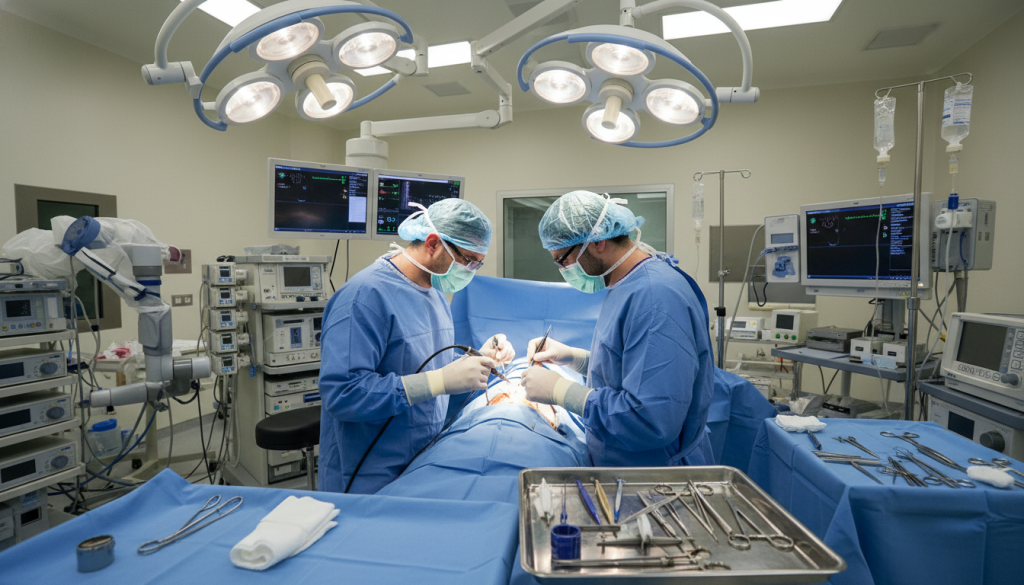
Two main methods are used in ureteral strictures treatment. A ureteroureterostomy removes the bad part and connects the healthy ends. A ureteroneocystostomy is for strictures near the bladder, attaching the ureter to a new spot on the bladder.
Dealing with Ureteral Strictures surgery can be scary. Our team uses the latest techniques to reduce recovery time and improve function. We plan carefully and execute expertly to solve tough Ureteral Strictures problems.
Choosing the right ureteral strictures treatment is a team effort. We focus on your comfort and health, making sure you know about the surgery and its results. Our goal is to provide top-notch Ureteral Strictures care to help you get better.
Post-Operative Management and Recovery
After your surgery, the next few days are key to managing ureteral strictures well. We focus on clear talks and care that fits you. This helps you get back to your normal life smoothly.
Our team is with you every step of the way. We guide you to make sure your repair lasts. By following our advice, you help keep your Ureteral Strictures fixed.
We give you clear rules on what to do and not do. This includes how to manage pain. Resting well is key to help your body heal right.
We keep an eye on how you’re doing with follow-up tests. These tests show us if the Ureteral Strictures are healing right.
| Recovery Focus | Patient Action | Clinical Goal |
|---|---|---|
| Pain Control | Follow medication schedule | Maintain comfort |
| Physical Activity | Avoid heavy lifting | Prevent tissue strain |
| Follow-up | Attend scheduled imaging | Verify healing progress |
We really stress the need for you to learn about your body. Knowing what your body needs helps us make your ureteral strictures management even better. This way, we aim for the best health for you in the future.
The Role of the Ureteral Strictures Specialist
Choosing the right ureteral strictures specialist is key to your recovery. These experts have the training to handle the complex issues of this condition. They guide you from the start to ongoing care, making sure every decision is precise.
Dealing with Ureteral Strictures needs more than basic knowledge. It requires a deep understanding of complex repair techniques. Every patient is different, so a tailored approach is best. A specialist will work with you to create a personalized care plan that meets your needs and goals.
Living with Ureteral Strictures can be tough. Our team ensures you get top-notch care at every step. With a skilled ureteral strictures specialist, you get a dedicated partner. They focus on preventing future problems and improving your life quality.
| Feature | General Urology | Specialized Care |
|---|---|---|
| Diagnostic Focus | Broad screening | Advanced imaging & mapping |
| Treatment Scope | Standard procedures | Complex reconstruction |
| Follow-up Care | Routine check-ups | Long-term surveillance |
| Personalization | Protocol-based | Anatomy-specific |
Lifestyle Considerations and Long-Term Health
Your recovery journey doesn’t stop after surgery. We stress that consistent care is key to keeping your kidneys working well. To manage ureteral strictures effectively, you must be active in your daily health routines.
Drinking enough water is a simple yet powerful step. It helps keep urine flowing smoothly, lowering the chance of blockages. Staying hydrated supports your urinary system’s natural function and helps avoid Ureteral Strictures coming back.
Regular check-ups are also critical for your long-term health. These visits help us keep an eye on your ureter’s health and catch small problems early. We see these appointments as a collaborative partnership aimed at your lasting well-being.
By following these steps, you can greatly reduce the risk of future problems. We’re here to help you manage ureteral strictures confidently. Your dedication to these habits brings peace of mind and supports your kidneys’ health. This lets you enjoy life fully.
Emerging Research and Future Directions
We are in a new era for treating ureteral strictures thanks to groundbreaking research. The field of urology is changing fast. We’re moving towards treatments that are less invasive and last longer for our patients.
Our team is working on using advanced biomaterials to help tissues heal naturally. These new scaffolds aim to lower the chance of ureteral strictures coming back. They also make recovery easier for patients.
Robotic-assisted surgical techniques are key in our work now. These precise tools help us do better reconstructions. This leads to better results for those with ureteral strictures in the long run.
We think it’s vital to lead in medical science. By mixing our clinical skills with new tech, we aim to offer the best care today.
| Treatment Aspect | Traditional Methods | Emerging Techniques |
|---|---|---|
| Precision | Standard manual tools | Robotic-assisted systems |
| Recovery Time | Moderate to long | Significantly reduced |
| Material Use | Standard stents | Bio-engineered scaffolds |
| Patient Outcome | Variable success | Higher long-term success |
Our focus on research shows our commitment to helping patients. We’re excited for a future where ureteral strictures are less of a problem. Thanks to innovative medical breakthroughs.
Conclusion
Managing Ureteral Strictures is all about taking care of yourself. Understanding this condition is key to good care and health in the long run.
We’ve looked at ways to help you deal with this diagnosis. You can make smart health choices by working with your doctors.
At Acıbadem Healthcare Group, our experts offer the help and support you need. We’re here to help you get better and feel your best.
Get in touch with our team to talk about what you need. Your journey to healing begins with a conversation about your symptoms and goals. We’re excited to support your health and help you live better.
FAQ
Q: What exactly are ureteral strictures?
A: Ureteral strictures are narrow spots in the ureter. The ureter is a tube that carries urine from the kidney to the bladder. These narrow spots can block urine flow, causing the kidney to swell.
At Acıbadem Healthcare Group, we aim to catch this early. This helps prevent damage to your kidneys over time.
Q: What are the most common causes of ureteral strictures?
A: Many causes exist, like scar tissue from surgeries or radiation. Trauma, chronic inflammation, and pressure from stones or endometriosis also play a role. Knowing these causes helps us work together to find a solution.
Q: What are the typical symptoms of ureteral strictures to look out for?
A: Symptoms include flank pain, which can feel dull or sharp. You might also see blood in your urine or have frequent infections. If you notice these signs, it’s time to see a doctor.
Q: How is a ureteral strictures diagnosis performed?
A: We use advanced imaging to find the narrow spots. CT urography or retrograde pyelography help us see the problem clearly. These tools help us plan your treatment.
Q: What are the possible complications if ureteral strictures are ignored?
A: Ignoring strictures can lead to serious kidney damage. This can cause chronic kidney disease or even kidney failure. Early treatment is key to avoiding these problems.
Q: What are the available ureteral strictures treatment options?
A: Treatment depends on the stricture’s severity and location. For many, balloon dilation or stent placement works well. These methods aim to open the passage without long recovery times.
Q: When is ureteral strictures surgery required?
A: Surgery is needed for complex or recurring cases. It involves removing scar tissue and reconnecting the ureter. Our surgeons use advanced techniques for the best results.
Q: How does a ureteral strictures specialist help in the recovery process?
A: A specialist guides you from diagnosis to aftercare. They are key for managing strictures long-term. They offer personalized care and advice to prevent future problems.
Q: What does long-term ureteral strictures management involve?
A: Long-term management includes regular check-ups and healthy habits. Drinking plenty of water helps keep your kidneys working well. Staying proactive and attending regular appointments is important for your urinary health.