

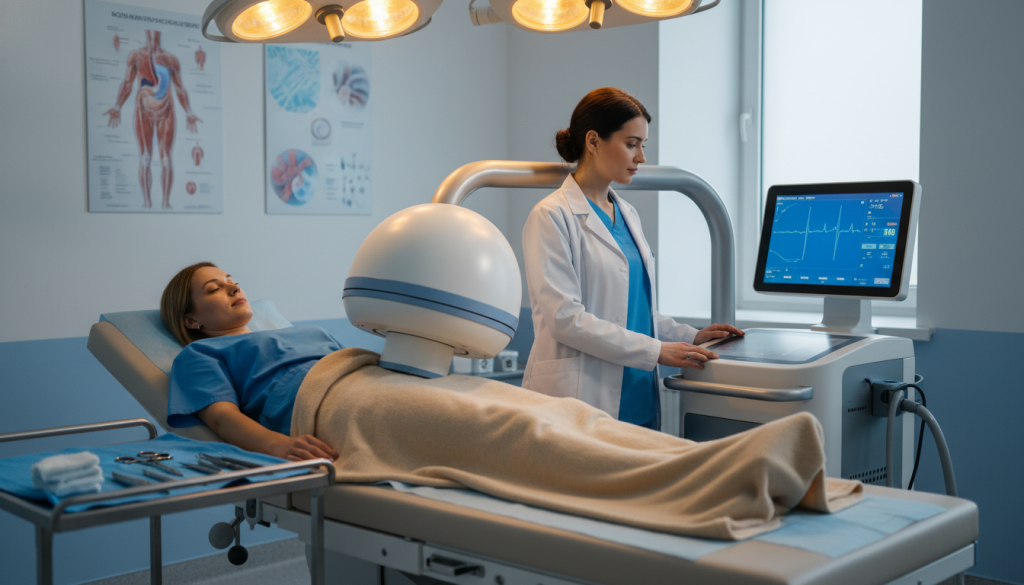
Dealing with urological discomfort can be tough. Finding the right way to feel better is your main goal. Extracorporeal Shock Wave Lithotripsy, or ESWL, is a key part of modern kidney stones treatment.
This non-invasive method uses energy waves to break down blockages. It makes them smaller and easier to handle. By choosing ESWL, we aim to give you a reassuring and effective solution.
We want you to get back to your daily life comfortably. Our goal is to help you understand your options and support you during recovery.
Key Takeaways
- ESWL is a primary, non-invasive medical intervention for urological issues.
- The procedure uses focused energy to resolve painful blockages safely.
- It serves as a vital component of contemporary kidney stones treatment.
- Patients benefit from a process designed to minimize recovery time.
- We prioritize patient education to ensure you feel confident in your care.
Understanding the Basics of ESWL
Learning about ESWL is the first step to ease kidney stone pain. This method, known as Extracorporeal Shock Wave Lithotripsy, is a non-invasive way to treat kidney stones.
This treatment breaks down stones in the urinary tract into smaller pieces. These pieces are then easily passed by the body.
After the stones are broken down, they move through the urinary system without much pain. This means many patients can skip traditional surgery. It helps them get back to their daily lives faster.
The table below explains the key points of this procedure. It helps you know what to expect during your treatment.
| Feature | Description | Patient Benefit |
|---|---|---|
| Procedure Type | Non-invasive | No surgical incisions |
| Primary Goal | Stone fragmentation | Easier natural passage |
| Recovery Time | Short | Quick return to activity |
| Technology | Shock wave energy | High precision targeting |
We think knowing about your health is key. By choosing ESWL, you pick a safe and effective method. It focuses on your well-being in the long run.
The Science Behind Shock Wave Therapy for Kidney Stones
Modern urology uses a cool science called extracorporeal shock wave lithotripsy. It helps us deal with kidney stones by sending high-energy sound waves from outside the body. These waves go through soft tissue safely, focusing on the stone.
The main aim of shock wave therapy for kidney stones is to break big stones into tiny pieces. These small pieces can then pass through the urinary tract easily. This method needs precise timing to hit the stone right.
We make sure patients are safe by using top-notch imaging. This helps us aim the shock waves exactly where they need to go. This non-invasive approach means no surgery, which makes recovery faster.
The force from extracorporeal shock wave lithotripsy is strong but controlled. When the waves hit the stone, they create a stress wave that breaks it from the inside. This method has changed how we treat urological problems, making surgery less necessary.
Knowing how shock wave therapy for kidney stones works can make patients feel more at ease. We think knowing about your treatment is key to healing. By using sound waves, we offer a safe, effective, and quick way to remove stones.
Candidates for Non-Invasive Kidney Stone Removal
Figuring out if you’re a good fit for non-invasive kidney stone removal is key. We check each case carefully. This ensures it’s the safest and most effective option for you.
Our team looks at several important criteria before suggesting a treatment. The size and location of the stone are top priorities. Stones that are too big or hard to reach might need other treatments.
We also consider your overall health profile. Your medical history, current meds, and kidney function are important. We aim for the best results with a personalized approach.
Some stones work better with this method than others. Advanced imaging helps us guess how well a stone will break apart. Your comfort and long-term health are always our main concerns.
Preparing for Your Lithotripsy Procedure
We believe that thorough preparation is key for a successful lithotripsy procedure. By preparing well before your visit, you help our team give you the best care.
Your comfort and peace of mind are our main concerns. We work with you to manage every detail before your treatment starts.
Managing your medications is a critical part of your prep. Tell our team about any blood-thinning meds or supplements. These might need to be stopped to avoid bleeding risks during the lithotripsy procedure.
Fasting is also a must for your safety. We’ll tell you when to stop eating and drinking. This usually means fasting overnight.
We need updated imaging to find your kidney stones’ exact location and size. This ensures our equipment fits your body perfectly.
| Preparation Category | Action Required | Timeline |
|---|---|---|
| Medication Review | Consult doctor regarding blood thinners | 1 week before |
| Diagnostic Imaging | Complete recent CT or ultrasound | 3 days before |
| Fasting Protocol | No food or drink | 8 hours before |
| Logistics | Arrange for a ride home | Day of procedure |
We’re here to support you every step of the way for your lithotripsy procedure. If you have questions, our clinical staff is ready to help with clear, expert advice.
The Clinical Environment at Acıbadem Healthcare Group
At Acıbadem Healthcare Group, we think the place where you get care matters a lot. We aim to mix world-class medical technology with a caring atmosphere. We want every patient to feel supported, informed, and comfortable during their stay.
We focus on precision when treating kidney stones. We use state-of-the-art imaging systems for accurate stone targeting. This approach reduces discomfort and boosts procedure success.

We care about your well-being beyond our technology. Our highly professional clinical environment follows strict safety rules. Our team works together to offer a smooth experience, meeting your needs with care and efficiency.
Many people feel anxious about medical procedures. That’s why we create a patient-centered experience that values clear talk and comfort. Our staff is ready to help you from the start, guiding you with kindness and clarity.
Step-by-Step Walkthrough of the ESWL Process
Knowing what happens during your procedure can make you feel more in control. At Acıbadem Healthcare Group, we think that knowledge is the best remedy for anxiety. We aim to make the extracorporeal shock wave lithotripsy process clear, so you feel supported from the start.
When you’re settled on the treatment table, our team starts setting things up. We use top-notch imaging to find your kidney stone’s exact spot. This is key for the lithotripsy procedure to work well, as it makes sure the shock waves hit the right place.
Before the treatment starts, we give you sedation or anesthesia to keep you comfortable. You might feel a rhythmic tapping sensation as the shock waves work to break the stone. Our team keeps a close eye on your vital signs the whole time to keep you safe.
The length of the treatment depends on the stone’s size and how hard it is. We adjust the wave intensity to make sure it’s effective but also comfortable for you. After the last pulse, we help you move to the recovery area. This extracorporeal shock wave lithotripsy is made to be quick and gentle.
Once the lithotripsy procedure is done, you’ll stay in the observation area for a bit. Our nurses will check on you often to make sure you’re okay before you go home. We’re all about making your experience smooth and focusing on your health and peace of mind.
Immediate Post-Procedure Care and Recovery
Recovering from your treatment is easy with our help. Shock wave therapy for kidney stones is non-invasive. You might feel some mild discomfort or see blood in your urine, known as hematuria, right after.
These symptoms are usually short-lived and mean your body is working on the stone. We suggest you rest for the rest of the day. Also, avoid hard physical activities for 24 to 48 hours. Your comfort is our primary concern, and our team is here to help with any questions.
Drinking lots of water is key to your recovery. It helps get rid of the stone’s small pieces as they move through your urinary tract. Keeping up with fluid intake is important for a smooth process.
If you feel a bit of pain, you can try over-the-counter meds. But we’ll give you a care plan that includes how to handle pain and when to call us. Using shock wave therapy for kidney stones means you can get back to your life faster, if you stick to these recovery tips.
| Care Category | Recommended Action | Expected Outcome |
|---|---|---|
| Hydration | Drink 2-3 liters of water daily | Facilitates stone fragment passage |
| Activity | Rest for 24-48 hours | Reduces risk of post-op fatigue |
| Pain Management | Use prescribed or OTC medication | Ensures comfort during recovery |
| Monitoring | Observe urine for fragments | Confirms successful stone clearance |
Comparing ESWL to Other Kidney Stone Treatments
We help patients choose the best kidney stones treatment by comparing options. We look at ESWL and other treatments. Our goal is to find the most effective and least invasive method for you.
We consider the size, location, and type of your stones. ESWL is often the top choice because it breaks stones without surgery. This means less recovery time and a quicker return to your daily life.
For bigger or more complex stones, other treatments might be needed. Ureteroscopy and PCNL are examples. Ureteroscopy uses a thin scope, while PCNL involves a small incision. We focus on personalized care to match your needs and health history.
The table below shows the main differences between these treatments. It helps you understand your options:
| Procedure | Invasiveness | Typical Recovery | Best For |
|---|---|---|---|
| ESWL | Non-invasive | 1-2 days | Small to medium stones |
| Ureteroscopy | Minimally invasive | 2-4 days | Mid-ureteral stones |
| PCNL | Surgical | 1-2 weeks | Large, complex stones |
We help you understand the pros and cons of each treatment. At Acıbadem Healthcare Group, we aim to provide world-class care. We respect your body and effectively treat your medical issues.
Success Rates and Factors Influencing Outcomes
We believe in being open about how treatments work. Knowing what to expect with renal calculi treatment helps you feel ready for your recovery. It’s all about making informed choices for your health.
Studies show ESWL works for 70% to 90% of patients. Success depends on the stone’s size and the patient’s body. Our main goal is to make sure you’re stone-free.
Many things affect how well ESWL works. Stone size matters a lot, as smaller stones are easier to break. The stone’s makeup and how dense it is also play big roles.
Your body’s shape can also change how well the treatment works. We look at these details before starting to make sure you get the best care. Here’s how different things can affect your treatment’s success.
| Variable | Impact on Success | Clinical Consideration |
|---|---|---|
| Stone Size | High | Smaller stones fragment more efficiently. |
| Stone Density | Moderate | Harder stones may require more sessions. |
| Patient Anatomy | Moderate | Influences shock wave targeting precision. |
| Stone Location | High | Accessibility affects fragmentation success. |
Potential Risks and Complications of ESWL
While shock wave therapy for kidney stones is very effective, we want to be clear about possible risks. Our team at Acıbadem Healthcare Group puts your safety first. We make sure you know what to expect and support you as you get better.

Most people only have minor side effects after the treatment. You might see some bruising near the treated area or notice blood in your urine. These signs usually go away as your body heals.
At times, stone fragments can block your urine flow temporarily. Our experts use advanced imaging to keep an eye on you. This way, shock wave therapy for kidney stones stays safe and reliable for you.
If you have ongoing pain, a high fever, or trouble urinating, talk to your doctor. Your comfort and health are our top priorities. We’re here to help you through your recovery.
Long-Term Management and Prevention of Recurrent Stones
Your journey toward better urological health continues long after your initial procedure. Preventing future episodes is key to renal calculi treatment and overall wellness. We are here to guide you through the necessary steps to maintain a stone-free life.
Hydration is your most powerful tool in the fight against new stones. We recommend drinking enough water to keep your urine dilute throughout the day. This helps flush out minerals before they can form into painful deposits.
Beyond hydration, we focus on personalized dietary modifications tailored to your specific needs. By analyzing your metabolic profile, we can identify the root causes of stone formation. This data-driven approach is a cornerstone of effective renal calculi treatment at Acıbadem Healthcare Group.
We encourage you to view these adjustments as sustainable lifestyle changes instead of temporary fixes. Our team works closely with you to create a plan that fits your daily routine. Together, we can significantly reduce the likelihood of recurrence and support your long-term health goals.
The Patient Experience and Quality of Life
Choosing non-invasive kidney stone removal puts your long-term health first. It ensures you have peace of mind. Our goal is to help you regain your energy with as little disruption as possible.
At Acıbadem Healthcare Group, we care about your comfort. We use the latest technology to reduce surgery’s impact. This means you can heal faster and get back to your life sooner.
We aim to provide care that is both accurate and caring. Choosing non-invasive kidney stone removal lets you stay independent. Your well-being is our mission. We work hard to make your experience as easy and worry-free as we can.
Technological Advancements in Lithotripsy
Technology has changed how we treat kidney stones without surgery. The field of extracorporeal shock wave lithotripsy keeps getting better. New digital tools make the process more precise and comfortable for patients.
Today’s machines can target stones more accurately. They use advanced imaging to show stones clearly during the lithotripsy procedure.
These new tools help break stones better and need fewer shock waves. This means treatments are shorter and patients recover faster.
We’re always looking to improve with the latest medical tech. We aim to make every lithotripsy procedure better. Our focus on extracorporeal shock wave lithotripsy shows our commitment to top-notch care.
Choosing the Right Facility for Your Procedure
Your choice of healthcare provider is key to your kidney stones treatment success. It’s not just about being close by. It’s about getting care from a team that cares about your long-term health. Look for centers that are both skilled and kind.
When picking clinics, check the urology department’s experience. A place with a strong track record of good results can make you feel more at ease. You want a team that knows how to handle your specific needs well.
Also, look for advanced diagnostic tools. Modern imaging helps find stones more accurately, making treatments work better. Choose a place that uses the latest technology for the best care.
| Facility Feature | Standard Center | Advanced Center |
|---|---|---|
| Urologist Experience | General Practice | Specialized Expertise |
| Diagnostic Tech | Basic Imaging | High-Resolution 3D |
| Safety Protocols | Standard Compliance | Enhanced Monitoring |
Your choice should match your health goals and comfort. Focus on places that put patient safety first and talk openly with you. Making a smart choice is the first step to a successful kidney stones treatment and getting back to your life.
Conclusion
Managing kidney stones means knowing your treatment options and staying proactive about your health. Extracorporeal Shock Wave Lithotripsy is a safe, non-invasive way to get back to your normal life.
We think informed patients make the best choices for their health. With modern technology and care tailored to you, you can face your recovery with confidence.
Acıbadem Healthcare Group is here to help you on your journey to a stone-free life. Our teams focus on your safety and comfort at every step of your treatment.
Contact our specialists to talk about your needs and how our advanced facilities can help. Your journey to better health begins with a conversation about your goals and health history.
FAQ
Q: What exactly is ESWL and how does it help with kidney stones?
A: ESWL stands for extracorporeal shock wave lithotripsy. It’s a non-invasive way to remove kidney stones. At Acıbadem Healthcare Group, we use sound waves to break down stones.
This method is key in modern urology. It helps solve blockages without surgery.
Q: How does the science of shock wave therapy for kidney stones work?
A: High-energy sound waves are used outside the body. These waves are focused on the stone during lithotripsy. This creates the force needed to break the stone into small pieces.
Once broken, the body can pass these pieces naturally through urine.
Q: Who is considered an ideal candidate for non-invasive kidney stone removal?
A: The right candidate depends on several factors. These include the stone’s size and location, and the patient’s health. Stones under 2 centimeters are best for this treatment.
Our team checks these factors to see if ESWL is right for you.
Q: What should I expect during the lithotripsy procedure at Acıbadem Healthcare Group?
A: You’ll be placed on a treatment table. Advanced imaging helps target the stone with great precision. We might use sedation or anesthesia to keep you relaxed.
You might hear a clicking sound and feel tapping as the shock waves are applied. Our team watches over you to ensure safety and effective stone breaking.
Q: How should I prepare for my extracorporeal shock wave lithotripsy session?
A: Good preparation is key. We might ask you to stop certain medications and follow fasting rules. We also need your diagnostic images before the procedure.
This helps us know exactly where to aim during treatment.
Q: What is the recovery process like after kidney stones treatment?
A: Recovery is usually quick and easy. You might feel some discomfort or see blood in your urine as fragments pass. But these symptoms usually go away fast.
We give you tips on staying hydrated and managing pain to help you get back to normal quickly.
Q: How does ESWL compare to other options like ureteroscopy or percutaneous nephrolithotomy?
A: ESWL is the least invasive option because it doesn’t need internal tools or cuts. It’s better for many patients because it’s safer and has less downtime.
Q: What are the typical success rates for this renal calculi treatment?
A: Success rates for ESWL are high, between 70% and 90%. The stone’s density and how well it breaks down affect success. At Acıbadem Healthcare Group, we use the latest tech to improve these chances for every patient.
Q: Are there any risks or complications associated with shock wave therapy?
A: While safe, side effects can include skin bruising or temporary blockage if a big piece gets stuck. Our team is always ready to help if you have any issues during recovery.
Q: How can I prevent the recurrence of stones after my procedure?
A: Long-term care is important. We might do metabolic tests to find out why stones formed. Then, we give advice on diet and hydration to keep your urological health stable.
Q: Why should I choose Acıbadem Healthcare Group for my lithotripsy procedure?
A: Choosing the right place is important. At Acıbadem Healthcare Group, we use top technology and focus on patient care. Our advanced imaging and safe, caring environment ensure your treatment is in expert hands.