

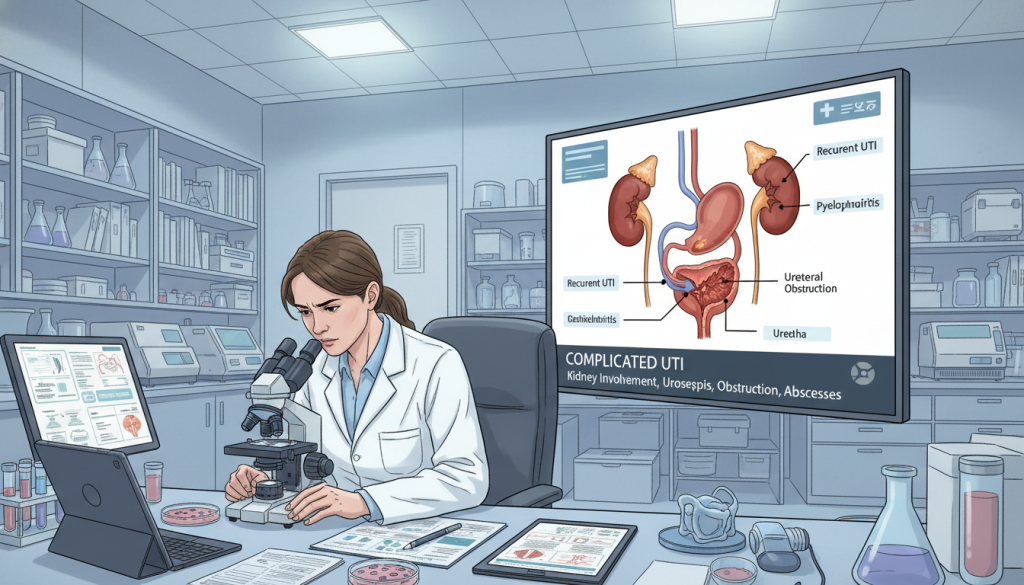
When you get a urinary tract infection, it can really disrupt your life. While many infections get better with basic treatment, some need more care. A Complicated UTI is when you need extra help because of other health issues or structural problems.
We want to help you understand your health better. Knowing your body is key to getting better. By working with your doctor, you can get a treatment plan that fits you.
We’re here to give you the info you need to make smart choices. This article is all about connecting medical knowledge with your health journey.
Key Takeaways
- Knowing when you need special medical help.
- Understanding the difference between simple and complex cases.
- The importance of working with your doctor for the best results.
- Using proven strategies for long-term health.
- Helping patients with clear and easy-to-understand medical info.
Understanding the Definition of a Complicated UTI
We call a complicated UTI an infection in a patient with certain urinary tract issues. These cases are harder to treat and more likely to last longer than simple infections.
These infections need more detailed tests and treatments than simple ones. Identifying these complexities early helps avoid bigger health problems and keeps you safe in the long run.
When you have a complicated UTI, your body finds it tough to fight off the bacteria. This is because of physical barriers or health problems. Knowing these risks helps us give you the right care to manage the infection and keep your urinary system healthy.
Common Causes and Pathogens Involved
We need to look at the specific pathogens and physical barriers that make an infection more complex. Unlike simple cases, a urinary tract infection often involves resistant bacteria or those protected by the body’s anatomy.
When urine flow is blocked, bacteria have a safe place to grow. Common blockages, like kidney stones or an enlarged prostate, act as shields. These blockages prevent the bladder from emptying fully, letting bacteria thrive despite treatment.
These obstructions create a lasting environment for urinary tract infections to come back. Because bacteria are shielded from antibiotics, they often survive and keep causing inflammation. This cycle of incomplete clearance is why some patients face long-term symptoms.
The type of bacteria also plays a big role in how complex the infection is. Certain bacteria, like E. coli or Proteus mirabilis, are great at forming biofilms. These layers make the urinary tract infection harder to treat than usual bladder infections, needing special medical approaches.
| Factor | Impact on Infection | Clinical Significance |
|---|---|---|
| Kidney Stones | Blocks urine flow | High risk of recurrence |
| Enlarged Prostate | Prevents bladder emptying | Common in older men |
| Biofilm Formation | Protects bacteria | Reduces antibiotic efficacy |
Recognizing the Symptoms of UTI in Complex Cases
Spotting the symptoms of UTI in complex cases is key to getting quick medical help. A simple infection might just cause some pain. But, complex cases can lead to bigger problems that need fast attention.
When an infection spreads beyond the bladder, your body might show more signs of trouble. Common signs include a high fever, constant chills, and sharp pain in the back or side.
These symptoms of UTI mean the infection might have reached the kidneys or bloodstream. This is a serious sign that needs a doctor’s check-up right away.
If you’re feeling confused, your heart is racing, or you can’t stop vomiting, get emergency care. Spotting these symptoms of UTI early helps doctors act fast. This is good for your kidney health in the long run.
If your symptoms get worse even after treatment starts, don’t hesitate to call your doctor. Your safety and well-being are our main concerns. Quick action is the best way to tackle complex infections.
Diagnostic Procedures and Clinical Evaluation
Finding the cause of a complicated urinary tract infection needs careful steps. We know that some infections don’t get better with usual treatments. This often means there’s something more going on. Our job is to find these problems through detailed tests.
We start with a detailed medical history and a physical check-up. Next, we do urine cultures to find out what bacteria are causing the problem. This is key because it helps us pick the right antibiotic for you.
We also use advanced imaging to see inside the urinary system. An ultrasound is often our first choice because it’s safe and shows us the kidneys and bladder well. If we need more info, a CT scan can show us things like kidney stones or blockages that might be causing the infection.
Every patient gets a tailored diagnostic plan based on their health. We use both our knowledge and modern tools to make sure we don’t miss anything. Below is a table showing the main tools we use to make our decisions.
| Diagnostic Tool | Primary Purpose | Clinical Benefit |
|---|---|---|
| Urine Culture | Identify specific pathogens | Targeted antibiotic selection |
| Ultrasound | Visualize anatomy | Non-invasive obstruction check |
| CT Scan | Detailed structural imaging | Detects complex complications |
| Blood Tests | Assess systemic response | Monitors kidney function |
The Impact of Antibiotic Resistance on Treatment
Dealing with persistent infections is getting harder due to antibiotic resistance. Bacteria are becoming resistant to the drugs meant to kill them. This makes treating infections more complicated.
Using antibiotics too much or incorrectly is a big problem. When drugs are not used right, bacteria can survive. This lets them develop ways to fight off future treatments.
We focus on targeted antibiotic therapy to fight this. We use lab results to pick the best drug for each infection. This way, we keep our drugs working better for longer.
We aim to give each patient the best care while avoiding more antibiotic resistance. We want you to talk openly about your treatment. Your health and recovery are our top concerns in this changing world of medicine.
Evidence-Based Treatment Options for Complicated UTI
Effective care for a complicated UTI starts with a smart move from broad-spectrum to targeted therapies. When we first meet a patient with a complex infection, we start with broad-spectrum antibiotics. This is key to help the patient right away while we wait for lab results.
After lab results show the exact pathogen, we get more precise. We switch to targeted treatment options. This way, we use the best medicine and lower the chance of antibiotic resistance. Precision is key to make sure the infection is gone for good.
We don’t just stop at getting rid of the bacteria. We also tackle the underlying issues that make a complicated UTI complex. This includes things like anatomical problems or health conditions. By fixing these, we greatly improve our patients’ long-term health.
Choosing the right treatment options is a team effort. We work closely with our patients to make sure they understand their treatment plan. Our aim is to offer reassuring and expert guidance every step of the way.
Managing a complicated UTI is an ongoing process. We keep a close eye on how the patient is doing and adjust our plan as needed. Our dedication to evidence-based treatment options means we always aim to give our patients the best care possible.
Managing Recurring UTIs and Chronic Infections
Dealing with recurring UTIs means moving from quick fixes to lasting solutions. When UTIs keep coming back, we need to look beyond just antibiotics. Our aim is to help you stop these infections and improve your life.
We start by looking closely at any underlying issues. Sometimes, problems with the body’s structure or how the bladder works make infections more likely. Fixing these physical problems is often the first step to ending the cycle of infection.
For many, we suggest suppression therapy. This is taking a low dose of medicine for a longer time to prevent infections. We watch how you’re doing to make sure this method is right for you.
Teaching you about your health is key to our approach. Knowing what triggers UTIs and when to act can help you manage your health better. Proactive monitoring lets us catch problems early, before they get worse.
Working together is the best way to manage recurring UTIs. Our team is here to support and guide you. Together, we can create a plan that focuses on your long-term health and well-being.
Potential UTI Complications and Long-Term Health Risks
When infections don’t go away, they can cause serious problems. Most cases can be treated, but ignoring UTI complications can lead to big health issues.

One big worry is kidney damage. Bacteria can move from the bladder to the kidneys and cause scarring. This scarring can hurt kidney function over time. It often needs constant medical care to keep things from getting worse.
Another serious risk is urosepsis, a severe reaction to an infection. It happens when the body’s immune system goes too far. This can lead to organ failure. It’s very important to know how serious these UTI complications are.
To understand these risks better, here’s a quick overview:
| Condition | Primary Impact | Clinical Focus |
|---|---|---|
| Kidney Scarring | Reduced filtration | Long-term monitoring |
| Urosepsis | Systemic inflammation | Emergency intervention |
| Chronic Impairment | Declining renal health | Specialized care |
It’s key to take your health seriously and follow treatment plans. Going to all your doctor’s appointments helps keep an eye on your recovery. By knowing about these UTI complications, you can help protect your health for the long term.
Special Considerations for Vulnerable Populations
Some patients face urinary tract infections differently than others. Those with certain health issues might not show the usual symptoms of UTI. We must be extra careful to catch these infections early and correctly.
Elderly patients might show cognitive changes or sudden confusion instead of pain. People with spinal cord injuries might not feel the usual discomfort of an infection. We focus on caring for each patient in a way that respects their unique needs.
Those with weakened immune systems need special care too. Their bodies might not react to infections in the usual way. We use detailed tests to find these infections, even when they’re hard to spot. Our aim is to help these patients by closely watching them and tailoring treatments just for them.
| Patient Group | Primary Challenge | Common Atypical Presentation |
|---|---|---|
| Elderly Patients | Reduced immune response | Confusion, lethargy, or falls |
| Spinal Cord Injury | Loss of sensory feedback | Increased spasticity or autonomic dysreflexia |
| Immunocompromised | Masked inflammatory signs | Systemic weakness or low-grade fever |
| General Population | Standard sensory awareness | Burning sensation and frequent urination |
By knowing these special needs, we can help our patients better. We’re dedicated to clinical excellence and caring for everyone, no matter their health challenges.
The Role of Surgical Intervention in Complex Cases
When medicines don’t work, surgery might be needed. Sometimes, we find physical problems that stop the body from getting rid of bacteria. These problems often cause UTI complications.
Our main goal is to fix the urinary system’s flow and function. We remove blockages or fix physical defects. This helps the immune system fight off infections. These surgeries are often key to lasting health.
Doctors often remove kidney stones or fix ureter blockages. These surgeries are done by skilled urologists who focus on safety and recovery. We want to make the surgery process clear, so you feel supported and informed about UTI complications.
| Procedure Type | Primary Purpose | Expected Outcome |
|---|---|---|
| Lithotripsy | Breaking down kidney stones | Clearance of obstruction |
| Ureteral Stenting | Opening blocked pathways | Improved urine flow |
| Stricture Repair | Correcting narrowed tissue | Reduced infection risk |
| Prostate Resection | Removing bladder outlet blockage | Better bladder emptying |
Deciding on surgery is big, but it often stops chronic infections. By fixing physical problems, we help patients live better lives. You are not alone in this journey, and our team is here to help you towards a healthier future.
Lifestyle Adjustments and UTI Prevention
Managing your urinary tract health is empowering. It starts with small, consistent changes. By adding certain habits to your daily routine, you can help keep your health in check and lower the chance of recurring UTIs. See these changes as ways to support your body, not limit it.
Drinking enough water is key for UTI prevention. Water helps flush bacteria from your urinary tract. Consistency is key; try to keep your urine diluted and empty your bladder often to reduce bacteria time.
Good hygiene is also important for your urinary health. Wipe from front to back after using the restroom to avoid bacteria transfer. Also, urinate soon after sex to clear bacteria introduced during intercourse.
Your diet can help prevent recurring UTIs too. Some people find cranberry products or probiotics helpful. Avoid bladder irritants like caffeine, alcohol, and spicy foods to reduce symptoms.
UTI prevention is about listening to your body and caring for it. By making these lifestyle changes, you build a strong defense against infections. We’re here to help you make these changes for a healthier life.
Emerging Research and Future Therapeutic Directions
We are in a new era of fighting complex infections with fresh research. The rise of antibiotic resistance has led us to seek better treatment options. Our goal is to help patients with long-lasting health problems through scientific breakthroughs.

Targeted vaccines are a big hope for us. They teach the immune system to fight off specific germs early. This way, we can lessen our need for medicines that might not work as well later.
Phage therapy is another area we’re excited about. It uses viruses to kill bad bacteria without harming good ones. We’re also looking into non-antibiotic treatment options like probiotics and anti-adhesion therapies. These help stop bacteria from sticking to the urinary tract.
Beating antibiotic resistance needs a mix of new and old ways. We’re all about pushing the limits of medicine. With these new tools, we aim to give our patients the best care for their health and happiness.
Conclusion
Managing urinary infections needs teamwork between you and your doctor. At Acıbadem Healthcare Group, we think knowing what to do is key to getting better. Early diagnosis and proven treatments help you feel more in control of your health.
Staying ahead of UTIs is the best way to keep you healthy long-term. Using the right prevention methods can lower the chance of future problems. We suggest talking openly with your doctor to make these strategies work best for you.
Our team is here to help you every step of the way. We offer the knowledge and support you need to manage your condition well. Start your journey to better health by understanding your body and taking action to prevent UTIs.
FAQ
Q: What is the primary difference between a simple infection and a complicated UTI?
A: A complicated UTI has issues like kidney stones or a weakened immune system. Simple infections happen in healthy people without these problems. Complicated cases need more treatment to clear the infection and prevent more problems.
Q: What are the most concerning systemic symptoms of UTI in complex cases?
A: Severe UTIs can cause symptoms like high fever and flank pain. These signs mean the infection might have spread to the kidneys or blood. Patients need quick medical help, like at Acıbadem Healthcare Group.
Q: How does antibiotic resistance impact the management of persistent infections?
A: Antibiotic resistance makes treating UTIs harder. Bacteria can survive drugs because of overuse. We use precise urine tests to find the right antibiotic for each case.
Q: Can structural issues like kidney stones cause recurring UTIs?
A: Yes, kidney stones and other obstructions can lead to recurring UTIs. These blockages let bacteria hide and multiply. Surgery might be needed to remove the blockage and prevent future infections.
Q: What are the possible UTI complications if the infection is not properly treated?
A: Untreated UTIs can cause serious problems. These include kidney damage, chronic kidney issues, and urosepsis, a dangerous infection response. Early treatment and a professional plan are key to avoiding these risks.
Q: What lifestyle adjustments do you recommend for effective UTI prevention?
A: Preventing UTIs involves daily habits. Stay hydrated, practice good hygiene, and consider supplements like D-mannose. For recurring UTIs, we create personalized plans to catch infections early.
Q: Why are certain populations, such as the elderly, at higher risk for a complicated urinary tract infection?
A: The elderly and others with special needs may not show typical UTI symptoms. They might feel confused or tired instead. These groups need careful care because of their unique risks.
Q: Are there any emerging treatment options for patients who do not respond to antibiotics?
A: New treatments like phage therapy and vaccines are being researched. These options could help those with resistant infections. They offer hope for the future of UTI treatment.