

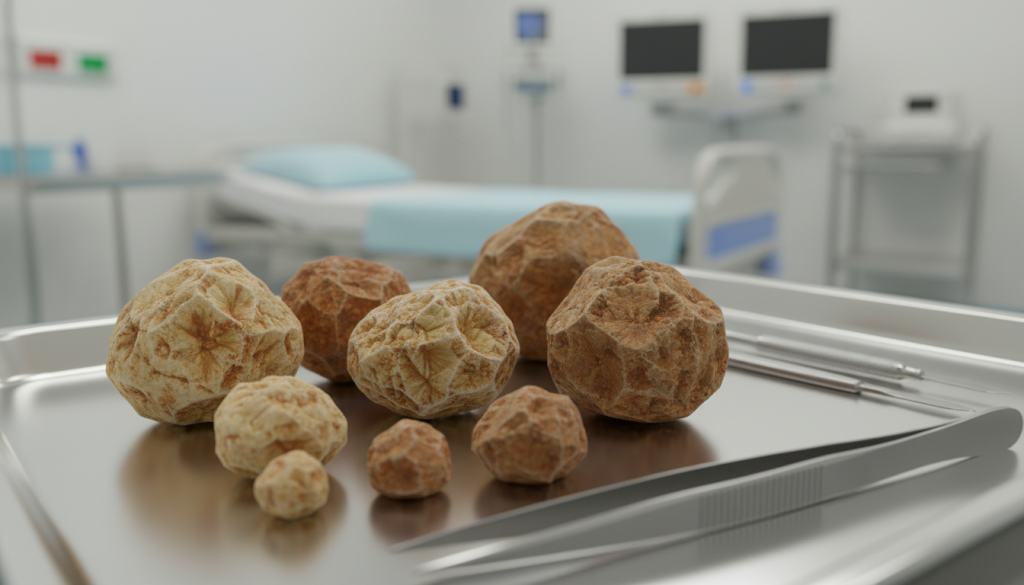
Discovering you have Bladder Stones can be scary, but you’re not alone. These stones form when minerals in your urine crystallize. This happens when the urine gets too concentrated. Understanding how these formations develop is the vital first step toward finding relief and restoring your comfort.
We see ourselves as your trusted medical resource. We’re here to guide you through every stage of your health. By learning about the causes of these deposits, you can make informed decisions about your care. Our team is here to support your well-being with clear, expert information.
Effective management is possible with the right approach. Whether you’re looking for answers for yourself or a loved one, we provide the clarity needed. Together, we can tackle these Bladder Stones and help you live a healthier life.
Key Takeaways
- These formations are mineralized masses that develop within the urinary system.
- Concentrated urine is the primary trigger for the crystallization process.
- Early identification is essential for effective and comfortable management.
- We prioritize patient education to help you make confident healthcare choices.
- Professional guidance ensures you receive the best path toward long-term relief.
Understanding the Formation of Bladder Stones
To understand bladder stones, we need to know how the urinary system works. It filters waste from the blood and removes it through urine. When it works right, minerals stay dissolved and leave the body without trouble.
But, if the bladder doesn’t empty fully, problems start. This is called urinary stasis. This trapped liquid is the main cause of mineral deposits.
Minerals in the urine start to concentrate and form crystals over time. These crystals grow and stick together, forming hard stones in the urinary system. Drinking enough water helps keep minerals diluted and the bladder clean.
Knowing how this works helps you stay healthy. Drinking water regularly and making sure the bladder empties fully helps your body clean itself. Here’s a table showing what affects these deposits.
| Factor | Impact on Bladder | Risk Level |
|---|---|---|
| Hydration Status | Dilutes mineral concentration | Low |
| Residual Urine | Promotes crystal formation | High |
| Bladder Emptying | Clears waste effectively | Low |
| Mineral Intake | Increases sediment risk | Moderate |
We think that basic knowledge is key to staying healthy. Knowing how your urinary system reacts to your habits helps you make good choices. Small, consistent healthy actions can greatly prevent stones from forming.
Primary Causes and Risk Factors
Many people mix up bladder stones with kidney stones. But they come from different reasons. Understanding these differences is key to getting the right treatment.
Bladder stones happen when your bladder doesn’t empty fully. This lets minerals in the urine turn into hard stones. It’s often because of problems that block urine flow.
In men, an enlarged prostate can block the bladder. Nerve damage, from diabetes or spinal cord injuries, can also stop the bladder from working right. Unlike kidney stones, bladder stones form mainly in the bladder.
Your lifestyle choices also affect your risk. Drinking too little water or eating foods high in certain minerals can make your urine more concentrated. Knowing these risks helps us make a plan to keep your urinary system healthy.
| Feature | Bladder Stones | Kidney Stones |
|---|---|---|
| Primary Origin | Bladder stasis | Kidney filtration |
| Common Cause | Prostate enlargement | Mineral imbalance |
| Clinical Focus | Emptying issues | Painful passage |
| Risk Factors | Nerve damage | Dietary habits |
Common Symptoms and Clinical Presentation
Knowing the signs of urinary stones helps get timely treatment. These mineral deposits can block urine flow, changing your daily life.
Lower abdominal pain is a common sign. It can feel like a dull ache or sharp spasms. Pain during urination gets worse as the stone moves or blocks the bladder.
Changes in bathroom habits are another sign. You might need to go more often but only pass a little urine. This is because the urinary system is reacting to the stone, irritating the bladder.
Blood in the urine, or hematuria, is a serious sign. If your urine looks pink, red, or brown, it means the stone is causing irritation. Seeing a doctor quickly is important to avoid more problems in the urinary system.
| Symptom | Clinical Description | Patient Experience |
|---|---|---|
| Abdominal Pain | Lower pelvic discomfort | Sharp or cramping sensation |
| Frequent Urination | Increased voiding frequency | Urgency with low volume |
| Hematuria | Blood in the urine | Visible discoloration |
| Dysuria | Painful urination | Burning or stinging feeling |
Knowing these common indicators helps you take care of yourself. If you have these symptoms, see a doctor to talk about getting checked for urinary stones.
Diagnostic Procedures and Medical Imaging
Understanding medical testing can reduce stress. We focus on transparency and clear communication to support you. Advanced technology helps us find stones accurately.
Ultrasound Assessment
Ultrasound is our first choice for screening. It’s non-invasive and radiation-free. Sound waves create real-time pictures of your bladder.
This method is safe because it doesn’t use harmful radiation. We know medical appointments can be overwhelming. We aim to make this quick and easy for you. You’ll get feedback on the scan results right away.
Computed Tomography Scans
For complex cases, we might suggest a CT scan. These scans give high-resolution, cross-sectional images. They show even the smallest stones or details.
CT scans use a bit of radiation, but they’re often necessary. Our team ensures your safety and comfort. We aim to give you the most accurate information for your recovery.
The Impact of Bladder Stones on Urinary Tract Health
It’s important to know how bladder stones affect your body for good urinary tract health. These mineral deposits in the bladder don’t just sit there. They rub against the bladder wall, causing irritation.
This irritation can lead to discomfort and may damage the bladder lining. We believe that recognizing these early warning signs is a vital step in protecting your physical well-being.
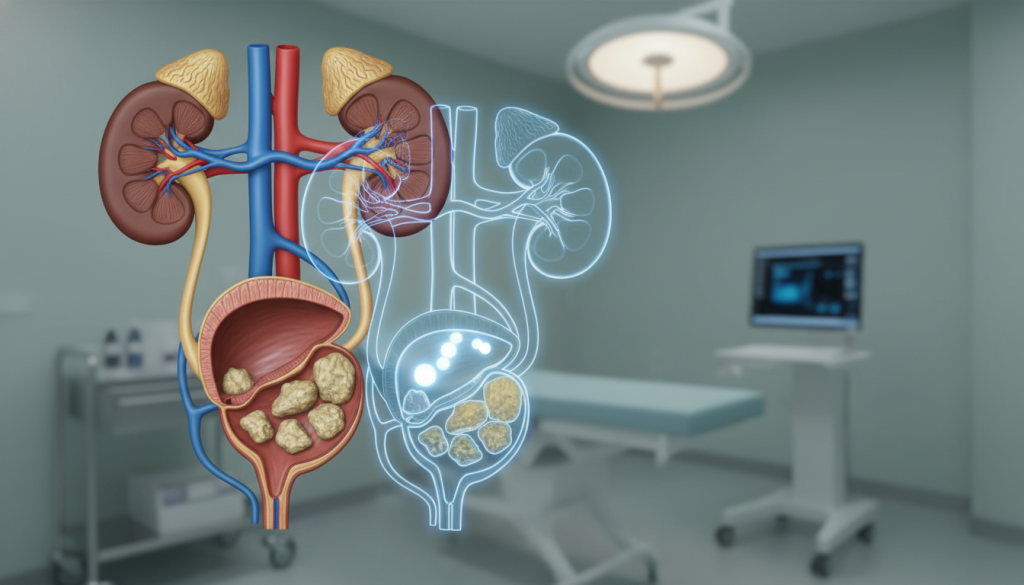
Stones can also block urine flow, creating a perfect spot for bacteria to grow. This often leads to recurrent urinary tract infections. It’s key to tackle these blockages early to keep your urinary tract health in check.
If ignored, bladder stones can weaken the bladder muscle. We encourage you to seek professional guidance at the first sign of trouble to prevent long-term damage.
Our team works together to address issues quickly. This ensures your urinary tract health stays a top priority. By acting now, you can avoid long-term problems and enjoy a better life.
Conservative Management and Lifestyle Adjustments
When bladder stones are found early and are small, we often start with conservative management. We think many patients can handle these issues with simple, non-invasive methods. By using your body’s natural ways, we can often skip more serious treatments.
The first step is drinking more water. Drinking lots of water makes urine less concentrated. This helps your body naturally get rid of small mineral deposits. Staying hydrated is a simple yet very effective way to keep your urinary tract healthy.
We also suggest making some diet changes to stop more stones from forming. Eating less food high in oxalates or too much sodium can help. These lifestyle changes are easy to follow and help you stay healthy for a long time.
We think it’s important to give patients the tools to take care of themselves. By following these steps, you help your body stay balanced and avoid future pain. Your active role in this is key to lasting health and comfort.
| Strategy | Primary Benefit | Implementation |
|---|---|---|
| Increased Hydration | Flushes mineral deposits | Drink 8-10 glasses daily |
| Dietary Control | Prevents crystallization | Limit sodium and oxalates |
| Regular Monitoring | Ensures stone passage | Follow-up clinical visits |
Surgical Interventions for Stone Removal
When bladder stones are too big to pass on their own or cause ongoing pain, surgery is often the best option. We know surgery can seem scary, but our team is here to support you every step of the way. Our main goal is to make you comfortable and improve your urinary health with the safest, most effective methods.
Cystolitholapaxy is a common and successful surgery we do. We use a special tool called a cystoscope to see the stones clearly. Then, we use laser or ultrasound to break them into small pieces.
After breaking down the stones, we remove the pieces from your bladder. This method is effective because it doesn’t need big cuts. This means you can recover faster and feel better sooner. Most people can go back to their normal activities quickly after the surgery.
We make sure you understand your treatment plan and what to expect. Modern surgery focuses on you, aiming for quick recovery and lasting results. You can trust that our team uses the latest technology to give you the best care.
| Procedure Type | Primary Benefit | Recovery Time |
|---|---|---|
| Cystolitholapaxy | Minimally invasive | Short (Days) |
| Laser Lithotripsy | High precision | Rapid |
| Open Surgery | Complex cases | Extended |
The Role of Lithotripsy in Modern Urology
If you have bladder stones, lithotripsy could be the answer. This advanced method is key in urology today. It uses shock waves to break down big stones into small pieces that can pass easily.
This method is less invasive than old surgeries. It puts less stress on your body. Most people recover faster and get back to their lives sooner. We use these new technologies to make your care better and less painful.
We know medical procedures can be scary. So, we explain how it works. We show how shock waves hit stones without harming healthy tissue. We aim to give you world-class care that’s comfortable and effective.
| Feature | Traditional Surgery | Modern Lithotripsy |
|---|---|---|
| Invasiveness | High (Incision required) | Low (Non-invasive) |
| Recovery Time | Several weeks | Few days |
| Anesthesia | General | Light sedation |
| Hospital Stay | Multiple days | Outpatient |
Choosing the right health path is a team effort. With lithotripsy, we keep improving urology for you. We’re here to support you every step of the way to better urinary health.
Complications Associated with Untreated Stones
Bladder stones might seem like a small problem, but ignoring them can lead to big health risks. These mineral deposits don’t just go away. They often get bigger and cause more serious health problems over time.
One big problem is getting chronic urinary tract infections. The rough surface of a stone is perfect for bacteria to grow. This can make infections come back, even with antibiotics.
Stones can also cause permanent damage to the bladder wall. The stone’s movement can irritate the lining, leading to scarring. This scarring can make it hard for the bladder to hold urine.
We stress that finding stones early is key to avoiding these problems. Treating stones quickly can help you avoid more serious issues. Taking care of your health now can prevent big problems later.
| Complication Type | Primary Cause | Potential Impact |
|---|---|---|
| Chronic Infection | Bacterial colonization on stone surface | Persistent pain and antibiotic resistance |
| Bladder Wall Damage | Mechanical irritation and inflammation | Reduced bladder capacity and scarring |
| Urinary Obstruction | Stone blocking the bladder neck | Inability to void and kidney strain |
Pediatric Considerations for Bladder Stones
Dealing with bladder stones in kids needs careful and gentle care. These stones are less common in children than in adults. But, they need special tests and treatment plans.
When your child has a health issue, it can be tough. Our team focuses on your child’s comfort and health. We use minimally invasive techniques to help them recover smoothly.

Managing these stones often means finding the root cause. This can be different from adults. Our experts work with families to support their child’s healing. We think informed parents are key in helping their child get better.
| Feature | Pediatric Approach | Adult Approach |
|---|---|---|
| Diagnostic Focus | Metabolic & Anatomical | Lifestyle & Diet |
| Treatment Priority | Growth & Comfort | Rapid Resolution |
| Bladder Stones | Gentle Intervention | Standard Lithotripsy |
| Follow-up Care | Developmental Monitoring | Recurrence Prevention |
We focus on specialized pediatric care to give kids the care they need. If you think your child has bladder stones, contact our specialists. We’re here to help your family with care and kindness at every step.
Preventative Strategies for Recurrent Stones
Creating a lasting plan is the best way to stop urinary stones from coming back. We work together, using medical advice and your lifestyle. This way, we can find and avoid specific triggers to keep you healthy.
Drinking enough water is the first step in prevention. It makes your urine less likely to form crystals. Consistency is key, so always carry a water bottle with you.
Changing what you eat is also important. Some foods can increase your risk of urinary stones. Others can help protect you. We suggest eating a balanced diet to keep your body in balance.
| Strategy | Action Item | Benefit |
|---|---|---|
| Hydration | Increase water intake | Dilutes urine minerals |
| Sodium Control | Limit processed foods | Reduces calcium excretion |
| Calcium Balance | Eat moderate calcium | Binds oxalates in gut |
It’s also key to keep an eye on your health. We help you watch for health issues that might lead to urinary stones. Regular check-ups let us adjust your plan as your health changes.
We’re all in this together to keep you healthy. Your journey to better health is a team effort. We’re here to guide you every step of the way. Together, we can make sure you stay healthy and feel good about your body.
The Connection Between Bladder Health and Kidney Function
Your urinary system works together like a team. Each part affects the others. Keeping your urinary tract health in check means looking at the whole system.
Chronic bladder stones show how connected we are. Stones in the bladder can block urine flow. This blockage can push urine back up, stressing the kidneys.
This backflow can harm the kidneys over time. It also makes it easier for new mineral deposits to form, raising the risk of kidney stones. So, taking care of your bladder health is key to protecting your kidney health.
We think a team effort is best for your health. Tackling bladder problems early can stop kidney damage. Proactive management keeps your urinary system working well, boosting your health.
Advancements in Urological Technology
We are entering a new era in urology where precision meets comfort. Our team uses the latest medical breakthroughs to make every procedure effective. This ensures care that is both advanced and personal.
Robot-assisted surgery is a big step forward. It lets our surgeons do complex tasks with great accuracy. This means there’s less trauma to healthy tissues.
We also use high-definition imaging systems for a clearer view of the urinary tract. These tools help us spot stones faster and more clearly. Our focus on innovation in urology means you get top-notch care tailored to your needs.
We aim to make your treatment as smooth and comfortable as possible. We think investing in technology is key to your long-term health. You can count on our methods being supported by the latest science.
Patient Education and Self-Care Guidelines
Keeping your bladder health in check needs regular effort and good habits. We think knowing more about your health makes you stronger. We’re here to help you every step of the way. By following these tips, you can help keep your health on track and watch for any problems.
Drinking enough water is key to a healthy bladder. We suggest drinking lots of water all day. This keeps your urine clear, stopping minerals from building up. Consistency is key for keeping your system clean.
Watching your symptoms at home helps catch problems early. If you see changes in how often you pee, the color, or if it hurts, call us right away. Keeping a simple log of your daily habits can help us understand your progress better.
The table below shows important habits for your bladder health and comfort:
| Habit Category | Recommended Action | Frequency |
|---|---|---|
| Hydration | Drink 6-8 glasses of water | Daily |
| Dietary Choices | Limit high-sodium processed foods | Ongoing |
| Symptom Tracking | Note pain or urgency changes | As needed |
| Physical Activity | Engage in light, regular exercise | Weekly |
We want you to use these tips at home to help you remember what we talked about. Sticking to these habits can really help your recovery. You are never alone in this journey, and we’re all here to help you succeed.
Conclusion
Managing bladder stones means knowing your body well and getting the right help. You now know how to spot symptoms early and get the right care. Staying proactive helps keep you healthy and comfortable for a long time.
We think informed patients make the best health choices. Bladder stones can be painful, but today’s medicine has good solutions. You don’t have to face these problems by yourself.
Our team at Acıbadem Healthcare Group is here to offer top-notch support and education. We focus on your recovery with expert advice and the latest medical care. If you have questions or worries about your urinary health, reach out to us.
Your path to better health begins with one step. Book a consultation to talk about your needs with our experts. We’re excited to help you stay healthy and active.
FAQ
Q: What exactly are bladder stones and how do they develop?
A: Bladder stones are hard masses that form in the bladder. They happen when urine in the bladder gets very concentrated. This concentration lets minerals turn into crystals and stick together. At Acıbadem Healthcare Group, we see these stones form when the bladder doesn’t empty fully. This leaves urine that hardens into stones over time.
Q: How do bladder stones differ from kidney stones?
A: Bladder stones and kidney stones are both mineral deposits. But they form in different places. Kidney stones form in the kidneys. Bladder stones form in the bladder, often because of issues like prostate enlargement or nerve damage. Knowing this helps protect your urinary system.
Q: What are the primary symptoms that indicate the presence of urinary stones?
A: Signs include pain in the lower abdomen, a strong need to urinate, and blood in the urine. You might also have trouble starting to urinate or feel pain while urinating. Spotting these symptoms early helps us act fast.
Q: Which diagnostic procedures are used to confirm a diagnosis?
A: We use advanced imaging to find and measure stones. Ultrasound gives a clear view of the bladder without radiation. CT scans provide detailed images for planning treatment.
Q: Can bladder stones be managed without surgery?
A: For small stones, we might suggest not doing anything. Drinking more water and changing your diet can help. We aim to support your bladder health and natural recovery.
Q: What is lithotripsy and how does it work in modern urology?
A: Lithotripsy is a modern, non-invasive method to break stones. It uses shock waves to shatter stones into tiny pieces. These pieces can then pass through urine naturally, making recovery faster than surgery.
Q: What surgical options are available for larger stones?
A: For big stones, we might do a cystolitholapaxy. This uses special tools and lasers to break down and remove stones. Our goal at Acıbadem Healthcare Group is to be precise and comfortable for you.
Q: Can children develop bladder stones?
A: Yes, though it’s less common in kids. Children need special care and gentle tests. We focus on finding and treating the root cause to support their growth.
Q: What are the risks of leaving bladder stones untreated?
A: Untreated stones can cause long-term irritation and infections. They can also block urine flow, harming the kidneys. This can affect your overall health.
Q: How can I prevent the recurrence of urinary stones in the future?
A: Preventing stones involves staying hydrated, eating right, and regular check-ups. We create a plan tailored to you to keep your urinary system healthy.
Q: How does bladder health impact my overall kidney function?
A: Your bladder and kidneys are connected. Problems in the bladder can harm the kidneys. Stones can cause pressure or infections that travel up, leading to kidney stones. Keeping your bladder healthy is key to your overall wellness.