

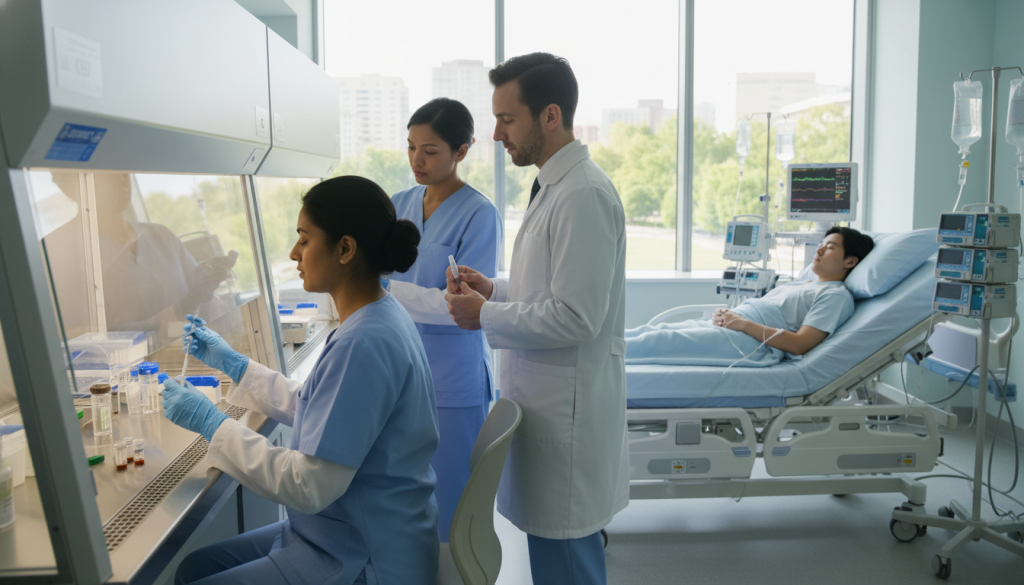
Getting a diagnosis that affects your blood or immune system can be scary. At Acıbadem Healthcare Group, we think knowing more is the first step to healing. A Stem Cell Transplant is a complex medical procedure. It aims to treat serious conditions by replacing bad marrow with good, working units.
This method removes unhealthy cells and adds new ones that can make healthy blood. We are here to guide you through every part of this journey. By knowing how these procedures help your body, you can face your treatment with confidence and peace of mind.
Key Takeaways
- This procedure is a vital treatment for various blood-related disorders and cancers.
- It functions by replacing damaged marrow with healthy, donor-derived or patient-derived cells.
- The primary goal is to restore the body’s ability to produce essential, healthy blood cells.
- Patients receive expert support to navigate the physical and emotional aspects of recovery.
- Understanding the process empowers individuals to make informed decisions about their healthcare path.
Understanding the Fundamentals of Stem Cell Transplant
To understand modern medicine, we must first learn about the hematopoietic stem cell transplant. This process involves giving healthy, young cells to a patient. These cells replace damaged ones caused by disease or strong treatments.
These cells are called the body’s master cells. They can grow into the blood’s key parts: red blood cells, white blood cells, and platelets. A stem cell transplant helps the body fight infections and carry oxygen better.
The hematopoietic stem cell transplant is like a biological reset for the body. It aims to give the bone marrow a chance to make healthy cells again. This is the goal for patients going through this process.
This procedure is key for treating serious blood diseases like leukemia and lymphoma. By knowing this, patients can better understand their treatment. A successful stem cell transplant is a big step towards better health and stability.
Types of Stem Cell Transplants
We divide stem cell transplants into types based on where the healthy cells come from. A hematopoietic stem cell transplant replaces damaged blood cells with new ones. It’s key for those with blood cancers and immune issues.
Older methods involved taking cells directly from the hip bone. Now, doctors often take them from the blood. Both methods aim to fix the body’s blood-making abilities.
The main difference is who the cells come from. In an autologous stem cell transplant, the patient’s own cells are used. These cells are saved before treatment starts. This method is best when the disease doesn’t affect the bone marrow.
An allogeneic stem cell transplant uses cells from a donor. This donor can be a family member or someone found through a registry. Finding the right match is key for the best results.
| Transplant Type | Cell Source | Primary Benefit |
|---|---|---|
| Autologous | Patient’s own cells | No risk of rejection |
| Allogeneic | Matched donor | Provides new immune system |
| Bone Marrow | Directly from bone | Traditional, proven method |
Whether it’s a bone marrow transplant or a blood procedure, your team will plan it just for you. Knowing your options can make you feel more in control. We’re here to help you understand and make choices about your health.
Conditions Treated with Stem Cell Therapy
Stem cell therapy is a key part of healthcare today. It helps replace damaged cells with healthy ones. This can lead to a big change in how patients feel.
People often turn to stem cell treatment when other treatments don’t work. It aims to fix the body’s ability to make healthy blood cells and fight off infections.
Studies show that stem cell therapy works well for many diseases. We make sure patients know how it fits with their health needs.
| Condition Category | Primary Examples | Therapeutic Goal |
|---|---|---|
| Hematologic Malignancies | Leukemia, Lymphoma | Replace malignant cells |
| Immune Disorders | Severe Combined Immunodeficiency | Restore immune function |
| Bone Marrow Failure | Aplastic Anemia | Stimulate healthy production |
Choosing stem cell treatment needs careful thought. We help patients understand if it’s right for them. We guide them based on their health and needs.
The main aim of stem cell therapy is to find lasting solutions for tough diseases. We focus on precision and care for each patient. This way, we open up new ways to help those facing big health challenges.
The Complete Stem Cell Transplant Process
We aim to clear up the stem cell transplant process for you. Our goal is to make you feel empowered and informed at every step. We believe in being open and supportive throughout your care.
The first step is a detailed initial evaluation. Our team checks your health to find the best treatment for you. This ensures your care is tailored to your needs.

After deciding on a plan, the stem cell procedure starts with conditioning. This step gets your body ready for the new cells. We work with you to make every decision, keeping you in the loop.
The infusion is the key moment in the stem cell transplant. Here, the healthy cells are given to you. Our team watches over you to keep you safe and comfortable.
The last part is the recovery phase. We focus on your long-term health and watch for any issues. We offer compassionate guidance as your body heals. By explaining the stem cell transplant process in simple steps, we help you feel more confident and clear.
Stem Cell Collection Procedures
Learning about stem cell harvesting can make you feel more at ease. We use two main ways to get these cells, each suited to the patient’s needs. Whether it’s a bone marrow transplant or peripheral blood, our team follows strict clinical standards.
One method is taking cells from the hip bone. This bone marrow transplant is done under anesthesia to keep you comfortable. Our team watches your vital signs closely to keep you safe.
Another way is peripheral blood apheresis. Here, blood is taken from a vein and filtered to get the stem cells. Then, the rest of the blood is put back in your body. This method is quick and doesn’t hurt much.
We make sure you’re comfortable by talking to you clearly and supporting you every step of the way. By explaining these methods, we hope to lessen your worries and make you feel more confident about your treatment. Our main goal is to create a reassuring place where your health is our top priority.
| Feature | Bone Marrow Harvest | Peripheral Apheresis |
|---|---|---|
| Anesthesia | General or Regional | None Required |
| Collection Site | Pelvic Bone | Bloodstream |
| Recovery Time | Several Days | Immediate |
| Procedure Duration | 1 to 2 Hours | 3 to 5 Hours |
The Infusion Phase
Receiving an autologous stem cell transplant or a donor-derived infusion is a pivotal moment in your treatment. It’s like a blood transfusion, where cells are put directly into your blood through a special catheter.
Our clinical teams watch over you closely to keep you safe. They check your vital signs constantly, looking for any signs of reaction as the cells enter your body. This careful observation shows our dedication to your well-being during this critical time.
After the infusion, the cells travel to your bone marrow. There, they start to settle and produce healthy blood cells. Whether it’s your own cells or a donor’s, the goal is to help your body work right again.
| Feature | Autologous Transplant | Allogeneic Transplant |
|---|---|---|
| Cell Source | Patient’s own cells | Matched donor cells |
| Primary Risk | Disease recurrence | Graft-versus-host disease |
| Immune Recovery | Generally faster | Requires immunosuppression |
| Preparation | High-dose chemotherapy | Chemo and/or radiation |
This phase can feel scary, but you’re in good hands. Our staff is here to offer reassurance and clarity every step of the way. Your recovery is our top priority, and we’re here to support your health every step of the way.
Managing Stem Cell Transplant Side Effects
We believe in being open about stem cell transplant side effects to help patients on their healing journey. The procedure is a lifesaver but comes with physical challenges. Our team works hard to manage these issues and support your health.
Right after the infusion, you might feel nausea, fatigue, or mouth sores. These temporary symptoms happen as your body gets used to the new cells. We help you with medications and diet changes to manage these symptoms.
Long-term health is also a big part of our care plan. By talking openly about stem cell transplant side effects, we help you and your family know what to expect. Keeping in touch with your healthcare team is key to handling any new symptoms fast.
| Side Effect Category | Common Symptoms | Management Strategy |
|---|---|---|
| Immediate | Nausea and fatigue | Anti-nausea medication |
| Oral Health | Mouth sores (mucositis) | Specialized oral hygiene |
| Immune Response | Skin rashes or fever | Close clinical monitoring |
| Long-term | Hormonal changes | Regular endocrine screening |
Your comfort is our top priority at every stage. We want you to tell us about any health changes, no matter how small. Working together, we can overcome these challenges and move forward towards recovery.
Graft-Versus-Host Disease (GVHD)
When donor cells see the recipient’s body as foreign, GVHD can happen. This is a special reaction that can occur after an allogeneic stem cell transplant. The donor’s immune system might see healthy tissues as threats, causing inflammation.
Understanding this is key to managing stem cell transplant side effects. The transplant aims to replace sick cells, but the immune system might get too active. We watch patients closely to see if they’re recovering normally or if GVHD is happening.

We have plans to catch symptoms early, which helps a lot. Signs often show up in the skin, liver, or stomach, like rashes, jaundice, or stomach pain. Telling your doctors about these symptoms right away is very important for quick treatment.
We use treatments like corticosteroids or other medicines to calm the immune system. These treatments work well if started early. By talking openly with your healthcare team, you help in your healing after an allogeneic stem cell transplant.
Our team is here to help you feel safe and comfortable. We have the knowledge to help you through these tough times. Your health and well-being are our main concern as we support your recovery.
The Recovery Journey and Post-Transplant Care
The post-transplant period is a key time for your body to get stronger. It’s a gradual process that needs careful care and watchful eyes from our medical team. This stage is a big part of the stem cell transplant process, helping your body adjust to the new cells.
In the first weeks, our team works on rebuilding your immune system. Your body is busy integrating the new cells, and we keep a close eye to avoid any issues. We create a supportive space for you to safely reach these early milestones.
Getting back to daily life is important, and physical therapy plays a big role. We suggest gentle exercises to help you build strength and stamina. This supportive approach helps you feel supported and confident as you get back to your routine.
The table below shows the main goals of your recovery journey:
| Recovery Phase | Primary Focus | Expected Outcome |
|---|---|---|
| Early Post-Transplant | Immune Monitoring | Stable cell engraftment |
| Intermediate Phase | Physical Rehabilitation | Improved mobility and energy |
| Long-term Recovery | Lifestyle Integration | Return to daily activities |
We are dedicated to your long-term health at every step of the stem cell transplant process. Together, we aim for the best care and support. Your health and happiness are our top priorities as you look forward to a better future.
Nutritional and Lifestyle Adjustments
We think small, steady changes in diet and environment can greatly help your health after a transplant. Your body needs extra help to get strong again and keep your vulnerable immune system safe. Making smart choices helps you heal faster.
Keeping your diet safe is key to getting better. Your immune system is weak, so we advise following certain rules to avoid getting sick from food. Food safety is important so your body can focus on healing, not fighting off infections.
We’ve listed some important diet tips to help you. These habits are safe and help you get the nutrients you need for healing and energy.
| Food Category | Recommended Approach | Items to Avoid |
|---|---|---|
| Dairy Products | Pasteurized milk and yogurt | Raw or unpasteurized cheeses |
| Proteins | Well-cooked meats and eggs | Raw sushi or undercooked poultry |
| Produce | Thoroughly washed fruits and vegetables | Unwashed raw sprouts or salads |
Your home environment is also very important for your health. We recommend keeping your home clean and avoiding germs. Simple actions like washing your hands often and staying away from crowded places help protect you.
Knowledge and consistency are powerful. By making these lifestyle changes part of your daily life, you support your recovery. We’re here to help you every step of the way, so you can feel strong and confident again.
Advancements in Stem Cell Research
We are in a new era of medical science with stem cell therapy leading the way. Our team is committed to using these breakthroughs to help our patients. We make sure every treatment plan is up to date with the latest in medicine.
New ways to process and engineer cells have made treatments safer. Scientists are working to improve how cells are taken and prepared. This helps reduce risks and makes treatments more effective for each person.
Keeping up with stem cell therapy is key to top-notch care. We update our methods based on new research. This way, we can tackle tough health issues with more confidence and success.
The future of regenerative medicine looks bright, with new treatments on the horizon. We’re always looking for the latest in stem cell therapy to help our patients. Your health and recovery are our main focus as we explore what’s possible in medicine.
The Importance of Specialized Healthcare Facilities
Your safety and recovery depend on the healthcare center you choose. A stem cell transplant is a complex process. It needs a highly controlled environment for your protection.
Centers like those in the Acıbadem Healthcare Group are designed for these treatments. They focus on sterile conditions to lower infection risks. This is key for patients with weak immune systems.
The success of your transplant also depends on a multidisciplinary team. This team includes hematologists, nurses, infectious disease experts, and nutritionists. They work together to watch over you 24/7.
Choosing a top-notch facility means you get access to the latest diagnostic tools and care plans. This team effort ensures your health is managed with care and compassionate care.
| Feature | General Hospital | Specialized Transplant Center |
|---|---|---|
| Infection Control | Standard protocols | Advanced HEPA-filtered environments |
| Medical Staff | General practitioners | Dedicated multidisciplinary specialists |
| Support Services | Limited availability | Comprehensive 24/7 patient support |
| Technology | Basic diagnostic tools | State-of-the-art transplant equipment |
Your choice of facility is the start of your healing journey. By picking a center that offers clinical excellence and support, you set yourself up for a successful recovery.
Navigating Insurance and Financial Planning
Financial clarity helps you focus on what’s most important: your health and recovery. We know dealing with the costs of medical procedures can be overwhelming for many. Our aim is to guide you through these financial challenges with confidence.
Our team works with you to clear up the financial side of your healthcare. We help verify your insurance coverage and deal with pre-authorization needs. This way, you’ll have a clear view of your financial future.
Good financial planning starts with talking openly. We encourage you to talk to our financial counselors early. Discuss your policy details and what you might have to pay out of pocket. This helps avoid surprises and lets you plan better for the future.
The table below shows important steps for getting ready financially for your treatment:
| Action Step | Description | Goal |
|---|---|---|
| Insurance Verification | Review policy benefits and coverage limits. | Understand your financial responsibility. |
| Pre-authorization | Submit necessary clinical documentation. | Secure approval for the procedure. |
| Financial Counseling | Meet with our dedicated support staff. | Create a manageable payment plan. |
We’re here to support you every step of the way. Remember, you’re not facing this alone. Our team is dedicated to helping you make choices that focus on your well-being and peace of mind.
Conclusion
Choosing the right medical partner is key to your health journey. At Acıbadem Healthcare Group, we focus on your well-being. We combine advanced clinical skills with caring support.
Modern stem cell treatment can change lives for many patients. Our specialists are dedicated to top-notch care that fits your needs. We aim to give you the knowledge to make smart choices about your future.
We encourage you to talk to our clinical experts about your health goals. Our team works hard to give you the best medical care during your recovery. Your health is our main goal as we explore new medical innovations.
Trust us to guide you through your care. We’re here to support your journey to better health and wellness. Let’s explore how stem cell treatment can enhance your life.
FAQ
Q: What exactly is a Stem Cell Transplant, and how does it function as a life-saving treatment?
A: A Stem Cell Transplant replaces damaged bone marrow with healthy cells. At Acıbadem Healthcare Group, we use it to help patients with serious blood disorders or cancer. It’s a way to “reboot” the body’s blood-making abilities.
Q: What are the biological fundamentals of a hematopoietic stem cell transplant?
A: A hematopoietic stem cell transplant uses “master cells” in the blood. These cells can become red blood cells, white blood cells, and platelets. They help the body make new blood cells.
Q: What is the difference between an autologous stem cell transplant and an allogeneic stem cell transplant?
A: An autologous transplant uses the patient’s own cells. An allogeneic transplant uses cells from a donor. Our team chooses the best option based on the patient’s health and diagnosis.
Q: Which medical conditions are most commonly treated with stem cell therapy?
A: We treat many conditions with stem cell therapy. This includes blood cancers and non-cancerous diseases. Our goal is to remove the disease and give the body a new blood system.
Q: What can I expect during the multi-stage stem cell transplant process?
A: The process starts with a check-up to prepare the body. Then, there’s a conditioning phase with chemotherapy or radiation. Next, the stem cells are infused, and the body is monitored for growth.
Q: How are cells harvested during a bone marrow transplant or peripheral blood collection?
A: Cells can be collected in two ways. Bone marrow transplants take marrow from the hip bone. Peripheral blood apheresis filters stem cells from the blood. We make sure patients and donors are comfortable during these procedures.
Q: What does the actual infusion phase of the stem cell treatment look like?
A: The infusion phase is like a blood transfusion. Healthy cells are given through a catheter. They then go to the bone marrow to make new blood cells.
Q: What are the common stem cell transplant side effects I should be aware of?
A: Side effects can include nausea, fatigue, and mouth sores. We also watch for long-term risks like infections. Our team works to manage these risks and keep you comfortable.
Q: What is Graft-Versus-Host Disease (GVHD), and how is it managed?
A: GVHD is a complication of allogeneic transplants. It happens when the donor’s cells attack the patient’s body. We use special treatments and medications to prevent and treat GVHD.
Q: How long is the recovery journey, and what does post-transplant care involve?
A: Recovery takes several months. The first part focuses on rebuilding the immune system. We check for infections and cell growth daily. Our care includes follow-up visits, blood tests, and physical therapy to help you get back to normal.
Q: What nutritional and lifestyle adjustments are necessary after a hematopoietic stem cell transplant?
A: Follow a neutropenic diet to protect your immune system. Eat well-cooked foods and avoid raw fruits and unpasteurized dairy. Keep your home clean, avoid crowds, and take your medications as directed.
Q: How are advancements in stem cell research improving outcomes for patients?
A: Research is making transplants safer and more effective. New techniques like haploidentical transplants and cell engineering are reducing risks. We stay updated with these advancements to give our patients the best care.
Q: Why should I choose a specialized facility like Acıbadem Healthcare Group for my procedure?
A: A successful transplant needs a clean, high-tech environment and a skilled team. Acıbadem Healthcare Group offers top-notch facilities and a dedicated team. We provide holistic care for your transplant journey.
Q: How can patients navigate insurance and financial planning for their stem cell treatment?
A: Dealing with insurance and finances can be tough. Our team at Acıbadem Healthcare Group helps with insurance and financial planning. We work with local and international insurance providers to help you understand your options.