

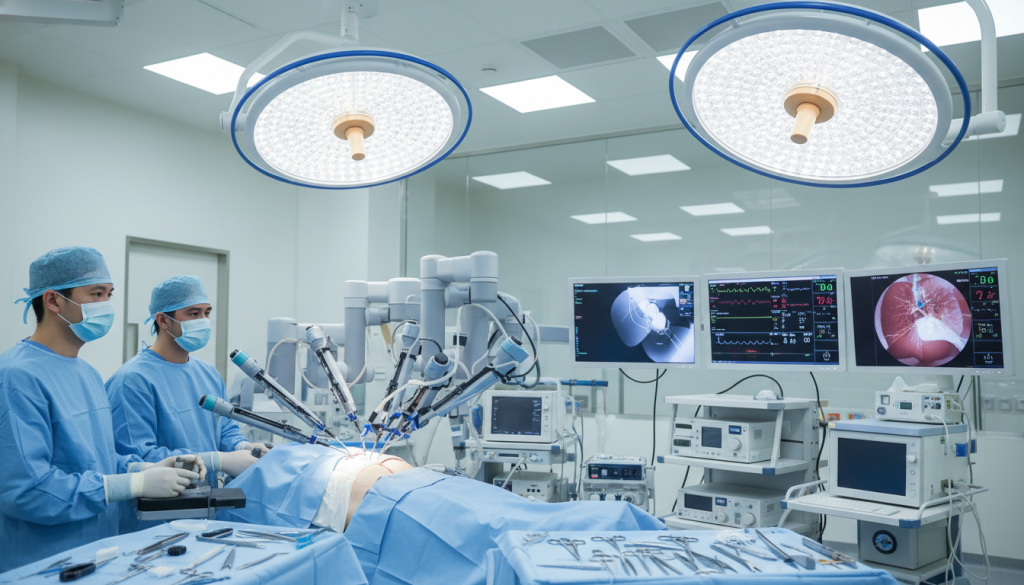
Modern medicine keeps getting better, giving patients new ways to tackle tough chest problems. Robotic Thoracic Surgery is a big step forward. It uses the latest tech and our team’s skills.
At Acıbadem Healthcare Group, we think world-class care means being open. We aim to give you the best treatment choices. And we make sure you feel supported every step of the way.
We teach patients about their health to clear up any confusion. By sharing clear, trustworthy info, we help you make smart health choices.
Key Takeaways
- Advanced technology enhances precision during complex chest procedures.
- Our institution focuses on delivering world-class, patient-centered care.
- We emphasize clear communication to help you understand your treatment plan.
- Modern techniques often lead to improved recovery experiences for patients.
- Empowering patients through education remains at the heart of our mission.
The Evolution of Minimally Invasive Thoracic Procedures
Surgical techniques have changed a lot in thoracic medicine. For years, surgeons used open thoracotomy. This method needed big cuts and spreading ribs to get to the chest.
But, it caused a lot of pain and long hospital stays. Now, we’re moving to minimally invasive surgery. This uses smaller cuts and special tools.
This change aims to reduce harm to patients. With advanced cameras and high-definition views, surgeons can do complex thoracic procedures with great accuracy.
The main benefit is a big drop in recovery time. Patients feel less pain and get back to normal faster. This has made these new methods the standard of care in many U.S. hospitals.
We keep improving these methods, focusing on patient safety and health. Technology in thoracic procedures helps us treat conditions better while protecting healthy tissue. Choosing minimally invasive surgery shows how far medical science has come in caring for patients.
Understanding Robotic Thoracic Surgery
Robotic Thoracic Surgery is a blend of human skill and advanced tech. It’s a myth that the machine does the surgery alone. The surgeon is in complete control at all times.
This robot-assisted surgery is like an extension of the surgeon’s hands. It uses special tools to make the surgeon’s hand movements precise inside the chest. This lets the surgeon do things their hands can’t.
The tech also gives enhanced visualization for chest surgeries. High-definition, 3D cameras show the surgical area clearly. This helps the team work with great accuracy.
We assure our patients this tech supports, not replaces, the surgeon. The robot-assisted surgery platform helps the surgeon in tight spaces. Robotic Thoracic Surgery mixes the surgeon’s knowledge with modern tech for top care.
Key Components of the da Vinci Surgical System
The da Vinci Surgical System combines advanced hardware and intuitive control. It uses advanced surgical technology for precise thoracic procedures. The system includes a surgeon console and a patient-side cart, working together for our medical teams.
The surgeon console is where we control the surgery. We see a 3D image of the site and move the robotic arms. This setup lets us work in the chest cavity with remarkable confidence.
The patient-side cart holds the robotic arms that touch the patient. These arms have special tools for stability. This advanced surgical technology helps us do detailed work in tight spaces without harming nearby tissues.
EndoWrist Instrumentation
The EndoWrist instruments are the system’s magic. They move like a human wrist, with seven degrees of freedom. This incredible flexibility lets us reach places traditional tools can’t.
These instruments are very precise. We can do complex tasks like suturing and dissection easily. The advanced surgical technology removes tremors, making our movements steady and controlled. Here’s a comparison of traditional tools and robotic ones.
| Feature | Traditional Tools | EndoWrist Instruments |
|---|---|---|
| Range of Motion | Limited (Rigid) | Full (7 Degrees) |
| Tremor Filtration | None | Automatic |
| Precision | Manual | High-Definition |
| Ergonomics | Standard | Advanced |
Clinical Applications and Common Procedures
We use advanced technology to treat many thoracic diseases with great precision. By using robotic-assisted thoracic surgery, we can tackle complex conditions that needed big, invasive cuts before. This method lets our teams work in the chest cavity with unmatched clarity and control.
Our surgeons deal with issues like lung nodules, thymomas, and complex esophageal problems. Each case is different, and we customize our surgery for each patient. Precision is the cornerstone of our care, making sure we remove diseased tissue without harming healthy areas.
Robotics in lung surgery is a big part of what we do, like during lobectomies. In a lobectomy, we take out a lung lobe with disease. The robotic system gives us a clear, 3D view, essential for finding and protecting important blood vessels and airways.
This level of detail leads to better results for our patients. We cause less damage to the chest, helping them recover faster. Whether it’s a benign growth or a tumor, our focus is always on patient safety and long-term health. With robotic-assisted thoracic surgery, we’re raising the bar for chest care.
Benefits of Robotic-Assisted Thoracic Surgery
We focus on improving patient life quality with new surgical tech. Robot-assisted thoracic surgery offers a precise, less invasive way to heal. It lets our teams do complex surgeries with better vision and control.
One big benefit of robotic surgery is less post-op pain. Smaller cuts mean less chest wall damage. This makes the recovery smoother and cuts down on pain meds.
Patients also spend less time in the hospital. The Robotic Thoracic Surgery method causes less tissue damage. This helps the body heal faster, so patients can go home sooner.
Another plus is smaller scars. The small cuts lead to better-looking results. We aim to make our patients happy with both great care and a good experience.
| Feature | Open Thoracotomy | Robotic-Assisted Surgery |
|---|---|---|
| Incision Size | Large (5-10 inches) | Small (1-2 cm) |
| Post-Op Pain | High | Low to Moderate |
| Hospital Stay | Extended | Shortened |
| Recovery Time | Several Weeks | Faster Return to Activity |
The benefits of robotic surgery go beyond the surgery room. Robot-assisted thoracic surgery helps patients heal faster and more comfortably. Our dedication to Robotic Thoracic Surgery shows our commitment to top-notch, patient-focused care.
Patient Selection and Preoperative Evaluation
A successful surgery starts long before the patient goes into the operating room. We believe that thorough preparation is key for safe and effective robotic thoracic surgery. We carefully screen each patient to make sure the surgery fits their health needs.
We start by reviewing the patient’s medical history. We look at past health issues, current medications, and any previous surgeries. This holistic view helps us create a surgical plan that meets the patient’s specific needs.
We use advanced imaging like CT and PET scans to map the chest’s anatomy. These images give our surgeons a detailed roadmap for the surgery. We also do pulmonary function tests to check how well the lungs are working.
Our team, including thoracic surgeons, anesthesiologists, and pulmonologists, works together to understand these findings. We focus on clear communication to make sure each patient is ready physically and mentally for the surgery.
| Evaluation Category | Diagnostic Tool | Clinical Purpose |
|---|---|---|
| Imaging Analysis | CT and PET Scans | Mapping anatomical structures |
| Respiratory Health | Pulmonary Function Tests | Measuring lung capacity |
| Cardiac Clearance | EKG and Stress Tests | Ensuring heart stability |
| Medical History | Clinical Review | Identifying surgical risks |
Our goal is to offer a personalized care experience. We explain the evaluation results to our patients, answering their questions and addressing their concerns. This builds trust and confidence as we prepare for the surgery.
The Surgical Workflow and Team Dynamics
Every successful surgery is a result of teamwork and precision. The whole room works together like one unit. The skill in robotic surgical techniques comes from the team’s unity.
The work starts before the first cut. Everyone knows their role to keep the patient safe and the surgery on schedule. Clear, concise communication is key in our surgical space.
Our team setup supports the lead surgeon and watches over the patient. Here’s a table showing the important roles for using robotic surgical techniques well:
| Team Member | Primary Responsibility | Key Contribution |
|---|---|---|
| Lead Surgeon | Console Operation | Precision control of instruments |
| Bedside Assistant | Port Management | Instrument exchange and retraction |
| Anesthesiologist | Patient Stability | Hemodynamic and respiratory monitoring |
| Surgical Nurse | Equipment Support | Sterile field and system readiness |
The bedside assistant is key, acting as the surgeon’s hands. They need to know robotic surgical techniques well. Their quick thinking makes the surgery smooth.
Our teamwork is the base of our safety. We value respect and open talk. This teamwork helps us give the best care to our patients.
Anesthesia Considerations for Robotic Chest Procedures
Managing anesthesia for robotic chest surgery is unique. It involves special patient positioning and ventilation. The patient is often placed in a lateral decubitus position. This allows the surgeon to access the chest cavity better.
Our team must watch for changes in lung mechanics. This is because of the patient’s position. Anesthesiologists need to stay alert during the surgery.
We use advanced monitoring to keep the patient stable. We track blood pressure, heart rate, and oxygen levels in real-time. This helps us manage the patient’s health during the surgery.

Lung ventilation is key during these thoracic procedures. We use techniques like one-lung ventilation. This gives the surgeon a clear view of the area being operated on.
Our team focuses on keeping the patient comfortable and stable. This attention to detail is important for a smooth surgery.
Our anesthesia team works closely with the surgical staff. They monitor the patient’s status throughout the surgery. By balancing anesthesia depth and respiratory support, we help the patient recover well.
The table below shows the main areas our anesthesia team focuses on during these complex surgeries.
| Monitoring Parameter | Clinical Goal | Safety Impact |
|---|---|---|
| Hemodynamic Stability | Maintain consistent blood pressure | Prevents organ stress |
| Lung Ventilation | Optimize oxygenation levels | Ensures tissue health |
| Patient Positioning | Protect nerves and joints | Reduces postoperative pain |
| Fluid Management | Balance hydration status | Supports cardiovascular function |
Managing Possible Complications and Safety Protocols
Our team takes a proactive approach to safety in the operating room. We use a detailed checklist for robotic lung surgery to reduce risks. This method helps us prepare for and solve problems quickly.
Even though robotic surgery outcomes are usually great, we stay very careful. We have set rules for handling issues like small bleeding or air leaks. Our team believes being ready is key to keeping patients safe.
We value being open with our patients. We explain the surgery process clearly, including what to expect if things don’t go as planned. This way, we build lasting trust with our patients.
We keep a close eye on patients after surgery to make sure they’re doing well. Our team watches every detail of the recovery to catch any problems early. This focus on quality means patients get the best care for robotic lung surgery.
Postoperative Care and Recovery Pathways
After the surgery, we focus on your comfort and healing. We have recovery plans to help you get strong again safely and quickly. One big benefit of robotic surgery is it lets you move early, which is key to our success.
Patients often feel less pain because the surgery is less invasive. This means you might not need as much pain medicine. We want you to start moving gently soon after surgery to help your lungs and blood flow.
Our nursing and rehab teams are here to support you. They help you get better and make sure you’re comfortable. They work with you to make sure you’re on the right path to recovery, feeling empowered and informed.
The table below shows how new methods make recovery better than old ones.
| Recovery Metric | Traditional Thoracotomy | Robotic-Assisted Surgery |
|---|---|---|
| Hospital Stay Duration | 5–7 Days | 2–4 Days |
| Pain Medication Needs | High (Opioid-heavy) | Low (Non-narcotic focus) |
| Return to Daily Activity | 4–6 Weeks | 2–3 Weeks |
| Overall Patient Experience | Standard | Enhanced benefits of robotic surgery |
Comparing Robotic Surgery to VATS and Open Thoracotomy
Patients often wonder how robotic surgery compares to traditional methods for thoracic surgery. Choosing the right path is a big decision. Understanding minimally invasive surgery helps you make informed choices about your care.
Open thoracotomy involves a big incision to reach the chest. It’s needed for some complex cases but leads to a longer recovery. Video-Assisted Thoracoscopic Surgery (VATS) uses smaller cuts and a camera for guidance.
Robotic-assisted surgery is a step forward in minimally invasive surgery. It offers high-definition, 3D views that are better than VATS. This helps surgeons be more precise in the chest.
| Feature | Open Thoracotomy | VATS | Robotic Surgery |
|---|---|---|---|
| Incision Size | Large | Small | Small |
| Visualization | Direct View | 2D Monitor | 3D High-Definition |
| Precision | Manual | Manual | Enhanced Robotic |
| Approach | Conventional | Minimally Invasive | Minimally Invasive |
The main benefit of robotic surgery is its wristed instrumentation. It allows for natural hand movement. This is great for complex surgeries where space is tight. Robotic systems often offer a good mix of safety and efficiency.
We think informed patients are empowered patients. Talking to your medical team helps you understand why a certain surgery is best for you. We aim to make you reassured and confident in your surgical plan.
Training and Credentialing for Thoracic Surgeons
Superior robotic surgery outcomes depend on our thoracic surgeons’ expertise and ongoing education. They need to understand complex anatomy and advanced tools. Our surgeons go through a detailed training program to ensure top safety and precision.
This training starts with learning and then moves to simulation-based practice. Our teams use simulators to practice without risk. This helps them stay sharp and provide quality care during real surgeries.
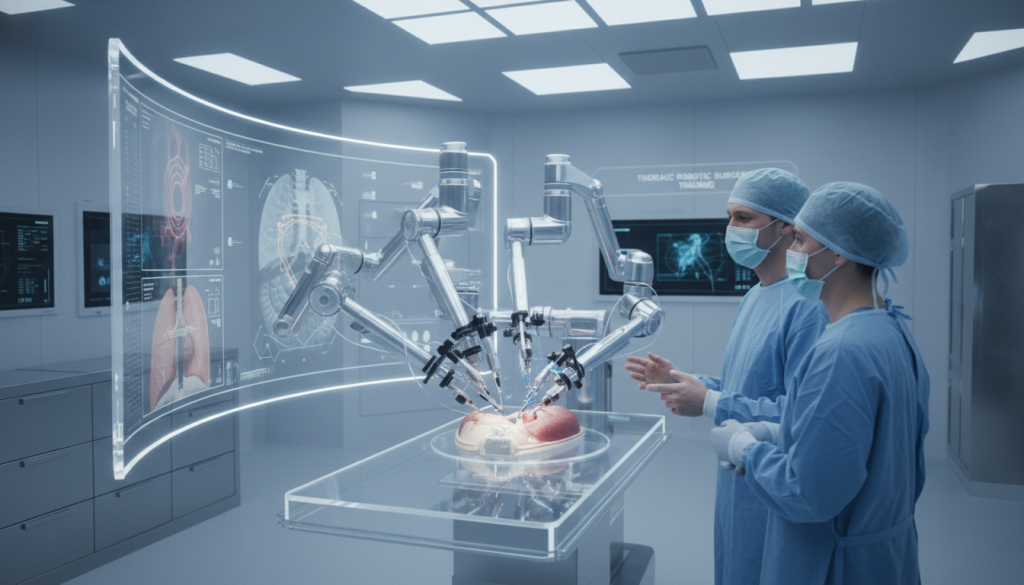
We value lifelong learning for our surgeons. They regularly update their skills and knowledge. This commitment to growth means our patients get the best, modern care.
| Training Phase | Focus Area | Expected Outcome |
|---|---|---|
| Didactic Modules | System Mechanics | Foundational Knowledge |
| Simulation Training | Technical Proficiency | Improved Robotic Surgery Outcomes |
| Proctored Cases | Clinical Application | Surgical Competency |
| Continuous Review | Quality Assurance | Institutional Excellence |
Future Innovations in Robotic Surgical Techniques
The world of thoracic surgery is growing fast with new technologies. We’re always looking for ways to make robot-assisted surgery better for our patients. We want to explore new tools to see what’s possible in the operating room.
Artificial intelligence is a big area of growth in advanced surgical technology. Soon, AI will help surgeons by analyzing data in real time. This intelligent guidance will help find important body parts more accurately than before.
Haptic feedback systems are also on the horizon. These sensors let surgeons feel the resistance of tissues through the robotic console. This makes every movement more precise and careful.
Miniaturized instruments are another exciting development. These smaller tools will allow for less invasive surgeries. This advanced surgical technology is a big step towards better patient care.
We’re committed to mastering these robotic surgical techniques. By leading in innovation, we ensure our patients get the best care. The growth of robot-assisted surgery is key to our mission to improve lives through medical excellence.
Conclusion
Robotic thoracic surgery is changing how we treat chest problems. It uses the da Vinci Surgical System for precise work. This helps patients heal faster and get better results.
We think informed patients are the best partners in healthcare. Knowing about the tools and methods helps you trust your treatment. Our aim is to support you fully during your recovery.
Acıbadem Healthcare Group is committed to improving surgery through new ideas and care. We encourage you to talk to our team about your health. Let’s work together to improve your health.
FAQ
Q: What is Robotic Thoracic Surgery and how is it performed at Acıbadem Healthcare Group?
A: Robotic Thoracic Surgery is a modern way to treat chest conditions. At Acıbadem Healthcare Group, we use the da Vinci Surgical System. This method allows us to do complex surgeries through small incisions.
It shows our commitment to giving patients the best medical options today.
Q: How have thoracic procedures evolved over the years?
A: Thoracic procedures have changed a lot. They moved from big incisions to small ones. This change has made recovery faster and pain less.
It has set a new standard in medicine.
Q: Does the robot perform the surgery independently?
A: No, the robot doesn’t do the surgery alone. The surgeon controls it at all times. The robot helps with better vision and dexterity in tight spaces.
Q: What makes the da Vinci Surgical System so precise?
A: The system’s precision comes from its advanced technology. The EndoWrist instruments have seven degrees of freedom. They mimic a human wrist but better.
This allows for very accurate and delicate movements.
Q: What conditions are commonly treated using robotic surgical techniques?
A: We treat many conditions with robotic surgery. These include lung nodules, thymomas, and esophageal disorders. Robotic lung surgery is also used for lobectomies.
It helps remove diseased tissue while keeping healthy lung function.
Q: What are the primary benefits of robotic surgery for the patient?
A: Robotic surgery has many benefits for patients. It reduces pain, shortens hospital stays, and leaves less scarring. Our goal is to help patients recover quickly and improve their quality of life.
Q: How do we determine if a patient is a candidate for a robotic procedure?
A: We carefully evaluate each patient before surgery. We use imaging, pulmonary function tests, and review their medical history. Our team at Acıbadem Healthcare Group makes sure patients are ready for the surgery.
Q: What does the surgical team look like during a robotic procedure?
A: A successful surgery needs a well-coordinated team. The team includes the surgeon, a bedside assistant, an anesthesiologist, and nurses. Their teamwork is key to a safe and successful surgery.
Q: What are the anesthesia considerations for these chest operations?
A: Anesthesia for these surgeries is special. Patients are often on their side during surgery. Our anesthesiology team closely watches lung ventilation and blood pressure to keep the patient comfortable and stable.
Q: How are possible complications and safety managed?
A: Robotic surgery is very safe, but we take safety seriously. We watch for risks like bleeding or air leaks right away. Our approach to safety helps patients understand and trust their surgery.
Q: What does the recovery pathway look like after surgery?
A: Recovery pathways are designed to help patients move quickly. Because of the small incisions, patients need less pain medicine and recover faster. Our rehabilitation teams support patients to achieve the best recovery.
Q: How does robotic surgery compare to VATS and open thoracotomy?
A: Robotic surgery offers better 3D vision and more precise instruments than VATS and open thoracotomy. We choose robotic surgery for complex cases where precision is key.
Q: How are surgeons trained to use these robotic systems?
A: Our surgeons get extensive training and are certified to use the da Vinci System. They also keep learning and practicing. At Acıbadem Healthcare Group, we aim for the highest surgical standards for our patients.
Q: What future innovations can we expect in robot-assisted surgery?
A: The future of surgery looks bright with new technologies. We’re excited about artificial intelligence, haptic feedback, and smaller instruments. We’re at the forefront of these advancements to offer the best robotic surgery options.