

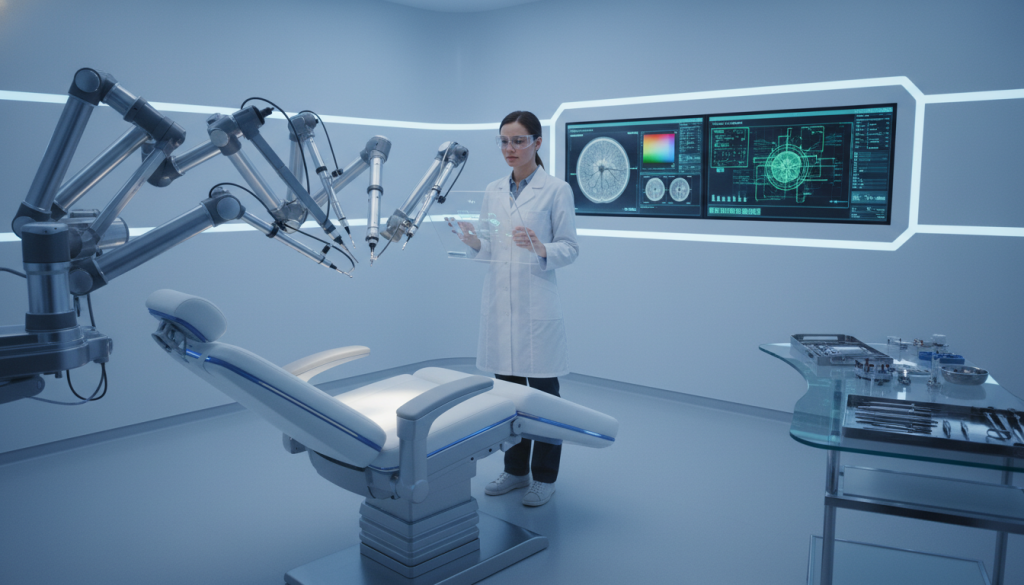
At Acıbadem Healthcare Group, we aim to give top-notch medical care to all our patients. We think the best results come from mixing human skill with cutting-edge technology. This is true for your eye health.
We’re excited to share robotic ophthalmology with you. It’s where advanced engineering meets careful eye care. Our surgeons use these systems to reach new heights of precision, beyond what hands can do.
Our team uses these advanced tools every day to keep you safe and comfortable. We’re committed to the highest care standards. You’ll get expert treatment that fits your needs. Our specialists will help you every step of the way to better vision.
Key Takeaways
- Acıbadem Healthcare Group prioritizes world-class care through advanced medical innovation.
- The field of robotic ophthalmology merges precise engineering with delicate eye surgery.
- Automated systems allow surgeons to perform complex tasks with enhanced stability.
- These technologies significantly improve surgical accuracy beyond traditional manual methods.
- Our commitment ensures that patients receive safe, high-quality, and personalized vision solutions.
The Evolution of Robotic Ophthalmology
To grasp the precision of today’s eye surgeries, we must look back. The early mechanical prototypes were the start. They aimed to overcome human hand limitations. These early systems were big and experimental but laid the groundwork for today’s advanced tools.
The human eye is very delicate, needing movements in microns. Surgeons face the challenge of natural tremors, which can make surgeries hard. Technology shines here, filtering out these movements for better stability.
Over time, engineers and medical experts worked together to improve these tools. Each new version of eye surgery robotics aimed to make care safer and better. They moved from simple mechanical aids to computer-assisted systems, tackling ocular surgery’s unique challenges.
Knowing this history makes patients more confident in their care. The growth of these devices shows a commitment to excellence and safety. Today, these systems are tested thoroughly to meet top clinical standards.
Looking at today, eye surgery robotics will keep advancing. The shift from manual to robotic-assisted surgery is a new chapter in ophthalmology. We’re committed to using these innovations for the best vision care for our patients.
Core Technologies Driving Ophthalmic Robotics
We are entering a new era in medicine with eye surgery robotics. These systems allow for movements beyond what humans can do. They act as an extension of the surgeon’s hands, making complex tasks possible.
At the heart of these systems are haptic feedback systems and high-resolution visualization tools. Haptic feedback lets the surgeon feel the resistance of delicate tissues. This is key for safety during detailed procedures.
These systems also translate big hand movements into small actions. This ensures that even the smallest tremors are removed. Using eye surgery robotics means we can operate with incredible precision that’s not visible to the naked eye.
The table below shows how robotic-assisted surgery differs from traditional manual techniques.
| Feature | Manual Surgery | Robotic-Assisted |
|---|---|---|
| Precision | Limited by human hand | Micro-scale accuracy |
| Tremor Control | Dependent on surgeon | Active electronic filtering |
| Sensory Input | Visual only | Visual and haptic feedback |
| Stability | Variable | High-level stabilization |
By combining these technologies, we ensure top care for every patient. Innovation in this field keeps expanding what we can do in sight-saving surgeries. We’re committed to making these tools better for everyone.
Robotic-Assisted Vitreoretinal Surgery
We are seeing a big change in eye surgery thanks to advanced robotics. Vitreoretinal surgery is very delicate because it works with the eye’s most sensitive parts. Ophthalmic robots help surgeons have the steady hand needed for these complex tasks.
When surgeons do membrane peeling, they must remove thin layers from the retina’s surface. This needs a lot of precision to avoid damaging the eye. Robotic assistance helps by smoothing out hand movements, making them very small and controlled.
Subretinal injections are also getting a lot better thanks to technology. Putting medicine under the retina needs a lot of stability. Ophthalmic robots help keep the needle steady, which greatly lowers the risk of harming the tissue.
These systems are changing eye surgery for the better. They help patients recover faster and see better. This technology is a big help to surgeons, making sure every move is precise.
Automated Eye Surgery and AI Integration
Artificial intelligence is changing eye surgery. It brings AI in ophthalmology to the operating room. This gives surgeons tools for real-time guidance and predictive analytics.
These systems are like advanced co-pilots. They process lots of visual data to find structures accurately. Remember, the surgeon is always in charge.
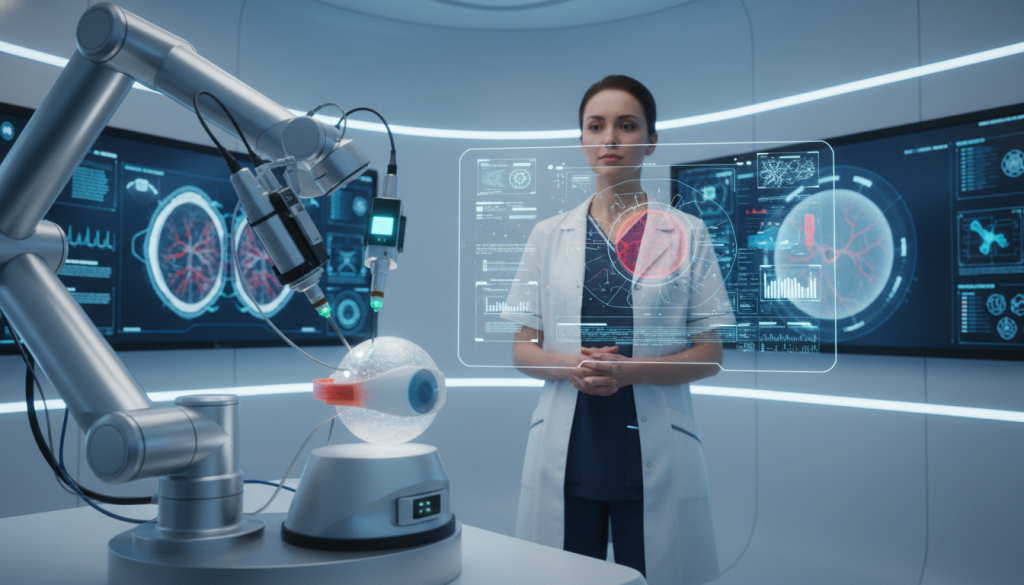
The tech aims to improve what humans can do, not replace them. Ophthalmic robots with AI help by stabilizing tools and showing important areas. This makes surgeries safer.
We think this mix is key to safe surgeries. It combines robots’ precision with a human’s skill. This way, we can do things we couldn’t before.
| Feature | Traditional Surgery | AI-Assisted Surgery |
|---|---|---|
| Precision | Human-dependent | Sub-millimeter accuracy |
| Guidance | Visual observation | Real-time data overlays |
| Decision Making | Surgeon only | Surgeon + Predictive AI |
| Safety Margin | Standard protocols | Enhanced risk mitigation |
We’re always working to make things better for our patients. The future of ophthalmic robots is about combining digital smarts with medical skill. This ensures every surgery is done with great care and precision.
The Preceyes Surgical System in Clinical Practice
Robotic-assisted eye surgeries have hit a new high with the Preceyes Surgical System. This top-notch tool is made for surgeons to do very fine eye work. It gives unmatched stability, making it easier to do very precise tasks.
The human hand shakes a bit, which can mess up eye surgeries. The Preceyes system gets rid of these shakes. It turns the surgeon’s moves into sub-millimeter precision. This is key for working in the eye’s dense, clear tissues.
In clinics, this tech is a big help, not a replacement. It makes surgeries safer and more consistent. The system keeps the surgeon steady, even during long, tough surgeries.
| Feature | Manual Surgery | Preceyes System |
|---|---|---|
| Precision Level | Millimeter scale | Sub-millimeter scale |
| Tremor Control | Limited by human physiology | Advanced digital filtering |
| Surgical Stability | Dependent on surgeon fatigue | Consistent robotic support |
| Procedure Type | Standard microsurgery | Robotic-assisted ophthalmic procedures |
Advancements in Robotic Cataract Surgery
We are entering a new era in eye care with robotic-assisted ophthalmic procedures. These procedures are changing how we remove cataracts. Surgeons can now do delicate tasks with more accuracy than before.
These systems are great at making perfect corneal incisions. This is key for the eye’s long-term health. They also help break up the cloudy lens precisely, making the process smoother and safer for the eye.
For patients, these advancements mean big benefits. They often heal faster and see better sooner. This new technology brings a level of consistency that makes the surgery better for everyone.
The table below shows how robotic-assisted procedures differ from traditional ones:
| Feature | Traditional Surgery | Robotic-Assisted |
|---|---|---|
| Incision Precision | Manual control | High-resolution guidance |
| Lens Fragmentation | Manual ultrasound | Automated laser/robotic |
| Recovery Speed | Standard | Enhanced |
| Visual Predictability | Variable | Highly consistent |
By mixing human skill with robotic precision, we’re making eye care better. Our aim is to give every patient the best and safest care possible.
Safety Protocols and Risk Mitigation
When we use robotic technology for eye surgeries, we watch every move closely. Our teams focus on keeping the patient’s eyes safe. They mix human skill with machine accuracy to make sure the surgery is safe.
These advanced tools have fail-safe mechanisms to stop any wrong moves. If something goes off track, the system stops right away. This lets the surgeon always be in control and step in if needed.
We take many steps to keep our patients safe during surgery. We check everything before starting, watch closely during the surgery, and have a plan for emergencies. Using robotic technology for eye surgeries helps us be more precise and consistent than old methods.
| Safety Feature | Function | Benefit |
|---|---|---|
| Fail-Safe Stop | Automatic motion halt | Prevents accidental injury |
| Surgeon Override | Manual control switch | Ensures human oversight |
| Precision Calibration | System alignment check | Increases surgical accuracy |
| Real-time Monitoring | Continuous data tracking | Reduces procedural risks |
Our goal is to put our patients first with patient-centered care. We keep improving our safety steps as new tech comes out. This way, every patient gets the best care possible during their surgery.
Training Surgeons for Robotic Platforms
Our surgeons get a lot of training to handle robotic technology for eye surgeries safely. They learn to balance their own skills with the machine’s precision. This balance is key to success in these surgeries.
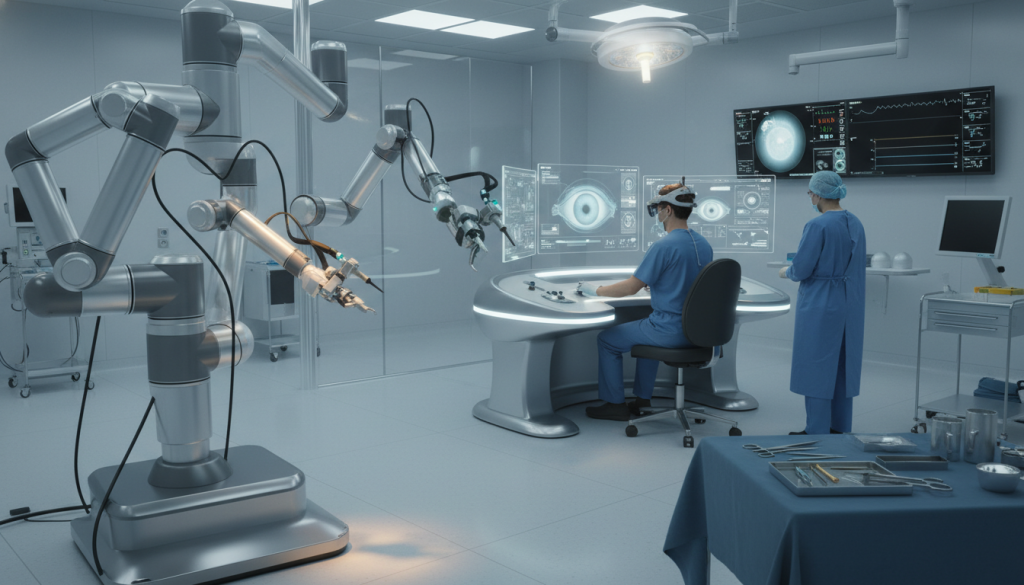
They go through rigorous simulation-based training. This lets them practice in a safe space before real surgeries. They learn to make precise moves and make smart decisions.
Our certification makes sure surgeons are top-notch. They show they can handle all kinds of cases with robotic technology for eye surgeries. This means you get the best care from a confident expert.
Economic Impact and Healthcare Accessibility
The use of advanced robotics in ophthalmic surgery in medical centers is a big investment. At first, it costs a lot of money. But, we see it as a long-term gain and a way to work more efficiently.
These systems help reduce damage during surgery and lower the chance of problems after. Efficiency in the operating room means better use of resources. This helps the whole healthcare system.
The real value of advanced robotics in ophthalmic surgery is in making care more consistent. When surgeries are more predictable, managing complications costs less over time.
| Metric | Traditional Surgery | Robotic-Assisted |
|---|---|---|
| Initial Investment | Lower | Higher |
| Complication Rate | Baseline | Reduced |
| Recovery Speed | Standard | Accelerated |
| Long-term Value | Moderate | High |
We aim to make advanced robotics in ophthalmic surgery available to more people. By improving care models, we can make workflows better. This way, we offer top-notch care without breaking the bank.
Current Limitations and Technical Challenges
Automated eye surgery has made huge strides, but it faces big technical and economic hurdles. These systems offer unmatched precision, yet they’re not in every operating room yet. We need to understand these challenges to see where medical tech stands today.
The main issue is the prohibitive cost of buying and keeping up robotic systems. These machines cost a lot, and many small clinics can’t afford them. Also, they need special rooms to work, which limits them to big hospitals.
Another big challenge is making software that’s easy for surgeons to use. They need systems that react fast and are simple. Making software that works well with the eye is a complex engineering feat that needs constant work.
Knowing these challenges helps patients understand why automated eye surgery is not fully here yet. We aim to be open, giving you a clear view of how these tools work today. Below is a table showing the main factors affecting their use.
| Challenge Category | Primary Impact | Current Status |
|---|---|---|
| Equipment Costs | High barrier to entry | Limited to major centers |
| Infrastructure | Requires specialized rooms | Ongoing facility upgrades |
| Software Design | Learning curve for staff | Continuous improvement |
| Regulatory Hurdles | Slower implementation | Strict safety oversight |
Future Trends in Ophthalmic Robotics
The future of eye care is bright, thanks to robots and smart software. AI in ophthalmology will change how we do surgery. We’re excited to use these new tools to give our patients the best care.
Soon, we’ll have miniaturized robotic instruments for eye surgery. These small tools will help surgeons work more precisely. This means less damage to the eye and faster healing for patients.
We’re also watching how augmented reality (AR) displays will change surgery. These displays show surgeons important data in real time. With AI in ophthalmology, they’ll make quicker, smarter decisions.
The mix of human skill and machine precision will only get better. Here’s what we expect as these technologies become common:
| Feature | Current Standard | Future Capability |
|---|---|---|
| Precision | Manual/Assisted | AI-Guided Robotics |
| Visualization | Standard Microscope | Advanced AR Overlays |
| Instrument Size | Micro-scale | Nano-scale Robotics |
| Data Integration | Limited | Real-time AI Analysis |
We’re always looking for new ways to improve eye care. By using these future trends, we want to make treatments safer and more effective. We hope to make these tools available to everyone, helping more people see better.
Patient Perspectives and Informed Consent
We believe that an informed patient is the best partner in achieving successful surgical outcomes. When considering robot-assisted eye procedures, it’s key to understand the process fully. Our goal is to ensure you feel fully supported and confident throughout your journey.
The informed consent process is vital. It connects our clinical team with your health goals. We discuss the benefits of robotic technology, like precision and stability. We also talk about risks and other treatment options to help you make a well-rounded decision.
We encourage open dialogue, where no question is too small. By working together, we help you understand modern ophthalmology. This partnership is key to our commitment to your eye health and well-being.
To help you see the differences, we’ve outlined traditional versus robotic care below. This comparison aims to clarify your options for robot-assisted eye procedures.
| Feature | Traditional Surgery | Robotic-Assisted Surgery |
|---|---|---|
| Precision Level | Manual control | Sub-millimeter accuracy |
| Tremor Control | Human-dependent | Automated stabilization |
| Recovery Time | Standard healing | Potentially faster healing |
| Communication | Standard consultation | Enhanced patient education |
Your comfort and peace of mind are our top priorities. We’re here to guide you at every step, ensuring you’re empowered to choose the best for your vision. Your trust is the foundation of our care every day.
Regulatory Landscape for Robotic Devices
Understanding the rules for medical devices brings peace of mind to patients and doctors. The use of advanced robotics in ophthalmic surgery follows strict rules. These rules put patient safety first.
Before new tech hits the operating room, it goes through tough clinical trials. These tests check if robot-assisted eye procedures work well and are safe. Only then can they be approved for use in real surgeries.
Groups like the FDA in the U.S. carefully check all the tech data. This makes sure advanced robotics in ophthalmic surgery is precise and reliable. We think this careful watch is key to good healthcare.
These rules help doctors do their best work. Patients can trust that robot-assisted eye procedures are watched over by experts. This focus on safety is what we stand for.
Conclusion
Robotic ophthalmology is leading a medical revolution. It’s changing how surgeons work on the human eye. These tools are making eye surgeries safer and more precise.
At Acıbadem Healthcare Group, we’re all about using these new technologies. We think combining human skill with machine precision sets a new standard. It makes recovery faster and safer.
Robotic ophthalmology is making it possible to treat complex eye problems. We encourage you to keep up with these advancements. They’re constantly getting better.
Your eye health is our top priority. Talk to your eye doctor about these new surgical options. Knowing what’s available helps you make better choices for your health.
We’re excited for a future where everyone can get top-notch eye care. If you have questions about these technologies, contact our team. We’re here to help you understand how they can meet your needs.
FAQ
Q: What exactly is robotic ophthalmology, and how does it benefit patients?
A: Robotic ophthalmology combines advanced engineering with precise eye care. At Acıbadem Healthcare Group, we use these systems for better surgery. This means patients get more stable and precise care, leading to safer results.
Q: How has eye surgery robotics evolved over the years?
A: Eye surgery robots have come a long way. They started as simple machines and now are high-tech tools. They are designed to handle the eye’s delicate needs, meeting top medical standards.
Q: Does the robot perform automated eye surgery on its own?
A: No, the surgeon is always in charge. While we’re exploring automated surgery, today’s robots are just tools. They help the surgeon with precise actions, but only under their control.
Q: What are the core technologies that make these robots so precise?
A: The key is haptic feedback and high-definition imaging. Haptic feedback lets the surgeon feel the eye’s tissues. High-definition imaging shows details the human eye can’t see. These tools help make surgery stable and precise.
Q: Can robotic technology for eye surgeries be used for retinal conditions?
A: Yes, it’s used for retinal surgery. Robots help with tasks like membrane peeling and injections. They allow for accurate work in the retina, reducing damage risk.
Q: What is the Preceyes Surgical System?
A: The Preceyes Surgical System is for vitreoretinal surgery. It offers sub-millimeter precision, making it hard for humans to match. It helps us work in the eye’s dense tissues, improving success rates.
Q: How does robotic technology assist in cataract surgery?
A: It helps with making incisions and breaking up the cloudy lens. This accuracy means better placement of the artificial lens. Patients often recover faster and see better.
Q: Is the use of robotic platforms safe for all patients?
A: Safety is our top concern. Eye surgery robots have safety features to prevent errors. They also go through strict tests and follow strict rules. We make sure patients know the safety of their treatment.
Q: How are surgeons trained to use these advanced robotic systems?
A: Surgeons get a lot of training. They go through simulations and real surgeries. This makes sure they’re ready to use these systems safely and effectively.
Q: What is the future of AI in ophthalmology and robotic care?
A: AI will be key in eye care, helping with planning and predictions. We’re looking at smaller robots and better displays. At Acıbadem Healthcare Group, we’re excited to use these new tools to help our patients.