

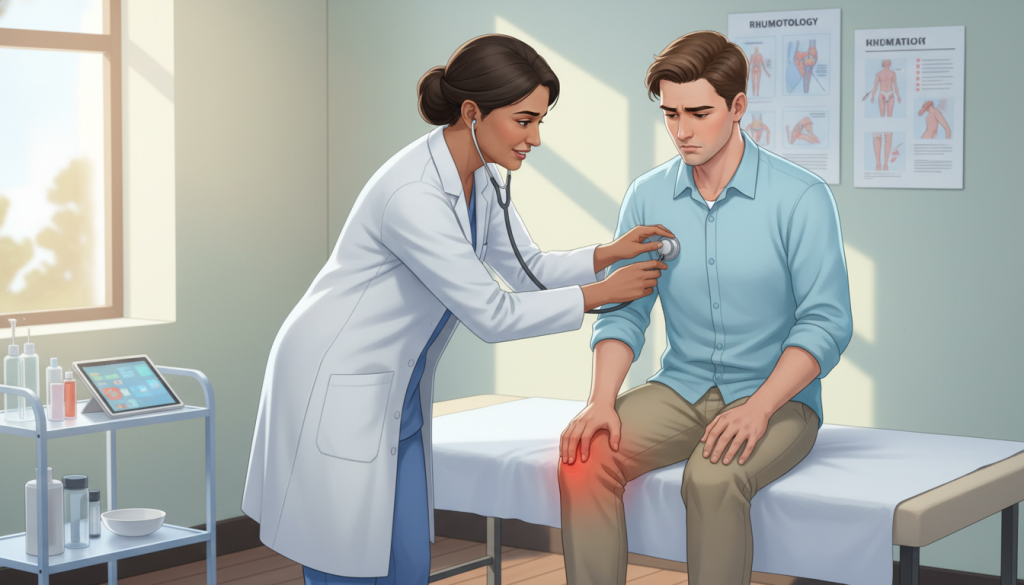
Have you ever noticed joint pain after being sick? You might have Reactive Arthritis. This happens when your body’s immune system reacts too strongly to an infection, like in your gut or urinary tract.
Feeling overwhelmed by symptoms is common. But knowing the cause is key to feeling better. This type of joint inflammation often hits the knees, ankles, or feet. It can also affect your eyes and skin. Remember, the pain is usually temporary.
Getting timely medical guidance is the best way to recover. Working with healthcare experts can help you regain your mobility and comfort. We’re here to guide you through these symptoms with clarity and confidence.
Key Takeaways
- This condition is an inflammatory response triggered by a prior infection in the body.
- Common symptoms include joint pain, swelling, and irritation in the eyes or urinary tract.
- It is not a direct infection of the joint itself but an immune-mediated reaction.
- Early diagnosis and professional medical care are essential for a smooth recovery process.
- Most patients see significant improvement with appropriate management and rest.
Understanding the Nature of Reactive Arthritis
When your body fights off a common illness, it can sometimes trigger an unexpected inflammatory condition. We define Reactive Arthritis as a systemic response where the immune system overreacts to a preceding bacterial infection. It is important to note that this is a reactive process, not a direct infection of the joint space itself.
Because the bacteria are not actually present in the joints, the condition is classified as a sterile inflammatory condition. While the resulting discomfort can be significant, it is often temporary and manageable with the right care. We want to help you grasp why your body reacts this way after a common illness, as understanding the mechanism is the first step toward recovery.
Many patients worry that their arthritis symptoms indicate permanent damage. But, this form of arthritis usually resolves as the immune system settles down. The following table highlights how this condition differs from other common joint issues to provide better clarity.
| Feature | Reactive Arthritis | Rheumatoid Arthritis | Osteoarthritis |
|---|---|---|---|
| Primary Cause | Bacterial Infection | Autoimmune Response | Joint Wear and Tear |
| Duration | Usually Temporary | Chronic/Long-term | Progressive/Chronic |
| Joint Involvement | Asymmetric | Symmetric | Weight-bearing joints |
| Systemic Nature | Triggered by infection | Systemic disease | Localized to joints |
The Pathophysiology of Reactive Arthritis
Our immune system is meant to protect us, but sometimes it goes wrong. When we get certain bacterial infections, our body fights hard to get rid of them. But for some people, this fight doesn’t stop, causing a inflammatory condition to last.
This situation falls under spondyarthropathy, a group of diseases with similar signs and genetic links. The immune system gets mixed up after fighting off the infection. It then attacks healthy cells in the joints and around them, a key sign of this autoimmune disease.
The body keeps fighting this perceived danger, making the joints swell and hurt. We call this a reactive process because the joint inflammation happens because of an infection somewhere else. Knowing that Reactive Arthritis isn’t caused by a direct infection in the joint is important for patients.
By explaining these changes, we help you understand that your symptoms come from your body’s overactive defense. This spondyarthropathy classification helps doctors find the best way to help you. Recognizing this autoimmune disease is the first step to managing this inflammatory condition well. With clear insights, we can tackle the challenges of Reactive Arthritis together.
The Common Triggers and Bacterial Infections
Specific bacterial pathogens often start Reactive Arthritis. This condition doesn’t just happen out of the blue. It’s an immune system reaction to an infection somewhere else in the body.
The main causes usually involve bacteria that get into the body through the gut or urinary system. When these invaders show up, your immune system fights back. In some people, this fight goes too far and attacks healthy joint tissues.
Chlamydia trachomatis is a common trigger linked to urinary infections. On the other hand, Salmonella, Shigella, or Campylobacter from the gut can also lead to joint inflammation.
Knowing these bacterial sources helps patients connect their past health issues with their current symptoms. Understanding these causes is key to getting better.
We urge you to talk about your recent health history with your doctor. This includes any past infections. By sharing this information, your doctor can better diagnose Reactive Arthritis and create a treatment plan just for you.
Recognizing the Clinical Symptoms
Spotting the signs of Reactive Arthritis early is key to getting better. This condition starts as an inflammatory reaction after an infection. It leads to noticeable changes in how you feel physically. Paying attention to these signs helps you get the medical help you need.
The main symptoms affect the musculoskeletal system. You might feel joint pain that’s deep or sharp. You could also see swelling and stiffness, more in the morning or after sitting for a while.

These problems often hit the lower parts of your body, like your knees, ankles, or feet. Inflammation here makes walking or standing hard. This type of arthritis can make everyday tasks tough.
But it’s not just about the joints. Some people get red eyes or skin rashes. These signs show your immune system is working too hard.
| Symptom Category | Common Presentation | Impact on Daily Life |
|---|---|---|
| Joint Involvement | Pain, swelling, stiffness | Reduced mobility and gait |
| Ocular Signs | Redness, irritation, pain | Blurred vision or sensitivity |
| Dermatological | Skin rashes or lesions | Discomfort and irritation |
| Systemic | Fatigue and low fever | General malaise and weakness |
Keep an eye on these signs. If you have ongoing joint pain or other odd changes, see a doctor fast. Early treatment is the best way to fight Reactive Arthritis and keep your joints healthy.
The Triad of Reactive Arthritis
Understanding the classic triad of Reactive Arthritis is key. It shows how different body systems can be affected at the same time. This condition is known for a specific set of symptoms: joint inflammation, urethra inflammation, and eye inflammation.
Not every patient shows all three symptoms. Sometimes, this makes it hard for doctors to diagnose early.
Joint pain is often the most severe symptom. This arthritis usually hits the lower body, like knees and ankles. It causes swelling and stiffness, making it hard to move around.
The symptoms of the urinary tract and eyes are important for diagnosis. If someone has joint pain and eye or urinary issues, it might be Reactive Arthritis. This is due to an immune response after an infection.
We advise patients to watch these symptoms closely. Spotting the pattern early helps manage the condition better. It also makes it easier to work with different doctors.
| Symptom Category | Clinical Term | Common Manifestation |
|---|---|---|
| Joint Involvement | Arthritis | Swelling and stiffness in knees or ankles |
| Urinary Tract | Urethritis | Burning sensation or frequent urination |
| Ocular System | Conjunctivitis | Redness, itching, or discharge in the eyes |
Diagnostic Procedures and Clinical Evaluation
Understanding the diagnostic process for Reactive Arthritis can be tough. But we’re here to help you through it. There’s no single test for this condition. So, we use a detailed clinical approach to find the right answer.
First, we do a thorough physical check-up. We look at your joints for signs of inflammation, swelling, or tenderness. Your comfort and understanding are our main goals during this step.
We also look at your recent infections. Reactive Arthritis often comes after a bacterial infection. Knowing about these infections helps us understand your health better. This teamwork ensures we don’t miss any important details.
Even though there’s no single test, we use blood work to help us. These tests are key to rule out other conditions that might look like Reactive Arthritis. We see these tests as a way to clear up any confusion and give you peace of mind.
The table below shows what our clinical evaluation includes:
| Evaluation Step | Purpose | Patient Focus |
|---|---|---|
| Medical History | Identify recent infections | Reviewing past symptoms |
| Physical Exam | Assess joint inflammation | Ensuring patient comfort |
| Blood Analysis | Rule out other diseases | Confirming Reactive Arthritis |
We think being open about the clinical process makes it less scary. By working together, we can figure out if you have Reactive Arthritis. Then, we can start working on managing it and finding relief.
Differentiating Reactive Arthritis from Other Conditions
When you feel joint pain, you might wonder if it’s Reactive Arthritis or something else. Many diseases cause similar symptoms, so we need to check carefully. Knowing the exact arthritis you have helps us make a treatment plan that fits you.
It’s easy to get confused with rheumatoid arthritis. Both can cause swelling and pain, but they start in different ways. Reactive Arthritis comes from infections and affects the spine and joints. Rheumatoid arthritis is an autoimmune disease that usually hits both sides of the body.
We take steps to make sure you get the right treatment. By figuring out your spondyloarthropathy, we can skip unnecessary treatments. This way, we can target the real cause of your pain. It helps us give you the best medical support based on solid evidence.
| Feature | Reactive Arthritis | Rheumatoid Arthritis |
|---|---|---|
| Primary Cause | Post-infection trigger | Autoimmune response |
| Joint Pattern | Asymmetrical (one side) | Symmetrical (both sides) |
| Systemic Impact | Often affects eyes/skin | Often affects lungs/heart |
| Diagnostic Focus | Infection history | Blood markers (RF/CCP) |
Knowing the differences helps you take charge of your health. We’re here to help you through every step, making sure you’re confident in your recovery. Your well-being is our top priority as we explore these complex health issues together.
The Current Treatment Options for Reactive Arthritis
Effective treatment options for Reactive Arthritis aim to make you feel better and move more easily. We work to lower inflammation and tackle any bacteria that might have started the problem.
We think a personalized care plan is key for each patient. This means we tailor our treatment to fit your needs. It makes sure you’re safe and supported as you get better.

NSAIDs are a big help in fighting Reactive Arthritis. They help reduce joint pain and swelling. This lets you move around more easily in your daily life.
We keep a close eye on how you’re doing to change treatment options if needed. This teamwork helps us find the best way to ease your symptoms. We’re here to guide you through these choices, making sure you’re informed and confident.
Managing Chronic Symptoms and Long-term Care
Managing Reactive Arthritis is a long-term effort that needs patience and ongoing medical support. While many people get better, some face lasting symptoms. They need a detailed plan to manage their health.
Our main goal with ongoing arthritis is to keep your quality of life high and reduce joint pain. We aim to help you stay active and do your daily tasks with ease.
Physical therapy is key in our long-term plan. It helps you learn exercises to move your joints better and strengthen the muscles around them. These treatment options help you stay active and avoid stiffness.
If inflammation is hard to control, we might consider disease-modifying drugs. These treatments target the immune system, not just the symptoms of Reactive Arthritis. We keep a close eye on how you’re doing and adjust your treatment as needed.
Managing arthritis is a team effort between you and your healthcare team. Regular check-ups with a rheumatologist keep your care on track. We want to give you the tools and knowledge to handle your health journey over time.
Lifestyle Modifications and Home Management
Empowering yourself with home care is key when dealing with Reactive Arthritis. While medical treatments are important, your daily habits also play a big role. They help manage joint pain and improve your overall health.
Being proactive in your recovery gives you a sense of control. Small, lasting changes can make your home more supportive. This helps your body and promotes comfort over time.
Low-impact exercises are great for keeping you mobile. Swimming, walking, or yoga are good choices. They keep your muscles strong without hurting your joints. Consistency is key, so choose activities that feel right for you.
It’s also important to balance activity with rest when you have joint pain. Rest when your body needs it to avoid more inflammation. Strategic pacing helps you stay active without getting too tired.
Lastly, make your home and workspace more ergonomic. Use supportive chairs, adjust your computer, or use assistive devices. These changes can greatly reduce joint pain and improve your life with Reactive Arthritis.
Potential Complications and Prognosis
This inflammatory condition is usually short-lived. But knowing about possible complications helps you stay ahead. Most people see their symptoms go away in a few months, getting back to their usual life.
Yet, it’s important to know about rare cases where symptoms don’t go away. Some people might face chronic joint damage or ongoing inflammation. They need constant medical care.
Also, watch out for eye inflammation that doesn’t stop. If your vision changes or you have lasting redness, see your doctor right away. This is key for keeping your eyes healthy long-term.
The outlook for Reactive Arthritis is mostly good with the right treatment. By sticking to your treatment and seeing your doctor regularly, you lower the chance of lasting joint problems.
Knowing a lot about this inflammatory condition helps you work better with your doctors. This teamwork is key to getting the best results.
Modern medicine and taking care of yourself are your allies in getting better. With the right steps, most people can beat Reactive Arthritis and live a healthy, active life.
The Role of Genetics and HLA-B27
Infections often start Reactive Arthritis, but our genes also play a big part. Many people ask if their family history affects their risk of getting this autoimmune disease.
The HLA-B27 gene is linked to a higher risk of some inflammatory joint diseases. It’s key to know that having this gene doesn’t mean you’ll get sick. Genetics are just one part of what makes someone more likely to get this condition.
Getting this condition is about being exposed to something and being more likely to react. The HLA-B27 marker can make inflammation more likely, but it’s not the only thing. Many people with the gene never get Reactive Arthritis. This shows how complex this autoimmune disease is.
Knowing about these biological factors helps patients understand their health better. By seeing that genetics are just part of the causes, we can focus on what we can control.
| Factor Type | Description | Impact on Health |
|---|---|---|
| Genetic Marker | HLA-B27 Presence | Increases susceptibility |
| Environmental | Bacterial Infection | Triggers the immune response |
| Clinical Outcome | Joint Inflammation | Varies by individual |
Research and Future Directions in Rheumatology
We are in a new era of medical research aimed at helping those with joint inflammation. The field of rheumatology is changing fast. Scientists are trying to understand the complex ways Reactive Arthritis works.
Our medical team is working hard to improve care through detailed studies. They are looking into new treatments that target specific inflammatory pathways. This goal is to give patients more effective and personalized relief.
New methods aim to stop the immune response at its source, not just treat symptoms. We think this approach will lead to better results for those with Reactive Arthritis in the long run.
It’s not just about finding new medicines. It’s about understanding the whole patient journey. We want to share these discoveries to help you feel supported and informed. This way, you can move towards better health and recovery from Reactive Arthritis.
Conclusion
Managing Reactive Arthritis needs a proactive approach to your health. Early detection is key to avoiding long-term damage and complications.
We think informed patients get the best results. Working with experts at places like Acıbadem Healthcare Group helps. You get care plans made just for you. This way, your treatment keeps up with how your body reacts.
Living with Reactive Arthritis doesn’t mean giving up on life. Regular check-ups and talking with your doctor help manage symptoms. Even small changes can make a big difference in how you feel and move.
Our goal is to give you reliable, expert advice to help you stay well. We’re committed to your health with ongoing education and resources. Talk to your doctor or a rheumatologist about any ongoing symptoms. Start your journey to a healthier future today.
FAQ
Q: What is Reactive Arthritis and how does it develop?
A: Reactive Arthritis is a type of arthritis that happens as a reaction to an infection. This usually happens after a bacterial infection in the gut or urinary system. At Acıbadem Healthcare Group, we tell our patients that the joints are not infected. Instead, the immune system overreacts, causing inflammation in the joints, eyes, and urinary tract.
Q: How is Reactive Arthritis different from rheumatoid arthritis?
A: Both conditions cause joint pain and swelling, but they start in different ways. Rheumatoid arthritis is a long-term autoimmune disease. Reactive Arthritis, on the other hand, is usually short-term and caused by specific bacteria like *Salmonella* or *Chlamydia*. Knowing the difference is key to choosing the right treatment.
Q: What are the most common causes of this inflammatory condition?
A: The main causes are infections from bacteria like *Chlamydia trachomatis*, *Salmonella*, *Shigella*, and *Campylobacter*. These infections trigger the body’s defense system to attack healthy tissues. By understanding these causes, we can help patients link their recent health issues to their joint symptoms.
Q: What are the hallmark symptoms of Reactive Arthritis?
A: The main symptoms are sudden joint pain, stiffness, and swelling. These often affect the knees, ankles, and feet. We also look for the “classic triad” of arthritis, urethritis, and conjunctivitis. Some people may also get skin rashes or mouth sores during a flare-up.
Q: How do you diagnose Reactive Arthritis at Acıbadem Healthcare Group?
A: There’s no single test for this condition. We use a detailed clinical evaluation, look at recent infections, and perform physical exams. Blood tests for inflammatory markers and the HLA-B27 genetic marker help confirm the diagnosis.
Q: What treatment options are available for managing joint pain?
A: Our goal is to reduce inflammation and improve mobility. We use NSAIDs like ibuprofen or naproxen to ease pain. If there’s a bacterial infection, we prescribe antibiotics. For severe cases, we may use corticosteroids or DMARDs to protect the joints.
Q: Does having the HLA-B27 gene mean I will definitely develop arthritis?
A: Not always. The HLA-B27 gene increases the risk of certain arthritis types, but many people with it never get it. We see genetics as just one part of the puzzle, along with environmental factors like bacterial exposure.
Q: Can lifestyle modifications help in the recovery process?
A: Yes, being active is key to recovery. We suggest gentle exercises and physical therapy to keep joints flexible. Using ergonomic tools and resting during flare-ups can also help reduce joint stress and improve daily life.
Q: What is the long-term prognosis for someone with Reactive Arthritis?
A: Most patients have a good prognosis, with symptoms usually improving within three to twelve months. But in some cases, it can become chronic. Early diagnosis and ongoing care with our specialists help prevent long-term damage and help patients get back to their normal activities.