


Dealing with joint pain can be really tough. Gout is a complex form of arthritis that affects many people worldwide. It happens when your body can’t handle uric acid, leading to too much of it.
Too much uric acid in your blood can cause sharp crystals in your joints. This leads to a lot of inflammation, swelling, and pain. Spotting these symptoms early is key to feeling better and moving around easily again.
At Acıbadem Healthcare Group, we think knowing about your health is the best way to stay well. Learning about Gout helps you take care of yourself better. Knowing what causes it lets us work together for a life with less pain and more joy.
Key Takeaways
- This condition is a common type of inflammatory arthritis.
- It is mainly caused by too much uric acid in the blood.
- Sharp crystals in the joints cause sudden and intense pain.
- Spotting it early is key for managing it well over time.
- Changing your lifestyle and getting medical help can really help.
Understanding the Pathophysiology of Gout
To grasp why gout causes such sudden pain, we need to look at what happens at a tiny level in your joints. At the core of this issue is a problem with how the body handles uric acid, leading to too much of it.
Uric acid is made when the body breaks down purines in food. Normally, the kidneys get rid of it through urine. But if the body makes too much or can’t get rid of it fast enough, uric acid builds up in the blood.
When uric acid levels get too high, it starts to form crystals. These sharp, needle-like urate crystals move into the joint fluid, which is like oil for your joints. Once they’re there, the immune system sees them as threats.
This sets off a strong inflammatory reaction. This reaction causes swelling and excruciating pain, which is what you feel during a gout attack. The body sends white blood cells to fight the crystals, but this makes things worse by releasing more chemicals that irritate the area.
| Stage | Biological Process | Physical Result |
|---|---|---|
| Hyperuricemia | High uric acid levels | Asymptomatic buildup |
| Crystallization | Urate crystal formation | Joint fluid irritation |
| Inflammation | Immune system response | Acute gout pain |
Knowing how gout works helps us see it’s not just random. It’s a chemical reaction we can control by managing uric acid levels. This way, we can stop crystals from forming in the first place.
Recognizing Common Gout Symptoms
Gout symptoms can start without warning, often in the middle of the night. You might wake up with a joint feeling like it’s on fire. This sudden onset is a classic sign of gout.
The pain from these attacks is intense and unbearable. Even a bedsheet on the affected joint can feel like a heavy burden. The area may become swollen, tender, and turn red or purple.
After the initial flare-up, you might feel discomfort that makes moving hard. While the big toe is most common, other areas like ankles, knees, elbows, and wrists can also be affected. Spotting these signs early is key to avoiding long-term damage.
The table below outlines the main signs of a gout flare-up. It helps you quickly spot any issues.
| Symptom Type | Physical Description | Typical Duration |
|---|---|---|
| Intense Pain | Sharp, throbbing, or crushing | 3 to 10 days |
| Inflammation | Swelling and warmth | Variable |
| Skin Changes | Redness or shiny appearance | During flare-up |
| Limited Mobility | Stiffness in the joint | Until inflammation subsides |
If you see these distressing changes in your joints, don’t wait for the pain to go away. Seeing a healthcare professional is important. They can give you a correct diagnosis and a treatment plan. Acting quickly is the best way to manage your health and keep your quality of life high.
Identifying Primary Gout Causes and Risk Factors
Understanding the main gout causes is key to managing your joint health. Gout is not just about diet. It’s a mix of genetics, biology, and environment. Knowing these triggers helps you take charge of your health.
The main problem is how your body deals with uric acid. When it builds up, it can cause sharp crystals in your joints. Genetics play a big role in how well you handle this.
Other factors also affect your risk. Age and gender are important. Men are more likely to get gout in their 40s and 50s. Women see an increase in risk after menopause. Also, conditions like high blood pressure, diabetes, and obesity can make it harder for your body to clear uric acid.
Looking at the table below can help you understand your risk better. Knowing this can lead to better talks with your doctor.
| Risk Factor Category | Primary Influence | Impact on Uric Acid |
|---|---|---|
| Biological | Genetics and Age | High susceptibility |
| Metabolic | Obesity and Diabetes | Increased production |
| Lifestyle | Diet and Hydration | Reduced excretion |
| Medical | Hypertension | Kidney filtration stress |
If you see yourself in these risk factors, it’s not a sign of doom. It’s a valuable roadmap for prevention. By teaming up with your doctor, you can watch your health closely. This way, you can make choices to avoid gout before it starts.
The Connection Between Diet and Gout Flare-ups
Many patients are surprised to learn that their daily meals directly influence the frequency of their joint pain. Foods high in purines are broken down into uric acid in our bodies. This acid is usually filtered by the kidneys, but too much can cause sharp crystals in the joints.
These crystals are the main cause of a painful gout flare-up. When the immune system finds these deposits, it starts an inflammatory response. This response causes sudden, intense discomfort. Managing what you eat is not just about restriction; it is about protecting your joints from unnecessary stress.
Some foods, like red meat, organ meats, and certain seafood, increase uric acid production. By knowing these triggers, you can lower the risk of a gout flare-up. We encourage you to see your nutrition as a team effort with your lifestyle and health goals.
Following a gout diet is a key step in reducing these painful episodes. While medicine is sometimes needed, changing your diet is a lasting way to help your body. Consistency is key when making these changes, as even small adjustments can make a big difference in your life.
Diagnostic Procedures for Gout Arthritis
We use precise testing to tell gout arthritis apart from other joint diseases. Symptoms can be similar, so we look for clear evidence. This ensures you get the right treatment.
The key test is joint fluid analysis. A doctor takes a small sample from the joint with a needle. We then check it under a microscope for urate crystals, which show the disease.
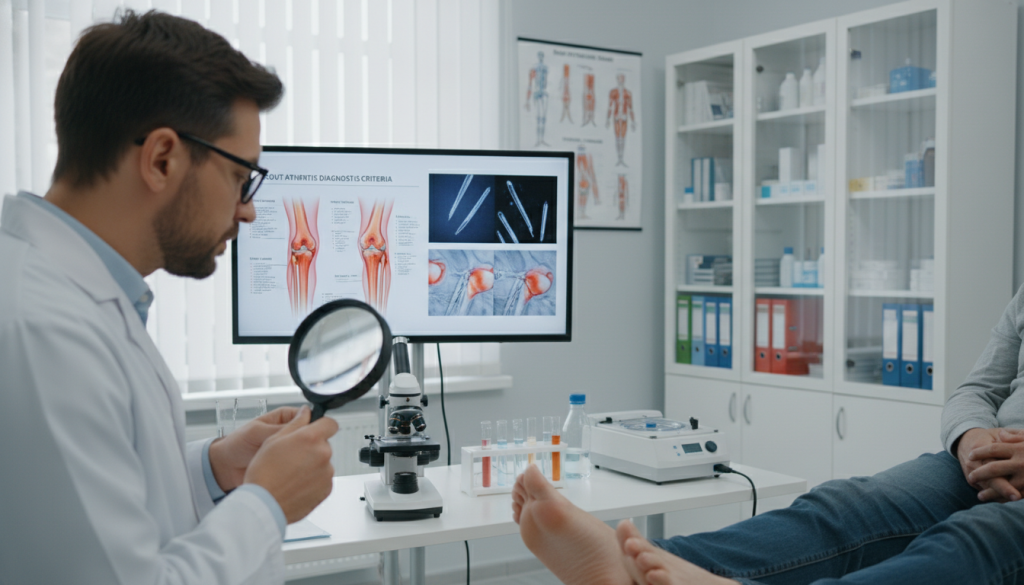
Blood tests also help. They measure uric acid levels. High levels might mean gout arthritis. But, some people can have high levels without symptoms, and others might have normal levels during a flare-up.
When tests aren’t clear, we use ultrasound and dual-energy CT scans. Ultrasound shows crystals on cartilage. Dual-energy CT scans find urate deposits in soft tissues with great detail.
| Diagnostic Method | Primary Purpose | Clinical Value |
|---|---|---|
| Joint Fluid Analysis | Identify urate crystals | Definitive diagnosis |
| Blood Serum Test | Measure uric acid | Supportive evidence |
| Dual-Energy CT | Detect crystal deposits | High-resolution imaging |
By using these tests together, we can confirm gout arthritis with certainty. This helps us rule out other conditions like septic arthritis or rheumatoid diseases. Our aim is to give you the clarity you need to manage your health with confidence and peace of mind.
Effective Gout Treatment Strategies
We believe that effective gout treatment starts with clear communication and care that fits you. Every person with gout is different. So, we focus on working closely with you and your medical team. This way, your health needs are always the top priority.
Handling gout means tackling two main areas. First, we aim to ease your pain during a flare-up. Then, we work on keeping your uric acid levels low. This helps prevent damage to your joints in the long run.
Your healthcare team will likely recommend a mix of treatments. Gout treatment plans are made just for you, based on your health and life. We want you to share your symptoms so we can adjust your care as needed.
Sticking to a treatment plan is key to managing gout. By following a structured gout treatment plan, you help protect your joints. We’re here to support you in keeping your joints healthy and improving your quality of life.
Common Gout Medication Options
When a flare-up happens, knowing your gout medication options is key for relief. We divide these treatments into two main groups. One group helps with immediate pain, and the other manages long-term crystal buildup.
For sudden attacks, we aim to reduce inflammation and pain fast. Nonsteroidal anti-inflammatory drugs (NSAIDs) are often the first choice to control swelling and pain. If NSAIDs don’t work, colchicine is a strong option when symptoms start early.
Corticosteroids are another strong gout medication for those who can’t take other options. They can be taken by mouth or injected directly into the joint for quick relief. It’s important to have a doctor guide these treatments for safety and best results.
For preventing future attacks, we use urate-lowering therapies. These drugs lower uric acid levels or help the body get rid of it better. Taking these medications regularly is key for keeping your joints healthy long-term.
| Medication Type | Primary Purpose | Common Usage |
|---|---|---|
| NSAIDs | Reduce inflammation | Acute flare-ups |
| Colchicine | Pain relief | Early-stage attacks |
| Corticosteroids | Rapid inflammation control | Severe or resistant cases |
| Urate-lowering agents | Prevent crystal buildup | Long-term maintenance |
Managing gout well needs teamwork between you and your doctor. Knowing how each pharmacological agent works helps you play a big part in your treatment. We’re here to help you make the best choices for a better life.
Lifestyle Modifications for Gout Management
We think that lifestyle choices are key to managing gout well. Medications help lower uric acid, but your daily habits are more important. Making smart changes can help you have fewer and less severe attacks.
Keeping a healthy weight is very important. Being overweight makes your body produce more uric acid. Losing a little weight can help prevent attacks and keep your joints working better.
Drinking enough water is also critical for gout management. Water helps your kidneys get rid of extra uric acid. This stops it from forming crystals in your joints. Always carry a water bottle to stay hydrated.
Doing low-impact physical activity is good for your joints and keeps you moving. Swimming, cycling, or walking are great because they don’t put too much strain on your joints. Exercise also helps with weight control and keeps your blood flowing well, which is good for your joints.
Being proactive about your health helps you feel more in charge of your condition. By making these lifestyle changes, you’re on the path to better health. Use the table below to keep track of your habits and see how you’re doing.
| Lifestyle Habit | Primary Benefit | Recommended Frequency |
|---|---|---|
| Hydration | Flushes uric acid | Throughout the day |
| Low-impact exercise | Joint mobility | 3-5 times per week |
| Weight maintenance | Reduces uric acid load | Ongoing daily effort |
| Stress reduction | Prevents flare-up triggers | Daily practice |
The Importance of a Gout Diet
Starting a gout diet is a big step towards feeling better and staying healthy. It might seem hard to pick the right foods, but small changes can make a big difference. By choosing what you eat, you can help control uric acid levels and cut down on pain.
Focus on eating anti-inflammatory foods to boost your health. Eat lots of fresh veggies, low-fat dairy, and whole grains. These foods help your body deal with uric acid better. Drinking plenty of water is also key, as it helps your kidneys get rid of waste.
It’s also key to avoid foods that can trigger gout, like high-purine foods. Foods like some red meats and organ meats can raise uric acid levels fast. Making smart food choices helps you live a healthier, more comfortable life.
Here’s a simple guide to help you pick the right foods for a gout diet.
| Food Category | Recommended Choices | Foods to Limit |
|---|---|---|
| Proteins | Low-fat dairy, plant-based proteins | Red meat, organ meats, shellfish |
| Beverages | Water, coffee, herbal tea | Sugary sodas, alcohol, fruit juices |
| Vegetables | Leafy greens, carrots, cucumbers | Asparagus, spinach (in large amounts) |
| Fruits | Cherries, berries, citrus fruits | High-fructose corn syrup products |
Sticking to a gout diet is all about consistency. See these changes as a good thing for your future health. By following a healthy gout diet, you’re taking charge of your health and helping your body stay in balance.
Preventing Future Gout Flare-ups
You can greatly reduce painful attacks by changing your daily habits. Gout prevention is more than just treating pain. It’s about keeping your body stable to control uric acid levels.
Consistent medication is key to your health plan. Taking your meds as directed keeps your levels steady. This helps avoid sudden gout flare-ups that can mess up your day.

It’s also important to check your uric acid levels often. Working with your doctor to track these numbers helps you make better lifestyle choices. This way, you can catch problems early and avoid severe joint pain.
Keeping your joints healthy needs both doctor advice and your own effort. See these steps as ways to empower yourself, not just rules. By staying alert, you lower the chance of pain and protect your joints from harm.
| Strategy | Primary Benefit | Frequency |
|---|---|---|
| Medication Adherence | Stabilizes uric acid | Daily |
| Uric Acid Testing | Tracks progress | Quarterly |
| Hydration Habits | Flushes toxins | Constant |
Complications Associated with Chronic Gout
Chronic gout is more than just painful flare-ups. It’s a condition that needs ongoing medical care to avoid lasting damage. Untreated or poorly managed gout arthritis can lead to serious risks. Understanding these risks is key to managing your long-term health.
One clear sign of long-term, uncontrolled disease is tophi. These are firm, often painless deposits of uric acid crystals. They form under the skin, usually around joints, ears, or fingers. These bumps show that uric acid has been high in your system for a long time.
Chronic gout symptoms can also cause permanent joint erosion. The constant presence of crystals wears away cartilage and bone in the joint. This leads to chronic stiffness, reduced range of motion, and a lower quality of life.
Early treatment is the best way to avoid these severe outcomes. Working with your healthcare provider to keep uric acid levels healthy can protect your joints. We see consistent care as an investment in your future mobility.
| Complication Type | Primary Cause | Long-term Impact |
|---|---|---|
| Tophi Formation | Uric acid crystal buildup | Visible skin deposits |
| Joint Erosion | Persistent inflammation | Permanent structural damage |
| Kidney Stones | High uric acid levels | Urinary tract obstruction |
| Reduced Mobility | Chronic joint stiffness | Loss of physical function |
Gout and Co-existing Health Conditions
Many patients find that their gout diagnosis is just one piece of a larger health puzzle. While we often focus on the intense pain in the joints, it is important to recognize that gout causes are frequently linked to broader systemic issues within the body.
When we look at the clinical profile of our patients, we often see a pattern of overlapping conditions. Hypertension, diabetes, and chronic kidney disease are common companions to gout. These conditions share underlying metabolic pathways that can complicate how your body processes uric acid.
Understanding these connections is essential for effective management. Because these conditions influence one another, a holistic approach to your health is the most reliable path forward. By addressing the root gout causes alongside these other factors, you can achieve better long-term outcomes.
| Condition | Impact on Gout | Management Strategy |
|---|---|---|
| Hypertension | Increases uric acid retention | Blood pressure control |
| Diabetes | Promotes insulin resistance | Blood sugar regulation |
| Kidney Disease | Reduces uric acid excretion | Renal function monitoring |
We encourage you to work closely with your healthcare team to review your entire health profile. When you treat the body as a whole system, you gain more control over your symptoms. Identifying the specific gout causes that relate to your other health conditions allows for a more personalized and effective treatment plan.
Psychological Impact of Living with Gout
Managing gout is not just about physical symptoms. It also affects your mental health. Living with a chronic condition can lead to emotional fatigue. This can be as tough as the pain itself. It’s important to acknowledge these feelings in your Gout management journey.
Flare-ups can cause anxiety or frustration. Not knowing when pain will strike can disrupt your daily life. Remember, feeling anxious or frustrated is normal for many patients.
Having a strong support system is key to staying positive. Whether it’s family, friends, or counselors, talking to someone can help. Gout management is not just about medicine. It’s about creating a supportive environment where you feel understood and strong.
We’re here to help you overcome these mental challenges. By focusing on both your physical and mental health, you can take back control. You are not alone in this journey. Seeking help is a sign of strength, not weakness.
Advancements in Gout Research and Therapy
We are in a new era of medical science for treating inflammatory conditions. The field of rheumatology is changing, moving from generic to personalized care. These exciting developments bring hope to those who have faced the limits of old medicine.
Today, research focuses on finding the genetic and molecular causes of gout. Scientists are creating Gout treatment that targets the root cause, not just the symptoms. This means patients get care that fits their unique needs.
New therapies in trials aim to lower uric acid levels better and with fewer side effects. We’re excited about biologic agents that control the immune system’s inflammation response. These are big steps forward in Gout treatment for our patients.
The table below shows how care is evolving, improving life for those with gout.
| Therapy Category | Traditional Approach | Emerging Innovation | Primary Benefit |
|---|---|---|---|
| Uric Acid Control | Standard oral medication | Targeted enzyme therapy | Faster reduction of crystals |
| Inflammation Management | Non-specific NSAIDs | Biologic inhibitors | Reduced systemic side effects |
| Patient Monitoring | Periodic blood tests | Real-time biomarker tracking | Proactive flare prevention |
Our commitment to evidence-based medicine is key. By using these cutting-edge therapies, we aim to improve our patients’ lives. We’re excited for the future of Gout treatment and proud to be at the forefront.
Conclusion
Managing gout means being proactive with your habits and medical care. We think informed patients are the best partners in their recovery.
Acıbadem Healthcare Group is here to help you manage gout. Our team supports you in reducing inflammation and preventing future attacks. We use proven strategies to help you.
By sticking to your treatment plan, you can improve your life. Even small changes can make a big difference in your joint health over time.
We encourage you to contact our specialists for personalized advice. Together, we can help you stay active and control gout symptoms.
FAQ
Q: What exactly is gout and how does it develop?
A: Gout is a type of arthritis caused by too much uric acid in the blood. At Acıbadem Healthcare Group, we teach our patients about this. They learn how this excess leads to sharp crystals in the joints, causing sudden pain and swelling.
Q: What are the most recognizable gout symptoms during an attack?
A: Gout attacks start suddenly, often at night. They are known for intense pain in the big toe. You’ll also see redness, swelling, and stiffness that lasts for days or weeks.
Q: What are the primary gout causes and known risk factors?
A: Several things can lead to gout. These include genetics, age, and gender. Lifestyle choices like being overweight also play a role. Certain health issues, like high blood pressure or kidney disease, can make gout worse.
Q: How does a person’s diet influence the frequency of attacks?
A: Diet is key because some foods raise uric acid levels. Eating less red meat, organ meats, and certain seafood helps. Drinking less alcohol also helps prevent attacks.
Q: Which diagnostic tests are used to confirm gout arthritis?
A: We use joint fluid analysis to find urate crystals. Blood tests check uric acid levels. We might also use ultrasound or CT scans to see crystals and check joint health.
Q: What are the current standard gout treatment options?
A: Treatment aims to ease pain and lower uric acid levels. We use a team approach, combining medicine with education. This helps patients manage their gout long-term and protect their joints.
Q: Which gout medication is typically prescribed for pain and prevention?
A: For quick relief, we might use NSAIDs, colchicine, or corticosteroids. For long-term control, we prescribe urate-lowering drugs like allopurinol. These help keep uric acid levels healthy and prevent crystals.
Q: What lifestyle modifications are recommended for gout prevention?
A: Preventing gout also means staying healthy. This includes keeping a healthy weight, drinking plenty of water, and doing low-impact exercises. These steps help reduce body stress and support joint health.
Q: What are tophi and what happens if gout is left untreated?
A: Untreated gout can lead to tophi, visible deposits under the skin. If not managed, gout can cause permanent damage to joints, leading to loss of mobility.
Q: Can gout be linked to other health conditions like diabetes or heart disease?
A: Yes, gout is linked to other health problems. People with gout are at higher risk for diabetes, high blood pressure, and kidney disease. We focus on treating these conditions together to improve your life.
Q: Are there any recent advancements in gout research and therapy?
A: Rheumatology is always improving. New treatments aim to lower uric acid levels better and with fewer side effects. At Acıbadem Healthcare Group, we keep up with these advances to offer the best care.