


Learning your child has Juvenile Idiopathic Arthritis can be scary. This condition causes ongoing joint pain in kids and teens. It makes the future seem uncertain.
We know how hard this news can be. We want to give you clear, reliable information. This will help you feel more confident as you face this challenge.
At Acıbadem Healthcare Group, we think medical education is key to empowerment. We mix our medical know-how with care. Our goal is to help your family make smart health choices. You’re not alone in this fight.
Key Takeaways
- This condition involves chronic inflammation of the joints in young patients.
- Early diagnosis and consistent care are vital for long-term health.
- Our guide offers expert insights to help families understand treatment options.
- We prioritize a collaborative relationship between doctors and caregivers.
- Empowerment begins with accessible, high-quality medical knowledge.
Understanding the Fundamentals of Juvenile Idiopathic Arthritis
Understanding Juvenile Idiopathic Arthritis is key for families. It’s a chronic autoimmune disorder where the body attacks healthy joint tissues. It is a challenging journey, but knowing about it helps a lot.
JIA is the most common arthritis in kids under 16. It affects young bodies, so they need special care. Early help and expert advice can greatly improve a child’s life.
The main issue with Juvenile Idiopathic Arthritis is ongoing joint inflammation. This can cause swelling, pain, and stiffness. Knowing this helps families see it’s not just a temporary pain, but a serious condition.
Managing JIA needs teamwork between doctors and families. We aim to reduce inflammation to protect joints. Your commitment to learning about this is a big step toward your child’s health.
The Biological Mechanisms Behind Pediatric Rheumatic Disease
Looking into childhood arthritis, we find a complex process of immune system imbalance. Normally, the immune system protects us from harmful invaders. But in kids with Juvenile Idiopathic Arthritis, it mistakenly attacks healthy tissues.
This mistake leads to ongoing inflammation in the joints. We call this a pediatric rheumatic disease. The joint lining, or synovium, gets swollen and sore. This can harm cartilage and bone if not treated.
Early treatment is key to preventing long-term damage. When the immune system stays on high alert, it causes pain and stiffness. This limits a child’s movement. Spotting these signs early helps calm the immune system and protect the joints.
Knowing how these diseases work shows why ongoing treatment is needed. Chronic inflammation can cause permanent damage if not managed. We aim to keep the immune system in check so kids can grow and play freely.
| Feature | Healthy Joint | Inflamed Joint (JIA) |
|---|---|---|
| Synovial Lining | Thin and smooth | Thickened and swollen |
| Joint Fluid | Clear and lubricating | Cloudy and inflammatory |
| Cartilage Status | Intact and protected | At risk of erosion |
| Immune Activity | Balanced and dormant | Overactive and aggressive |
The goal of modern treatments is to balance the immune system. By tackling pediatric rheumatic disease, we aim to stop inflammation before it causes lasting harm. Treating Juvenile Idiopathic Arthritis requires teamwork between doctors and families for the best results.
Recognizing Common Juvenile Arthritis Symptoms
Spotting small changes in your child’s health is key to managing Juvenile Idiopathic Arthritis. Many parents first think joint pain is just a childhood injury. But, if the pain lasts, it might be something more serious. Early detection is our best way to protect your child’s joints and overall health.
Fatigue and Fever Patterns
Systemic children arthritis shows itself in ways you might not see. Your child might get tired easily, making it hard to play or go to school. These energy drops often come with fevers that don’t seem to have a cause.
Tracking these Juvenile Arthritis Symptoms can be tough. Keeping a log of these episodes is very helpful. It helps doctors tell if it’s a long-term problem or just a short illness.
Eye Inflammation and Vision Concerns
Eye health is very important when dealing with this condition. Uveitis, a serious eye problem, is common in kids with Juvenile Idiopathic Arthritis. It can happen without pain or redness, making it a big risk for vision loss if not treated.
Regular eye exams by a pediatric ophthalmologist are a must. Even when joints seem fine, kids with children arthritis need these checks. Keeping your child’s eyes healthy is a big part of our care plan.
| Symptom Category | Common Manifestation | Impact on Daily Life |
|---|---|---|
| Joint Health | Morning stiffness and swelling | Difficulty with movement |
| Systemic Health | Persistent fatigue and fever | Reduced energy for activities |
| Ocular Health | Asymptomatic Uveitis | Potential vision impairment |
The Diagnostic Journey for Childhood Arthritis
The journey to diagnose Juvenile Idiopathic Arthritis is complex and can be tough for families. Seeing your child in pain or stiffness is scary. But knowing what to expect can help.
Early diagnosis is critical to stop long-term damage and improve your child’s life. Finding the condition early means starting treatments that protect joints and reduce swelling. This is key to managing childhood arthritis well.
The first step is a visit to a pediatric rheumatologist. They will examine your child and look at their medical history. They check for signs like swelling, warmth, or stiffness in the joints.
To confirm Juvenile Idiopathic Arthritis, doctors use tests and tools. Blood tests check for inflammation. Imaging like X-rays or ultrasounds show the joints and any damage.
| Diagnostic Tool | Purpose | What to Expect |
|---|---|---|
| Physical Exam | Assess joint health | Checking for swelling and pain |
| Blood Tests | Identify inflammation | Routine blood draw |
| Imaging | Visualize joints | X-rays or ultrasound scans |
This journey needs patience, but you’re not alone. Working with your healthcare team is important. It helps your child get the right care. Knowing these steps is key to managing childhood arthritis and supporting your child’s health.
Subtypes and Classifications of JIA
We divide Juvenile Idiopathic Arthritis into several subtypes based on how it presents. It’s not just one disease. It’s a group of chronic conditions that affect kids.
Knowing the subtype helps us understand how the immune system affects your child. This is based on the number of joints involved and systemic symptoms in the first six months.
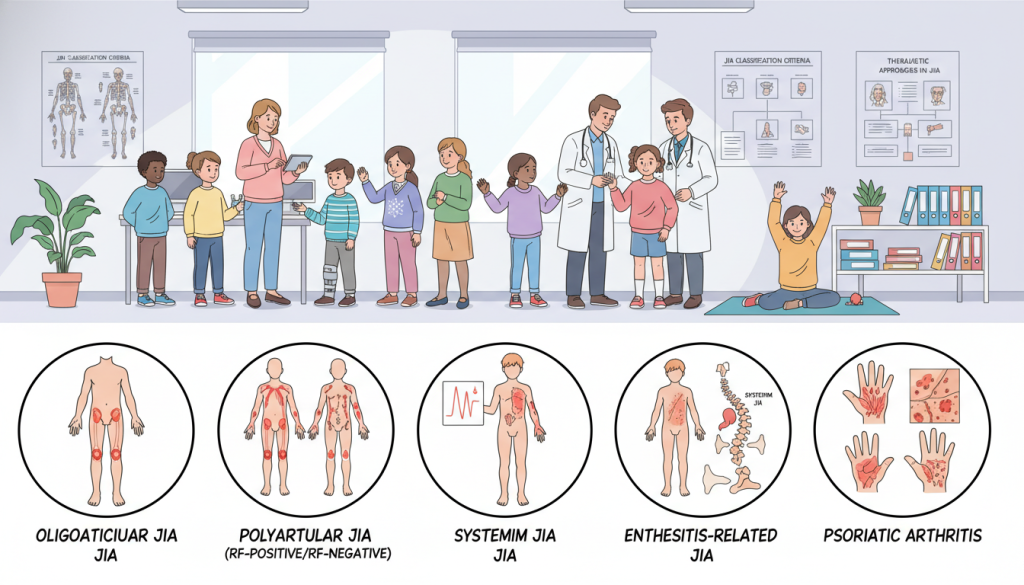
The table below shows the main types of JIA. It helps you see the differences between them:
| Subtype | Joint Involvement | Key Characteristics |
|---|---|---|
| Oligoarticular | 4 or fewer joints | Often affects larger joints like knees or ankles. |
| Polyarticular | 5 or more joints | Can affect both small and large joints symmetrically. |
| Systemic | Variable | Involves fever, rash, and internal organ inflammation. |
Oligoarticular JIA is the most common, seen in younger kids. Polyarticular JIA affects more joints and needs closer watch to avoid damage.
Systemic JIA affects the whole body. It causes high fevers, rashes, and joint pain. Knowing this is essential for families to talk with doctors about treatment.
Understanding these classifications helps families advocate for their children. Every JIA case is different. Tailoring care to the subtype ensures the best care for your child.
Genetic and Environmental Factors in Juvenile Arthritis Causes
The exact cause of Juvenile Idiopathic Arthritis is not fully known. But, science has given us some key insights. It shows that this condition comes from a mix of a child’s genes and outside factors.
Studies suggest that some genes might make a child more likely to have autoimmune issues. These genes don’t mean a child will definitely get the disease. But, they can make the immune system more likely to react to certain things. Remember, these genetic factors are inherited and not something you can control.
Looking at Juvenile Arthritis Causes, we also see the role of the environment. Things like viral or bacterial infections can trigger an immune response in a child who’s more likely to react. These triggers are part of our everyday world.
We want to reassure parents that this diagnosis isn’t because of anything you did or didn’t do. There’s no specific action or choice that leads to this condition. Understanding the science behind it helps us support children better. By seeing it as a biological process, we can help them on their path to health.
Current Standards for Treatment for Juvenile Arthritis
We focus on reducing inflammation and protecting joints for treatment for Juvenile Arthritis. Our goal is to keep children moving freely. We aim to lessen the condition’s daily impact.
Modern treatment for Juvenile Idiopathic Arthritis uses a mix of therapies. This approach helps manage symptoms and prevent joint damage. It’s wonderful to see kids enjoying their favorite activities again.
Non-steroidal anti-inflammatory drugs (NSAIDs) are often the first choice. They reduce inflammation and ease pain. If NSAIDs aren’t enough, we add disease-modifying antirheumatic drugs (DMARDs) to slow the disease.
The table below shows the main types of medications for treatment for Juvenile Arthritis. It helps families understand their options:
| Medication Class | Primary Purpose | Common Usage |
|---|---|---|
| NSAIDs | Reduce inflammation | Initial symptom management |
| DMARDs | Modify disease progression | Long-term joint protection |
| Biologics | Target specific proteins | Severe or resistant cases |
| Corticosteroids | Rapid inflammation control | Short-term flare management |
Managing Juvenile Idiopathic Arthritis means constant monitoring and adjusting treatment. We work with families to find the best therapy for each child. Your child’s comfort and long-term health are our top concerns.
The Role of Physical and Occupational Therapy
We focus on movement and independence in our care for young patients. Managing Juvenile Idiopathic Arthritis involves a lot of rehabilitation. This helps kids stay strong and confident.
Physical therapy is key in this process. It helps keep joints moving, which is vital for health. Therapists guide exercises to prevent muscle weakness and joint contractures. This keeps kids active.
Occupational therapy helps with daily tasks for kids with Juvenile Idiopathic Arthritis. Specialists work with families to make tasks easier. They use tools and change environments to help kids feel independent.
These therapies also help in school. We work with teachers to support kids in class. This way, Juvenile Idiopathic Arthritis doesn’t hold kids back from doing well in school.
| Therapy Type | Primary Goal | Key Benefit |
|---|---|---|
| Physical Therapy | Joint Mobility | Prevents contractures |
| Occupational Therapy | Functional Skills | Promotes independence |
| Combined Care | Quality of Life | Supports daily activity |
Managing Pain and Emotional Well-being in Children
Dealing with the emotional side of a child with Juvenile Idiopathic Arthritis is as important as treating their joints. Chronic illness affects more than the body; it also impacts a child’s emotional health and social growth.
Children with Children Arthritis often feel frustrated, anxious, or left out. It’s key to tackle these emotional challenges to help them stay strong and positive.
We suggest looking into non-pharmacological pain management strategies for families. Mindfulness, deep breathing, and guided imagery can help kids feel in control. These methods are great for lessening pain during flare-ups.
Getting help from a therapist who knows about chronic conditions is also vital. They help kids share their feelings and learn to cope. This way, kids feel understood and supported in their fight against Juvenile Idiopathic Arthritis.
Here’s a table with ways to help kids with Children Arthritis feel better emotionally and physically:
| Strategy Type | Technique | Primary Benefit | Frequency |
|---|---|---|---|
| Mindfulness | Guided Meditation | Reduces Anxiety | Daily |
| Physical | Warm Compresses | Eases Joint Stiffness | As Needed |
| Psychological | Cognitive Reframing | Builds Resilience | Weekly |
| Creative | Art Therapy | Emotional Expression | Bi-weekly |
Nutritional Considerations for Managing Inflammation
Nutrition is key for kids with Juvenile Idiopathic Arthritis. While no diet cures it, the right foods help manage inflammation. Families should see nutrition as a way to improve life quality.
An anti-inflammatory diet is often suggested. Foods high in omega-3 fatty acids, like salmon and walnuts, are great. They help naturally reduce joint inflammation.

Keeping a healthy weight is also vital. Too much weight can hurt joints like knees and ankles. Balanced meals help your child stay mobile and healthy.
Busy families need easy, lasting changes. Swapping processed snacks for fruits or veggies helps a lot. Consistency is key for healthy habits.
| Food Category | Key Nutrients | Primary Benefit |
|---|---|---|
| Fatty Fish | Omega-3 Fatty Acids | Reduces joint inflammation |
| Berries | Antioxidants | Protects cells from damage |
| Leafy Greens | Vitamin K and Calcium | Supports bone strength |
| Whole Grains | Fiber | Maintains healthy weight |
The goal is to make food a positive part of your child’s life. Focus on whole foods to help manage Juvenile Idiopathic Arthritis. Always talk to a doctor or dietitian to make these changes work for your child.
Navigating School and Social Life with Chronic Illness
For kids with Juvenile Idiopathic Arthritis, school can be tough. It’s important for parents, teachers, and doctors to work together. This way, school can be a place where kids learn and grow, not just a place of pain.
Getting support is key for kids to do well in school. Parents should look into 504 plans or IEPs. These plans help kids get the help they need, like more time to move or special seats.
It’s also important for kids to have friends. They might feel shy about their illness. Parents can help them talk about it in a way that makes sense to others.
When friends understand, they can be more supportive. This makes school a better place for kids with Childhood Arthritis.
Here’s a list of things that can help kids manage their illness at school:
| Accommodation Type | Purpose | Example Strategy |
|---|---|---|
| Physical Access | Reduce joint strain | Elevator access or extra time |
| Classroom Setup | Improve comfort | Ergonomic chair or footrest |
| Academic Support | Manage fatigue | Note-taking assistance or breaks |
| Social Integration | Build confidence | Peer education sessions |
The main goal is to help kids speak up for themselves. By talking about their needs early, kids can learn to handle challenges. This helps them do well in school and in life.
The Long-term Outlook and Remission Possibilities
Getting a diagnosis of Juvenile Idiopathic Arthritis can be scary. But, the outlook is getting better. Thanks to modern medical advancements, we can now manage this condition better.
Many kids with JIA live full lives. They play sports, go to school, and hang out with friends just like everyone else. Our main goal is to get them into clinical remission. This means their symptoms are under control or gone.
Remission in JIA means the inflammation is stopped. During this time, kids might need less medicine. But they can keep their bodies healthy.
Regular check-ups are key to managing JIA long-term. Working closely with a pediatric rheumatology team helps. Staying proactive helps protect a child’s joints and health for the future.
Advancements in Research and Future Therapies
New ways to treat Juvenile Idiopathic Arthritis are giving families hope. The field of pediatric medicine is changing fast. These changes are making long-term care for kids better.
Biologic medications are a big step forward. They revolutionize treatment outcomes by targeting the immune system. This approach is more effective at controlling inflammation.
We’re excited to share the latest research with our community. Every new study brings us closer to personalized medicine. This means treatments that fit each child’s unique genetic profile.
This precision reduces side effects and boosts the chance of long-term remission. Here’s a table showing how care has evolved:
| Treatment Era | Primary Focus | Expected Outcome |
|---|---|---|
| Traditional | General inflammation reduction | Symptom management |
| Modern | Targeted immune pathways | Disease modification |
| Future | Genetic and molecular precision | Potential for lasting remission |
Looking ahead, digital health tools and advanced diagnostics will help us more. We’re hopeful these advancements will make life better for those with Juvenile Idiopathic Arthritis. Our aim is to make sure every child gets the best care possible.
Support Systems for Families Facing Juvenile Rheumatoid Arthritis
Families dealing with Juvenile Idiopathic Arthritis find strength in their connections. Caring for a child with a chronic illness is a journey that no family should walk alone. By reaching out, you can turn a tough diagnosis into a journey of growth and resilience.
Connecting with other families who know Juvenile Rheumatoid Arthritis brings relief. They offer practical advice on school, medication, and flare-ups. Look for these communities at local hospitals or national groups.
Groups like the Arthritis Foundation are key for families. They provide resources, webinars, and support group directories. These networks give you accurate, evidence-based information and support from others.
Creating a strong support network is vital for sharing experiences and finding emotional encouragement. Whether online or in person, these connections reduce the feeling of isolation. Remember, taking care of yourself is just as important as caring for your child. Seeking help shows you are strong.
Conclusion
Managing Juvenile Idiopathic Arthritis needs a strong team effort between families and doctors. We think that knowing a lot about the condition helps parents and kids fight for their health.
We aim to help families understand this complex disease better. Early action and steady care can help kids stay active, even with Juvenile Idiopathic Arthritis.
At Acıbadem Healthcare Group, we’re committed to top-notch medical care. We give families the tools and knowledge to handle Juvenile Idiopathic Arthritis well.
Get in touch with our experts to talk about your child’s specific needs. We’re here to help you every step of the way, towards better health and a better life.
FAQ
Q: What is Juvenile Idiopathic Arthritis (JIA) and how does it affect children?
A: Juvenile Idiopathic Arthritis is a chronic condition where the immune system attacks healthy joints. At Acıbadem Healthcare Group, we call it the most common form of Childhood Arthritis. It happens in kids under 16.
It causes ongoing joint inflammation. This can lead to pain, swelling, and damage to growing bones if not treated.
Q: Is Juvenile Rheumatoid Arthritis the same thing as JIA?
A: Yes, Juvenile Rheumatoid Arthritis is an older term for this condition. Now, we use Juvenile Idiopathic Arthritis (JIA) to describe it. The name change reflects a better understanding of the disease.
Our goal remains the same: to help kids manage their condition and protect their joints.
Q: What are the primary Juvenile Arthritis Symptoms parents should watch for?
A: Look out for joint stiffness, swelling, redness, and warmth in the morning. Kids might also feel tired or have a fever without a clear reason. They might not want to use a certain limb.
It’s also important to watch for uveitis, a serious eye problem. It can happen without obvious symptoms and might harm vision.
Q: What are the most common Juvenile Arthritis Causes?
A: The exact Juvenile Arthritis Causes are not fully understood yet. But we know it’s not caused by diet, weather, or how active a child is. It’s a mix of genetics and environmental factors that mess up the immune system.
We want to reassure parents that this condition isn’t their fault.
Q: What does the current Treatment for Juvenile Arthritis involve?
A: Today’s Treatment for Juvenile Arthritis is tailored to each child. At Acıbadem Healthcare Group, we use NSAIDs, DMARDs, and biologic medications to target the immune system. We also use physical and occupational therapy to keep joints moving and help kids stay active.
Q: Why is early diagnosis so critical for Children Arthritis?
A: Early diagnosis is key because chronic inflammation can cause permanent damage. If caught early, we can start treatment right away. This helps prevent long-term problems and improves a child’s life quality.
Q: Can lifestyle changes help manage this Pediatric Rheumatic Disease?
A: Lifestyle choices are important in managing Pediatric Rheumatic Disease. Eating an anti-inflammatory diet and staying healthy can help. Physical therapy strengthens muscles and supports emotional health. We also encourage open communication and school support through 504 plans.