

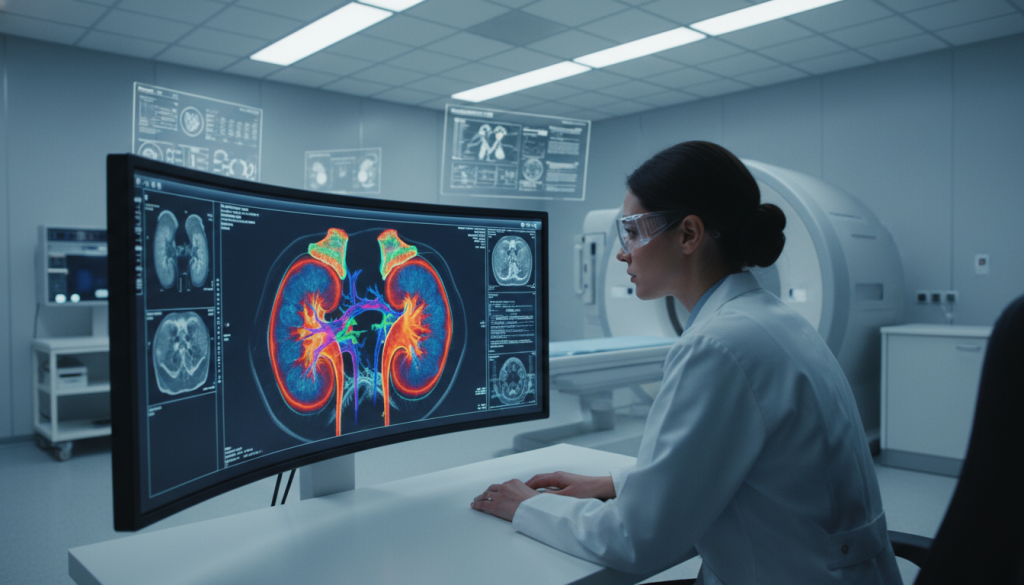
Understanding how doctors look inside your body is key to your health. Renal Radiology is vital for diagnosing and managing kidney issues. Our teams use advanced imaging to see inside with remarkable precision and care.
These tools help us spot problems early. This means you get the best treatment plan. We aim to make medical stuff easy to understand. This way, you can make informed decisions about your health.
Key Takeaways
- Medical imaging is essential for accurate kidney diagnosis.
- Advanced tools allow for precise visualization of internal structures.
- Early detection through imaging leads to better health outcomes.
- We prioritize patient education to reduce anxiety during testing.
- Our team uses these insights to create personalized care plans.
The Scope of Renal Radiology
Kidney imaging is at the core of modern medicine, helping protect our kidneys. It lets us see inside the body without surgery. This way, we can spot problems early and plan the best treatments.
This field focuses on checking the kidneys’ size, shape, and health. It helps find stones, cysts, or other issues. These tools are a vital bridge between symptoms and solutions. When patients understand these processes, they feel more in control of their health.
Today’s kidney imaging uses many non-invasive methods to get important information. Each method has its own strengths, helping doctors choose the best approach for each patient. These procedures are key for making accurate decisions in hospitals across the U.S.
| Diagnostic Modality | Primary Focus | Key Benefit |
|---|---|---|
| Ultrasound | Anatomy and Flow | No radiation exposure |
| CT Scan | Detailed Structure | High-resolution images |
| MRI | Soft Tissue Detail | Excellent contrast |
The field of renal radiology keeps growing with new technology. By making kidney imaging a part of regular care, we help patients get the best support. Our goal is to give you the knowledge to manage your health confidently and with peace of mind.
Anatomy and Physiology Relevant to Kidney Imaging
The human kidney is a true marvel of biology. Its structure is key to understanding kidney imaging. Each kidney is a complex filter unit, with an outer cortex and inner medulla. These areas have millions of tiny filters that clean our blood and keep us balanced.
The cortex is where the main filtering happens. The medulla sorts waste into tubes for drainage. Because of these differences, scans show them in unique ways. Radiologists adjust settings to highlight these details.
A complex network of blood vessels supports the kidney’s functions. The renal arteries carry a lot of blood, which we watch closely during kidney imaging. We look for blockages or problems that could harm health.
Knowing the kidney’s anatomy helps us connect complex processes to what we see on screens. By understanding where blood vessels and drainage systems are, we can give more precise diagnoses. This knowledge lets us choose the best diagnostic tools for you.
| Anatomical Structure | Primary Function | Imaging Significance |
|---|---|---|
| Renal Cortex | Blood filtration | Detects lesions or masses |
| Renal Medulla | Fluid concentration | Assesses drainage efficiency |
| Renal Artery | Blood supply | Evaluates vascular health |
| Renal Pelvis | Urine collection | Identifies blockages or stones |
Clinical Indications for Radiologic Evaluation of Renal Diseases
We carefully look at your symptoms to choose the best renal imaging techniques for you. We know medical tests can be tough, so we focus on you. We aim for a patient-centered approach in every step.
A radiologic evaluation of renal diseases starts when we see certain signs. These signs include high blood pressure that doesn’t get better with usual treatments. Or when there’s blood in your urine, known as hematuria.
We also look into imaging for unexplained flank pain or frequent kidney infections. By picking the right renal imaging techniques, we make sure our tests are both quick and precise for everyone.
The table below shows common reasons we might suggest a radiologic evaluation of renal diseases. This team effort makes sure your treatment fits your health history.
| Clinical Indication | Primary Concern | Recommended Initial Imaging |
|---|---|---|
| Persistent Hypertension | Renal Artery Stenosis | Doppler Ultrasound |
| Gross Hematuria | Structural Abnormalities | CT Urography |
| Recurrent Infections | Anatomical Obstruction | Renal Ultrasound |
| Acute Flank Pain | Nephrolithiasis | Non-contrast CT |
We promise to keep you informed every step of the way. We think knowing why you’re getting tested helps you make better choices for your kidney health.
Renal Ultrasound: The First-Line Diagnostic Tool
Renal ultrasound is key in kidney care because it’s safety and precise. It’s the first choice for checking patients because it doesn’t use harmful radiation. This makes it perfect for everyone, including kids and pregnant women.
The test uses sound waves to show real-time images of the kidneys. A technician uses a small device on the belly. The sound waves reflect off the kidneys, giving us clear pictures.
This method is great for finding problems like kidney stones, fluid-filled cysts, and structural issues. It’s easy and doesn’t hurt, making patients feel at ease. We love how it lets us see what’s going on right away.
Here’s why we often pick it for first checks:
| Feature | Renal Ultrasound | Alternative Imaging |
|---|---|---|
| Radiation Exposure | None | Variable |
| Real-time Imaging | Yes | Limited |
| Patient Comfort | High | Moderate |
| Primary Use | Screening | Detailed Analysis |
Choosing a renal ultrasound means we care about your health and quality of care. It’s our go-to for spotting kidney problems early. We’re dedicated to using the latest tech to give you the best care.
Computed Tomography: The Gold Standard for Renal Masses
A CT scan for kidney evaluation is the top choice for finding and figuring out kidney masses. It gives us clear pictures of the kidneys’ inside parts. This helps us make a precise diagnosis.
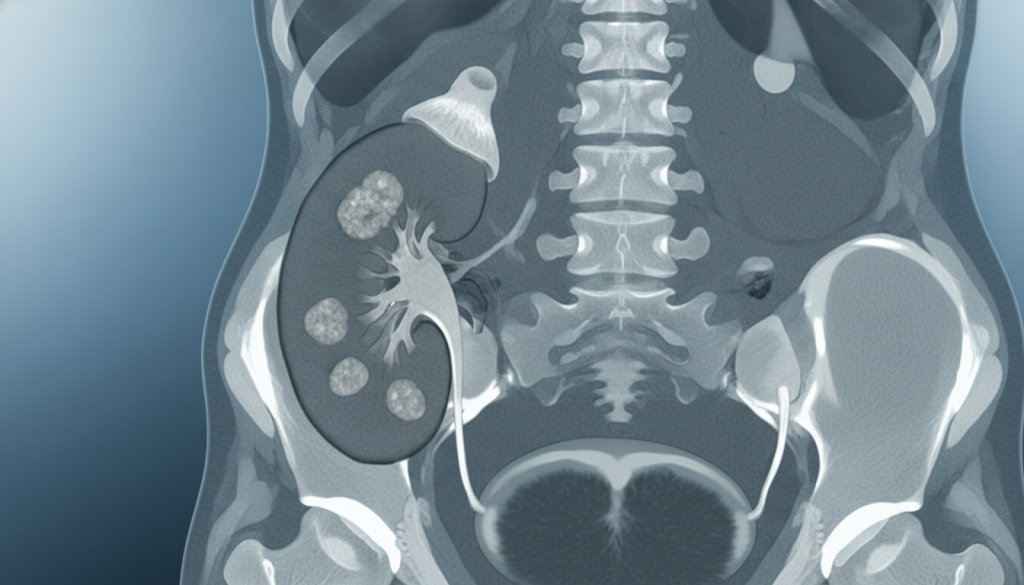
The scan works by moving an X-ray source around your body. It takes many images. Then, a computer puts these images together into a comprehensive 3D view of your kidneys. This detailed view lets our radiologists tell the difference between harmless cysts and dangerous tumors.
Many people wonder about contrast dye in CT scan for kidney procedures. This special liquid is given through a vein to make blood vessels and tissues stand out. We check for allergies and make sure your kidneys are okay before using it.
| Feature | Standard CT | Contrast-Enhanced CT |
|---|---|---|
| Image Detail | High | Superior |
| Vascular View | Limited | Excellent |
| Safety Focus | Standard | Renal Function Check |
We know medical imaging can be scary. But our team is here to make you comfortable and safe during your CT scan for kidney check-up. We’re ready to answer your questions and make sure you know what’s happening with your care.
Magnetic Resonance Imaging for Renal Evaluation
MRI for renal evaluation is a top choice for kidney checks. It gives clear images of soft tissues without harmful radiation. This makes it a safer option for detailed looks.
MRI uses strong magnetic fields and radio waves to create detailed images. These images show the kidneys and nearby areas clearly. It’s a great choice for those who need to be checked often.
Medical imaging can seem scary, but MRI machines are made to be comfortable. The whole process is completely non-invasive. It’s quiet and calm, making it a safe way to check your health.
| Feature | MRI | Ultrasound | CT Scan |
|---|---|---|---|
| Radiation | None | None | Yes |
| Soft Tissue Detail | Excellent | Moderate | Good |
| Primary Use | Complex Masses | Initial Screening | Acute Trauma |
| Imaging Speed | Slower | Fast | Very Fast |
Renal Nuclear Medicine Imaging
Traditional imaging shows us what the kidneys look like. But renal nuclear medicine imaging shows us how they work. It focuses on how the kidneys function, not just their shape. This helps us understand how well your body filters waste.
We use small, safe amounts of radioactive tracers in these tests. These tracers help us see how blood flows and is filtered. This dynamic data is key for complex cases where just images aren’t enough.
We often use renal nuclear medicine imaging to check on transplanted kidneys. It also helps us track chronic kidney diseases. By watching how these tracers move, we spot changes early. This helps us give better care to our patients.
| Scan Type | Primary Purpose | Clinical Benefit |
|---|---|---|
| MAG3 Scan | Blood flow and drainage | Assesses obstruction |
| DMSA Scan | Renal cortical imaging | Detects scarring |
| DTPA Scan | Glomerular filtration | Measures GFR accuracy |
These tests give us a comprehensive view of your kidney health. We aim to use these advanced tools for the most accurate diagnosis. Knowing how your kidneys function is key to your long-term health.
Advanced Renal Angiography Techniques
Modern medicine lets us see inside the renal vessels with amazing clarity through renal angiography. This special imaging gives our medical teams a detailed view of the blood vessels that feed the kidneys. We use contrast dye and advanced X-ray tech to spot blockages or issues that might be hidden.
We often do this to find renal artery stenosis, where the arteries narrow and limit blood flow. Finding this early is key to keeping the kidneys healthy and managing blood pressure. Our specialists use these clear images to pinpoint where and how severe any narrowing is.
These minimally invasive techniques are a big plus for our patients. The small incision needed means quicker recovery times compared to old-school surgery. We focus on your comfort and safety while using renal angiography to get the exact data for your care plan.
The images from this process are key for planning treatments. Whether it’s for a stent or another procedure, having a clear map helps our team work with extreme precision. By using these advanced tools, we keep giving top-notch care that fits your health needs.
Imaging Protocols for Renal Biopsy
We use advanced renal biopsy imaging to make sure every procedure is safe and accurate. When a kidney issue needs a clear diagnosis, our teams use these special techniques. They help guide the biopsy process, linking the problem to the right tissue sample for treatment.
Ultrasound or CT scans guide the biopsy, giving a real-time view of the kidney. This lets us place the biopsy needle with remarkable precision. It greatly reduces risks for the patient. We aim to hit the right spot in the kidney, avoiding important blood vessels.
Success comes from teamwork between radiologists and nephrologists. Their combined skills make sure renal biopsy imaging works best during the procedure. We think this teamwork is key to giving our patients the best care. It makes the whole process smoother and more reassuring.
Radiologic Assessment of Renal Trauma
When an injury happens suddenly, how fast we act can make a big difference. We focus on immediate and precise imaging to give patients the best care. This quick action is key in the radiologic evaluation of renal diseases, designed for emergencies.
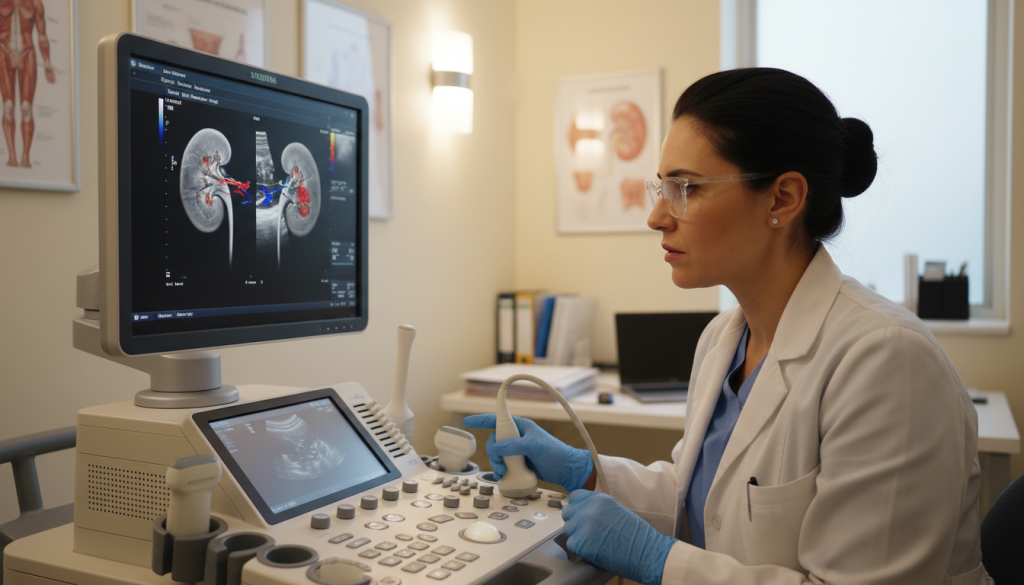
After an accident, we quickly look for serious damage like lacerations or hematomas. We use top-notch imaging to see how bad the injury is. This helps our teams decide if a patient needs just watchful waiting or surgery right away.
We’re all about top-notch diagnostic support, ready for any emergency. By adding these special protocols to our radiologic evaluation of renal diseases, we miss nothing. We think clear talk and fast results are key for patients to get better.
| Injury Grade | Description of Damage | Primary Imaging Finding |
|---|---|---|
| Grade I | Minor contusion or subcapsular hematoma | Normal or minimal fluid collection |
| Grade II | Non-expanding perirenal hematoma | Localized cortical laceration |
| Grade III | Deep cortical laceration | Visible parenchymal disruption |
| Grade IV | Vascular injury or collecting system tear | Contrast extravasation or segmental infarction |
Pediatric Renal Radiology Considerations
Pediatric renal radiology needs a special mix of accurate diagnosis and safety for kids. We know kids are more sensitive to radiation than adults. So, radiation safety is our top concern. We use special methods to get the needed info without too much radiation.
We use special imaging tools for kids’ smaller bodies. These tools help us get clear images of the kidneys and urinary tract without too much radiation. We are deeply committed to protecting our youngest patients and giving their doctors the right info for treatment.
We also know that imaging can be scary for kids and their families. Our team is trained to be gentle and reassuring. We work with parents to make the whole process as comfortable and stress-free as possible.
The table below shows the imaging methods we use for kids, their main benefits, and how safe they are:
| Imaging Modality | Primary Use | Safety Profile |
|---|---|---|
| Renal Ultrasound | Initial screening and monitoring | No radiation exposure |
| Pediatric MRI | Detailed soft tissue evaluation | No ionizing radiation |
| Low-Dose CT | Complex stone or mass assessment | Minimized radiation dose |
| Nuclear Medicine | Functional kidney assessment | Controlled, minimal tracer dose |
Our team works with pediatric specialists to make each imaging plan fit the child’s needs. We believe that informed parents are empowered partners in their child’s health. By combining our expertise with care, we aim to provide the best care for every family.
Imaging the Transplanted Kidney
Getting a kidney transplant is a big change that needs close medical watch. We focus on your new kidney’s health, using specialized imaging protocols. These tools help us see how the kidney is doing in its new spot in the lower abdomen.
Keeping an eye on your transplant is key for its long-term success. We use scans to spot small changes early. This helps us catch issues like rejection or problems with blood flow before they get worse.
Our transplant teams use these detailed images to guide your care. They help us check the kidney’s size, look for fluid, and make sure the surgery site is okay. Radiology gives us the clear pictures we need for effective clinical management. We want you to understand these findings so you can be more involved in your recovery.
The table below shows the main imaging methods we use to check on your transplanted kidney:
| Imaging Modality | Primary Purpose | Clinical Benefit |
|---|---|---|
| Renal Ultrasound | Initial graft assessment | Non-invasive, real-time flow monitoring |
| Doppler Ultrasound | Vascular evaluation | Detects arterial or venous blockages |
| CT Angiography | Detailed anatomical review | Identifies complex surgical complications |
| Nuclear Scintigraphy | Functional analysis | Measures overall graft filtration rate |
We use these advanced tools and our expert clinical oversight to give you the best care. We’re here to support your health at every step of the transplant journey. If you have any questions about your imaging, talk to our dedicated medical team.
Interventional Radiology in Renal Care
Interventional radiology lets us treat kidney problems with great precision and little harm. It’s a transformative shift in kidney health management. We use advanced imaging to guide our tools, often avoiding open surgery.
We perform complex procedures through small skin incisions. This method is minimally invasive. Patients feel less pain and recover faster.
Procedures like angioplasty and stenting restore blood flow to the kidneys. We also use image-guided drainage to remove fluid or abscesses. These targeted treatments aim to solve the problem while saving healthy tissue.
The table below shows the main differences between traditional surgery and interventional radiology for kidney care:
| Feature | Traditional Surgery | Interventional Radiology |
|---|---|---|
| Incision Size | Large/Open | Tiny (Needle-sized) |
| Recovery Time | Several weeks | Usually 24-48 hours |
| Anesthesia | General | Local or Conscious Sedation |
| Hospital Stay | Extended | Often outpatient |
We put patient wellbeing first with these advancements. By reducing procedure stress, we make patients feel better and more confident. Our goal is to provide the most effective, least invasive care for everyone.
Emerging Trends in Renal Imaging Technology
We’re entering a new era where renal imaging techniques are getting faster and more precise. Digital tools are helping us see kidney structures with never-before-seen clarity. This lets us spot small problems early, which is key for good treatment plans.
Artificial intelligence is leading this tech leap. AI algorithms help radiologists find tricky spots in scans. This collaborative approach between humans and machines cuts down diagnosis time.
Another big step is in 3D reconstruction. These advanced renal imaging techniques turn flat images into detailed, interactive models. Surgeons use these models to plan surgeries better, knowing exactly where tumors are.
We think these changes will keep shaping nephrology and radiology. By focusing on innovation, we make sure patients get the most accurate checks. Here’s how these new tools compare to old methods.
| Feature | Traditional Imaging | Emerging Technology |
|---|---|---|
| Processing Speed | Standard | High-Speed AI Analysis |
| Visual Detail | 2D Slices | Interactive 3D Models |
| Diagnostic Accuracy | Clinician Dependent | AI-Assisted Precision |
| Clinical Utility | Baseline Screening | Advanced Surgical Planning |
Interpreting Radiologic Reports for Patients
Your radiologic report is a detailed map of your health. We’re here to help you understand it. These reports use complex terms but are meant to guide your care team. Understanding these reports is key to being involved in your care.
See your report as a starting point for a conversation, not a final diagnosis. Imaging results need to be matched with your symptoms and medical history. Always schedule a follow-up appointment with your healthcare provider to discuss the findings in the context of your overall health status.
Medical reports use specific terms to describe findings. To prepare for your next consultation, we’ve listed common terms you might see. Knowing these definitions can help you ask better questions during your visit.
| Term | Definition | Clinical Significance |
|---|---|---|
| Lesion | Any abnormal change in tissue. | Requires further investigation to determine nature. |
| Calcification | Calcium deposits in soft tissue. | Often benign but may indicate past inflammation. |
| Hydronephrosis | Swelling of the kidney due to urine buildup. | Suggests a possible blockage or obstruction. |
| Attenuation | Reduction in the intensity of an X-ray beam. | Helps differentiate between fluid, fat, and solid tissue. |
Transparency is at the heart of our mission. By making radiologist language clear, we aim to build a collaborative relationship between you and your medical team. Remember, your doctor is the best person to explain how these findings affect your treatment plan.
Conclusion
Modern medicine depends on Renal Radiology for your long-term health. These tools connect complex biological data to health choices. Choosing Acıbadem Healthcare Group means getting a team focused on your needs.
Our experts make sure you’re comfortable while using the latest technology. We think informed patients are the best partners in their care. Knowing about Renal Radiology makes you confident in your medical journey.
If you have questions about your results, contact our specialists. Your health is our top priority as we improve patient care. We’re here to help you on your path to better kidney health with care and precision.
FAQ
Q: What is the primary role of Renal Radiology in my healthcare journey?
A: Renal Radiology uses advanced imaging to diagnose and treat kidney issues. At Acıbadem Healthcare Group, we use these tools to see inside the body clearly. This helps us find problems early and create treatment plans for you.
Q: Why might I need a radiologic evaluation of renal diseases?
A: You might need it if you have high blood pressure, blood in your urine, or chronic pain. These tests help us find the cause of your symptoms. It could be a structural problem, a decline in function, or something like stones or masses.
Q: What makes a renal ultrasound a common first-line diagnostic tool?
A: It’s non-invasive, doesn’t use radiation, and is safe for everyone, even pregnant women. It uses sound waves to show the kidneys in real-time. This makes it a great first choice for many tests.
Q: When is a CT scan for kidney evaluation necessary?
A: We use CT scans when we need to see kidney masses or complex stones clearly. It gives detailed views that are better than X-rays. At Acıbadem Healthcare Group, we use safe contrast dye for the best results.
Q: What are the benefits of choosing MRI for renal evaluation?
A: MRI is great for detailed images of soft tissues without radiation. It uses strong magnetic fields to show the kidneys and surrounding areas clearly. It’s good for patients who need close monitoring or have sensitivities to other tests.
Q: How does renal nuclear medicine imaging differ from other scans?
A: It focuses on how well the kidneys work, not just their structure. It uses a small radioactive tracer to track blood flow and filtration. This gives us important information for managing chronic conditions or checking on transplanted kidneys.
Q: What is the purpose of renal angiography?
A: It shows the blood vessels of the kidneys. It’s key for diagnosing issues like narrowed arteries. The detailed maps help our teams plan and do treatments to improve blood flow.
Q: Why is renal biopsy imaging important for my safety?
A: It guides the needle during tissue sampling. This makes the biopsy more accurate and safer. It helps us get the right tissue without risking complications.
Q: How does Acıbadem Healthcare Group approach pediatric renal radiology?
A: We focus on “Image Gently” in pediatric care. We use special imaging and equipment for kids to reduce radiation. Our team creates a safe and comforting environment for our youngest patients.
Q: What are the emerging trends in renal imaging technology?
A: We’re seeing new things like Artificial Intelligence (AI) for better detection and 3D reconstruction for surgery planning. These advancements at Acıbadem Healthcare Group aim to make diagnoses faster and more accurate, improving patient care.
Q: How can I understand the findings in my renal radiology report?
A: Reports can be hard to understand. We encourage patients to discuss them with their doctor. We work together to explain the findings and how they guide your care.