

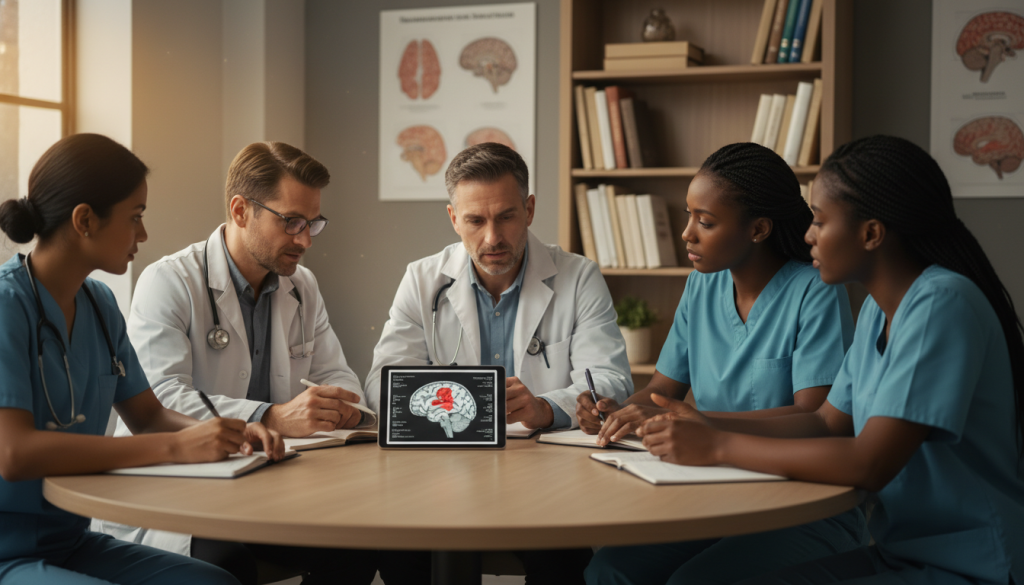
Aphasia is a complex condition that affects how the brain processes language. It often happens after a stroke or brain injury. This can make it hard for someone to speak, read, write, or understand others.
This condition can make people feel very isolated. But knowing more about it is the first step to managing it better.
At Acıbadem Healthcare Group, we think that knowledge is the foundation of recovery. Our team offers expert, caring help. We guide patients and their families through these communication challenges.
We are dedicated to helping you through clear, easy-to-understand medical education. We also provide ongoing support.
By understanding aphasia, we aim to help you see how it affects your daily life. Our goal is to make sure every patient gets the personalized care and resources they need. We want to help them improve their quality of life and feel more confident in their interactions.
Key Takeaways
- Aphasia is a neurological condition that disrupts language processing and communication skills.
- It frequently results from brain injuries, such as strokes, affecting speech and comprehension.
- Acıbadem Healthcare Group offers expert, compassionate support for patients and their families.
- Clear medical education is essential for empowering individuals to manage their recovery journey.
- Understanding the condition helps reduce isolation and improves daily communication outcomes.
Understanding the Fundamentals of Aphasia
Aphasia is a physical challenge, not a sign of low intelligence. It’s a language disorder caused by brain damage. This damage affects areas key to speaking and understanding language.
This condition is not a sign of being less smart. It’s a problem with how our brain talks. We understand how scary this can feel. But knowing the cause is the first step to understanding.
Communication gets tough because of how our brain works. It uses complex networks to turn thoughts into words. When these networks get broken, speaking and writing become hard.
We aim to clear up aphasia for those who want to understand it. By focusing on its biological side, we can move past myths. This way, we can help in more effective ways.
Common Causes and Underlying Conditions
Figuring out why someone gets a language disorder is key to helping them get better. We examine what might have caused this neurological condition in our patients. Knowing the cause helps us tailor a treatment plan just for them.
Most often, aphasia comes from a stroke. This happens when blood stops flowing to the brain. Without oxygen, areas like Broca’s or Wernicke’s can get damaged. These areas are vital for speaking and understanding language.
Other causes include traumatic brain injuries (TBI) and brain tumors. A TBI can happen from a hit to the head, harming brain connections. A tumor can press on brain parts, causing symptoms to appear.
We want our patients and their families to understand. Knowing why someone has aphasia helps us find the best ways to treat it. The table below shows how different causes affect the brain’s language skills.
| Cause | Primary Mechanism | Impact on Language |
|---|---|---|
| Ischemic Stroke | Blood flow blockage | Sudden loss of speech |
| Traumatic Brain Injury | Physical impact/trauma | Variable cognitive disruption |
| Brain Tumor | Pressure on brain tissue | Progressive communication decline |
| Hemorrhagic Stroke | Bleeding in the brain | Acute neurological damage |
Every neurological condition needs a special care plan. Whether it’s from an injury or a tumor, our team at Acıbadem Healthcare Group works to help. We support you every step of the way.
Classifying Types of Aphasia
We divide aphasia into different types to help patients overcome their communication challenges. This language disorder shows up in many ways. Knowing the exact type is key to making a treatment plan that fits each person.
There are two main types based on how people process and speak. Expressive aphasia makes it hard to speak. People know what they want to say but can’t find the right words. On the other hand, receptive aphasia makes it tough to understand what others say or write.
Knowing these differences helps our teams create personalized recovery plans. We can then use the best therapy for each patient’s specific needs.
| Type of Aphasia | Primary Challenge | Communication Impact |
|---|---|---|
| Expressive Aphasia | Speech production | Difficulty speaking or writing |
| Receptive Aphasia | Language comprehension | Difficulty understanding others |
| Global Aphasia | Severe impairment | Affects both expression and reception |
Recognizing Symptoms and Behavioral Indicators
Understanding the signs of this neurological condition is key for families to get help fast. Aphasia impacts the brain’s language areas differently for everyone. These signs are important for finding the right care.
Expressive aphasia makes it hard for people to find the right words. They might speak in short, broken phrases. It’s very frustrating when they know what they want to say but can’t find the words.
Receptive aphasia makes it tough to understand others. A person might hear sounds but not grasp the meaning. This neurological condition can cause confusion because the brain can’t process language well.
Spotting these symptoms early is the best way to get the right help. Whether the signs are small or big, a doctor’s check-up is needed. This way, we can tailor care to meet each person’s needs with a patient-centered approach.
Communication impairment doesn’t show how smart someone is. It’s a challenge that needs patience and the help of experts. We’re here to guide you through these changes with understanding and care. Early action is the best way to improve life quality.
The Diagnostic Process at Acıbadem Healthcare Group
At Acıbadem Healthcare Group, we know a precise diagnosis is key to recovery. When you or a loved one has aphasia, we aim to clear up confusion. We do this through a detailed and evidence-based evaluation process.
We use a team of experts to tackle every part of a communication impairment. Our team includes skilled neurologists and speech-language pathologists. They work together to see how aphasia affects your daily life.
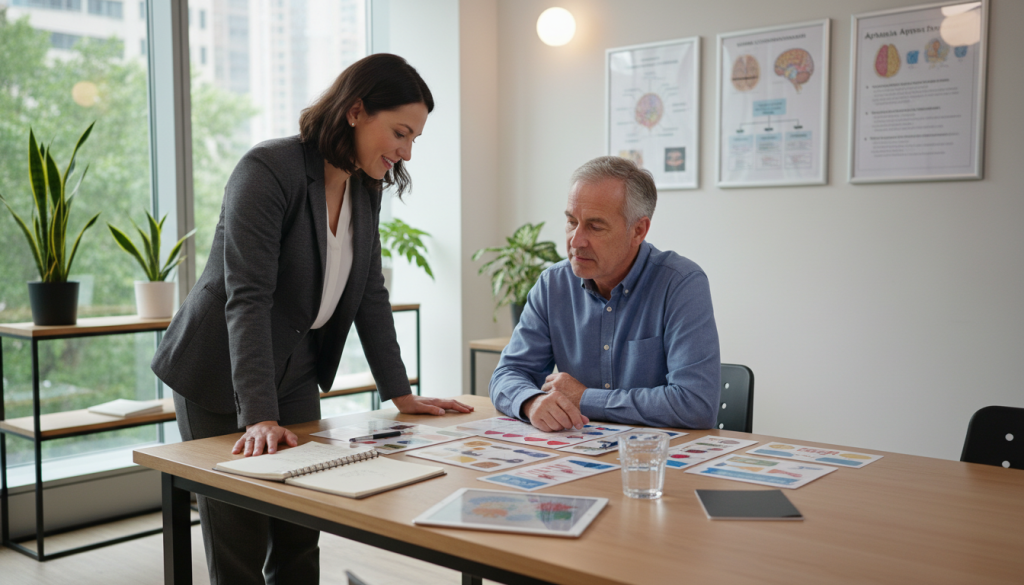
Our diagnostic process includes tests to check language skills. We look at how well you speak, listen, read, and write. These tests help us understand the exact type of aphasia and where you need the most help.
After the tests, we create a personalized care plan for you. We know dealing with a communication problem can be tough. So, we focus on both being accurate and caring. We want you to feel supported every step of the way.
The Role of Speech Therapy in Recovery
At Acıbadem Healthcare Group, we see speech therapy as key to helping patients connect with the world again. When aphasia affects language, this care offers the support needed to improve communication. Our aim is to help people regain their voice and live their lives with purpose.
Our therapists work with patients to rebuild lost language skills. They also teach strategies to help with communication. This evidence-based approach is made for each patient’s needs.
We think recovery is a team effort. Our experts work with patients to set goals for social and work life. Through speech therapy, we help patients reach their goals of independence.
The exercises we use aim to improve thinking and speaking skills. They also boost confidence. In a supportive setting, patients find it easier to handle everyday talks. Our focus on personalized care means every patient gets the tools to overcome aphasia challenges.
Advanced Language Rehabilitation Techniques
Modern language rehab techniques open new doors for recovery. They tap into the brain’s ability to adapt. When old methods stall, we use special methods to spark new neural paths. These advanced methods are key for those facing aphasia.
Melodic Intonation Therapy (MIT) is a powerful tool we use. It uses the brain’s musical areas to help patients speak when usual ways are blocked. Singing phrases instead of speaking makes it easier for them to share meaningful thoughts and regain confidence.
Our speech therapy program also includes Constraint-Induced Language Therapy (CILT). This method pushes the brain to use damaged areas by limiting other ways to communicate. By making verbal output the only choice, we strengthen the brain’s speech connections.
These methods rely on neuroplasticity. This is the brain’s amazing ability to change and form new connections. Through language rehabilitation, we give the brain the chance to find new ways to communicate, even with damaged areas.
| Technique | Primary Mechanism | Target Goal |
|---|---|---|
| Melodic Intonation Therapy | Musical processing | Fluency and rhythm |
| Constraint-Induced Therapy | Forced verbal use | Strengthening speech pathways |
| Neuroplasticity Training | Repetitive stimulation | Long-term brain reorganization |
We know that progress in aphasia recovery can be slow. But these speech therapy methods bring hope and real improvements in daily talk. By using these modern methods, we make sure our patients get the best care for their recovery journey.
Living with Aphasia: Daily Life Adjustments
Daily life with aphasia can be tough, but small changes help a lot. Making your environment easier to navigate can make a big difference. Patience is your most valuable tool as you adapt to these changes.
Using visual aids at home is a great way to manage aphasia. Picture boards, written lists, or digital tablets can help when words are hard to find. They let you express your needs and feelings without worrying about speaking.
Keeping your communication simple is key when you have aphasia. Use short, clear sentences and talk about one thing at a time. This makes conversations easier and keeps you connected with loved ones.
Remember, give yourself and others more time to talk. Rushing can make things harder and more stressful. Slowing down helps everyone feel heard and understood.
Keeping your independence is the main goal of these changes. Embracing these habits with resilience and grace lets you keep doing what you love. We’re here to support you as you face the challenges of aphasia, helping you thrive every day.
Supporting Loved Ones with Communication Impairment
We believe that the journey of recovery from aphasia is most successful when caregivers feel empowered and well-informed. Family members play a vital role in the healing process by creating a patient and understanding environment at home. When you provide a safe space for expression, you help your loved one regain their confidence.
Managing a communication impairment requires a shift in how we approach daily interactions. It is essential to practice active listening, which means giving your full attention without rushing the speaker. By slowing down, you allow your loved one the necessary time to process thoughts and formulate their responses.
Non-verbal cues are just as important as spoken words during this recovery phase. Using gestures, facial expressions, and even simple drawings can bridge the gap when words are difficult to find. These methods reduce the frustration often associated with aphasia and help maintain a strong emotional connection.
Fostering a supportive atmosphere significantly lowers the stress levels for everyone involved. We encourage families to focus on the intent behind the message, not the grammatical accuracy of the speech. This shift in perspective helps build more effective ways of connecting during the recovery journey.
| Strategy | Action to Take | Expected Benefit |
|---|---|---|
| Active Listening | Maintain eye contact and wait patiently | Reduces speaker anxiety |
| Visual Aids | Use gestures or written notes | Clarifies complex messages |
| Environment | Minimize background noise | Improves focus and clarity |
| Validation | Acknowledge their effort | Boosts emotional confidence |
By implementing these techniques, you can help manage the challenges of communication impairment more effectively. Remember that every small success is a step forward in the long-term recovery from aphasia. We are here to support your family in building these essential skills for better connection.
The Intersection of Aphasia and Cognitive Health
A neurological condition like aphasia often affects more than just language. It can also impact other areas of cognitive communication. This is because the brain works as a whole system.
When we check a patient, we look at memory, attention, and how well they can make decisions. These areas are often affected by the same neurological condition that causes language problems. This helps us understand the patient’s overall health better.
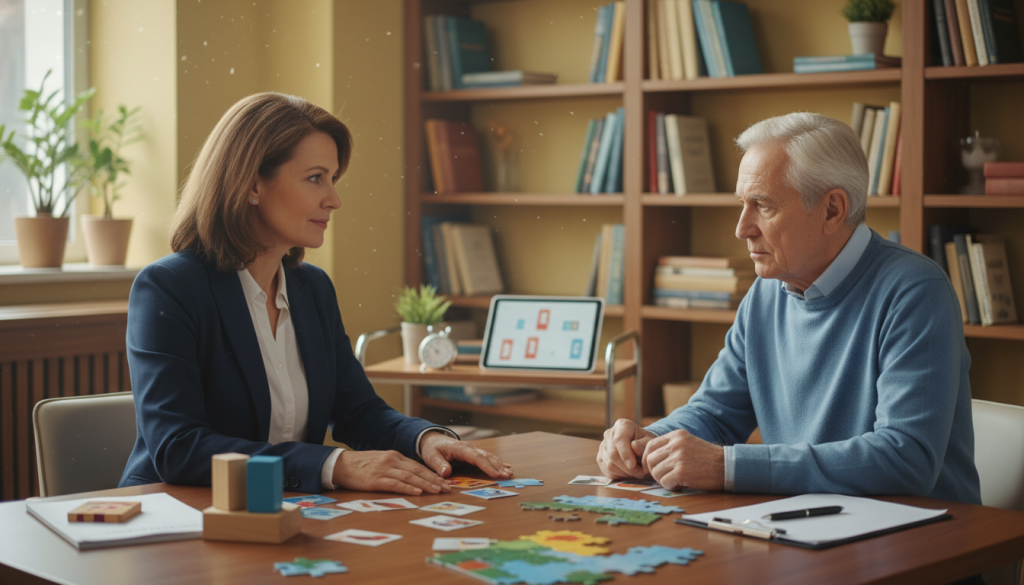
At Acıbadem Healthcare Group, our team does detailed assessments. We look at both strengths and weaknesses in cognitive areas. We think that holistic care is the best way to help.
By treating both language and cognitive issues, we tailor our care to each person. This approach helps patients become more independent. We focus on cognitive communication to improve daily life skills. This comprehensive approach supports the whole person, not just their language skills.
Multidisciplinary Care Teams
At Acıbadem Healthcare Group, we know that getting better from aphasia takes a team. This condition makes talking and understanding hard, so one way isn’t enough to fix it.
We put together a team of experts for each patient. This collaborative model means we treat the whole person, not just the symptoms.
Our teams have neurologists, psychologists, and social workers, plus speech therapy experts. Neurologists keep the brain healthy, and therapists work on language skills with special exercises.
Psychologists help with the emotional side of aphasia. They support patients feeling frustrated. Social workers help families deal with daily life and planning for the future.
This mix of fields makes care smooth and complete. The integrated approach lets us watch how patients do in many areas at once.
This team effort leads to the best results for our patients. Everyone talks often to make sure speech therapy fits with the patient’s big picture recovery.
| Specialist | Primary Focus | Contribution to Recovery |
|---|---|---|
| Neurologist | Brain Health | Manages underlying neurological conditions |
| Speech-Language Pathologist | Communication | Improves language and cognitive skills |
| Psychologist | Emotional Well-being | Supports mental health and adjustment |
| Social Worker | Resource Coordination | Assists with social and logistical needs |
The Long-Term Outlook and Recovery Potential
Recovering from a brain injury is not always straightforward. Yet, many patients can make significant progress. The journey to recovery from aphasia varies greatly. It depends on several important factors.
Consistent language rehabilitation is key to ongoing improvement. Setting achievable goals helps patients feel a sense of accomplishment. These small wins boost their confidence over time.
As therapy continues, patients’ cognitive communication skills can grow. This progress comes from regular practice and a supportive network. We aim to offer hope and a realistic view of recovery for those with aphasia.
Navigating Social and Professional Challenges
Going back to work and social events can be tough when you have a communication impairment. Starting your journey back after a diagnosis takes time. But it’s a key step to getting your life back. You are not alone in this transition, and we’re here to help you succeed.
Talking openly about your aphasia at work is a good first step. Explain your needs to your colleagues or boss. This way, you can work better and feel less stressed.
Using assistive technology is also helpful. Tools like speech-generating devices or apps can help in meetings or parties. They let you keep your voice heard and join in conversations.
Getting ready for new situations is key to feeling confident. Practice different scenarios and find what works best for you. We aim to support you in every step, so you can keep living your life fully with aphasia.
Research and Future Directions in Treatment
We are in a new era for treating aphasia. The field of language rehabilitation is changing fast. We’re moving towards more tailored and effective treatments.
Studies are looking into brain stimulation to help the brain adapt. This, along with focused language rehabilitation, could be a game-changer. We keep an eye on these advancements to keep our treatments top-notch.
Medicine is also a key area of research. Scientists are looking into drugs that might improve brain function. These drugs could help people regain lost language skills. Though they’re not ready yet, they give us hope for the future of aphasia treatment.
We’re committed to turning these scientific breakthroughs into real-life therapies. Our teams work hard to make sure new discoveries reach patients. This way, everyone gets the best care possible.
| Treatment Category | Traditional Approach | Emerging Innovation |
|---|---|---|
| Brain Stimulation | Standard Speech Therapy | Non-invasive Neuro-modulation |
| Pharmacology | Symptom Management | Neuro-regenerative Agents |
| Rehabilitation Focus | Repetitive Exercises | Personalized Neural Mapping |
By leading in global research, we offer our patients innovative care that works. We’re excited about the future of recovery. Our drive for discovery and support for those facing communication challenges is unwavering.
Conclusion
Living with Aphasia can be tough, but the right help makes it easier. This condition is a challenge, but experts can help a lot. They provide the care and support you need.
If you or your family is dealing with Aphasia, reach out to us at Acıbadem Healthcare Group. Our team offers personalized advice and support. We help you regain confidence in talking and interacting every day.
Learning about Aphasia is key to your recovery. It lets you make smart choices about your health. We’re committed to giving you top-notch care. Our goal is to help you communicate well and live your best life.
Your voice is important to us. Contact our team today. Let’s see how we can meet your needs and help you achieve your goals.
FAQ
Q: What exactly is aphasia, and how does it affect the brain?
A: At Acıbadem Healthcare Group, we define aphasia as a complex language disorder. It happens when the brain’s communication areas get damaged. This can include Broca’s or Wernicke’s areas.
It’s a neurological condition that messes with the brain’s language pathways. This affects speaking, listening, reading, and writing. But, it doesn’t mean someone has lost their intelligence.
Q: What are the most common causes of this communication impairment?
A: The main causes we see are strokes, brain injuries, and tumors. These can damage the brain’s language centers. Finding out why it happened is the first step to help.
Q: What is the difference between expressive aphasia and receptive aphasia?
A: Expressive aphasia makes it hard to speak. People know what they want to say but can’t find the words. Receptive aphasia makes it hard to understand spoken or written language.
Both need a special approach to help people with their communication challenges.
Q: How is aphasia diagnosed at Acıbadem Healthcare Group?
A: We use a detailed diagnostic process. A team of neurologists and speech-language pathologists work together. They use tests to check speaking, listening, and reading skills.
This helps us make a care plan that fits each patient’s needs.
Q: Can speech therapy really help in the recovery of language skills?
A: Yes, speech therapy is key to recovery. Our therapists work to restore lost skills and teach new ways to communicate. They use exercises that help patients feel more confident and able to interact better.
Q: What are some advanced techniques used in language rehabilitation?
A: We use special methods like melodic intonation therapy and constraint-induced language therapy. These techniques help the brain’s language pathways get stronger.
Q: Does aphasia affect other areas of cognitive health?
A: It can. Language problems often go hand in hand with other cognitive issues. We watch for problems like memory and attention. A complete view of the patient’s health is important for care.
Q: How can family members best support a loved one with a communication impairment?
A: Create a supportive environment. Use active listening and non-verbal cues. Give them time to process and respond. This helps reduce stress during recovery.
Q: What is the long-term outlook for someone diagnosed with aphasia?
A: Recovery varies by person and the severity of the injury. Early and consistent therapy can lead to big improvements. We set small goals to improve quality of life and independence.
Q: Are there new research developments for treating aphasia?
A: The field is always changing. We keep up with research on new treatments like brain stimulation. Our goal at Acıbadem Healthcare Group is to use these discoveries to help our patients.