





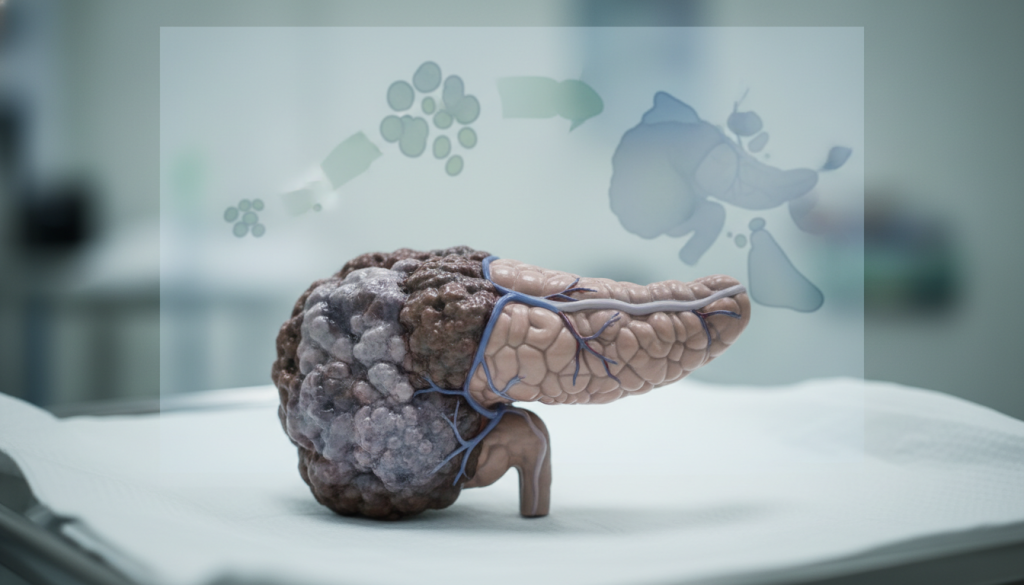
Understanding your body is key to better health. We aim to give you clear, evidence-based medical education. This helps you deal with complex health issues with confidence.
The pancreas is a vital organ behind your stomach. It’s important for your daily life. It makes enzymes for digestion and hormones like insulin to control blood sugar. When its cells grow abnormally, it can lead to Pancreatic Cancer.
Learning about this condition can be tough, but knowing is powerful. By understanding how your pancreas works, you see why early detection and informed care matter. We’re here to help you through these medical ideas. We want you to feel supported and empowered as you learn about Pancreatic Cancer and its effects on your health.
Key Takeaways
- The pancreas is essential for both digestion and blood sugar management.
- We prioritize clear, evidence-based information to support your health journey.
- Understanding organ function helps demystify complex medical diagnoses.
- Early awareness and education are vital for making informed healthcare decisions.
- Our goal is to provide compassionate, expert guidance for every patient.
Understanding the Biology of Pancreatic Cancer
Learning about the roots of pancreatic cancer shows why treatments differ a lot. The pancreas is key for digestion and blood sugar control. When its cells grow too much, they become tumors, classified by their cell type.
Exocrine Tumors
Exocrine tumors are the most common. They start in cells that make enzymes for digestion. These cells are the bulk of the pancreas, making them the usual spot for cancer.
Neuroendocrine Tumors
Neuroendocrine tumors come from hormone-making cells, or islet cells. These cells release hormones like insulin into the blood. Because they act differently, they need a special approach and treatment plans.
| Feature | Exocrine Tumors | Neuroendocrine Tumors |
|---|---|---|
| Cell Origin | Digestive enzyme cells | Hormone-producing cells |
| Prevalence | Very common | Rare |
| Clinical Focus | Standard Pancreatic Cancer protocols | Specialized hormonal management |
Knowing these differences is crucial for patients and families. Doctors can then create treatments that fit each person’s needs. We aim to make these complex topics clear to help you make informed health choices.
Recognizing the Early Symptoms of Pancreatic Cancer
Spotting the early symptoms of pancreatic cancer can greatly improve treatment outcomes. The pancreas is deep in the abdomen, so tumors may not show up early. Staying vigilant about your body’s signals is key to proactive health.
Unexplained weight loss is a common sign. If you lose weight without diet or exercise changes, see a doctor. This often happens when the pancreas can’t digest food well.
Jaundice, or yellow skin or eyes, is another warning sign. It happens when a tumor blocks the bile duct. Many also feel persistent abdominal pain that radiates to the back.
Don’t ignore these symptoms of pancreatic cancer as minor digestive issues. Early detection leads to quicker medical checks. This gives doctors a better chance to find the cause.
If you notice these changes, get a professional check-up. Your health is our priority. Early detection is a powerful tool in medicine. Knowing the symptoms of pancreatic cancer helps you take charge of your health.
Identifying Causes and Risk Factors
Many things can lead to pancreatic cancer, from lifestyle choices to biological conditions. Understanding the causes of pancreatic cancer means looking at both things we can change and things we can’t. Knowing these risks helps us take care of our health.
Smoking is a big, preventable cause of pancreatic cancer. Studies show smokers are twice as likely to get this cancer as non-smokers. Tobacco smoke has chemicals that harm pancreatic cells, causing them to grow abnormally.
Quitting tobacco is a big step to lower your risk. Even long-time smokers start to heal soon after they stop. We urge patients to get help if they need to quit, as it’s key to preventative health.
Dietary Habits and Obesity
What we eat affects our health over time. Eating too much processed meat, red meat, and sugary drinks raises pancreatic cancer risk. But, eating more fruits, veggies, and whole grains might help protect against it.
Also, keeping a healthy weight is vital for metabolic health. Obesity can lead to chronic inflammation. This inflammation can help abnormal cells grow. Making smart choices today is a proactive approach to protect your health in the future.
The Diagnostic Process for Pancreatic Cancer
Learning how doctors confirm a pancreatic cancer diagnosis can ease some of the worry. We use advanced imaging and biopsy techniques to find the disease. This helps us make a treatment plan just for you.
Computed Tomography (CT) Scans
A CT scan is often the first step. It gives detailed images of the abdomen. This helps us see where the tumor is and how big it is.
Seeing the anatomy clearly is key. It tells us if the tumor is near blood vessels or other organs.
Endoscopic Ultrasound (EUS)
For more detail, we use endoscopic ultrasound. It combines endoscopy with ultrasound for high-resolution images from inside the body. This method is great for getting an accurate pancreatic cancer diagnosis.
It lets us take tissue samples during the procedure. This is called a biopsy.
The table below shows the main differences between these two tools:
| Diagnostic Tool | Primary Function | Key Advantage |
|---|---|---|
| CT Scan | Cross-sectional imaging | Non-invasive and fast |
| Endoscopic Ultrasound | Internal high-resolution imaging | Allows for tissue biopsy |
By using these advanced methods, we make sure every pancreatic cancer diagnosis is thorough. Our aim is to give you clear and confident care. You are not alone in this journey, and we’re here to support you every step of the way.
Staging the Disease
We sort pancreatic cancer into specific pancreatic cancer stages to plan your treatment. This step helps us see how big the tumor is and if it has spread. Knowing the stage lets us give you the best care.
Staging is more than just a label. It’s a guide for your treatment. We check if the cancer is just in the pancreas or if it has spread. This way, we tailor your treatment to fit your needs.
Here’s a simple table showing how we classify the disease. These pancreatic cancer stages help us talk clearly about your diagnosis and treatment goals.
| Stage Category | Description | Treatment Focus |
|---|---|---|
| Localized | Cancer is confined to the pancreas. | Surgical removal if possible. |
| Locally Advanced | Cancer has spread to nearby blood vessels. | Chemotherapy or radiation therapy. |
| Metastatic | Cancer has spread to distant organs. | Systemic therapy and symptom relief. |
Getting a diagnosis can be tough, but we want to be clear. By knowing the stage, you can make better health choices. Our team is here to support you every step of the way.
Surgical Interventions
Surgery is a key treatment for pancreatic cancer. It’s the best choice for tumors that can be removed. This method is a main part of pancreatic cancer treatment.
The Whipple procedure is a common surgery for this cancer. It involves removing parts of the pancreas, gallbladder, and bile duct. Precision is essential to get the best results.
We always put patient safety first. Using advanced robotic and minimally invasive techniques helps. These methods make recovery faster and reduce stress.
Recovery is a team effort. We watch patients closely to manage pain and support nutrition. Our goal is to give the best care in pancreatic cancer treatment.
Chemotherapy and Targeted Therapies
We use advanced chemotherapy and targeted drugs to fight cancer cells. These treatments are key parts of a pancreatic cancer treatment plan. They help shrink tumors before surgery or manage spread cancer.
Chemotherapy travels through the blood to reach cells all over the body. It aims to destroy rapidly dividing cells, like cancer cells. But, it can also harm healthy cells that grow fast, like hair follicles or digestive tract cells.
Targeted therapies, on the other hand, are more precise. They target specific molecular pathways or genetic mutations in tumors. By blocking these signals, they slow tumor growth with less harm to healthy tissue.
| Feature | Chemotherapy | Targeted Therapy |
|---|---|---|
| Primary Goal | Kill rapidly dividing cells | Block specific growth signals |
| Precision | Systemic (broad impact) | Molecular (high precision) |
| Administration | Intravenous or oral | Primarily oral or intravenous |
Choosing the right pancreatic cancer treatment depends on the tumor’s genetic profile and disease stage. We work with patients to find the best combination of therapies. Our aim is to balance clinical efficacy with your quality of life during treatment.
Radiation Therapy Approaches
Understanding radiation’s role is key for those facing pancreatic cancer treatment. We use high-energy beams to hit and harm cancer cells. This helps shrink tumors or kill tiny cancer cells left behind.
This therapy is often used alongside surgery or chemotherapy. It adds an extra layer of protection against tumor growth.
Thanks to modern tech, we can now deliver treatments more precisely. Techniques like Intensity-Modulated Radiation Therapy (IMRT) help us focus beams with great accuracy. This method lets us minimize exposure to healthy tissues near the pancreas, like the stomach, liver, and kidneys.
We adjust the radiation dose to fit the tumor’s shape for better results and fewer side effects. This precision is key in our approach. We make sure each patient gets a treatment plan that fits their body perfectly. We believe that informed patients can better help in their healing.
| Radiation Method | Primary Benefit | Targeting Precision |
|---|---|---|
| IMRT | Reduced side effects | High |
| IGRT | Real-time adjustment | Very High |
| Stereotactic Body Radiation | High-dose efficiency | Maximum |
Combining radiation with other treatments for pancreatic cancer needs teamwork. Oncologists, surgeons, and radiologists work together. They decide when to do radiation sessions for the best results. Our aim is to give care that helps both body and mind during recovery.
Managing Symptoms and Palliative Care
Palliative care is a key part of our treatment plan for pancreatic cancer. We focus on the symptoms of pancreatic cancer as much as the main treatment. Our goal is to keep your quality of life high at every step of your illness.
We work with you to manage pain, digestive issues, and nutrition problems. This helps you stay strong and comfortable during treatment. Your well-being is our main goal, and we’re here to help you face these challenges.
We create a personalized plan to manage your symptoms. Whether it’s pain or changes in appetite, our team offers expert advice to enhance your daily life. We know managing symptoms is key to keeping you physically and emotionally well.
| Focus Area | Supportive Strategy | Expected Benefit |
|---|---|---|
| Pain Management | Medication and nerve blocks | Increased comfort |
| Digestive Health | Enzyme replacement therapy | Improved nutrient absorption |
| Nutritional Support | Dietary counseling | Better energy levels |
We aim to make you feel cared for and supported by our medical team. We offer compassionate care that meets your physical and emotional needs. By adding these services, we aim to make your healing journey as easy as possible.
The Role of Immunotherapy in Modern Treatment
We are entering a new era in fighting cancer. Immunotherapy is training the body’s defenses to attack disease. It’s a key part of pancreatic cancer treatment, helping the immune system find and destroy cancer cells.
Unlike old treatments that kill cancer cells directly, immunotherapy boosts the immune system. It lets the body fight the tumor more effectively. It is a hopeful development for those facing a tough diagnosis.

This method works best for certain patients. Those with tumors that show high levels of MSI-H or dMMR get the most benefits. Researchers are working on new drug combinations to help more people.
These therapies are important but not the only solution. They should be part of a complete treatment plan. A team of experts must carefully decide how to use them. By keeping up with these advances, we can help patients choose the best pancreatic cancer treatment for them.
Psychological and Emotional Support for Patients
Getting a cancer diagnosis is tough, and it’s not something to face alone. It affects not just the body but also the emotional and psychological well-being of the patient and their loved ones. Healing is more than just medical treatment.
It’s key to include mental health support in cancer care. Professional counseling helps patients deal with feelings like anxiety, fear, and grief. Professional guidance gives a safe place to talk about these feelings and learn to cope.
Support groups are a big help for those going through tough times. They connect people who understand each other’s struggles. Here, patients can share their stories and learn from the resilience of others in a supportive setting.
We think it’s important to address these psychological needs for a better patient experience. When patients feel heard and understood, they can handle treatment’s stresses better. Prioritizing mental health is a big part of our promise to care for patients fully.
| Support Type | Primary Benefit | Target Audience |
|---|---|---|
| Individual Counseling | Personalized coping strategies | Patients and family members |
| Support Groups | Shared experience and community | Patients and survivors |
| Psychiatric Consultation | Clinical management of distress | Patients with severe anxiety |
Advancements in Pancreatic Cancer Research
We are in a new era of pancreatic cancer research that offers hope to many. Scientists are studying the pancreas’s molecular biology. They find unique genetic markers that help tumors grow.
This knowledge helps us move to more precise, personalized care. It’s a big step forward.
New clinical trials test innovative therapies. These therapies target specific molecular pathways. This is a big leap in fighting the disease.
We join global efforts to bring these breakthroughs to our patients. This ensures they get the latest medical advancements.
Our focus on pancreatic cancer research keeps us leading in medical science. We use new findings to improve our care. This is key to better outcomes and quality of life.
The future of fighting cancer depends on our ongoing research. As we push forward in pancreatic cancer research, we get closer to making this disease more manageable. We’re committed to using all scientific tools to help our patients.
Navigating the Prognosis
Understanding the pancreatic cancer prognosis is key to planning your care. These talks might feel tough, but they’re essential for planning ahead and getting support. We see it as a team effort between you and your doctors.
A prognosis is not a sure thing, but a statistical estimate based on data. It depends on the cancer stage and the tumor’s biology. Your health and how well you react to treatments also matter a lot.
Talking openly with your doctors is important. It helps keep your hopes realistic. By sharing your pancreatic cancer prognosis goals, you can get care that fits your values. This approach makes our care more caring and effective.
| Factor | Impact on Prognosis | Clinical Consideration |
|---|---|---|
| Tumor Stage | High | Early detection often improves options. |
| Patient Health | Moderate | Overall fitness aids treatment tolerance. |
| Biological Markers | High | Guides targeted therapy selection. |
| Treatment Response | Moderate | Monitored via regular imaging scans. |
Integrative Approaches to Patient Care
We believe treating the whole person is as important as treating the disease. Integrative care mixes traditional medicine with supportive therapies. This comprehensive approach makes sure we focus on your comfort and long-term health.
Nutrition is key in keeping you strong during tough treatments. A balanced diet helps your body heal and manage treatment side effects better. We work with dietitians to make plans that focus on nutrient-dense foods for your needs.
Physical activity is also a big part of our care plan. Even small amounts of movement can help reduce fatigue and improve mood. We suggest gentle exercises like walking or restorative yoga to keep you moving and boost emotional resilience.
Managing stress is also vital when dealing with a complex diagnosis. Mindfulness, meditation, and deep-breathing exercises are great for emotional control. These practices help you stay calm and focused, facing each day with sense of calm and clarity.
By adding these supportive elements, we aim to create a healing space for you. Our goal is to provide top-notch care that respects your unique journey. We’re here to support you every step, making sure you feel empowered and cared for during your treatment.
Pancreatic Cancer Awareness and Prevention
Raising pancreatic cancer awareness is a key goal for doctors and patient groups. Public education is vital to help people spot early warning signs. Knowing the risks helps them get medical help sooner, which can greatly improve treatment outcomes.

For those with a family history of the disease, genetic counseling is very important. We urge people to talk about their family health with their doctors. This can lead to early screenings and catch problems before they start.
Building a well-informed community is essential for better health outcomes. By sharing accurate info, we help patients take control of their health. Below is a table with key strategies for staying healthy and informed about pancreatic cancer.
| Strategy | Focus Area | Primary Benefit |
|---|---|---|
| Public Education | Symptom Recognition | Earlier diagnosis |
| Genetic Counseling | Family History | Risk assessment |
| Healthy Lifestyle | Prevention | Reduced risk factors |
| Community Outreach | Pancreatic cancer awareness | Increased support |
Conclusion
Getting a pancreatic cancer diagnosis means you need a team of experts. They must work together for the best results. A team approach is key for every patient.
At Acıbadem Healthcare Group, we’re all about your health. We mix top-notch care with kindness. This helps you through every part of your journey.
Learning about your cancer is very important. It helps you feel more in control. Knowing your options lets you make better choices for your treatment.
We want you to talk to our specialists about your needs. We’re here to help you tackle pancreatic cancer. Together, we’ll face it with skill, hope, and support.
FAQ
Q: What are the most common early symptoms of pancreatic cancer to watch for?
A: Early signs of pancreatic cancer can be hard to spot. Look out for jaundice, which is yellow skin and eyes. Also, watch for unexplained weight loss, pain in the abdomen that goes to the back, and new diabetes.
At Acıbadem Healthcare Group, we stress the importance of catching these signs early. This is key for quick medical help.
Q: What are the primary causes of pancreatic cancer and its associated risk factors?
A: Several things can lead to pancreatic cancer. Smoking is a big risk factor. So is chronic pancreatitis, being overweight, and having a family history of the disease.
Knowing these risks helps our patients make healthy choices. This can help them stay healthy for a long time.
Q: How do medical professionals arrive at a definitive pancreatic cancer diagnosis?
A: Doctors use advanced tech to diagnose pancreatic cancer. They start with CT scans to see the abdomen. Then, they use Endoscopic Ultrasound (EUS) for detailed images and to take tissue samples.
These tools help our team at Acıbadem Healthcare Group confirm the cancer. They also find out what kind of cancer it is.
Q: What are the different pancreatic cancer stages, and why do they matter?
A: Knowing the stage of pancreatic cancer is key for treatment. It ranges from Stage I, where the tumor is just in the pancreas, to Stage IV, where it has spread.
Understanding the stage helps us choose the best treatment. This could be surgery, chemotherapy, or radiation.
Q: What are the current options for pancreatic cancer treatment?
A: Today, treatment for pancreatic cancer is tailored to each patient. For some, surgery is the best option. Others may get chemotherapy, targeted therapies, or radiation.
At Acıbadem Healthcare Group, we work together as a team. This ensures our patients get the best care possible.
Q: How is a pancreatic cancer prognosis determined for a patient?
A: Predicting how long someone with pancreatic cancer will live is complex. It depends on the cancer’s stage, its biology, the patient’s health, and how well they respond to treatment.
We have honest talks with our patients. We want them to understand their situation and the goals of their treatment.
Q: What is the focus of current pancreatic cancer research at leading institutions?
A: Researchers are working hard to find better ways to detect and treat pancreatic cancer. They’re looking into genetic profiling and immunotherapy.
These new approaches aim to target cancer cells more effectively. This could lead to better treatments in the future.
Q: Why is pancreatic cancer awareness and genetic counseling important?
A: Raising awareness about pancreatic cancer is vital. It helps people get medical help sooner. For those with a family history, genetic counseling is also important.
This way, we can catch high-risk individuals early. We can then offer them the monitoring they need.
Q: How does Acıbadem Healthcare Group support the emotional well-being of patients?
A: We treat the whole person, not just the disease. Our approach includes strong emotional support. We offer counseling and support groups to patients and their families.
We also start palliative care early. This helps manage pain and improve life quality. We make sure every patient feels supported on their journey with us.