





Getting a Melanoma Skin Cancer diagnosis can be scary, but you’re not alone. We think knowing more is your best ally when facing health issues. Our team at Acıbadem Healthcare Group is here to help you understand and support you.
Early detection is key to beating this disease. By focusing on melanoma awareness, we help people spot changes early. We want to make sure you’re well-informed so you can make the best choices for your health.
We work closely with each patient to meet their needs with kindness. Our goal is to make complex medical info easy to grasp. Together, we’ll guide you through your health journey with care and precision.
Key Takeaways
- Early identification significantly improves clinical outcomes for patients.
- Education serves as a vital component of your personal health journey.
- We provide expert guidance to help you make informed medical decisions.
- Collaborative care ensures that your specific needs remain the top priority.
- Understanding your health helps reduce anxiety during the treatment process.
Understanding the Biology of Melanoma Skin Cancer
Learning about the start of Melanoma Skin Cancer is key to preventing and treating it. Our skin has many layers, with the epidermis being the outermost. It protects us from the outside world.
In this layer, there are special cells called melanocytes. They make melanin, which colors our skin, hair, and eyes.
Melanocytes work well to shield us from UV rays. But, when they change and grow out of control, they become cancerous.
This change often comes from DNA damage. As these cells grow, they form tumors. This is what Melanoma Skin Cancer looks like. It’s natural to worry about this, but knowing helps a lot.
Knowing how Melanoma Skin Cancer starts is why early action is so important. Catching it early means we can stop it sooner.
By learning about Melanoma Skin Cancer, you’re taking care of your health. We’re here to guide you with clear advice every step of the way.
Risk Factors and Genetic Predispositions
The risk of melanoma skin cancer comes from both inherited traits and lifestyle choices. We can’t change our genes, but knowing these factors helps us stay healthy.
Being exposed to UV radiation from the sun or tanning beds is a big risk. This radiation can damage skin cells’ DNA. This damage can lead to cancerous cell growth.
Your risk also depends on your natural skin type and family history. People with fair skin, light hair, or a history of sunburns are at higher risk. Those with darker skin are less likely to get melanoma skin cancer.
Having relatives with melanoma also raises your risk. This is because some people’s bodies can’t fix DNA damage from UV rays as well.
Knowing these risks helps you take care of your health. Regular skin checks and sun safety are key. They help catch melanoma early and prevent it.
Recognizing the Early Signs of Melanoma
Your skin tells a story, and learning to read it is key to early detection. By performing regular self-examinations, you become the best advocate for your own health. We encourage you to check your skin from head to toe at least once a month to identify any new or changing spots.
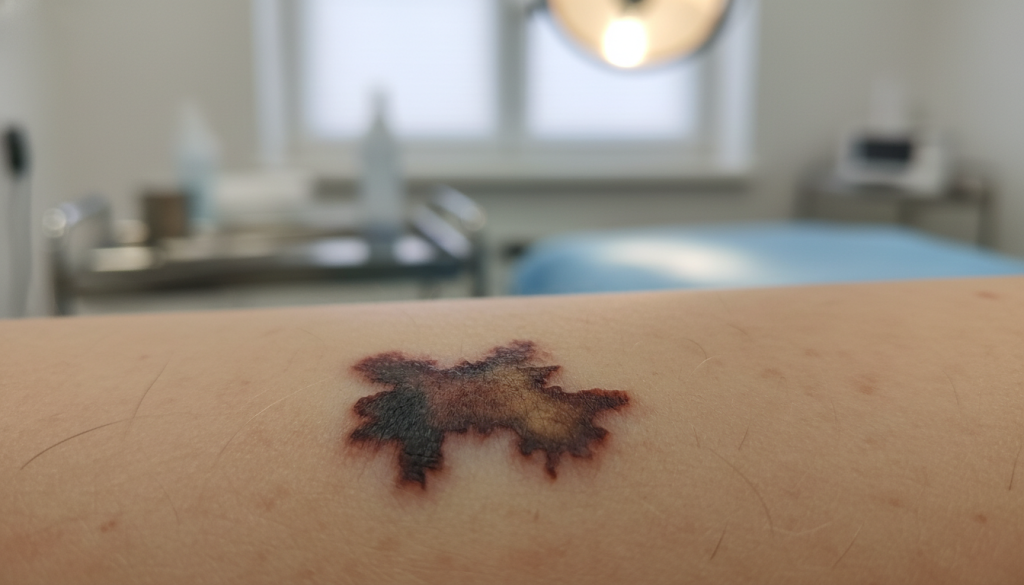
When you examine your skin, look for specific signs of melanoma that might indicate a need for a professional evaluation. The medical community uses the ABCDE rule as a reliable framework. This helps you distinguish between common moles and potentially dangerous lesions. Understanding these criteria empowers you to take action when something looks unusual.
The following table outlines the key characteristics to monitor during your self-check. These indicators are essential for identifying the early stages of malignant melanoma.
| Letter | Feature | What to Look For |
|---|---|---|
| A | Asymmetry | One half of the mole does not match the other. |
| B | Border | Edges are ragged, notched, or blurred. |
| C | Color | Variations in color, such as shades of brown, black, or red. |
| D | Diameter | Spots larger than a pencil eraser (6mm). |
| E | Evolving | The mole is changing in size, shape, or color over time. |
If you notice any of these changes, do not panic, but do not ignore them either. Early detection is the most powerful tool we have in treating malignant melanoma effectively. If a spot seems suspicious, it is always better to be cautious and consult a healthcare professional.
We want you to feel confident in your ability to monitor your skin health. By staying vigilant and observing these signs of melanoma, you are taking a proactive step toward long-term wellness. Remember, your doctor is your partner in this process, and they are ready to provide the clarity you need.
The Importance of Professional Melanoma Diagnosis
Getting a quick medical check is key to good health when you worry about your skin. If you see signs of melanoma, seeing a doctor is the best way to keep you safe.
Starting a melanoma diagnosis means a detailed check-up. Our experts use special tools like dermoscopy. It lets them see skin details that are hard to spot by eye. This tool helps us tell if a spot is safe or needs more looking into.
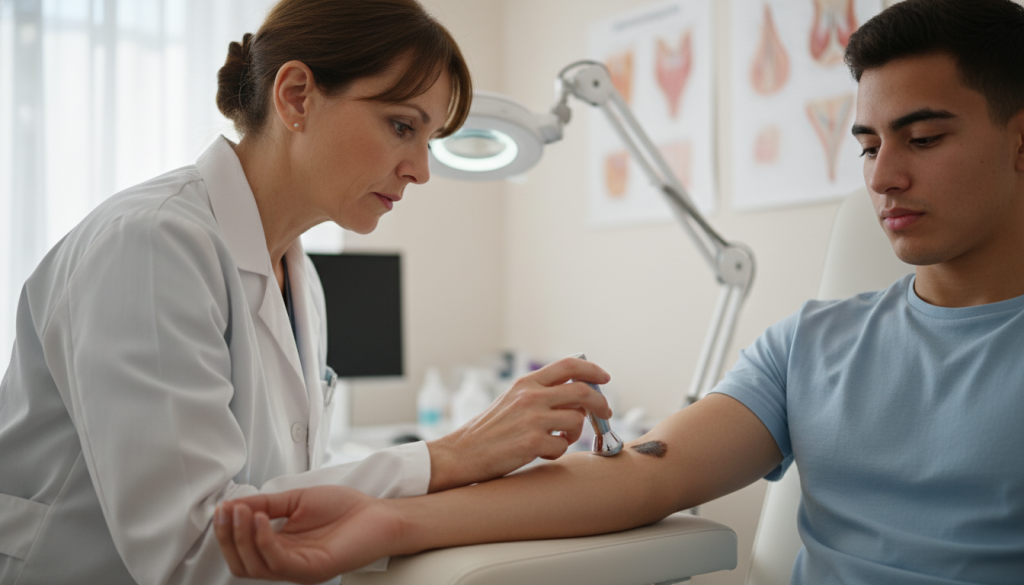
If a spot looks odd, a biopsy might be next. We know tests can seem intimidating, but they’re a common step. A small skin sample is checked to see if malignant melanoma is there. Our pathologists then tell us what to do next.
Spotting signs of melanoma early is very important. It helps doctors act fast and save lives. We urge you to get regular skin checks. A quick melanoma diagnosis can be a lifesaver.
Our team is here to help you at every step. We aim to make you feel at ease with tests by being open and kind. Finding malignant melanoma early means you get the best treatment. This lets you take charge of your health with confidence.
Staging and Classification of Skin Tumors
Understanding how we classify a skin tumor is key to your care plan. Staging helps us see how far the disease has spread. This lets us choose the best treatment for you.
We use the TNM classification system for a clear framework. It breaks down the condition into three parts. This helps you understand your health better.
The TNM system looks at three main parts:
- T (Tumor): This checks the tumor’s size and growth at the start.
- N (Node): It shows if the cancer has reached nearby lymph nodes.
- M (Metastasis): This tells if the malignant melanoma has spread to distant places.
We believe knowing about your care is empowering. We explain these stages simply. This way, you can help plan your treatment.
Every patient’s path is different. Accurate staging lets us give you personalized attention. Our aim is to make the clinical process clear. So, you can focus on your health and well-being.
Surgical Approaches to Melanoma Treatment
Removing tumors through precise surgery is key in melanoma treatment. Early detection of skin cancer means surgery is often the first step. It aims to remove the tumor and stop it from growing further.
Our team uses wide local excision to remove the tumor and some healthy tissue around it. This method helps ensure all cancer cells are taken out. It also lowers the chance of the cancer coming back.
When the tumor is deep, we do a sentinel lymph node biopsy. This test checks if the cancer has spread to nearby lymph nodes. It’s vital for knowing how to treat you better and for planning your care.
We focus on both the surgery’s success and your recovery. Our aim is to give you comprehensive care. We want to meet your medical needs and support your well-being during healing.
| Procedure | Primary Purpose | Clinical Benefit |
|---|---|---|
| Wide Local Excision | Tumor removal | Ensures clear margins |
| Sentinel Lymph Node Biopsy | Staging assessment | Detects early spread |
| Mohs Micrographic Surgery | Tissue preservation | High cure rate for specific areas |
Systemic Therapies and Advanced Medical Interventions
For those with advanced melanoma, systemic therapies offer hope. These treatments target melanoma treatment at a molecular level. They are key in fighting skin cancer when it spreads.
Targeted therapy zeroes in on genetic mutations that fuel tumors. By blocking these signals, it can slow or stop the disease. This method tailors treatment to the tumor’s genetic makeup.
Immunotherapy is another big leap in treatment. It doesn’t directly attack tumors. Instead, it stimulates the immune system to fight cancer cells. This boosts the body’s natural defense against the disease.
These advanced treatments can greatly improve a patient’s life and outcomes. We watch progress closely to keep treatments effective and safe. The table below shows the main differences between these two treatments.
| Therapy Type | Primary Mechanism | Best Used For |
|---|---|---|
| Targeted Therapy | Blocks specific genetic mutations | Tumors with known genetic markers |
| Immunotherapy | Boosts immune response | Broad-spectrum immune activation |
| Combination Therapy | Dual-action approach | Complex, aggressive cases |
Choosing the right melanoma treatment is a team effort. We focus on clear communication to support you. Our aim is to offer innovative care that meets your health needs and personal goals.
The Role of the Skin Cancer Specialist
A skin cancer specialist is key to your care plan. They guide you when you might have melanoma. Clear talk and expert watch are vital for good treatment.
Handling a skin tumor needs a team, not just one doctor. We have a team that includes dermatologists, surgical oncologists, and pathologists. They work together for your health.
Each team member has special skills for your melanoma diagnosis. Pathologists analyze the skin tumor details. Surgical oncologists use the best removal methods. Your skin cancer specialist makes a plan just for you.
We choose this team approach for top care. It brings together different medical views. This way, we tackle tough cases better and care for you fully.
Lifestyle Adjustments and Skin Cancer Prevention
We think keeping your skin healthy is easy with small, daily changes. Prevention is a lifelong commitment that starts with protecting your skin from UV rays. By making smart choices now, you lower your risk of skin cancer later.
Using sunscreen every day is key to skin cancer prevention. Choose a broad-spectrum sunscreen with SPF 30 or higher. Use it every day, even on cloudy days, because UV rays can get through.
Your clothes also play a big part in protecting you. Wear hats, sunglasses, and clothes that block UV rays. When outside, stay in the shade from 10 a.m. to 4 p.m. to keep your skin safe.
Checking your skin regularly is also vital. Look for new or changing moles, spots, or lesions. If you find something odd, see a skin cancer specialist right away. Early detection is often the best way to treat it.
Working with a skin cancer specialist helps you get advice that fits your skin. They guide you through health choices with their expertise. By making these habits part of your life, you take charge of your health and protect your skin from skin cancer.
Psychological Impact and Support Systems
Dealing with melanoma is not just about the physical side. It’s also about the emotional journey. It is completely normal to feel overwhelmed. We’re here to make sure you’re not alone in these feelings.
We see you as a whole person, not just your physical health. When you talk to your skin cancer specialist, share your worries about stress and anxiety. This helps us make a care plan that covers both your body and mind.
Many find great help in support groups or counseling. These places offer a safe space to share with others who get what you’re going through. Connecting with a community can make you feel less alone and more in control.
We’re all in this together, supporting your mental health every step of the way. By working with your skin cancer specialist, you can build a strong support network. Your emotional health is a priority. We’re here to help you thrive during your recovery.
Advancements in Melanoma Research and Clinical Trials
The world of cancer treatment is changing fast. New research is helping us fight skin tumors better. Every discovery brings us closer to a future where cancer is manageable and treatable.
Clinical trials are key in this progress. They let patients try cutting-edge therapies before they’re widely available. By joining these trials, patients help shape the future of cancer treatment.
It’s important for patients to know about these new treatments. Melanoma treatment is getting better, giving hope to many. Our team works hard to make sure our patients know about these options.
When facing a tough skin tumor, clinical trials can offer a way forward. They test new drugs and treatments that target specific genetic changes. This is the heart of modern medicine.
We’re dedicated to giving top-notch care with the latest treatments. By using the newest melanoma treatment methods, we help our patients make informed choices. Your journey is our priority, and we’re here to support you with the best science has to offer.
Promoting Melanoma Awareness in the Community
We think that teaching about skin health is key to saving lives. By focusing on melanoma awareness, we can change how our communities view health and safety. Education is the foundation of change, and every talk we have makes the public more informed.
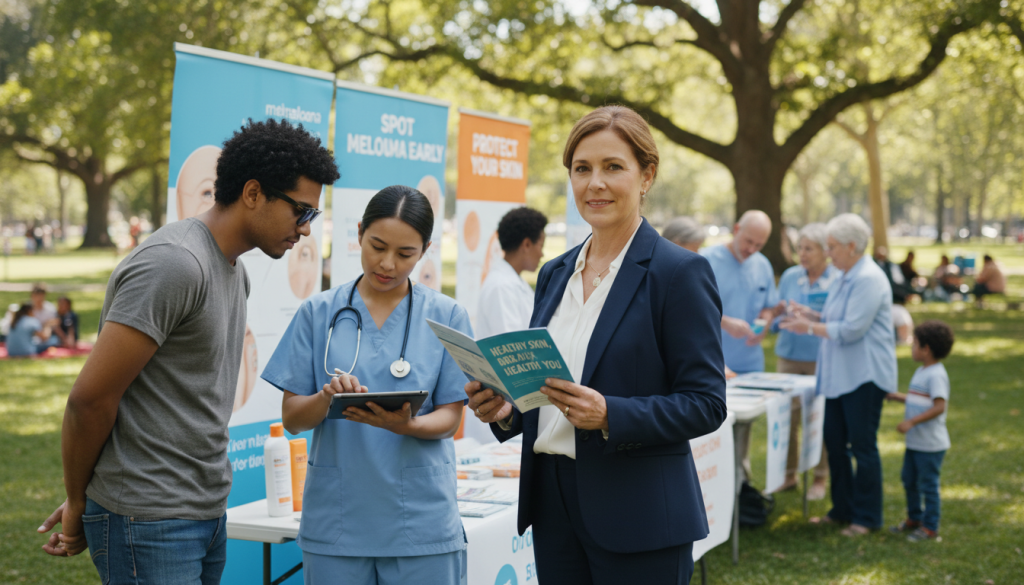
Getting involved in the community is essential in fighting skin cancer. When we talk about the signs of melanoma with our loved ones, we create a culture of watchfulness. This way, more people can check their skin for any odd changes.
We urge everyone to join local efforts on skin cancer prevention. Together, we can spot skin cancer early and lessen its impact. Your voice has the power to inspire others to care about their health and seek help when needed.
| Action Item | Benefit | Goal |
|---|---|---|
| Regular Skin Checks | Early Detection | Improved Outcomes |
| Sharing Knowledge | Community Vigilance | Reduced Risk |
| Sun Protection | Prevention | Healthier Skin |
Conclusion
Managing your health is a team effort between you and your doctors. Getting a melanoma diagnosis can feel scary, but today’s medicine has many ways to help. We’re here to support you every step of the way with top-notch care.
Preventing skin cancer is a long-term goal that’s worth it. By doing simple things like checking your skin and protecting it from the sun, you can lower your risk a lot. Always watch out for any new or changing spots on your skin.
Spreading the word about melanoma can save lives, not just yours but also those of your loved ones. Learning about early signs and sharing this knowledge can create a healthier community. If you have any questions or worries, don’t hesitate to contact our team at Acıbadem Healthcare Group.
Your health is our top priority. We offer the best medical advice to help you make smart choices about your body. Rely on our knowledge as we work together to keep you healthy for years to come.
FAQ
Q: What exactly is malignant melanoma?
A: Malignant melanoma is a serious skin cancer. It starts in the melanocytes, the skin’s pigment cells. It’s less common but can spread if not caught early. At Acıbadem Healthcare Group, we focus on early detection to manage it effectively.
Q: How can I identify the early signs of melanoma?
A: Use the ABCDE rule to check your skin. Look for Asymmetry, irregular Borders, multiple Colors, a Diameter over 6mm, and if it’s Evolving. These signs mean you should see a professional right away.
Q: What should I expect during a professional melanoma diagnosis?
A: A diagnosis starts with a detailed skin check. A dermascope might be used to see deep into the skin. If a spot looks suspicious, a biopsy is done. This is the only way to confirm melanoma.
Q: What are the primary risk factors for developing Melanoma Skin Cancer?
A: Too much UV radiation from the sun or tanning beds is a big risk. Genetics also play a role. People with fair skin, many moles, or a family history are at higher risk. Knowing these risks helps in staying healthy.
Q: What types of melanoma treatment are currently available?
A: Melanoma treatment is tailored to each patient. For early stages, we remove the tumor surgically. For more serious cases, we use immunotherapy or targeted therapy. These treatments boost the immune system or target cancer cells.
Q: What is the role of a skin cancer specialist in my care?
A: A skin cancer specialist leads a team of experts. They stage the cancer and ensure your physical and emotional health is cared for. They coordinate your treatment for the best results.
Q: Can skin cancer prevention really make a difference?
A: Yes, it can. Most skin cancers are preventable. Use sunscreen, wear protective clothes, and avoid the sun when it’s strongest. Regular skin checks are also key to staying healthy.
Q: Are there support systems available for those diagnosed with a skin tumor?
A: Yes, we treat the whole person, not just the disease. A diagnosis can be tough emotionally. We offer support groups and counseling. Open communication with your healthcare team is important for your well-being.