


The Zac Efron Transformation Explained
Ever wonder if a celebrity’s sudden look change is due to aging or something else? The talk about Zac Efron’s transformation has really gotten people talking online. We focus on evidence-based healthcare here. We think it’s key to look beyond guesses. Our team uses medical science to understand these changes. We use anatomical knowledge to clear up the mystery between body changes and possible surgeries. We’re all about being clear and honest with our patients.
Key Takeaways
- Objective analysis helps separate medical reality from public speculation.
- Facial structure changes can often be attributed to natural physiological processes.
- Distinguishing between cosmetic procedures and natural aging requires expert anatomical insight.
- Our institution prioritizes transparent, evidence-based information for all patients.
- Understanding clinical perspectives fosters a more informed approach to aesthetic health.
The Public Fascination with the Zac Efron Transformation
Celebrity changes often spark big debates, like the Zac Efron transformation. Famous people face a lot of scrutiny, leading to false rumors fast. This shows how much we care about how stars look over time.
People are curious about how stars look because of a big misunderstanding. Fans might think surgery is the answer, but it’s really about health, exercise, and aging. We should focus on true facts, not just stories.
The table below shows the gap between what people think and what’s really true about the Zac Efron transformation and other stars.
| Observation Factor | Public Perception | Clinical Reality |
|---|---|---|
| Facial Volume | Implied surgical fillers | Natural muscle hypertrophy |
| Jawline Definition | Implied jaw reconstruction | Dietary and training impact |
| Skin Texture | Implied cosmetic procedures | Professional skincare and lighting |
| Overall Change | Rapid artificial intervention | Gradual lifestyle evolution |
Looking at these points helps us understand how stars change. We should stick to facts, not just guesswork. Our aim is to clear up confusion in a world full of rumors.
Analyzing the Timeline of Physical Changes
Looking at a big physical transformation, we see two types: sudden changes and slow progress. We need to study how a person changes over time. This helps us see how hard work on a fitness journey leads to big changes.
By comparing before and after pictures, we get a clear view of how people change. This is key to understanding a body transformation. We focus on real data to keep our analysis true, not just guesses.
The table below shows the main stages of a fitness journey. These stages help us see how a physical transformation unfolds. They give us a standard to judge long-term success.
| Phase | Primary Focus | Expected Outcome |
|---|---|---|
| Initial Baseline | Assessment of health | Establishment of goals |
| Active Training | Intensity and nutrition | Visible body transformation |
| Maintenance | Consistency and stability | Long-term health retention |
| Review Period | Before and after audit | Clinical validation of progress |
Tracking these milestones is key to spotting real changes from other factors. We aim to give a fair, fact-based look at how people change. This careful approach ensures every physical transformation is seen with professional honesty.
The Jawline Debate: Masseter Hypertrophy vs. Surgical Intervention
Understanding the masseter muscle is key to seeing how our faces change. This muscle is at the jaw’s angle and helps us chew and clench. If we stress it a lot or train it hard, it gets bigger. This makes our jawline look more defined and square.
It’s important to know the difference between natural muscle growth and surgery. Surgery like implants or bone shaping changes our face’s bones forever. But muscle growth is how our body adapts to constant use.
Doctors say muscle growth can look like surgery results. But the science behind it is different. Here’s a table showing how these two ways to get a defined jawline differ.
| Feature | Masseter Hypertrophy | Surgical Intervention |
|---|---|---|
| Primary Cause | Muscle overuse or training | Mandibular implants or bone work |
| Permanence | Reversible with lifestyle changes | Permanent structural change |
| Biological Basis | Muscle fiber enlargement | Synthetic or bone graft integration |
| Recovery Time | Not applicable | Extended clinical recovery |
It’s important to understand facial anatomy well. Professional assessment is the best way to know why our faces change. Experts can tell us for sure by looking at how and why the change happens.
Understanding Facial Anatomy and Aging
The human face is made up of bone, muscle, and fat. It changes as we get older. The interplay between deep tissue layers and the skin keeps it looking young. But, as we age, these parts change in ways that alter our face’s shape.
One big change is how fat moves around. In younger years, fat pads are high in the cheeks, making them look plump. But as we get older, these pads can move down or shrink. This makes the mid-face area look more hollow.
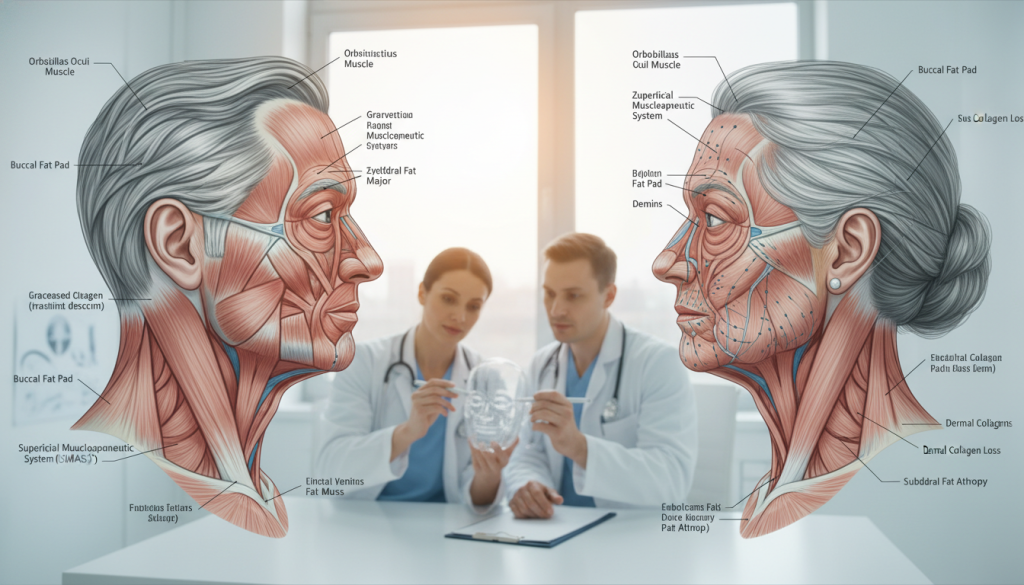
Besides fat, bone density also changes. The skull remodels itself as we age, which weakens support for soft tissues. This is most noticeable in the jawline and chin. Bone loss here can make the skin sag.
These changes are natural and part of growing older. Understanding that bone density and fat volume change helps us see how our face evolves. Knowing this helps us tell natural aging from other factors that might affect how we look.
The Impact of Fitness Journeys on Facial Structure
Starting a serious fitness journey can change how you look, including your face. People often notice changes in their body shape, but the face changes too. These changes happen because of how the body’s composition shifts.
Working out to gain muscle helps reduce body fat. As fat goes away, the bones under your skin show more. This makes your face look leaner, thanks to hard work, not surgery.
Many think these changes come from plastic surgery. But, when you build muscle through intense workouts, your face gets sharper. This shows how your body can change with hard work.
It’s important to see how a fitness journey affects your face. Knowing that changes in your body affect your face helps us understand celebrity makeovers. Health and wellness efforts can show in many ways, not just in the gym.
Evaluating the Role of Diet Plans and Body Fat Percentage
Changes in facial appearance often come from changes in body composition. When someone follows a diet plan, they often lose weight all over, not just in the belly. The face has fat pads that shrink when we eat less, making it look thinner.
As body fat goes down, the bones and muscles under the skin show more. This natural process makes the face look sharper and more defined. Many people think this is because of makeup or surgery, but it’s really about how the body changes.
It’s key to know that these changes come from how our body works, not from surgery. When we stick to a strict diet plan, our body uses energy differently. This can make our cheeks and jawline look leaner.
A big body transformation is about more than just looks. It’s about how our body changes from the inside out. By understanding how fat moves, we see how health and fitness shape our face. Institutional analysis shows that how we eat affects our facial shape.
Addressing the Rumors of Fillers and Cosmetic Procedures
Many people mix up natural changes with cosmetic treatments. Dermal fillers are special tools for adding volume or shaping faces. But, they are often wrongly blamed for quick changes in looks.
It’s key to know the difference between cosmetic help and natural changes. Fillers add volume, but they work differently than muscle growth or fat loss. Being open about these treatments helps people understand the science behind them.
Filling doctors use fillers for specific reasons after checking the patient. Unlike bone changes or muscle growth, fillers are temporary and only in one area. We stress that professional medical standards guide how fillers are used for natural-looking results.
| Feature | Dermal Fillers | Muscle Hypertrophy | Weight Loss |
|---|---|---|---|
| Primary Cause | Hyaluronic Acid Injection | Increased Muscle Mass | Reduction of Fat Tissue |
| Duration | Temporary (6-18 months) | Long-term with Training | Variable based on Diet |
| Visual Effect | Localized Volume Gain | Defined Jawline/Structure | Increased Facial Definition |
| Clinical Nature | Aesthetic Procedure | Physiological Adaptation | Metabolic Change |
Looking at these differences helps us understand facial beauty better. Evidence-based observation is the best way to see changes in looks. We aim to give clear, accurate info on health, fitness, and beauty science.
The Reality of Dental Surgery and Jaw Reconstruction
Many people think dental fixes are just for looks. But, they’re really needed to fix serious problems. Patients might get orthodontic work or jaw surgery for issues like bad bites or uneven jaws. These treatments aim to fix how teeth bite together, improve speaking, and boost oral health.
These fixes often change how the face looks, too. When the jaw moves, the soft parts like the chin and lips adjust. This can make the jawline look sharper or change the face’s shape, which might surprise others.
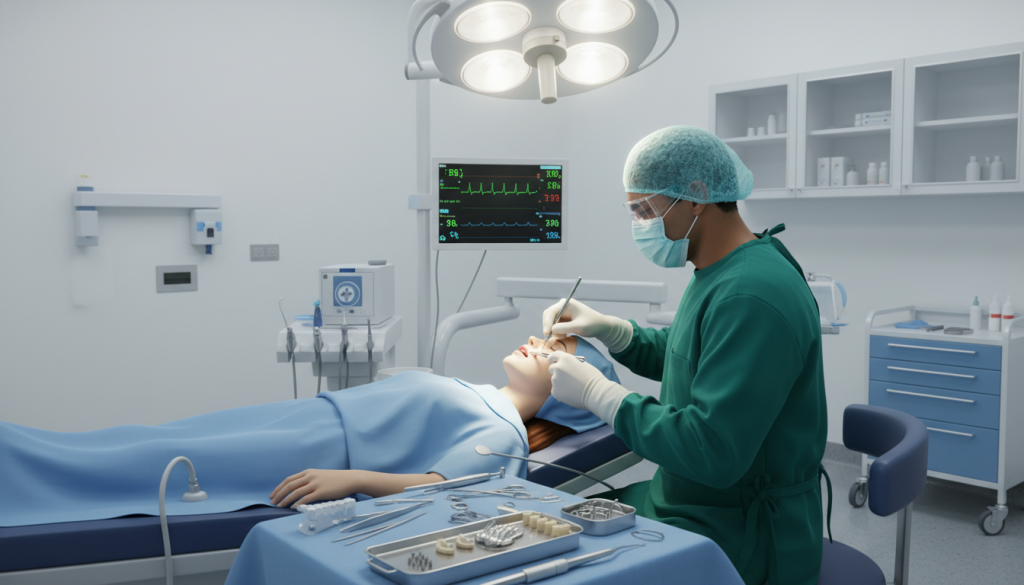
These changes come from careful medical planning. For those curious about oral health and related treatments, learning about rak usne tretmani i efekti can be enlightening. Professional surgical care focuses on the patient’s health first.
The table below shows the main medical goals and the secondary beauty effects of common dental and jaw treatments.
| Procedure Type | Primary Medical Goal | Aesthetic Impact |
|---|---|---|
| Orthognathic Surgery | Correcting skeletal jaw misalignment | Enhanced chin and jawline definition |
| Orthodontic Alignment | Fixing malocclusion and bite issues | Improved lip support and smile symmetry |
| Dental Reconstruction | Restoring tooth function and structure | Refined lower facial proportions |
How Muscle Gain and Training Intensity Affect Facial Appearance
The link between body transformation and facial looks is quite interesting. When people start a serious fitness journey, changes in their body show up in their face. These changes are not just skin-deep but are tied to big changes in metabolism and hormones.
Doing a regular workout routine puts a lot of stress on the body. When you push yourself hard, your body changes in ways that affect fat under the skin. This can make your face look thinner and more defined.
Big weight loss often makes your face look more chiseled. When you lose fat, your cheeks might get thinner, making your face look sharper. This structural refinement happens to those who stick to a tough workout plan for a long time.
Also, muscle gain can make your face look more athletic. This is because building muscle changes your hormone levels. More muscle means you burn more calories, helping you stay lean. These changes show how hard you’ve worked on your health.
Distinguishing Between Natural Aging and Cosmetic Enhancement
It’s important to know the difference between aging naturally and getting cosmetic enhancements. Doctors look at specific signs to see how a face has changed. They use before and after photos to figure out if changes are from aging or surgery.
Natural aging makes skin less elastic and fat moves around. These changes happen evenly and follow a pattern. Cosmetic enhancements, on the other hand, can add localized volume or change the face’s structure in ways that don’t follow aging patterns.
We focus on giving clear information about these changes. Looking at before and after photos helps us understand how celebrities and others keep looking young. Below is a table showing key signs to tell natural aging from cosmetic enhancements.
| Feature | Natural Aging | Cosmetic Enhancement |
|---|---|---|
| Skin Texture | Gradual thinning and fine lines | Smoothness due to resurfacing |
| Volume Loss | Uniform reduction in fat pads | Targeted, localized augmentation |
| Structural Lines | Deepening of natural folds | Altered contours or jawline definition |
| Documentation | Consistent before and after trends | Sudden, non-linear changes |
The Psychological Pressure of Hollywood Standards
The media’s push for perfection can harm our health and lifestyle. The entertainment world puts a lot of focus on how people look. This can cause a lot of psychological strain for those who feel they must look a certain way.
We believe in finding a balance that values long-term health over what others think. We know that mental health is key when changing how we look. True health is about living a lifestyle that keeps our bodies and minds strong.
When people feel forced to change how they look, they might make quick decisions. It’s important to know the difference between wanting to be healthy and feeling pressured by others. By teaching self-compassion, we help people deal with these pressures without losing their health.
The table below shows the difference between making healthy changes and doing it because of pressure.
| Focus Area | Balanced Approach | Pressure-Driven Approach |
|---|---|---|
| Primary Motivation | Long-term health and longevity | Immediate public approval |
| Decision Making | Consultation with medical experts | Impulsive aesthetic changes |
| Mental Impact | Increased self-confidence | Heightened anxiety and stress |
| Sustainability | High; supports natural aging | Low; requires constant maintenance |
We are dedicated to helping people make choices that are good for their whole health. By focusing on inner well-being, people can handle the pressure of being in the public eye better. Our aim is to make sure every health choice is made with care, safety, and a focus on the future.
Expert Consensus on Celebrity Aesthetic Evolution
Understanding how a celebrity’s look changes is complex. It involves lifestyle, biology, and professional care. Medical experts say big changes in facial looks come from many factors, not just one thing.
Experts agree that these changes are part of a holistic journey. This journey includes changes in daily habits, aging, and sometimes medical treatments. Seeing these changes as a whole helps us understand the truth behind famous faces.
Every person’s health journey is unique and complex. When famous people change physically, people look for one reason. But, clinical reality shows it’s usually many things together.
Medical groups stress the need to respect the privacy and complexity of these changes. Keeping an objective view helps us talk about beauty standards in a smart way. This way, our understanding is based on scientific accuracy and trustworthiness.
Navigating the Truth Behind Celebrity Transformations
Understanding a celebrity’s physical change needs careful thought and knowledge of health. Famous people often get a lot of attention for how they look. But, the reasons for these changes are often complex.
The Zac Efron transformation shows how our bodies can change in many ways. Things like our lifestyle, how hard we train, and aging all affect our looks. It’s important to look past the headlines and really think about what’s happening.
Knowing about facial structure helps us see the real beauty in celebrities. Asking questions and seeking answers helps us understand the pressure to look a certain way in Hollywood. We aim to share top-notch health tips to help our readers make smart choices for their own health!
FAQ
Q: What are the primary factors contributing to the Zac Efron transformation?
A: The Zac Efron transformation comes from a mix of natural aging, muscle gain, and body changes. Our team sees that intense workout routines and recovery from injuries can change the jawline. This is due to changes in the masseter muscles.
Q: How can a fitness journey affect the shape of the jaw and face?
A: A tough fitness journey can change the body’s shape. When you gain muscle and lose fat, your face looks more defined. This is why you might see a big change in a before and after photo.
Q: What is masseter hypertrophy, and how does it relate to celebrity physical transformation?
A: Masseter hypertrophy is when the jaw muscles get bigger. It can happen from clenching, dental work, or intense workouts. For Zac Efron, this could make his jaw look wider and more square.
Q: Can a strict diet plan change facial features without surgery?
A: Yes, a good diet plan can change how your face looks. Losing weight makes your face look thinner and more defined. This is common when preparing for roles that require a lean body.
Q: How do medical professionals distinguish between natural aging and cosmetic procedures?
A: Doctors look at before and after photos to spot signs. Natural aging changes fat and bone in a certain way. Surgery looks different, with sudden changes in structure. We aim to share accurate info about physical transformation!
Q: Could dental surgery be responsible for changes in facial symmetry?
A: Yes, dental surgery can change how your face looks. It’s done to fix teeth or jaw issues but can affect your face’s appearance. This can lead to a big body transformation that people might think is just for looks.
Q: Why is there such intense public scrutiny regarding the Zac Efron transformation?
A: People are curious because they don’t fully understand how weight loss, aging, and muscle gain work together. Celebrities are expected to look perfect, so any change sparks rumors. But, our bodies are complex and influenced by many factors.