




15 Typical Antipsychotics: First Generation Medications Explained
Ever wondered how we started treating severe mental health issues? Knowing about these treatments is key to your health journey. Welcome to our guide on 15 Typical Antipsychotics: First Generation Medications Explained. We aim to give you solid, evidence-based info to help you make smart choices. We make complex drug info easy to get. This way, you can understand how these drugs work in your brain. We focus on your safety and health, giving you a clear view of these important treatments.
Key Takeaways
- These treatments mark the start of psychiatric medicine.
- We offer solid insights to help you on your mental health path.
- Knowing how these drugs affect your brain is key to feeling empowered.
- Our goal is to keep you safe and informed about medical topics.
- This guide makes tough medical ideas simple to grasp.
Understanding the History and Mechanism of Typical Antipsychotics
Learning about Typical Antipsychotics helps us grasp how we treat severe mental health issues today. These medicines started in the mid-20th century, changing psychiatric care forever. Before them, doctors had few ways to help those with severe psychosis. These drugs were the first to tackle psychosis symptoms by changing brain signals. They work on certain brain pathways, helping to stabilize mental health. This breakthrough is key to today’s treatments.
The main way Typical Antipsychotics work is by blocking dopamine receptors in the brain. This reduces dopamine overactivity, cutting down hallucinations and delusions. This method is a core part of managing symptoms in psychiatry. Knowing their history helps us see how medicine has grown. Even with newer treatments, Typical Antipsychotics‘ impact is clear. Our goal is to use this knowledge to improve care for our patients.
15 Typical Antipsychotics: First Generation Medications Explained
Understanding the 15 Typical Antipsychotics is key in psychiatric care. These drugs have been used for many years. Knowing about them helps us work better with doctors to manage mental health.
First Generation Medications are sorted by their chemical makeup and strength. This helps doctors know how they will work in the body. It’s important to tailor treatments to fit each person’s needs.
The table below lists common drugs in this class. They are grouped by chemical family. This helps us understand their side effects and how well they work.
| Chemical Class | Common Medication | Potency Level |
|---|---|---|
| Phenothiazines | Chlorpromazine | Low |
| Phenothiazines | Fluphenazine | High |
| Butyrophenones | Haloperidol | High |
| Thioxanthenes | Thiothixene | Mid |
First Generation Medications mainly block dopamine receptors in the brain. This helps with some symptoms but needs careful watch. We suggest using this info to talk with your doctor about your health goals.
High-Potency Typical Antipsychotics
We look into the use and careful handling of Antipsychotic Drugs with high potency. These drugs tightly bind to dopamine receptors, even at low doses.
In our detailed Antipsychotic Medication List, these agents are notable for their quick effects on brain chemistry. Doctors often pick them for treating sudden psychotic episodes where fast action is key.
Examples include haloperidol and fluphenazine. These drugs are effective but need careful dosing to keep patients safe and comfortable.
We aim for the right balance between their strong effects and possible side effects. Because they strongly affect dopamine, watching for physical reactions is part of treatment.
| Medication Name | Primary Use | Potency Level |
|---|---|---|
| Haloperidol | Acute Psychosis | High |
| Fluphenazine | Chronic Management | High |
| Thiothixene | Acute Stabilization | High |
Knowing about these options helps patients and caregivers talk better with doctors. We think it’s important to understand how these drugs work for better mental health in the long run.
Mid-Potency Typical Antipsychotics
Exploring our Antipsychotic Medication List, you’ll see mid-potency agents are special. They help manage symptoms without being too strong. Doctors use them to balance treating thoughts and keeping patients comfortable.
These Antipsychotic Drugs, like perphenazine and loxapine, work by adjusting dopamine in the brain. This helps lessen hallucinations and delusions. They also have fewer side effects, making them a key part of mental health care.
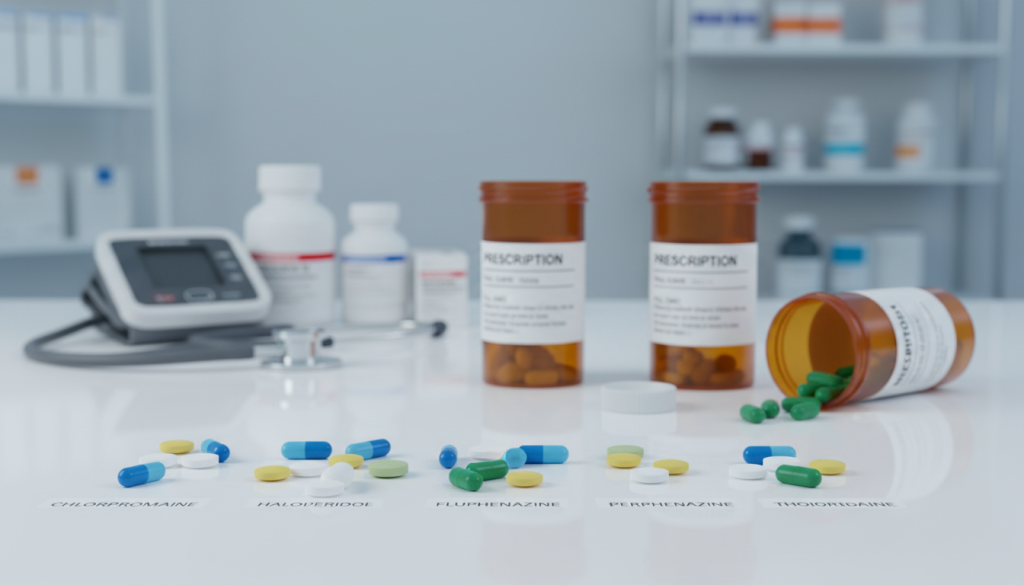
Knowing about these treatments helps you take a bigger role in your care. When you look at the Antipsychotic Medication List with your doctor, think about how these drugs might help you. Below is a table showing some common mid-potency agents and their benefits.
| Medication | Primary Benefit | Common Usage |
|---|---|---|
| Perphenazine | Balanced efficacy | Schizophrenia management |
| Loxapine | Rapid symptom relief | Acute agitation control |
| Thiothixene | Consistent stabilization | Chronic psychotic disorders |
We think Antipsychotic Drugs should be chosen together. By considering how well they work and their side effects, you and your doctor can make a plan just for you. This teamwork is key to finding long-term stability and bettering your life.
Low-Potency Typical Antipsychotics
Low-potency antipsychotic drugs are different from high-potency ones. They include drugs like chlorpromazine and thioridazine. These drugs work by affecting many receptors in the brain, leading to unique effects.
Looking at our Antipsychotic Medication List, you’ll see these drugs are chosen for their effects. They bind to many receptors, causing strong sedative effects. This helps patients who have trouble sleeping or are very agitated.
It’s important to know these differences for your comfort. These drugs are effective but can affect other parts of the brain. Your doctor will watch how you react to make sure you’re doing well.
The table below shows key features of common low-potency drugs. It helps you see their roles in treatment.
| Medication Name | Primary Clinical Use | Common Sedative Level | Receptor Profile |
|---|---|---|---|
| Chlorpromazine | Psychosis and Agitation | High | Broad-spectrum |
| Thioridazine | Severe Schizophrenia | Moderate to High | Broad-spectrum |
| Mesoridazine | Treatment-resistant cases | High | Broad-spectrum |
Choosing the right antipsychotic drugs is a team effort. Talking with your doctor helps you understand why you’re taking a certain drug. We’re here to help you on your path to mental wellness.
Pharmacological Classification and Dopamine Receptor Antagonism
Psychiatric treatment is all about how chemistry and brain function interact. Typical Antipsychotics are a key part of this. They work by blocking dopamine D2 receptors in the brain.
This action is why these drugs are classified as they are. They help control dopamine levels, reducing symptoms like hallucinations and delusions.
Dopamine blockade doesn’t just happen in one place in the brain. It affects many areas because dopamine is involved in many functions. This is why these drugs can help but also cause side effects.
Knowing how Typical Antipsychotics work is important for your health. It helps you understand your treatment better. Here’s how these drugs affect your biology and how they’re classified.
| Receptor Target | Primary Effect | Clinical Outcome |
|---|---|---|
| Dopamine D2 | Receptor Blockade | Reduction of Psychosis |
| Mesolimbic Pathway | Neurotransmitter Modulation | Decreased Hallucinations |
| Nigrostriatal Pathway | Dopamine Inhibition | Potential Motor Side Effects |
Common Side Effects and Neurological Risks
We think it’s important to talk openly about antipsychotic medication side effects. Knowing how these drugs work in your body helps you take charge of your health. We aim to give you a straight, honest look at what you might face during treatment.
First-generation meds can affect dopamine in the brain, leading to physical reactions. They help manage symptoms but might also bring neurological risks. Spotting these early helps your healthcare team make the right changes.
Many people feel a bit of discomfort, like dry mouth or blurry vision, which are common antipsychotic medication side effects. But we also watch for bigger issues like muscle stiffness or tremors. If you notice these, tell your doctor right away.
| Category of Antipsychotic Medication Side Effects | Common Symptoms | Clinical Significance |
|---|---|---|
| Neurological | Tremors, muscle rigidity, restlessness | Requires medical evaluation |
| Autonomic | Dry mouth, constipation, blurred vision | Often manageable with lifestyle changes |
| Metabolic | Weight changes, increased appetite | Monitored through regular check-ups |
| Dermatological | Increased sensitivity to sunlight | Requires protective measures |
We suggest keeping a simple log of any changes you notice while on medication. Being informed and proactive helps keep your treatment safe and effective. Your well-being and long-term health are our top priorities in psychiatric care.
Managing Extrapyramidal Symptoms and Tardive Dyskinesia
It’s important to treat involuntary muscle movements in psychiatric care. Patients may face Antipsychotic Medication Side Effects that affect their comfort. These can show as muscle stiffness, tremors, or restlessness.
Tardive dyskinesia is another challenge, with repetitive, involuntary movements. These often happen in the face, lips, and tongue. We focus on early detection and ongoing care to help.

We use several ways to reduce these risks. We start by adjusting the dosage to the lowest effective level. Sometimes, we add supportive medications for specific issues. It’s key for the patient and doctor to work together.
| Condition | Primary Characteristics | Management Strategy |
|---|---|---|
| Extrapyramidal Symptoms | Muscle stiffness and tremors | Dosage reduction or anticholinergics |
| Tardive Dyskinesia | Repetitive facial movements | Medication review or switching agents |
| Proactive Monitoring | Regular neurological assessments | Early intervention and education |
Patient education is our strongest tool for neurological health. We urge you to tell us about any new or unusual physical feelings right away. By being informed and proactive, we can make sure your treatment supports your mental and physical health.
Clinical Indications and Therapeutic Uses in Psychiatry
We use psychiatric medications to help patients with severe mental health issues. These treatments are mainly for schizophrenia and other psychotic disorders. They work by targeting specific brain chemicals to lessen symptoms.
Doctors decide if these treatments are right for each patient. They look at the patient’s history and current symptoms. This careful process shows our dedication to world-class, patient-centered care.
These psychiatric medications are also used in other situations. For example, they help with severe agitation or mood swings in bipolar disorder. Each treatment plan is tailored to the patient’s needs.
The table below shows the main and secondary uses of these medications:
| Condition | Primary Goal | Clinical Focus |
|---|---|---|
| Schizophrenia | Symptom Stabilization | Reducing Psychotic Episodes |
| Bipolar Disorder | Mood Regulation | Managing Manic Symptoms |
| Severe Agitation | Behavioral Control | Ensuring Patient Safety |
We think informed patients are more active in their recovery. Knowing how psychiatric medications work helps patients work better with their doctors. Our aim is to create a team effort where medical knowledge and care meet.
Comparing First Generation to Second Generation Antipsychotics
Understanding how medicine has evolved is key for patients. The move from First Generation Medications to newer drugs marks a big step forward in treating mental health.
Older drugs, known as Typical Antipsychotics, mainly block dopamine in the brain. This helps with some symptoms but can cause movement problems.
Newer drugs, or second-generation agents, work differently. They balance dopamine and serotonin. This might lower the risks of long-term side effects. It aims for a better treatment for many people.
Your doctor picks the right medication based on your health and needs. Knowing the differences helps you talk better about your treatment. We think informed patients do better in their mental health journey.
| Feature | First Generation Medications | Second Generation Agents |
|---|---|---|
| Primary Mechanism | Dopamine D2 Antagonism | Dopamine and Serotonin Modulation |
| Neurological Risk | Higher risk of movement issues | Lower risk of movement issues |
| Common Usage | Acute symptom management | Broad spectrum maintenance |
| Clinical Focus | Typical Antipsychotics | Atypical Antipsychotics |
Safety Considerations and Monitoring Protocols
When starting any treatment, your safety is the top priority. These safety steps are key to your long-term health and stability. By following these protocols, we make sure your treatment works well and is easy to handle.
We have standard monitoring to track your progress and catch any issues early. This includes blood tests to check your metabolic health and organ function. We also do physical exams to see how your body reacts to the medication.
Neurological checks are also important. They help us spot early signs of side effects that could affect your movement. This way, we can act quickly to keep you comfortable. Seeing these check-ups as a team effort is important.
Being involved in your monitoring schedule helps us provide the best care. Knowing about the Antipsychotic Medication Classification helps you talk better with your doctor. Together, we can adjust your treatment to focus on your well-being and support your mental health.
Patient Perspectives and Quality of Life Considerations
Your comfort and well-being are key to any psychiatric care plan. While results are important, feeling good every day is what really matters. Your own experiences are the best information for your doctors.
Quality of life includes energy levels, social interactions, and daily tasks. Antipsychotic meds can change these things. It’s important to keep track of these changes to talk about them with your doctor.
Talking openly with your medical team is the best way to get better care. If a medication affects your work, social life, or hobbies, tell your doctor right away. Your input helps your doctor find the right treatment for you.
We aim to support your mental wellness by listening to you. We want you to stay comfortable and live well while managing your health. The table below shows how your feedback can improve your treatment.
| Life Domain | Potential Impact | Action for Patients |
|---|---|---|
| Social Interaction | Reduced motivation or withdrawal | Discuss social goals with your doctor |
| Daily Energy | Fatigue or daytime drowsiness | Track timing of medication doses |
| Cognitive Function | Difficulty focusing or memory gaps | Report changes in work performance |
| Physical Comfort | Restlessness or muscle stiffness | Monitor and report physical symptoms |
Together, we can make sure your treatment is patient-centered and effective. Your voice is the most important tool for long-term wellness. We’re here to listen and help you every step of the way.
Navigating Treatment Choices for Mental Health Wellness
Managing your mental health means knowing your options. The world of Psychiatric Medications can seem daunting. But, you don’t have to face it alone.
This guide aims to help you feel sure when talking to doctors. Your mental health journey is a team effort with your healthcare team.
Acıbadem Healthcare Group is here to offer the support you need. Being informed and proactive is a big step towards your health goals.
Talking openly with your doctor is key to a good treatment plan. You can speak up for what you need and find the best fit for you.
If you have questions, contact your local clinic for a consultation. Taking control of your care can lead to better results and a better life.
FAQ
Q: What exactly are Typical Antipsychotics?
A: Typical Antipsychotics, also known as First Generation Medications, were the first to treat psychosis. They manage symptoms like hallucinations and delusions. They work by changing how the brain signals.
Q: How is the Antipsychotic Medication Classification determined?
A: We classify Antipsychotic Medication based on their strength. Our list includes high, mid, and low-potency drugs. High-potency drugs like Haloperidol work well at low doses. Low-potency drugs like Chlorpromazine need more and can make you sleepy.
Q: Which drugs are included in a standard Antipsychotic Medication List for first-generation treatments?
A: Our Antipsychotic Medication List has 15 first-generation drugs. Examples are Haloperidol and Chlorpromazine. Our team picks each drug based on its benefits and the patient’s needs.
Q: What are the most common Antipsychotic Medication Side Effects we should be aware of?
A: We talk openly about Antipsychotic Medication Side Effects. These include muscle stiffness and tardive dyskinesia. Other side effects can be sedation, dry mouth, or blurred vision.
Q: How do these Psychiatric Medications work within the brain?
A: These Psychiatric Medications block dopamine receptors in the brain. This helps control dopamine overactivity in psychosis. But, we watch for effects on motor control.
Q: Why might a doctor choose First Generation Medications over newer options?
A: First Generation Medications are effective and sometimes preferred. At Acıbadem Healthcare Group, we choose based on what works best for you.
Q: What safety protocols do we follow when prescribing these Antipsychotic Drugs?
A: Safety is our top priority. We monitor closely with regular checks and tests. This helps us catch issues early and keep you safe.