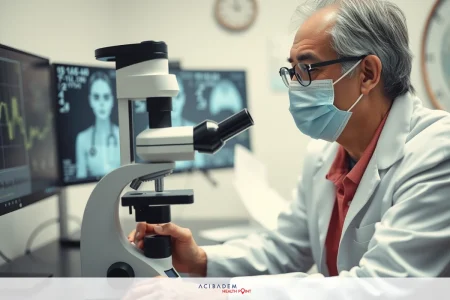
What Is The Role Of Histology In Diagnosing Mycosis Fungoides?
What Is The Role Of Histology In Diagnosing Mycosis Fungoides? What Is The Role Of Histology In Diagnosing Mycosis Fungoides? Doctors use many tools to find out if someone has Mycosis Fungoides. Histology is when they look at cells under a microscope. This method helps them see the disease closely. It can tell which stage it’s at and how best to treat it.Looking at skin samples experts can spot changes caused by this illness. They stain cells and check patterns against healthy ones for clues. Each finding leads them closer to an accurate answer about what’s wrong.
Patients waiting on a diagnosis might wonder why biopsy results take time. The truth lies in careful examination and comparison with other cases. Every step must be precise; patient health depends on these details being right.
Importance of Histology
Histology is key in finding out if a patient has Mycosis Fungoides. It lets doctors see the disease at the cell level. This view is vital for an accurate diagnosis. Without it other skin issues might be mistaken for this cancer.
The role of histology goes beyond basic spotting of the disease. It can reveal how far the illness has spread within the skin layers. Such details guide doctors to choose suitable treatments. They need this full picture to plan care that works best.
Diagnosing Mycosis Fungoides starts with taking a small piece of affected skin. Then, using dyes, experts make cells easier to see and study under microscopes. Each color can show different parts of the cells or highlight abnormal areas.
Understanding what’s normal and not helps find changes linked to Mycosis Fungoides. Histology is like detective work where each clue uncovers more about the condition’s presence and nature. Through careful analysis histologists provide answers that are important for patients’ health journeys.
Types of Histological Examinations
Several histopathology methods exist to diagnose Mycosis Fungoides. A common approach is a skin biopsy where doctors take a small sample. This piece of skin is then prepared for microscopic examination. The biopsy helps to rule out other conditions with similar symptoms.
Staining techniques are crucial in highlighting abnormal cells in the tissue. Special dyes make certain cell features stand out. These colors help pathologists spot irregularities that suggest Mycosis Fungoides. Each stain reacts differently depending on the cellular structures present.
Immunohistochemistry is another method used in these examinations. It detects specific markers on cells that are typical of this disease. By using antibodies that bind to these markers it shows which cells are affected and how much. Molecular pathology can find changes at the DNA level within skin samples. Although not always needed for diagnosing Mycosis Fungoides it provides deeper insights when results are unclear or complex cases arise.
Interpreting Histological Findings
When doctors get histology results they look for signs of Mycosis Fungoides. They check the skin cells’ shape, size, and how they’re arranged. These details help them tell if it’s Mycosis Fungoides or another condition. The findings are often compared to healthy skin samples.
Medical professionals must understand what each marker means in the context of the disease. They consider patient history and symptoms alongside lab results. This careful process ensures a correct diagnosis is made. It takes skill and knowledge to interpret these complex clues correctly.
After studying the stained samples under a microscope pathologists make detailed notes on their observations. These notes explain which features point to Mycosis Fungoides specifically. Then they share this with other healthcare team members who plan out treatment steps based on this information.
Challenges and Limitations
Diagnosing Mycosis Fungoides using histology isn’t always straightforward. Early stages of the disease may show subtle changes in skin cells that are hard to spot. These early signs can easily be confused with other skin conditions which complicates diagnosis.
Moreover histological findings aren’t always clear-cut. Sometimes the features of Mycosis Fungoides overlap with those of eczema or psoriasis. This similarity can lead to misdiagnosis if not carefully considered alongside clinical symptoms and patient history.
A single biopsy might not be enough to confirm Mycosis Fungoides. Because the disease affects patches of skin differently multiple samples from various sites may be needed for accurate results. This is especially true when lesions don’t have a typical appearance.
Even with advanced staining techniques some cases remain challenging to diagnose through histopathological analysis alone. In these instances additional tests like molecular studies are often called upon to help clarify the diagnosis and ensure proper treatment planning.
Staying up-to-date with evolving criteria for diagnosing this complex condition is important for medical professionals. As research progresses and new insights emerge into what defines Mycosis Fungoides at the cellular level pathologists must continually adapt their analysis methods.
Treatment Options
Once Mycosis Fungoides is diagnosed treatment can start. The stage of the disease shapes what options are available. Early stages often need milder treatments than later ones. Each patient gets a plan made just for them by their healthcare provider.
Skin-directed therapies are common first steps in treatment. These might include creams with steroids or chemotherapy drugs. Light therapy, using UV light to kill cancer cells, is another option used often for skin lesions.
In more advanced cases stronger methods may be needed. Systemic treatments that work throughout the body could be considered then. These can range from pills to injections and even newer targeted therapies designed specifically for this condition.
If Mycosis Fungoides spreads beyond the skin radiation or chemotherapy may become necessary parts of treatment plans. Such approaches aim to control the disease when it’s affecting other parts of the body. Always talk with healthcare providers about which treatments fit best for you if facing this diagnosis. They will guide you through choices based on your health needs and life goals while keeping an eye on how well treatments work over time.
Frequently Asked Questions