





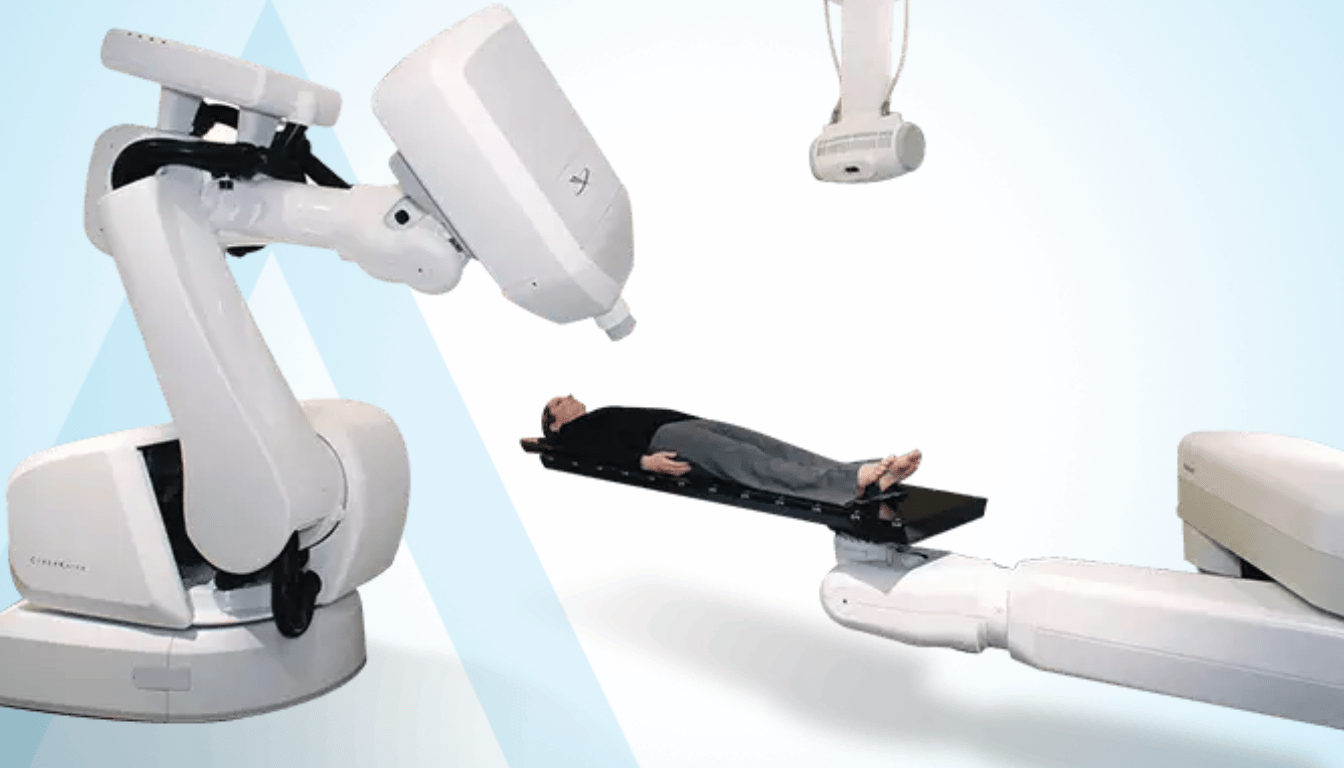
ACIBADEM Cyberknife
ACIBADEM Cyberknife is leading the way in cancer treatment. It’s a robotic radiosurgery system that brings new hope to patients. This method is non-invasive and targets tumors with great accuracy.
Robotic radiosurgery is a big step forward in medicine. It uses advanced tech to deliver radiation with incredible precision. This makes it possible to treat cancers that were once unreachable.
The ACIBADEM Cyberknife system brings this advanced care to patients. It’s a painless option for those looking for effective cancer treatment. With its robot-guided beams, it can hit tumors from many angles.
This technology is changing cancer care. It allows for shorter treatment times and fewer side effects. ACIBADEM’s use of Cyberknife shows their dedication to the best medical solutions.
Understanding ACIBADEM Cyberknife Technology
The Cyberknife Robotic Radiosurgery System is a big step forward in cancer treatment. It uses precision and efficiency to give targeted radiation therapy.
Core Components of the System
The Cyberknife system has a robotic arm and a linear accelerator at its core. They work together to send radiation beams from different angles. This ensures the tumor is hit exactly right.
The robotic arm’s flexibility lets it reach tumors that are hard to get to.
Revolutionary Imaging Technology
The system’s imaging is top-notch. High-resolution X-ray cameras make real-time images of the tumor. This is key for accurate treatment.
Real-time Motion Tracking Capabilities
The motion tracking is a standout feature. It adjusts for any movement during treatment. It tracks breathing and body shifts, keeping the radiation on target.
| Feature | Benefit |
|---|---|
| Robotic Arm | Treats hard-to-reach tumors |
| Real-time Imaging | Ensures precise tumor targeting |
| Motion Tracking | Adjusts for patient movement |
The ACIBADEM Cyberknife technology brings these features together. It’s a powerful tool against cancer. Its ability to target tumors precisely makes it a key part of modern radiation therapy.
Benefits of Robotic Radiosurgery Treatment
Robotic radiosurgery is a game-changer in cancer treatment. It uses non-invasive radiation to target tumors with great accuracy. This means patients recover faster and have fewer side effects than with traditional surgery.
This method allows doctors to give higher doses of radiation to tumors. This helps protect healthy tissue from harm. It also means some tumors that were once untreatable can now be addressed.
Another big plus is that it can treat multiple tumors in one go. This cuts down on the need for many hospital visits. It also shortens the overall treatment time.
- Minimal invasiveness leads to faster recovery
- Precise targeting reduces damage to healthy tissue
- Higher radiation doses can be safely delivered
- Multiple tumors can be treated in a single session
- Expanded treatment options for complex cases
Robotic radiosurgery combines the best of surgery and radiation therapy. It gives new hope to patients who had few options before. As cancer treatment advances, this method is proving to be a powerful ally in the fight against cancer.
How Cyberknife Precision Targeting Works
Cyberknife technology changes cancer treatment with its image-guided radiation and precise tumor targeting. It uses advanced tech and software to send focused radiation beams with unmatched accuracy.
Advanced Radiation Beam Delivery
The Cyberknife system has a linear accelerator on a robotic arm. This setup lets it send radiation beams from many angles to the tumor. The multi-beam method reduces harm to healthy tissue and boosts the dose to the tumor.
Motion Synchronization Technology
Cyberknife tracks tumor movement in real-time. It uses advanced imaging to watch the tumor’s position during treatment. Then, it adjusts the radiation beam to hit the tumor exactly, even if the patient moves.
Treatment Planning Software
Advanced software is key to Cyberknife’s success. It makes treatment plans tailored to each patient’s tumor. The software plans the best way to deliver radiation, protecting healthy tissues.
| Feature | Benefit |
|---|---|
| Multi-angle beam delivery | Minimizes radiation to healthy tissue |
| Real-time motion tracking | Maintains accuracy during patient movement |
| Customized treatment planning | Optimizes radiation delivery for each patient |
Cyberknife combines these technologies for unmatched precision in radiation therapy. This precision helps treat tumors in hard-to-reach areas, giving hope to patients with complex cancer cases.
Types of Cancers Treated with Cyberknife
Cyberknife technology has changed cancer treatment. It treats many cancers with great accuracy. Brain tumors are a big area where it shines. It can hit the tumor right on, without harming the healthy parts around it.
Lung cancer patients get help from Cyberknife’s ability to follow the tumor’s movement. For prostate cancer, it gives high doses of radiation with fewer side effects. Liver cancer treatment also gets better because it tracks the tumor in real-time.
| Cancer Type | Cyberknife Advantage | Treatment Sessions |
|---|---|---|
| Brain Tumors | Precise targeting, minimal damage to surrounding tissue | 1-5 |
| Lung Cancer | Tracks tumor movement during breathing | 3-5 |
| Prostate Cancer | High-dose radiation with fewer side effects | 4-5 |
| Liver Cancer | Real-time tracking for moving tumors | 3-5 |
Cyberknife is also good for treating cancers that have spread. It can hit tumors in different parts of the body. When other treatments don’t work, Cyberknife offers hope. It works well with other treatments, making them more effective.
The Patient Experience During Treatment
ACIBADEM Cyberknife offers a unique experience. It combines advanced technology with caring service. The treatment journey has three main stages, making sure patients feel supported every step of the way.
Pre-treatment Consultation
The journey starts with a detailed consultation. Patients get imaging studies to map their tumor accurately. Then, doctors create a custom treatment plan using the ACIBADEM Cyberknife system’s advanced software.
During the Procedure
The ACIBADEM Cyberknife procedure is painless and non-invasive. Patients lie on a treatment table while a robotic arm delivers precise radiation. Sessions last 30-90 minutes, based on the tumor’s complexity.
| Treatment Aspect | Patient Experience |
|---|---|
| Procedure Duration | 30-90 minutes |
| Anesthesia Required | No |
| Pain Level | Painless |
| Recovery Time | Minimal to none |
Post-treatment Care
After treatment, patients can usually go back to normal activities right away. Follow-up appointments check on progress and address any concerns. Side effects are usually mild, but the care team is always there to offer support and guidance during recovery.
Image-Guided Radiation Therapy Explained
Image-guided radiation therapy (IGRT) changes how we treat cancer. It makes aiming at tumors more precise. This method uses live images to guide the radiation, making treatments more accurate and effective.
Doctors can see tumors and the tissues around them during treatment. This is thanks to IGRT.
The process starts with detailed images of the target area before and during treatment. X-rays, CT scans, and MRI are often used. These images help doctors find the tumor’s exact spot, even if it moves.
IGRT brings many benefits:
- More accurate radiation delivery
- Less damage to healthy tissues
- Adjustments for daily changes in tumor position
- Potential for higher doses to tumors
By combining IGRT with precise targeting, doctors can create personalized plans. They can adjust the treatment as the tumor changes. This approach makes treatments more effective and reduces side effects.
| IGRT Feature | Benefit |
|---|---|
| Real-time imaging | Accurate tumor localization |
| Multiple imaging modalities | Comprehensive tumor visualization |
| Adaptive planning | Optimized treatment over time |
| Motion management | Compensation for organ movement |
IGRT is a big step forward in fighting cancer. It offers patients safer and more effective treatments. This is thanks to its ability to target tumors precisely and adapt to changes.
Comparing Traditional Radiation to Cyberknife
Cancer treatment has changed a lot with the arrival of robotic radiosurgery. This part talks about the differences between old ways of treating cancer and the new Cyberknife method. We’ll look at how they compare in accuracy, treatment time, and side effects.
Accuracy Differences
Cyberknife robotic radiosurgery is way more precise than old methods. Its advanced system can pinpoint targets with incredible accuracy, even down to a few millimeters. This means it can treat tumors that were once thought too hard to reach.
Treatment Duration Comparison
Old radiation treatments often take weeks or even months. Cyberknife, on the other hand, can give more intense treatments in fewer sessions. This makes treatment shorter, which is good for patients because it means fewer trips to the hospital and less time away from daily life.
Side Effect Profiles
Cyberknife’s high accuracy means fewer side effects for patients. They usually don’t get as tired, have less skin problems, and their organs are less likely to be damaged. This leads to a better life during and after treatment.
| Aspect | Traditional Radiation | Cyberknife |
|---|---|---|
| Accuracy | Lower precision | Sub-millimeter accuracy |
| Treatment Sessions | Multiple over weeks | Fewer, higher-dose sessions |
| Side Effects | More common and severe | Reduced frequency and severity |
| Tumor Targeting | Limited for complex cases | Capable of treating complex tumors |
Brain Tumor Treatment Protocols
Stereotactic body radiation therapy has changed how we treat brain tumors. It lets doctors aim radiation at tumors with great precision. This method works for both main brain tumors and those that have spread from other parts.
Doctors use detailed images to find the tumor’s exact spot. Then, they make a plan to send high-dose radiation. This way, they protect healthy brain tissue, cutting down on side effects. It’s great for tumors in hard-to-reach brain areas.
The treatment process includes:
- Detailed brain scans
- Custom-fitted mask creation
- Treatment planning
- Multiple radiation sessions
Patients usually get treated over several days. Each session is short, under an hour. This makes treatment more comfortable and easier to fit into daily life.
Stereotactic body radiation therapy treats many brain tumor types. These include acoustic neuromas, meningiomas, and gliomas. It’s also good for tumors that have spread from lung, breast, or skin cancers. Its flexibility makes it a key part of modern cancer treatment.
Recovery and Follow-up Care
After ACIBADEM Cyberknife treatment, patients start a key recovery and follow-up care phase. This non-invasive radiation therapy makes the post-treatment experience smoother than traditional methods.
Monitoring Progress
Doctors keep an eye on patient progress with regular check-ups and imaging studies. These visits help see how well the treatment is working and spot any early issues. Patients usually get scans every few months, with the frequency going down if the results stay good.
Long-term Success Rates
ACIBADEM Cyberknife has impressive long-term success rates. Studies show high tumor control rates across different cancer types. For instance, brain tumor patients often see control rates of 90% or higher after five years.
The non-invasive nature of Cyberknife allows for repeated treatments if needed. This flexibility is valuable for patients needing more care without the risks of multiple surgeries. As technology gets better, success rates keep improving, giving hope to those fighting cancer.
Stereotactic Body Radiation Therapy Applications
Stereotactic body radiation therapy (SBRT) is a leading-edge cancer treatment. It targets tumors with high precision, delivering strong doses of radiation. This makes SBRT different from traditional radiation therapy.
SBRT is effective for many cancer types. It’s not only for brain tumors. also used for lung, liver, and spine tumors. It’s great for small, hard-to-reach spots.
| Tumor Type | SBRT Benefits |
|---|---|
| Lung | Targets moving tumors, spares healthy tissue |
| Liver | Treats inoperable tumors, minimal side effects |
| Spine | Protects spinal cord, reduces pain quickly |
SBRT’s strength is its accuracy. It hits tumors with exact precision. This means less harm to healthy cells. Patients often need fewer sessions than with standard radiation therapy.
SBRT’s precise targeting allows for stronger radiation doses. This increases the chance of controlling tumors. It’s a big help for patients who can’t have surgery or have few treatment options.
Technology Behind Frameless Radiosurgery
Frameless radiosurgery is a big step forward in fighting cancer. It uses the latest tech to give precise radiation therapy. This is done without the need for invasive head frames.
Advanced Imaging Systems
Image-guided radiation is key to frameless radiosurgery. It combines X-ray, CT, and MRI scans to make detailed 3D maps of tumors. These images help plan treatment and ensure accurate targeting during therapy.
Computer-Guided Precision
Advanced algorithms drive the precision of frameless radiosurgery. These programs figure out radiation doses and adjust beam delivery in real-time. This accuracy lets doctors treat complex tumors while protecting healthy tissue.
Frameless radiosurgery makes treatment more comfortable and flexible. Patients can breathe normally during treatment. They can also have multiple sessions without needing a rigid frame. This tech makes cancer treatment more accessible and less stressful for many.
Treatment Planning and Preparation
The Cyberknife Robotic Radiosurgery System needs careful planning for effective cancer treatment. Medical teams use advanced imaging and software to make custom plans for each patient.
First, detailed imaging studies are done. These might include CT scans, MRIs, or PET scans. They help map the tumor’s exact location and shape. Sometimes, small markers are placed near the tumor to track its position during treatment.
Then, a radiation oncologist works with experts to design the treatment plan. They use special software to figure out the best angles and intensities for the radiation beams. This ensures the tumor gets the right dose while protecting healthy tissue.
- Analyze tumor size, shape, and location
- Calculate precise radiation dosage
- Determine optimal beam angles and intensities
- Create a tailored treatment schedule
The Cyberknife system’s focused radiation means treatments are shorter than traditional methods. Patients usually need 1 to 5 sessions, based on their case. This approach improves treatment results and reduces side effects in cancer radiation therapy.
Success Rates and Clinical Outcomes
ACIBADEM Cyberknife has changed cancer treatment with its robotic radiosurgery. This new method has shown great success and results for many cancers.
Statistical Analysis
Research on ACIBADEM Cyberknife shows high success rates. For brain tumors, it controls over 90% of cases. Lung cancer patients see 85-90% control for early-stage tumors.
These numbers highlight how well robotic radiosurgery targets and treats cancer cells.
Patient Testimonials
Many patients are happy with their ACIBADEM Cyberknife treatment. A lung cancer survivor said, “The treatment was painless and quick. I returned to work within days.”
A brain tumor patient noted, “After Cyberknife, my symptoms improved dramatically. I’m grateful for this technology.”
Long-term Results
Long-term data on ACIBADEM Cyberknife treatments is encouraging. Five-year survival rates for early-stage lung cancer patients are similar to traditional surgery. Most patients have a high quality of life with few late effects.
This data shows the lasting benefits of Cyberknife technology in cancer treatment.
Innovation in Cancer Treatment Technology
Cancer treatment technology is changing fast, with robotic radiosurgery leading the way. This method uses precision robotics and advanced imaging for targeted radiation therapy. It’s making a big difference for patients all over the world.
Imaging has gotten much better. Now, high-resolution scans give detailed 3D views of tumors. This helps doctors plan treatments more accurately, reducing harm to healthy tissue.
Treatment planning software has also improved a lot. It uses smart algorithms to make radiation doses more effective and less harmful. These programs can adjust plans quickly if the tumor changes, making treatments more tailored.
Radiation delivery systems are getting better too. Modern robotic radiosurgery can send radiation from many angles, focusing it on the tumor. This makes it possible to treat cancers that were hard to reach before.
As research keeps going, we’ll see even more exciting changes in cancer treatment. New technologies like AI and nanoparticles will play big roles. Robotic radiosurgery will keep leading the way, bringing hope and healing to patients everywhere.
Patient Eligibility and Assessment
ACIBADEM Cyberknife offers a non-invasive radiation option for many. But, not everyone can get it. Doctors carefully check each case to see if it’s right.
They look at the tumor’s type, size, and where it is. The patient’s overall health is also important.
The evaluation is detailed. It starts with a look at the patient’s medical history and imaging tests. More scans might be needed. This helps doctors understand the tumor and the tissues around it.
Some conditions might mean Cyberknife isn’t an option. This includes certain tumors or cancer that’s too far along. In these cases, doctors might suggest other treatments. They aim to find the best treatment for each patient.
ACIBADEM Cyberknife specialists explain the assessment results clearly. They talk about the treatment’s benefits and risks. This helps patients make informed choices about their care. The team works hard to get the best results for everyone.
FAQ
What is ACIBADEM Cyberknife?
ACIBADEM Cyberknife is a cutting-edge robotic radiosurgery system. It’s used for non-invasive cancer treatment. It delivers precise, high-dose radiation to tumors while minimizing exposure to surrounding healthy tissue.
How does Cyberknife differ from traditional radiation therapy?
Cyberknife offers greater accuracy and shorter treatment durations. It has fewer side effects compared to traditional radiation therapy. Its robotic arm and real-time imaging allow for precise tumor targeting and motion tracking during treatment.
What types of cancers can be treated with Cyberknife?
Cyberknife can treat various cancers, including brain tumors, lung cancer, prostate cancer, liver cancer, and metastatic tumors. It’s effective for small, well-defined tumors and those in sensitive locations.
Is Cyberknife treatment painful?
No, Cyberknife treatment is generally painless. It’s a non-invasive procedure that doesn’t require anesthesia or incisions. This makes it more comfortable for patients compared to traditional surgery.
How long does a typical Cyberknife treatment session last?
Treatment sessions typically last 30 to 90 minutes. This depends on the tumor’s location and complexity. Most patients complete their full course of treatment in 1 to 5 sessions.
What are the side effects of Cyberknife treatment?
Side effects are generally mild. They may include fatigue, temporary skin irritation, and some swelling near the treated area. The precise nature of Cyberknife often results in fewer side effects compared to traditional radiation therapy.
How does Cyberknife track tumor movement during treatment?
Cyberknife uses advanced imaging technology and motion synchronization. It tracks tumor movement in real-time. This allows the system to adjust the radiation beam continuously, ensuring accurate targeting even if the patient or tumor moves slightly.
Can Cyberknife treat inoperable tumors?
Yes, Cyberknife can often treat tumors that are considered inoperable. Its precision allows it to target tumors in sensitive areas that may be too risky for traditional surgery.
How soon can I return to normal activities after Cyberknife treatment?
Most patients can return to their normal activities immediately after each treatment session. The non-invasive nature of Cyberknife typically results in minimal downtime.
How is the success of Cyberknife treatment measured?
Success is measured through follow-up imaging studies, clinical evaluations, and long-term monitoring. Factors such as tumor shrinkage, local control rates, and overall survival are used to assess treatment effectiveness.
Is Cyberknife covered by insurance?
Many insurance plans cover Cyberknife treatment, but coverage can vary. It’s best to check with your insurance provider and the ACIBADEM financial team for specific details about your coverage.
How does Cyberknife compare to Gamma Knife?
While both are radiosurgery systems, Cyberknife offers greater flexibility in treating tumors throughout the body, not just in the brain. Cyberknife also uses a frameless system, which can be more comfortable for patients.
What is the role of imaging in Cyberknife treatment?
Imaging plays a critical role in Cyberknife treatment. Advanced imaging techniques like CT, MRI, and PET scans are used for treatment planning. Real-time X-ray imaging guides the radiation delivery during treatment.
Can Cyberknife be used in combination with other cancer treatments?
Yes, Cyberknife can be used in conjunction with other cancer treatments such as chemotherapy, immunotherapy, or traditional surgery. Your medical team will determine the best treatment plan for your specific case.
What makes ACIBADEM Cyberknife unique?
ACIBADEM Cyberknife combines state-of-the-art technology with a team of experienced specialists. It provides personalized, high-quality cancer care. The center’s commitment to innovation ensures patients have access to the latest advancements in robotic radiosurgery.