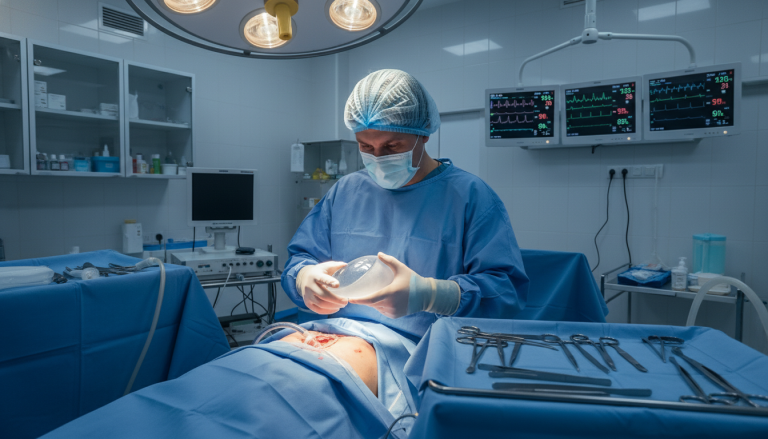

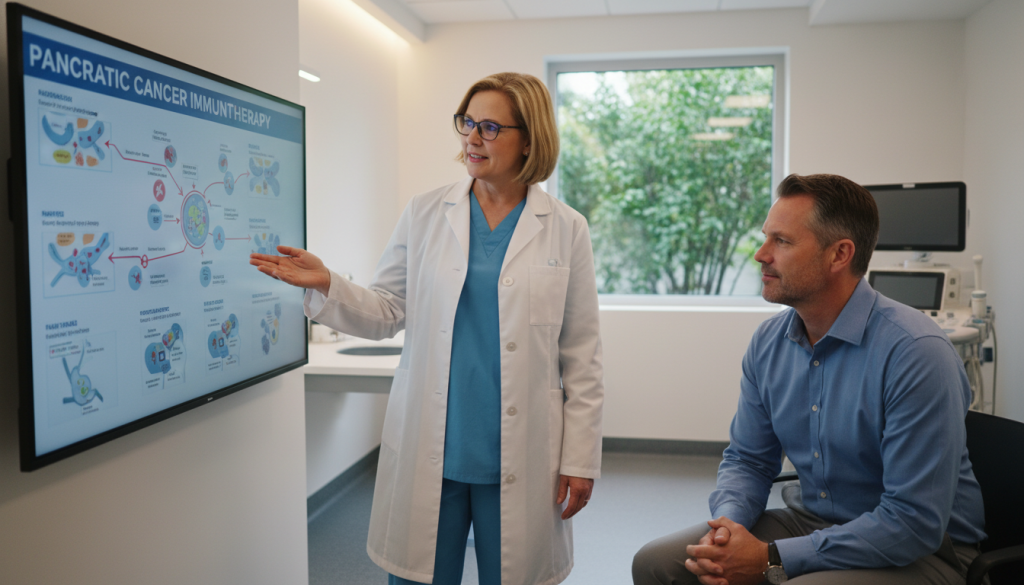
Getting a pancreatic cancer diagnosis is a big change that needs quick and accurate action. People often feel they must start treatment fast. But, getting a second opinion is a key step for a good outcome. It lets you see different views on your health.
How well we handle complex cancer cases matters a lot. Our team thinks knowing what to do is the key to top-notch care. We focus on solutions that put you first, using the latest like immunotherapy to help your recovery.
Finding the right way means trusting your medical team and their tools. We aim to offer new, high-tech solutions for each patient. By looking at all options, you can get the best health results for the long run.
Key Takeaways
- A second opinion gives you clarity and confidence during a tough diagnosis.
- Expertise in institutions means access to the newest medical breakthroughs.
- Using immunotherapy can change many patients’ recovery paths.
- Knowing what to do is key for top cancer care outcomes.
- Putting patients first means focusing on long-term health and new tech.
The Complexity of Pancreatic Cancer Diagnosis
Getting a correct diagnosis for pancreatic cancer is tough. The pancreas is hidden deep in the belly, making it hard to check with simple tests. This makes early symptoms hard to spot, leading to late treatment.
Our team uses top-notch cancer specialists to tackle this challenge. They use cutting-edge imaging like high-resolution endoscopic ultrasound and special MRI scans. This helps us see the pancreas clearly and check for cancer without doubt.
But it’s not just about seeing the cancer. We also do detailed tests on tissue samples. Cancer specialists look for specific genes in these samples. This helps us find the best treatment for each patient’s cancer.
| Diagnostic Feature | Standard Approach | Specialized Institutional Approach |
|---|---|---|
| Imaging Resolution | Basic CT Scans | High-Definition Endoscopic Ultrasound |
| Tissue Analysis | General Pathology | Comprehensive Molecular Profiling |
| Staging Accuracy | Clinical Estimation | Multidisciplinary Tumor Board Review |
| Treatment Planning | Generalized Protocols | Personalized Therapeutic Strategy |
We’re all about clinical excellence at our institution. We focus on making sure every test is precise and useful. This way, patients can make smart choices about their health. Every test is a step towards a better recovery.
The Strategic Value of an Oncology Second Opinion
Getting an oncology second opinion is key when you’re diagnosed with pancreatic cancer. It adds a layer of professional validation. This step helps you understand and trust your treatment plan better.
Our team uses a multidisciplinary review to bring together experts from different fields. This team approach helps find new treatment options that might have been missed. We focus on evidence-based medicine to ensure the best care for you.
Choosing an oncology second opinion is a smart move. Our team checks every detail of your diagnosis and plan. This ensures your treatment is thorough and fits your needs perfectly.
Patients who get a second opinion often feel less anxious. We confirm the initial findings, giving you assurance about your care. This empowers you to make informed decisions with confidence.
Evaluating Immunotherapy and Targeted Therapy Options
Modern oncology is changing fast with precision medicine and new biological agents. These changes help doctors focus on a tumor’s unique traits. They can now tailor treatments based on a patient’s genetic makeup.
Immunotherapy options are a big step forward. They teach the body’s immune system to fight cancer cells. This is a big change in how we treat cancer.
Targeted therapy is also key in modern care. It stops cancer cells from growing by blocking certain signals. This helps slow the disease while protecting healthy cells.
We’re always looking for new ways to help patients. We offer immunotherapy in a safe and effective way. With targeted therapy, we’re working to improve survival rates for pancreatic cancer patients.
Using cutting-edge immunotherapy options needs a lot of knowledge. Our teams check each patient to see if these treatments are right for them. This personalized care is what we stand for.
The Landscape of Advanced Oncology Centers
Advanced oncology centers are key in modern cancer care around the world. They need a strong setup, cutting-edge tech, and expert teams. Patients should look for places that focus on both top care and making patients happy.
Look for places with the latest surgery rooms and research teams. These are key for precise, up-to-date care. Knowing about imunoterapija znaci i dijagnoza raka shows a center can handle tough cases.
We offer big, detailed care that meets top global standards. We think technological integration is key for good treatment plans. Choosing a center with a strong history means you get a solid support system for long-term success.
Here’s what to look for in a top medical facility:
| Feature | Standard Facility | Advanced Oncology Center |
|---|---|---|
| Surgical Technology | Basic Equipment | Robotic & Minimally Invasive |
| Research Integration | Limited | Active Clinical Trials |
| Regulatory Compliance | Local Standards | International Accreditation |
| Multidisciplinary Teams | Consultation-based | Integrated Daily Review |
Personalized Cancer Care and Patient Empowerment
Personalized cancer care is a big change in how we treat diseases today. We move away from one-size-fits-all treatments. Instead, we focus on treatments that match the unique biological profile of each person. This way, our medical teams can target the disease more accurately and avoid unnecessary treatments.
We think healing is more than just medical skills. It’s about caring for the whole person. Our goal is to support both the physical and emotional health of our patients. Every patient deserves to feel heard, valued, and fully supported during their treatment.
Empowerment starts with being open and clear. We give patients the facts about their prognosis. This way, they can make informed decisions about their health. By working together, we make sure patients feel informed and confident in their recovery.
By using personalized cancer care, we create lasting solutions for our patients. We focus on the human side of medicine. This mix of technology and caring for patients leads to better outcomes. It makes the care we provide a truly personalized experience.
The Role of Clinical Trials in Long-Term Recovery
Clinical trials are at the core of our commitment to long-term recovery. They are the frontier of medical discovery. Patients get to try new treatments that might change the future of cancer care.
We are dedicated to keeping patients safe and treating them with respect. Every trial follows stringent regulatory protocols. This ensures that new treatments are safe and don’t compromise patient care.
Our trials are part of a bigger plan for personalized cancer care. We connect lab research with real-world treatment. This way, we offer sustainable, life-saving healthcare solutions for those with tough diagnoses.
The table below shows what we stand for in clinical research. It’s about being open and excellent for everyone involved in treatment.
| Core Pillar | Focus Area | Patient Benefit |
|---|---|---|
| Safety Protocols | Regulatory Compliance | Enhanced Monitoring |
| Innovation | Breakthrough Therapies | Early Access |
| Ethical Standards | Patient Advocacy | Informed Decision-Making |
Our work in clinical research shows our commitment to the future of medicine. We think it’s key to empower patients with the latest science. This way, we build a strong healthcare system for future generations.
Addressing the Challenges of Medical Tourism for Cancer Care
Patients thinking about cancer treatment abroad face a big decision. They must balance the chance to get top-notch care with the challenge of keeping care going over time. Even though international places might have the latest tech, moving between healthcare systems can leave big gaps. Ensuring a smooth experience means putting patient safety first.
The growth of medical tourism has changed how people deal with tough health issues. But it also brings its own set of problems. Rules and standards for care vary a lot by place, making it hard to keep treatments the same everywhere. We think that no matter where you are, your care should always be top-notch.
To tackle these issues, our place has set up strict rules for handling patients from abroad. We focus on smooth coordination between our cancer teams and local doctors. This way, we make sure every part of treatment is tracked and checked. It helps keep care safe and clear, no matter where you are.
In the end, we want to give a stable, comforting place for those looking for our top cancer care. By closing the gap in medical tourism, we help patients get the best care without losing track of their treatment. We’re here to support our patients every step of the way, no matter where they’re from.
Optimizing Surgical Approaches Through Expert Review
Getting the best results in pancreatic surgery needs a lot of skill. It’s a big deal, needing cancer specialists to be very precise. Our team makes sure each surgery plan fits the patient’s body perfectly.
Operations like the Whipple procedure or distal pancreatectomy are very tricky. They need surgeons who are very experienced and well-trained. Our institutional confidence comes from careful planning and using the latest surgical tech.

How often a surgeon does these operations matters a lot. Studies show that cancer specialists in busy hospitals do better and have fewer problems. We focus on these places to make sure every surgery is top-notch.
The table below shows how being in a busy hospital helps patients. These points are key when we look at how well complex pancreatic surgeries are done.
| Metric | High-Volume Center | Low-Volume Center |
|---|---|---|
| Surgical Complication Rate | Significantly Lower | Higher |
| Average Recovery Time | Optimized/Faster | Extended |
| Specialized Training | Board-Certified Experts | General Practice |
| Technology Access | Advanced/Robotic | Standard |
Our cancer specialists help lower risks and improve patients’ lives. We aim for the highest quality care. Our goal is to keep improving, always staying up-to-date with the latest in cancer treatment.
Integrating Supportive Care into the Treatment Plan
Comprehensive cancer care is more than just surgery. It’s about helping patients through tough times. We focus on personalized cancer care to support every part of a patient’s health.
We add important supportive services to treatment plans. This includes nutrition advice, pain management, and mental health support. These are key for those facing intense treatments, like immunotherapy and its effects.
We think it’s critical to care for the whole patient. Our teams work together to give a care plan that’s all about the patient. This personalized cancer care helps tackle the unique challenges of healing.
| Supportive Service | Primary Objective | Patient Benefit |
|---|---|---|
| Nutritional Counseling | Optimize metabolic health | Improved energy levels |
| Pain Management | Reduce physical discomfort | Enhanced quality of life |
| Psychological Support | Address emotional stress | Better mental resilience |
| Personalized Cancer Care | Holistic treatment alignment | Increased recovery success |
Overcoming Barriers to Seeking a Second Opinion
Many patients are hesitant to get an oncology second opinion because of misconceptions. They worry it might upset their doctor or slow down treatment. But, doctors see it as a normal step to ensure the best health care.
Your peace of mind is a priority. Getting a second opinion doesn’t mean you don’t trust your doctor. In fact, most oncologists see it as a chance to double-check everything. This can give you the confidence to move forward.
We’ve made it easy to get a second opinion. Our process makes sure your records are moved quickly and safely. This way, you can focus on getting better without worrying about delays.
Choosing to get an oncology second opinion puts you in control of your care. Our team is here to help you understand your options without interrupting your treatment. We want you to have all the information you need to make the best choice for your future.
The Impact of Early Intervention on Cancer Survival Rates
Early detection is key to improving cancer survival rates for pancreatic cancer patients. Finding disease markers early opens up more treatment options. This early action allows for more precise surgeries and targeted therapies.
Timely diagnosis is the foundation for better recovery in oncology. Quick access to specialized care helps fight pancreatic tumors. Swift and decisive action is essential for patient health.
We focus on public health awareness and advanced screening. We believe educating patients about early signs boosts cancer survival rates. The data shows how early intervention affects outcomes.
| Diagnosis Stage | Treatment Option | Survival Outlook |
|---|---|---|
| Stage I (Localized) | High Surgical Success | Significantly Improved |
| Stage II (Regional) | Multimodal Therapy | Moderate Improvement |
| Stage III/IV (Advanced) | Palliative Focus | Limited Long-term |
We invest in cutting-edge diagnostic infrastructure to give patients the best recovery chance. Early intervention changes pancreatic cancer’s story from uncertain to managed care. We aim to improve cancer survival rates for future patients.
Technological Advancements in Pancreatic Cancer Treatment
The world of pancreatic cancer treatment is changing fast thanks to new technologies. Innovation is key in advanced oncology, making treatments more precise and less invasive. Our team uses these tools to target cancer better and protect healthy tissue.
Robotic-assisted surgery is a big step forward in surgery. It lets surgeons do complex tasks with better vision and control. This means patients often heal faster and have fewer complications than before.
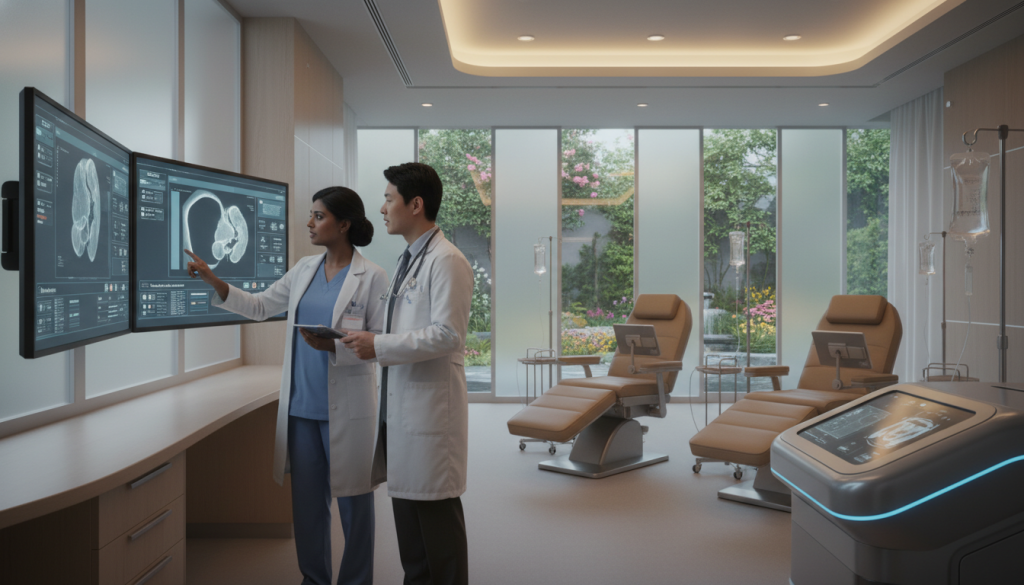
High-precision radiation therapy is another big improvement. It uses real-time images to aim radiation beams accurately. This way, we can treat tumors well without harming nearby organs. It’s all about keeping treatment safe and effective in advanced oncology.
Advanced imaging tools give us a clear picture of the disease. These high-resolution scans help us find tumors early and stage them accurately. This helps us create personalized treatment plans for each patient.
We invest in the latest technologies to offer top-notch healthcare. We keep adding new scientific discoveries to our treatments. In advanced oncology, we aim to give patients the best care possible today and tomorrow.
Securing Your Future Through Informed Medical Choices
Starting your health journey means seeking expert knowledge. Making smart medical choices is key to a better future and health. It’s the best way to look after your long-term well-being.
Our place puts your health first by using top-notch diagnostic tools and tailored treatment plans. We aim to boost cancer survival rates with strict clinical standards and new research. Every patient should get care that uses the newest in cancer treatment.
We’re committed to excellence and a green future for all. Our goal is to have medical facilities that help patients recover and protect our planet.
Choosing a partner who values innovation gives you confidence. We encourage you to talk to our experts to find the right path for you. Taking charge of your health decisions lays a strong foundation for better health and peace of mind.
FAQ
Q: Why is an oncology second opinion essential after a pancreatic cancer diagnosis?
A: Getting a second opinion is a smart move. It gives patients clarity and confidence. Top hospitals review your case to find new treatments or trials.
This step checks the diagnosis and treatment plan. It makes sure you get the best care based on solid evidence.
Q: What are the primary diagnostic challenges associated with pancreatic cancer?
A: Diagnosing pancreatic cancer is hard because of its location and early symptoms. Our team uses advanced imaging and precise biopsies to find tumors early.
Accurate staging is key before treatment starts. It helps avoid any confusion in diagnosis.
Q: How do immunotherapy options and targeted therapy change the treatment landscape?
A: Immunotherapy and targeted therapy have changed cancer treatment. Immunotherapy boosts the body’s fight against cancer. Targeted therapy stops cancer growth by targeting specific genes.
These treatments are more effective and safer for healthy cells. They offer a new way to fight cancer.
Q: What should patients look for when evaluating advanced oncology centers?
A: Look for centers with the latest technology and research. They should meet high standards and offer large-scale care. A good center has a strong track record in complex treatments.
This ensures you get the best care for a long recovery.
Q: How does personalized cancer care empower the patient?
A: Personalized care focuses on your unique needs. It involves you in treatment decisions and shares clear information about your prognosis. This builds a strong partnership between you and your healthcare team.
It supports your physical and emotional health throughout your journey.
Q: What impact does early intervention have on cancer survival rates?
A: Early treatment is key to better survival rates. Quick access to care and advanced screening help catch cancer early. Our focus on fast action and innovation aims to give you the best chance of recovery.
Q: What are the risks and benefits of medical tourism for cancer treatment abroad?
A: Medical tourism can offer specialized care, but it’s important to choose wisely. Look for places that work well with your local doctors and follow strict safety rules. Our organization provides a safe and reassuring place for international patients, ensuring top medical standards.
Q: Why is supportive care integrated into the personalized cancer care plan?
A: Recovery is more than just treatment. It includes nutrition, pain management, and mental support. Adding these to your care plan helps you stay strong and focused during treatment. Our goal is to give you a patient-centered experience.
Q: Will seeking a second opinion delay my access to treatment?
A: Many worry a second opinion will slow treatment. But our process is designed to fit into your schedule. Seeing a second opinion is a normal part of care. It improves your treatment without slowing it down.
Q: How does technology like robotic-assisted surgery improve surgical outcomes?
A: Technology like robotic surgery makes complex procedures safer and more precise. It allows for less invasive treatments, which are better for recovery. Our investment in the latest technology shows our commitment to top-notch healthcare.