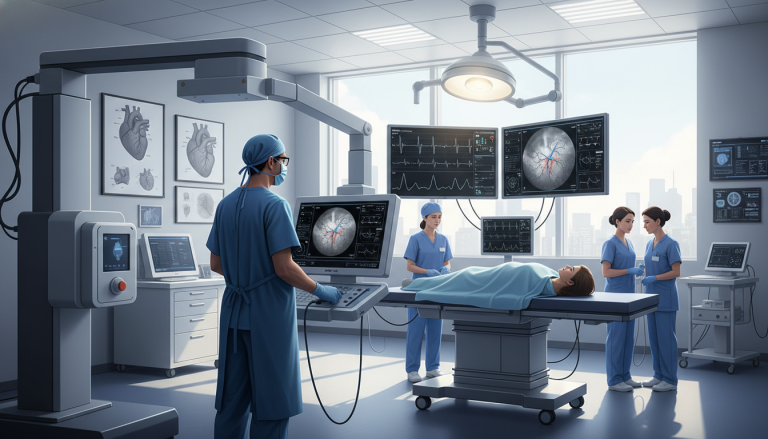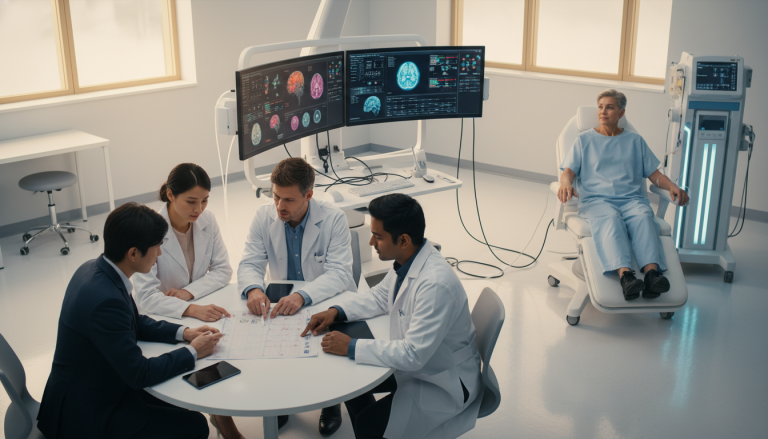






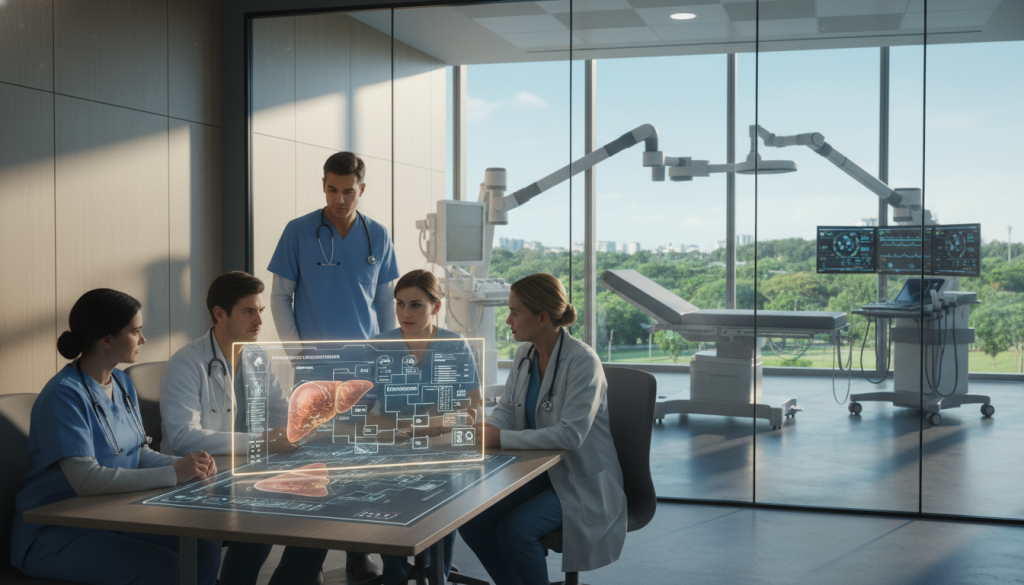
Modern hepatology is seeing a big change thanks to digital innovation. We’re using new tech to make patient care better worldwide. By planning early and precisely, we give each patient a treatment plan that meets top standards.
We’re working hard to make cirrhosis treatment better with data. New software lets our experts track disease progress more accurately. This helps us lower risks and help patients recover faster from complex liver issues.
Technology is also key for patients needing a kidney transplant and liver care. We use advanced tools to keep patients safe and comfortable. Our aim is to offer top-notch cirrhosis treatment and build strong healthcare for the future.
Key Takeaways
- Digital integration is changing modern hepatology and patient care.
- Precision planning makes sure every treatment fits the patient’s needs.
- Advanced tech helps track disease progress more accurately.
- Our focus on innovation improves health outcomes for patients everywhere.
- Integrated care models make complex procedures like kidney transplants safer.
The Evolution of Cirrhosis Management in Modern Medicine
In the last few decades, treating cirrhosis has changed a lot. We used to just watch and react to symptoms. Now, we use advanced technology to care for patients.
Today, we focus on catching problems early and treating them before they get worse. This new way of treating liver disease is all about using data to help patients. It’s a big change in how we keep people healthy for a long time.
Our team is leading this change in medical care. We use the latest technology to help our patients. This helps us give better care than ever before.
The table below shows how treating liver disease has changed:
| Feature | Traditional Approach | Modern Approach |
|---|---|---|
| Primary Focus | Symptom Management | Predictive Intervention |
| Diagnostic Tools | Physical Examination | Advanced Digital Imaging |
| Data Utilization | Limited/Manual | Real-time Analytics |
| Clinical Goal | Stabilization | Proactive Optimization |
We keep improving our care to meet our patients’ needs. Precision medicine is now our standard. We’re committed to creating better healthcare for everyone.
Digital Imaging and Diagnostic Precision in Liver Disease
High-resolution digital imaging has changed how doctors diagnose liver problems. Our team uses advanced software to read complex data with unprecedented accuracy. This new technology lets us spot changes early that old tools couldn’t see.
Being able to find these small changes before they turn into symptoms is key. By looking closely at liver tissue, we help our patients stay ahead of health issues. This focus on precise diagnosis is the base for all treatments we offer.
We use top-notch software to quickly go through lots of radiology data. This means every treatment plan is based on a comprehensive understanding of the patient’s liver health. We invest in these technologies to keep our team leading in liver care.
| Diagnostic Feature | Traditional Imaging | Advanced Digital Imaging |
|---|---|---|
| Resolution Quality | Standard Definition | High-Resolution Clarity |
| Data Processing | Manual Interpretation | AI-Assisted Analysis |
| Early Detection | Symptom-Dependent | Pre-Symptomatic Identification |
| Clinical Impact | Reactive Treatment | Proactive Intervention |
Using these state-of-the-art systems, we cut down on mistakes in complex liver cases. Our goal is to give reliable, data-driven outcomes for everyone we care for. This strict imaging standard helps us keep safety and effectiveness at the highest level in medicine.
The Role of Artificial Intelligence in Predictive Modeling
Predictive modeling is key to our goal of proactive and personalized patient care. We use artificial intelligence to turn raw clinical data into useful insights. This tech leap lets us predict disease progression with unmatched precision.
Our algorithms dig deep into huge, complex datasets to spot hidden patterns in patient health. These intelligent systems look at lab results, imaging reports, and health history all at once. This way, our doctors can spot and act on future health issues before they happen.
Our advanced tools make our care both personal and scientifically sound. We focus on machine learning to help our medical teams make informed, data-driven choices. This method greatly cuts down on uncertainty in treating patients with cirrhosis.
The table below shows how we’ve moved from old ways to our new AI-based predictive system:
| Feature | Traditional Methods | AI-Enhanced Modeling |
|---|---|---|
| Data Processing | Manual and fragmented | Automated and holistic |
| Risk Assessment | Reactive, post-symptom | Proactive, predictive |
| Treatment Planning | Standardized protocols | Highly personalized |
| Clinical Accuracy | Moderate variability | High, consistent precision |
By using these innovative technologies, we’re sure we can handle complex liver diseases well. Our drive for excellence pushes us to keep improving these models. We’re committed to creating lasting healthcare solutions that focus on each patient’s long-term health.
Advanced Surgery and the Integration of Robotic Assistance
The use of robotic platforms is a big step forward in advanced surgery. These systems help medical teams do complex liver surgeries with great precision. They use high-definition images and robotic arms to work on small parts with unparalleled accuracy.
This new tech makes liver surgeries less invasive. Patients get smaller cuts, which means less pain and fewer complications after surgery. We aim to make sure every patient gets the safest and most effective care.
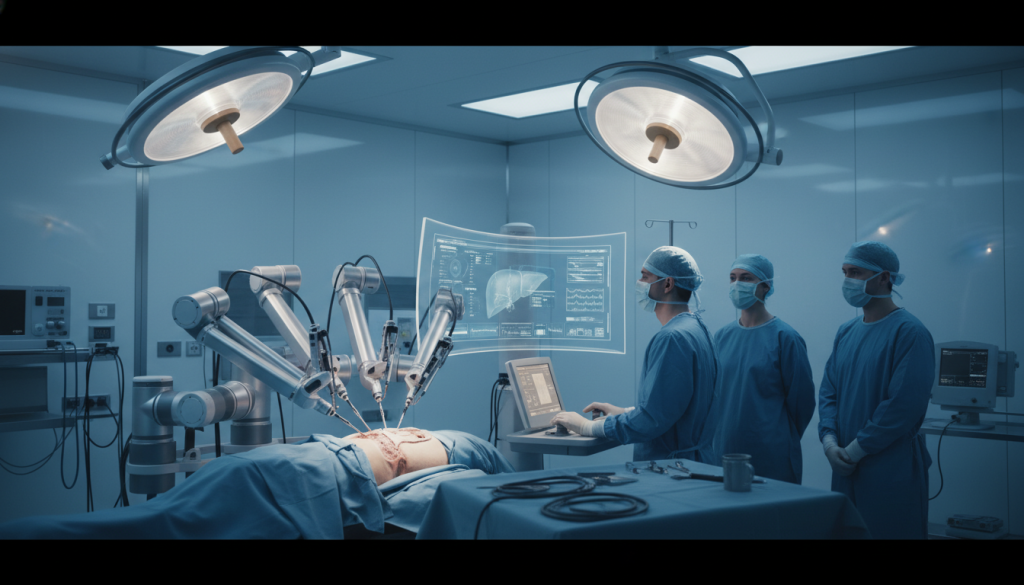
We use these technologies to make recovery times shorter while keeping quality high. The seamless coordination between the surgeon and the robot makes surgeries safer. This teamwork is key for handling tough liver problems.
| Feature | Traditional Surgery | Robotic-Assisted Surgery |
|---|---|---|
| Incision Size | Large/Open | Minimally Invasive |
| Visualization | Standard Optics | 3D High-Definition |
| Recovery Time | Extended | Significantly Reduced |
| Surgical Precision | Manual | Enhanced Dexterity |
By using these advanced surgery methods, we stay at the forefront of healthcare. Our goal is to keep improving care with the latest robotic tools. We’re committed to making hepatology better with ongoing innovation.
Optimizing Patient Survival Through Data-Driven Protocols
We check our clinical work against global standards to keep patient survival our main goal. Our hepatology team uses strict, data-based plans to watch over every care step. This careful method helps us spot patterns and make proactive adjustments to treatments.
We see excellence as an ongoing effort, not a one-time achievement. By comparing our results with global standards, we keep improving our care. This focus on quality helps us aim for better patient survival rates in all liver cases.
Our team is always looking to improve health outcomes. We give our doctors the latest analytics to make sure every choice is based on clinical evidence. This approach makes our care safer and gives patients the confidence that they’re getting the best treatment.
| Metric Category | Current Standard | Target Improvement |
|---|---|---|
| Clinical Audit Frequency | Quarterly | Monthly |
| Patient Survival Tracking | High Precision | Real-time Monitoring |
| Protocol Compliance | 95% | 99% |
Our commitment to data-driven innovation keeps us leading in hepatology. We keep investing in systems that support long-term health and quality of life for our patients. These efforts help us build a lasting future for liver care.
Innovations in Kidney Transplant Coordination for Cirrhosis Patients
Our institution focuses on working together across departments for patients getting a kidney transplant. Dealing with advanced cirrhosis and kidney problems needs a special plan. We use a team effort to keep both organs stable before, during, and after surgery.
We use integrated communication platforms to connect nephrology and hepatology teams. This tech lets us share patient data in real-time. It’s key for watching fluid levels and keeping metabolism stable. By keeping all patient info in one place, we lower the chance of problems and make sure patients are ready for surgery.
Getting ready for a kidney transplant means going through careful checks. We focus on managing high blood pressure in the liver and blood clotting issues. Our goal is to give each patient care that fits their unique health needs.
| Care Phase | Hepatology Focus | Nephrology Focus |
|---|---|---|
| Pre-operative | Liver function optimization | Kidney transplant evaluation |
| Intra-operative | Hemodynamic monitoring | Fluid and electrolyte balance |
| Post-operative | Cirrhosis complication control | Renal graft function support |
Hematology Oncology Contributions to Complex Liver Care
Dealing with liver failure needs a team effort with hematology oncology experts. Our teams work together to offer a complete treatment plan for patients with advanced cirrhosis. This teamwork makes sure each patient gets care that fits their specific needs.
Liver disease can cause blood problems that need careful handling. Our team is skilled at managing these issues. We watch patients closely to prevent serious problems.
The table below shows how our team care improves patient results by tackling big challenges:
| Clinical Focus | Hematology Oncology Role | Patient Benefit |
|---|---|---|
| Coagulation Management | Advanced clotting factor analysis | Reduced bleeding risk |
| Anemia Treatment | Targeted iron and marrow support | Improved energy and recovery |
| Malignancy Screening | Early detection of hepatocellular carcinoma | Higher survival rates |
We keep working to make our care even better. By using hematology oncology knowledge, we stay at the top of liver care. This integrated approach is key to our goal of top-notch healthcare.
Refining Donor Matching Algorithms for Better Outcomes
Our institution uses advanced models to improve donor matching. We analyze huge datasets quickly to find the best organ matches. This ensures every transplant is scientifically proven.
We combine genetic, immunological, and physiological data for better matches. This precision is key for reducing rejection risks and increasing liver transplant success.

Our focus on donor matching excellence leads to better patient survival rates. We match organs at a molecular level to lower post-op risks. This shows our commitment to top-notch healthcare that puts patient safety first.
We keep improving our donor matching systems to stay ahead in medicine. Our goal is to create a better future for liver care. We aim to deliver the best care through innovation and data.
Personalized Treatment Planning for High-Risk Candidates
Precision medicine is changing how we treat high-risk patients. We’re moving away from one-size-fits-all treatments. Now, every patient gets a plan made just for them.
This new approach lets our medical teams tackle complex liver issues with great accuracy. It’s a big step forward.
We use genomic profiling and detailed medical histories to find the best treatment. This method helps us spot problems early. By looking at genetic markers, we can guess how a patient will react to certain treatments.
This way, we can make treatments work better and reduce risks. It’s all about making the most of each patient’s unique situation.
Our team makes sure every patient feels supported and understood. We believe in combining clinical excellence with empathy. This approach helps us build trust and makes patients feel like they’re part of the team.
The table below shows how our personalized care differs from traditional methods.
| Feature | Standard Care | Personalized Care |
|---|---|---|
| Diagnostic Basis | General clinical guidelines | Genomic and clinical history |
| Intervention Strategy | Uniform protocol | Tailored treatment treatment |
| Risk Management | Reactive monitoring | Proactive, predictive modeling |
| Patient Experience | Standardized support | Individualized caregiver focus |
Streamlining Transplant Recovery with Telemedicine and Remote Monitoring
For international patients, remote monitoring is key after a kidney transplant. Our medical teams use digital health platforms to keep an eye on patients from anywhere. This seamless integration of technology means top-notch care, no matter the distance.
The transplant recovery phase needs careful attention and quick action. We use real-time data to track vital signs and lab results. This helps our specialists catch problems early, preventing serious issues.
We make recovery easier by cutting down on travel. Our remote monitoring protocols let patients manage their health at home. This approach improves the recovery experience and keeps safety standards high.
The table below shows the benefits of remote monitoring in kidney transplant care:
| Feature | Traditional Recovery | Remote-Monitored Recovery |
|---|---|---|
| Data Frequency | Periodic Clinic Visits | Continuous Real-Time |
| Issue Detection | Reactive (Symptom-based) | Proactive (Data-driven) |
| Patient Travel | Frequent and Costly | Minimal and Convenient |
| Clinical Oversight | Limited to Office Hours | Extended Institutional Reach |
Using these advanced tools, we show our dedication to excellence beyond the hospital. Our aim is to provide world-class healthcare that’s both accessible and affordable for all patients.
Addressing Kidney Failure Complications in Cirrhosis Patients
Dealing with cirrhosis and kidney problems needs careful planning and skilled care. When liver disease gets worse, the chance of kidney failure is a big worry for doctors. We know that treating both organs at once is key to helping patients.
We focus on using advanced treatments to help the kidneys. With the latest technology, we give essential support to patients under a lot of stress. This early action is important to keep the body balanced before surgery.
Medicine also plays a big role in our treatment plans. We adjust medicines carefully to protect the kidneys and treat the liver. This meticulous attention to detail helps us prepare patients for surgery with more confidence.
Our success comes from handling kidney failure cases with great skill. We’re dedicated to giving each patient the care they need. By watching patients closely and providing special support, we aim to improve survival rates and quality of life.
Collaborative Care Models Among Transplant Specialists
Getting the best results for patients needs a team effort from transplant specialists. We bring together different medical areas to tackle liver disease from all sides. This way, every part of a patient’s health gets the best care.
Our approach is built on open communication and sharing knowledge. When experts from various fields work together, they spot problems sooner. This teamwork is key to our top-notch healthcare in today’s complex world.
We see patient success as a team win. By having transplant specialists work together, we offer a strong support system. This dedication to excellence keeps our care both cutting-edge and caring.
The Future of Sustainable and Accessible Hepatology Care
Modern medicine is at a crossroads. It combines clinical innovation with environmental care. We aim to build healthcare that lasts for generations.
Our focus on hepatology goes beyond new tools and software. We build medical facilities that are green and safe for patients. This way, top-notch liver care reaches people everywhere.
We’re working on green energy and using resources wisely in our clinics. This cuts down on waste and saves money for our partners. By being eco-friendly, we help the planet and improve medical care.
We want you to join our mission. Contact our specialists to learn about our liver health projects. Together, we can make a better future for all patients needing care.
FAQ
Q: How does the institution leverage technology to improve cirrhosis treatment outcomes?
A: Our facility uses advanced technology to change how we treat cirrhosis. We use digital imaging and artificial intelligence to catch problems early. This lets our transplant team plan treatments that meet top medical standards.
Q: What role does advanced surgery play in the management of complex liver disease?
A: Advanced surgery is key in treating complex liver diseases. We use robotic systems for precise and less invasive surgeries. This approach reduces recovery time and makes surgeries safer for our patients.
Q: How is patient survival prioritized within the hepatology department?
A: We focus on improving patient survival through careful planning and constant review of results. We compare our outcomes with the Mayo Clinic to keep improving. This ensures our patients get the best care possible.
Q: Why is hematology oncology collaboration essential for liver care?
A: Hematology oncology helps manage liver failure’s systemic effects. Working together, we create a complete treatment plan. This approach ensures our patients get the best care for complex conditions.
Q: How do donor matching algorithms improve transplant success?
A: We use advanced algorithms to match donors and recipients. This ensures the best possible match, improving transplant success. It also helps extend the life of donated organs for our patients worldwide.
Q: What specialized strategies are used for high-risk treatment treatment planning?
A: For high-risk patients, we create custom treatment plans. We use genetic data and detailed medical histories. This approach helps reduce risks and ensures each patient gets the best care for their unique needs.
Q: How does the facility manage kidney failure complications in cirrhosis patients?
A: We work closely with nephrology to manage kidney failure in cirrhosis patients. We use advanced treatments and stay in close communication. This ensures both organs are cared for during the critical perioperative period.
Q: What innovations are available to streamline transplant recovery?
A: We’ve improved transplant recovery with telemedicine and remote monitoring. These tools let us keep a close eye on patients. This way, we can catch and treat problems early, extending our care beyond the hospital.
Q: How do transplant specialists collaborate to ensure world-class care?
A: Our team works together to provide top-notch care. We share knowledge and expertise to ensure every patient’s health is considered. This teamwork is key to delivering world-class healthcare.