
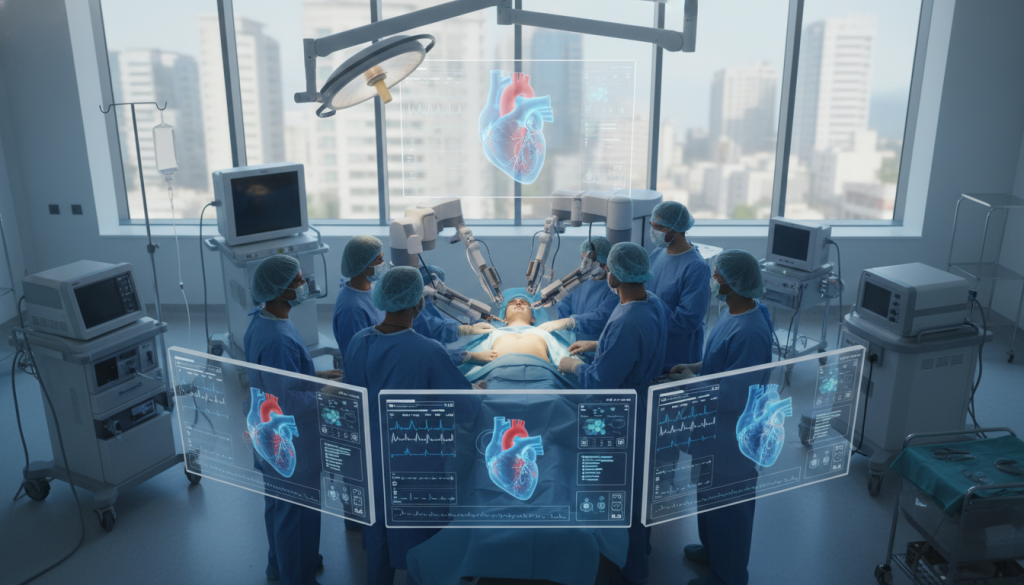
Modern medicine has entered a new era. Precision and innovation are now the standard of care. In cardiology, new technology has changed how we do bypass surgery.
We use advanced tools and robotic systems for each patient. This makes sure every surgery fits the patient’s needs perfectly. It helps us offer faster recovery and better health in the long run.
We think that combining the latest medical tech with patient needs is key in cardiology. Our teams use data to make surgeries more precise. This way, every patient gets the best personalized care during their recovery.
Key Takeaways
- Advanced technology makes bypass surgery safer and more precise.
- Personalized care is key for better recovery for each patient.
- Data helps us tailor treatments to each patient’s needs.
- Our focus on innovation leads to better health outcomes for patients.
- Today’s surgery combines technology with caring for the patient.
The Evolution of Bypass Surgery in Modern Medicine
For decades, research has made bypass surgery better and more focused on patients. The history of coronary artery bypass grafting shows a big change. It moved from old open-heart methods to new, less invasive ones. This change shows our goal to reduce surgical trauma and keep high standards of care.
In the past, heart surgeries needed big cuts and long recovery times. Now, we use new methods based on lots of research. Our teams can do complex repairs with unprecedented precision. This means patients have shorter hospital stays and heal faster.
Today, we focus on using proven practices at every step for patients. By looking at long-term results, we’ve made care better. This change is not just about new tech; it’s a big step up in patient safety and heart health.
We keep improving by using the latest diagnostic tools and surgical systems. This makes sure each bypass surgery fits the patient’s needs perfectly. Our hard work keeps us leaders in heart medicine, giving exceptional care that lasts.
The Role of Advanced Cardiology in Surgical Success
Today, top medical centers focus on teamwork to make sure every bypass surgery is perfectly planned. They use the newest cardiology tech to see complex blood vessel structures before starting surgery. This way, each patient gets a treatment plan made just for them.
Surgeons and interventional cardiology experts work together closely. They use detailed images to lower the chance of problems during surgery. Precision planning is now key to getting the best results for patients.
In top hospitals, this teamwork leads to quick decisions during tough surgeries. The cardiology field keeps growing, giving surgeons the tools to tackle hard cases. Effective communication between teams makes sure the patient’s heart health is fully covered during surgery.
The mix of interventional cardiology and surgery changes how we tackle heart disease. It combines accurate diagnosis with skilled surgery for a higher standard of care. This focus on excellence means every patient gets the best care with today’s top tech.
Robotic-Assisted Systems and Surgical Precision
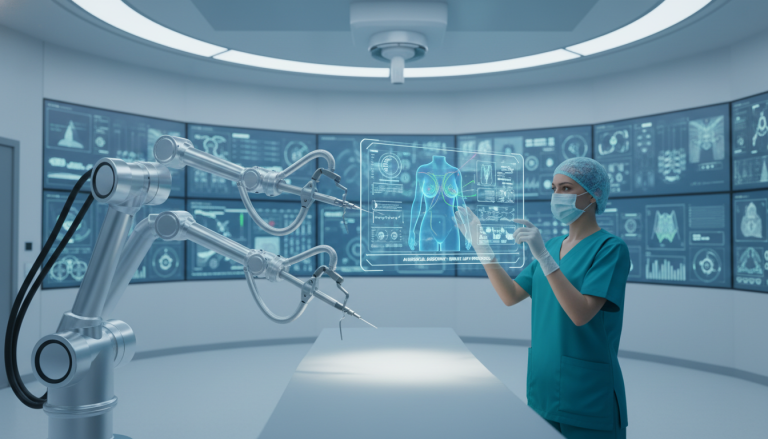
Our surgical teams use advanced robotic platforms for unprecedented control in bypass operations. These systems extend the surgeon’s hands, making precise, micro-scale actions possible. This technology boosts accuracy in open-heart procedures.
These platforms offer enhanced visualization with high-definition, three-dimensional imaging. Surgeons can see the surgical site clearly, making them more confident in navigating delicate cardiac structures. This clear view is key to ensuring safety during the bypass process.
One big benefit of this technology is the ability to use smaller incisions. Traditional bypass surgery often needs large openings, raising the risk of complications. Smaller incisions mean less risk of infection and a faster healing process for patients.
We’re committed to using these innovative tools for patient safety and better health outcomes. By investing in the latest robotic systems, we give our patients the best chance at recovery. This keeps our institution at the leading edge of patient-centered cardiac care.
Imaging Technologies Driving Personalized Care
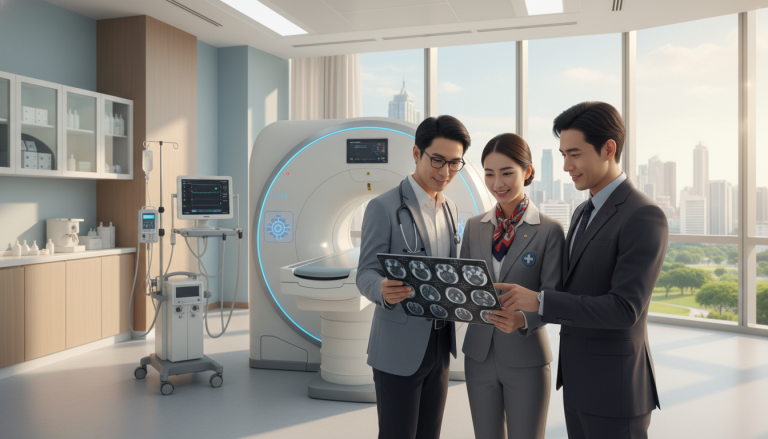
Advanced diagnostic imaging is key for personalized surgical strategies. Our medical teams use high-resolution tools to see complex blockages clearly. This helps before surgery.
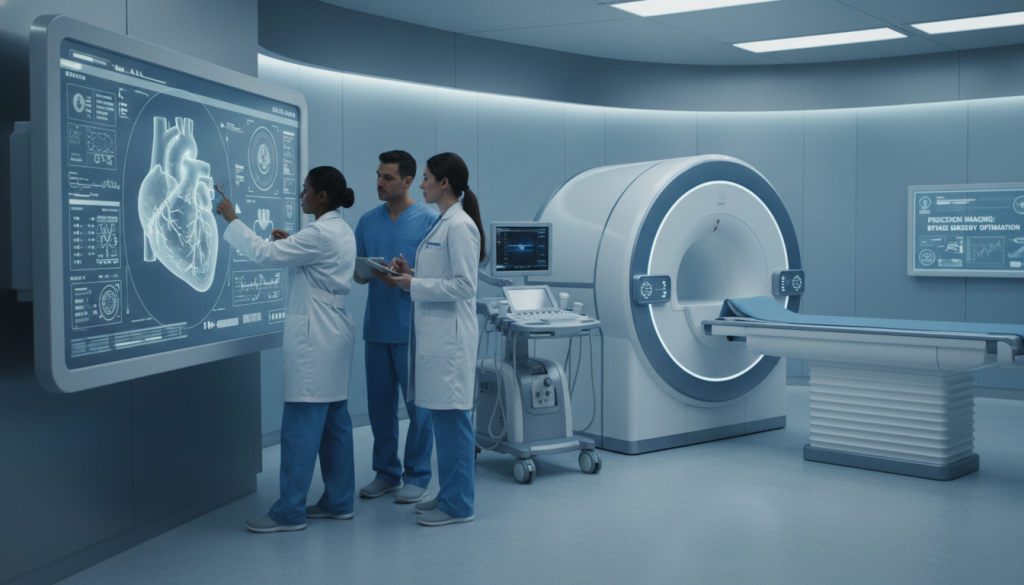
Technologies like 3D cardiac mapping and advanced CT angiography help surgeons. They map each patient’s vascular landscape. This ensures each bypass plan is customized to the unique anatomical structure of the individual.
These systems give a roadmap for success in complex procedures. Surgeons can now see anatomical variations that were invisible before. This proactive approach reduces risks and makes surgery safer.
| Imaging Technology | Primary Benefit | Clinical Impact |
|---|---|---|
| 3D Cardiac Mapping | Spatial Visualization | Enhanced Surgical Planning |
| CT Angiography | Vascular Clarity | Precise Blockage Identification |
| High-Resolution MRI | Tissue Assessment | Improved Patient Outcomes |
Our commitment to technological excellence means each patient gets care tailored to them. By using these advanced tools, we’re setting new standards in cardiac surgery. Our goal is to deliver superior results through innovation and precise data.
The Impact of Artificial Intelligence on Surgical Outcomes
Machine learning in the operating room is changing surgery. It lets our teams predict risks with unprecedented accuracy before surgery. This helps tailor bypass procedures to each patient’s needs.
We use advanced machine learning to analyze huge amounts of data. This helps surgeons during complex operations. It makes the surgery safer by supporting quick decisions.
Our move to data-driven surgery makes care more predictable and effective. These digital tools help reduce errors. We think using new technology is key to top-notch cardiac care.
| Feature | Traditional Approach | AI-Enhanced Approach |
|---|---|---|
| Risk Assessment | Manual clinical review | Predictive algorithmic modeling |
| Intraoperative Support | Surgeon intuition only | Real-time data-driven guidance |
| Outcome Predictability | Based on general averages | Patient-specific data analysis |
| Safety Protocols | Standardized checklists | Dynamic, adaptive monitoring |
This change in cardiac surgery shows our commitment to advanced healthcare. We keep improving these models for better surgery. Our aim is to provide world-class healthcare that focuses on patient safety and recovery.
Personalized Cholesterol Management and Bypass Recovery
Personalized cholesterol management is key to keeping bypass grafts healthy. After heart bypass surgery, patients need to focus on their metabolic health. This helps keep the benefits of surgery going for years.
Every patient has a unique lipid profile that needs a special plan. Our teams use biomarkers to create personalized care plans. These plans mix advanced medicines with lifestyle changes. Precision is the key to stopping atherosclerosis in new grafts.
Good cholesterol management is more than just medicine. It’s about nutrition and exercise, tailored to each patient’s recovery. Our experts keep a close eye on these areas to fine-tune treatments as needed.
This focus on long-term goals lowers the chance of heart problems later. Our aggressive approach to lipid control safeguards the investment in surgery. It ensures patients live better, with healthier hearts, for years to come.
Advanced Arrhythmia Treatment During the Perioperative Period
Managing heart rhythm issues during bypass surgery is a complex task. The perioperative period is a time when the heart is very sensitive. Our team uses advanced monitoring protocols to catch any rhythm changes early. This way, we make sure every patient gets the best care possible.
Good arrhythmia treatment needs quick action based on real-time data. We use continuous telemetry and detailed electrophysiological monitoring. This helps our surgical teams spot problems like atrial fibrillation early. We can then quickly adjust treatments to keep the patient stable.
We focus on proven methods to reduce risks during recovery. Our cardiac units have the latest tech to keep patients stable. We make sure each patient gets a care plan that fits their heart needs.
| Monitoring Strategy | Intervention Type | Clinical Goal |
|---|---|---|
| Continuous Telemetry | Pharmacological Therapy | Rhythm Stabilization |
| Electrophysiological Mapping | Electrical Cardioversion | Arrhythmia Treatment |
| Hemodynamic Profiling | Rapid Response Protocols | Preventing Complications |
We’re always working to improve our perioperative care pathways. By combining top-notch clinical skills with the latest tech, we create a safe space for heart surgeries. This dedication ensures patients stay stable and recover well under our care.
The Importance of Comprehensive Heart Screening
Comprehensive heart screening is key to avoiding sudden heart problems. It catches coronary artery disease early. This lets doctors start treatments before surgery is needed. It’s all about keeping patients safe and healthy for a long time.
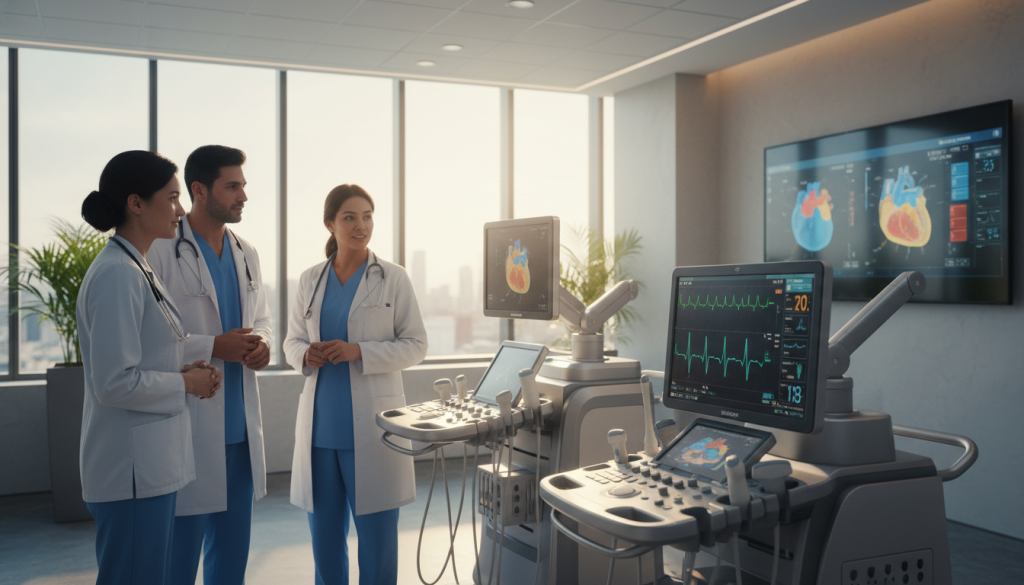
A detailed heart checkup uses special tests for each patient. These tests help doctors check how well the heart works. They can spot small changes in blood vessels before symptoms show up.
Tests like stress tests show how the heart does under work. Biomarker analysis looks at signs of inflammation and heart stress. Regular heart screening means patients get help early, not just when it’s an emergency.
The table below shows the main tools used in a heart checkup. They help keep an eye on the heart’s health.
| Diagnostic Tool | Primary Function | Clinical Benefit |
|---|---|---|
| Stress Testing | Evaluates heart rhythm under exertion | Identifies exercise-induced ischemia |
| Biomarker Analysis | Measures protein levels in blood | Detects early signs of cardiac strain |
| Echocardiography | Visualizes heart structure and flow | Assesses valve and chamber function |
| Coronary CT Scan | Maps arterial plaque buildup | Quantifies risk of future blockage |
Innovations in Heart Valve Repair During Bypass Surgery
We focus on keeping the heart’s natural shape through heart valve repair. Our surgeons fix valve problems during bypass surgery. This way, patients get better blood flow and a fixed valve in one go.
We choose to fix the valve instead of replacing it whenever we can. Keeping the natural valve structure often means better long-term results and a better life. Our team uses the latest materials and techniques to make sure every valve repair works well.
Here’s why fixing the valve is often better than replacing it during complex heart surgeries:
| Feature | Valve Repair | Valve Replacement |
|---|---|---|
| Cardiac Function | Preserves natural anatomy | Requires prosthetic device |
| Medication Needs | Reduced anticoagulation | Long-term blood thinners |
| Procedure Type | Advanced heart valve repair | Standard valve substitution |
We’re always looking for the best ways to help our patients. By combining bypass surgery with advanced valve techniques, we help our patients have a stronger, healthier heart. We’re committed to finding innovative solutions that keep our patients safe and help them recover well.
Sustainable Infrastructure in the Modern Heart Hospital
Building a sustainable heart hospital is key to our future. We know that top-notch medicine needs both cutting-edge tech and care for the planet. Our green infrastructure makes sure our care helps the community.
Our building design cuts down on energy use. We use smart systems for climate and lighting. This keeps our sterile, high-tech environment perfect for heart surgeries. It also helps us care for the planet.
Our green practices don’t lower our medical standards. Whether it’s simple tests or complex heart surgeries, our setup supports top precision. We aim for a modern heart hospital that’s both efficient and effective.
Our green building shows our long-term health commitment. We’re setting an example, showing a heart hospital can heal and protect the environment. Our drive for innovation keeps us leading in heart care and green practices!
Patient-Specific Bypass Treatment Plans
Precision medicine has changed how we treat bypass treatment. We now focus on each patient’s unique needs. Our team looks at their vascular anatomy, age, and health conditions to plan the best course of action. This meticulous approach ensures every surgery is tailored to the individual.
Our teams work together to find the best surgical plan. Surgeons, cardiologists, and anesthesiologists review the patient’s data. They decide whether to use on-pump or off-pump procedures. This collaborative decision-making process is key to keeping patients safe and healthy.
Choosing the right bypass treatment depends on the patient’s health. Off-pump surgery might be better for some to lower inflammation. On-pump methods are better for complex repairs. We choose the most precise method for each case.
This patient-focused method makes sure every step of the surgery is optimized. We use advanced diagnostics and personalized plans for the best results. Our goal is to provide safe and effective care. This shows our commitment to excellence in cardiac medicine.
| Factor | Standard Approach | Personalized Approach |
|---|---|---|
| Vascular Anatomy | General assessment | 3D-modeled precision |
| Surgical Method | Routine protocol | On-pump or off-pump selection |
| Recovery Goal | Baseline recovery | Optimized clinical outcome |
Enhancing Heart Health Through Telemedicine and Remote Monitoring
Modern medicine now goes beyond hospital walls to keep heart health in check. We use advanced digital platforms to move smoothly from the operating room to the patient’s home.
Our doctors use smart wearable devices to track vital signs and recovery in real-time. This continuous connection lets our teams spot small changes right away. We can then act quickly to prevent bigger problems, helping patients recover better.
Patients feel safer knowing their heart health is watched by our experts. This digital watchful eye offers reassurance during the important weeks after a procedure. We think technology should help build trust and independence for everyone we care for.
The data from these remote systems is carefully analyzed to create personalized recovery plans. This focus on personalized care means each patient gets the right support to keep their heart health strong for years.
The Future of Regenerative Medicine in Cardiac Repair
Regenerative medicine is a new frontier in healing damaged heart tissue. It goes beyond old methods to fix the heart at a cell level. This change is a big step forward in cardiac repair.
Research on stem cell therapy shows great promise for those with heart damage. These cells can turn into healthy heart tissue. This could help reverse chronic disease. Our teams are watching these advances to help our patients.
We’re also looking into bio-engineered scaffolds for heart tissue growth. These structures help new tissue form, which might cut down on bypass surgery needs. We aim to use these materials to better our patients’ long-term health.
Our place is leading in regenerative medicine, exploring new ways to help patients heal. We think the future of heart health is in using the body’s own healing powers. Below is a table showing the move from old methods to new regenerative ones.
| Approach | Primary Mechanism | Expected Outcome |
|---|---|---|
| Traditional Bypass | Mechanical revascularization | Restored blood flow |
| Stem Cell Therapy | Cellular regeneration | Improved muscle function |
| Bio-engineered Scaffolds | Structural tissue support | Biological tissue repair |
Redefining the Standard of Care for Cardiac Patients
Modern medicine is moving towards integrated systems. These systems focus on patient outcomes and protecting the environment. Our institution is dedicated to this vision. We combine advanced surgical tools with green hospital designs.
We think cardiology should be a whole-body approach. This means every patient gets a treatment plan made just for them. Our team uses data to make recovery times shorter and improve heart health over time.
Innovation is at the heart of what we do. We build energy-saving facilities to help the planet and provide top-notch medical care. This approach makes our workplace safer for everyone.
For those looking for specialized care, check out our pediatric cardiology resources. We’re committed to heart health for all ages. Join us to see how we’re changing the future of medicine. Your health is our top priority as we explore new possibilities in cardiac care.
FAQ
Q: How does advanced technology improve bypass treatment outcomes?
A: Our use of high-tech tools lets us tailor care for each patient. This approach boosts recovery chances. We match advanced medical tech with each person’s needs for the best results.
Q: How has bypass surgery evolved in modern medicine?
A: Bypass surgery has moved from old methods to new, less invasive ones. We use years of data to make surgery safer and better. This keeps our care top-notch and safe.
Q: What is the role of interventional cardiology in ensuring surgical success?
A: Our team works closely with cardiology experts for the best results. We use precise tests before surgery to plan better. This teamwork is key for handling complex heart cases.
Q: What are the benefits of robotic-assisted systems in cardiac surgery?
A: Robotic tools give our surgeons better views and control. They make smaller cuts, which lowers infection risks and speeds healing. This shows our focus on patient safety and innovation.
Q: How do imaging technologies facilitate personalized care?
A: We use detailed imaging to plan surgeries. Tools like 3D cardiac mapping help us see blockages clearly. This lets us create treatment plans that fit each patient’s heart perfectly.
Q: How does artificial intelligence impact surgical outcomes?
A: AI helps us predict risks and guide surgeons during surgery. This makes procedures safer and more precise. It helps us give better care to our patients.
Q: Why is personalized cholesterol management critical for bypass recovery?
A: Managing cholesterol is key for recovery. We adjust treatments based on each patient’s cholesterol levels. This helps prevent graft failure and keeps the heart healthy long-term.
Q: What arrhythmia treatment is available during the perioperative period?
A: We use advanced monitoring and treatments for arrhythmias during surgery. This keeps patients stable and prevents complications. It ensures a safe recovery.
Q: What does a comprehensive heart screening involve?
A: Heart screenings are key for catching heart disease early. Our screenings include stress tests and biomarker analysis. They help us act fast before surgery is needed.
Q: Can heart valve repair be performed concurrently with bypass surgery?
A: Yes, we often repair heart valves during bypass surgery. Using new materials and methods, we preserve natural heart function. This improves patients’ quality of life.
Q: How does sustainable infrastructure contribute to a modern heart hospital?
A: Our heart hospital is built with the environment in mind. It uses energy-efficient tech and is designed for safety and efficiency. This supports our patients and the planet.
Q: How are patient-specific bypass treatment plans developed?
A: Our teams create plans based on each patient’s unique needs. We consider age, health, and heart anatomy. This ensures the best surgery plan for each person.
Q: How do telemedicine and remote monitoring enhance heart health after discharge?
A: We use devices and digital platforms to track patients’ health. This lets us help them even after they leave. It keeps their heart health in check.
Q: What is the future of regenerative medicine in cardiac repair?
A: We’re leading research in regenerative medicine for the heart. This includes stem cells and bio-engineered materials. It could change how we treat heart disease in the future.
Q: How is the standard of care being redefined for cardiac patients?
A: We’re changing care by using new tech, being green, and personalizing treatment. Our goal is to give the best care with compassion and innovation. This ensures our patients get the best care possible.