

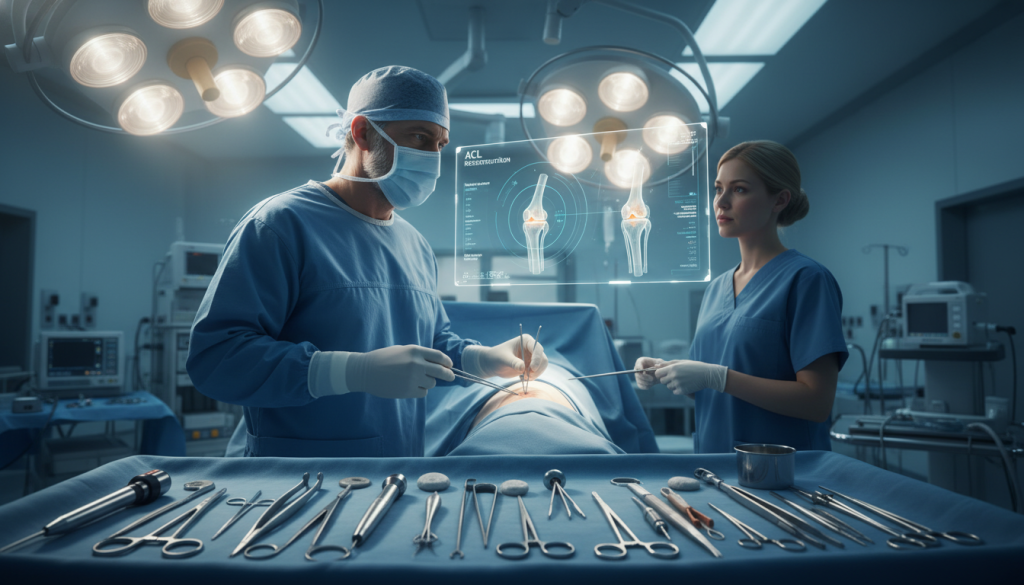
Top medical centers focus on excellence in orthopedic care with the newest surgical methods. Our team aims for the best results by following proven practices. We know treating complex ligament injuries needs great skill and a strong team effort.
Patients looking for a trusted reconstruction treatment get access to top technology and experts. Our place is dedicated to full care for long-term healing. Choosing an evidence-based reconstruction treatment means patients get the best from leading surgeons in research and safety.
Key Takeaways
- Leading medical centers prioritize evidence-based practices for superior patient outcomes.
- Advanced surgical interventions are essential for treating complex ligament injuries effectively.
- Institutional excellence ensures that patients receive high-quality, reliable care throughout their recovery.
- Specialized medical teams utilize cutting-edge technology to improve surgical precision.
- Commitment to patient safety remains the cornerstone of our orthopedic care philosophy.
The Anatomy and Mechanics of ACL Injuries
The anterior cruciate ligament (ACL) is key to knee health. It keeps the tibia from sliding too far forward compared to the femur. This is important during high-impact activities, as it helps keep the joint stable.
When the ACL is damaged, the knee loses its main support. This can cause the joint to feel unstable. It’s important to get help early to protect the cartilage and other tissues.
Ignoring a torn ACL can lead to more serious problems. Getting medical help quickly can help avoid needing arthritis treatment later. We focus on early care to keep joints healthy for the long term.
Diagnostic Protocols at Top-Tier Medical Facilities
Getting the best results for ligament injuries starts with a thorough and detailed diagnostic check. At our top medical centers, we know the road to recovery begins before surgery. Our experts use the latest imaging and physical checks to miss nothing.
We use high-resolution magnetic resonance imaging to see how bad the ligament damage is. This tech lets our surgeons see soft tissues in 3D. Knowing exactly how bad the tear is helps us plan the best treatment for each patient.
We combine these advanced images with detailed physical exams. This way, we get a full picture of each patient’s injury and how it affects them. Personalized surgical plans come from this detailed approach, meeting the highest care standards.
The table below shows the main tools we use for accurate diagnosis and safety:
| Diagnostic Tool | Primary Function | Clinical Benefit |
|---|---|---|
| High-Resolution MRI | Soft tissue visualization | Pinpoints ligament tear severity |
| Physical Examination | Joint stability testing | Assesses functional range of motion |
| Digital Radiography | Bone structure analysis | Rules out associated fractures |
| Patient History Review | Symptom mapping | Customizes the recovery trajectory |
Our strict diagnostic standards give our patients confidence. We keep improving our tools to better assess patients. This focus ensures every surgery is right for the patient’s needs.
The Evolution of Surgical Techniques in Reconstruction Treatment
Our institution leads in surgical advancements, focusing on quick patient recovery. The history of orthopedic care has seen a big change. Now, we use minimally invasive arthroscopic techniques instead of old open surgeries.
These new methods involve small cuts and high-definition cameras. Surgeons can see the joint clearly. This means less damage to soft tissues and muscles. Patients often feel less pain and can get back to their lives sooner.
Another key part of this progress is anatomical graft placement. This means the new ligament is placed just right. It works well with the knee’s natural movements. This is what makes reconstruction treatment top-notch, keeping the joint stable and healthy for a long time.
We keep up with new technologies to help patients recover faster. By using these advanced methods, we make sure every treatment is safe and effective. Our goal is to always improve our surgical techniques for the best results for our patients.
Integrating Robotic Surgery into Orthopedic Care
The world of joint reconstruction is changing fast with robotic surgery. This new tech is key to our goal of top-notch care. It lets surgeons control operations with unmatched precision, making sure each patient gets the right treatment.
At the core of this change is computer-assisted navigation. It makes sure grafts are placed with extreme accuracy. This is key for keeping joints healthy and stable over time. Surgeons can now align grafts to match the knee’s natural movement, cutting down on complications after surgery.
These systems have made robotic knee replacement more popular worldwide. Patients are happier because these surgeries are less invasive. Our goal is to use robotic surgery to help patients heal faster and move better.
The table below shows how advanced tech improves orthopedic care:
| Feature | Traditional Surgery | Robotic-Assisted Surgery |
|---|---|---|
| Precision | Manual alignment | Sub-millimeter accuracy |
| Graft Placement | Standardized | Patient-specific mapping |
| Recovery Time | Moderate | Accelerated |
| Technology | Manual tools | Robotic surgery navigation |
We keep investing in these systems to stay at the forefront of orthopedic innovation. By blending expert surgical skill with robotic precision, we offer a safer, more reliable way to recovery for our patients.
Comparing ACL Reconstruction and Knee Replacement Procedures
Many people mix up ACL reconstruction with knee replacement. But these surgeries are for different needs. ACL reconstruction fixes a torn ligament in the knee. It’s for those who want to get back to sports or hard activities.
Knee replacement is for those with severe joint wear, like from osteoarthritis. It’s about fixing the bone and cartilage in the joint. It’s key to know the difference when choosing your treatment.
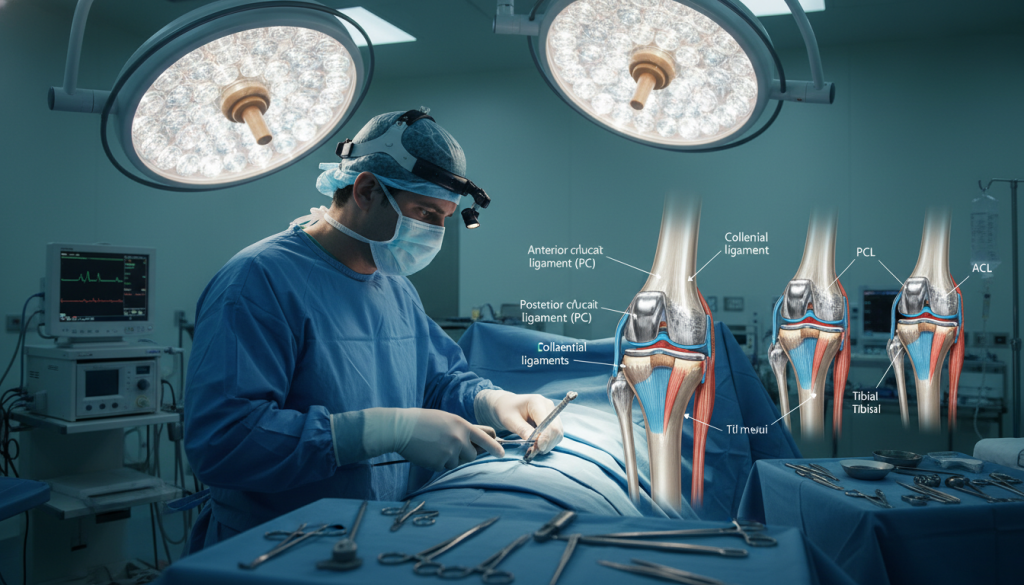
We always try to save the joint first. We use the latest tools to see if a repair is possible. Or if a bigger fix is needed.
| Feature | ACL Reconstruction | Knee Replacement |
|---|---|---|
| Primary Goal | Restore joint stability | Relieve chronic pain |
| Indication | Ligament rupture | Advanced arthritis |
| Target Population | Active, younger patients | Older, degenerative cases |
Choosing between these options needs careful thought. Joint preservation is our main goal. But sometimes, a knee replacement is the only way. We aim to guide you to the best care for your future mobility.
The Role of Cartilage Repair in Joint Longevity
Modern orthopedic care sees cartilage repair as key to keeping joints working well. Keeping the articular cartilage smooth is essential for long-term mobility. It also helps prevent early wear in the knee.
When patients get ligament reconstruction, our teams check the whole joint. We often find focal defects that need quick action. This ensures the best results for the patient.
We use advanced biological restoration to fix these damage spots during the first surgery. This early action in cartilage repair helps stabilize the joint. It also lowers the chance of future degenerative changes.
We aim to make joints last longer with precise care. Our work in cartilage repair greatly improves patients’ lives. It lets them get back to their active lives with confidence.
Pre-Surgical Optimization and Patient Preparation
Getting the best results from surgery starts before the operation. We focus on proactive patient optimization for a smooth recovery. This is key for everyone having orthopedic surgery.
This important step checks both physical and mental health. We tackle any issues early. This makes sure the body is ready for surgery, like total knee replacement surgery.
We offer personalized nutritional counseling to aid in healing. Good nutrition cuts down on inflammation and speeds up recovery.
We also have targeted exercise programs to strengthen muscles. These exercises make the joint more stable. They also boost the success of our surgeries.
Mental preparation is just as important. We give patients clear goals and educational materials. This helps them stay positive and focused on their recovery.
Anesthesia and Pain Management Strategies
Our anesthesia team uses a detailed approach for a smooth surgery for all patients. We know that controlling pain well is key for a good recovery after ACL surgery. We focus on making patients comfortable to start healing right after surgery.
We use a multimodal pain management strategy to tackle pain from different angles. This mix of local nerve blocks and pain medicines helps a lot. It means we use fewer strong pain drugs.
We are all about keeping patients safe and comfortable. We watch their vital signs and how they feel before, during, and after surgery. Using fewer opioids helps avoid bad side effects and gets patients moving and active sooner.
The table below shows how our new pain management is different from the old way:
| Feature | Traditional Approach | Multimodal Strategy |
|---|---|---|
| Primary Focus | Reactive pain relief | Proactive pain prevention |
| Opioid Usage | High reliance | Minimal to none |
| Recovery Speed | Slower due to side effects | Accelerated recovery |
| Patient Comfort | Variable | Consistently high |
Our advanced methods make surgery safer and more comfortable. We are always looking for new ways to give the best care in orthopedics.
Post-Operative Care and Early Recovery Milestones
The journey to full mobility starts right after surgery. Our medical teams focus on protecting the surgical site to keep the graft stable. This helps the body start healing naturally. We keep the environment controlled to lower the chance of problems in the first few days.
Almost right away, we start range-of-motion exercises to avoid joint stiffness. These small movements help keep fluid moving and prevent scar tissue. We help each patient with these steps carefully.
We watch for key recovery milestones closely. Our team looks for signs of muscle loss or movement problems early. Quick action lets us change the rehab plan as needed. This keeps patients on track for a good recovery.
Helping patients move from the hospital to home is a big part of our job. Our nursing and medical teams give detailed instructions. This support helps patients feel confident and safe at home. It’s all about keeping them safe and independent.
| Recovery Phase | Primary Focus | Expected Outcome |
|---|---|---|
| Immediate Post-Op | Site Protection | Reduced Inflammation |
| Days 1-7 | Range-of-Motion | Improved Joint Mobility |
| Weeks 2-4 | Muscle Activation | Preventing Atrophy |
The Critical Role of Physical Therapy in Rehabilitation
Rehabilitation is key to getting back to full strength after surgery. Physical therapy is at the heart of this process. It uses a step-by-step plan to rebuild strength and improve joint function.
Our sports injury clinic offers custom rehab programs for everyone. Whether you’re an athlete or just want to stay active, we create a plan just for you. Consistency is key to lasting success.
Our experts guide you through each step carefully. They make sure you don’t push too hard too soon. Using proven physical therapy methods, we help you move better and control your muscles. This careful approach helps avoid future injuries and keeps your joints healthy.
The table below shows the steps we follow at our sports injury clinic. It helps you smoothly get back to doing what you love.
| Recovery Phase | Primary Focus | Expected Outcome |
|---|---|---|
| Early Phase | Inflammation control | Pain reduction |
| Intermediate Phase | Range of motion | Improved mobility |
| Advanced Phase | Strength building | Functional stability |
| Return to Sport | Agility training | Full performance |
Addressing Complications and Revision Surgery
While complications are rare, we take a proactive approach to patient safety. Our teams use strong protocols to spot and handle any issues right away. This ensures top care for every patient during their recovery.
Patients often ask about pain behind the knee after surgery. Our experts carefully check to see if it’s normal or a problem. We tackle concerns early to avoid bigger issues later.
When revision surgery is needed, our surgeons plan with meticulous care and use the latest tech. We treat each case with the same care as the first surgery. Our aim is to fix the joint’s structure well.
We rely on evidence-based medicine and watch patient results closely. With the latest diagnostic tools, we find the cause of pain or failure. This lets our teams do complex revisions with confidence.
| Service Category | Standard Protocol | Revision Approach |
|---|---|---|
| Diagnostic Imaging | Routine Assessment | Advanced 3D Mapping |
| Surgical Planning | Standardized Technique | Customized Reconstruction |
| Recovery Support | Standard Rehabilitation | Enhanced Clinical Oversight |
We think transparency and communication are key for patients. Our team is always ready to talk about joint health or future surgeries. We focus on keeping you mobile and improving your life quality.
Bone and Joint Care Beyond the Operating Room
Our institution sees bone and joint care as a lifelong partnership with every patient. While surgery is key, true wellness is a continuous journey. It needs ongoing care and proactive steps.
We offer many resources to help patients find lasting joint pain relief. By adopting low-impact exercises, eating right, and managing weight, you can protect your joints. This helps avoid stress on them over time.
Keeping an eye on your musculoskeletal health is vital. Regular check-ups help our specialists spot issues early. They can then offer targeted joint pain relief to prevent big problems.
The table below shows important ways to keep your orthopedic health in top shape for life:
| Strategy Category | Primary Focus | Expected Outcome |
|---|---|---|
| Physical Activity | Low-impact strength training | Enhanced joint stability |
| Nutritional Support | Anti-inflammatory diet | Reduced systemic inflammation |
| Clinical Monitoring | Annual orthopedic screenings | Early detection of wear |
| Weight Management | Body mass index optimization | Decreased mechanical load |
Our dedication to your health doesn’t stop when you leave. We’re committed to helping you achieve lasting mobility and overall well-being at every stage of life.
Managing Hip Pain Relief and Kinetic Chain Stability
The human body is a complex system where hip health affects knee stability. When treating injuries, we see how the lower body works together. Focusing only on the injury site misses the biomechanical imbalances that cause joint stress.
We take a comprehensive assessment approach to ensure our patients’ long-term success. By adding hip pain relief to our treatment plans, we help patients move naturally again. This reduces knee strain and prevents injuries from other parts of the body.
We think balanced movement is key to a strong recovery. Weak or tight hip muscles can make the knee take too much force, causing pain. Effective hip pain relief helps spread the load evenly, keeping joints healthy after surgery.
| Kinetic Component | Primary Function | Impact on Knee Stability |
|---|---|---|
| Gluteal Muscles | Pelvic Alignment | Prevents Medial Knee Collapse |
| Hip Flexors | Range of Motion | Reduces Anterior Joint Stress |
| Core Stability | Postural Control | Enhances Overall Kinetic Efficiency |
| Hip Abductors | Lateral Support | Stabilizes the Patellofemoral Joint |
We treat the body as a whole, not just parts. By focusing on both the hip and knee, our patients regain functional independence. They can return to their daily lives with confidence. This approach is at the heart of our advanced orthopedic care.
Technological Advancements in Graft Fixation
The way we fix grafts has changed a lot. Now, surgeons use the latest tools to make sure the graft is strong right away. This is key in ACL reconstruction to help the graft heal well.
We use both bio-absorbable and metallic devices to attach the graft to the bone. We pick the right material for each patient to help it heal best. This makes the recovery process more reliable and predictable.
These new technologies are vital for the graft’s long-term success. They help make the ligament stable sooner. This means our patients can start moving and bearing weight earlier. These advances show our dedication to lasting results in every ACL surgery we do.
Psychological Recovery and Returning to Sport
The journey back to top athletic performance is tough, both physically and mentally. Surgery fixes the knee, but getting back to sports takes time and guidance. Patients often feel scared about doing high-impact activities again.
Our medical teams focus on psychological recovery by adding mental checks to rehab plans. We know healing fully means feeling sure about joint stability. We tackle these fears early to help athletes overcome them and get back to competing.

We use a detailed plan to make sure patients are ready mentally for their sport. We watch how confident they feel during drills and training. Building trust in the knee is key, and we support it through recovery.
The table below shows the steps patients take to get back to sports, both physically and mentally.
| Recovery Phase | Physical Focus | Psychological Goal | Readiness Indicator |
|---|---|---|---|
| Early Post-Op | Range of motion | Acceptance of injury | Compliance with therapy |
| Mid-Rehab | Strength building | Confidence in stability | Reduced fear of movement |
| Late-Rehab | Agility training | Mental visualization | Trust in joint mechanics |
| Return to Sport | Full competition | Competitive focus | Absence of hesitation |
We are committed to excellence, giving patients the comprehensive support they need to succeed. By using the latest surgery and focusing on mental health, we help athletes come back strong. We aim to create a place where both physical and mental health are valued equally.
The Future of Sustainable Care in Orthopedic Centers
Modern orthopedic medicine looks beyond the operating room. We aim to build a sustainable future for healthcare. We do this by using environmentally friendly practices every day.
Our centers focus on saving energy and cutting down on waste. This way, we protect the planet while giving top-notch medical care.
Excellence in patient care must also mean caring for the environment. By using green technology and lowering our carbon footprint, we keep the high standards of care alive. This is key for institutions like the Mayo Clinic or the Hospital for Special Surgery.
Patients getting ACL reconstruction or joint repair need a healthcare partner that cares about the planet. We invite you to talk to our medical teams about our green efforts. Your recovery journey supports our mission of innovation and saving the environment.
We’re excited to help you regain your mobility. At the same time, we’re working towards a healthier world together.
FAQ
Q: Why is it essential to undergo ACL reconstruction at a high-volume medical center?
A: Leading centers like Mayo Clinic and Cleveland Clinic use the latest surgical methods. They focus on patient outcomes with evidence-based care. This ensures every reconstruction meets top international standards.
Q: How can an untreated ACL injury lead to the need for arthritis treatment?
A: The ACL keeps the knee stable during high-impact activities. If it fails, the knee becomes unstable. This leads to joint wear and arthritis, needing intensive treatment.
Q: What diagnostic technologies are utilized to assess the severity of a ligament tear?
A: We use high-resolution imaging, like the Siemens Magnetom MRI, to see the damage clearly. Combining these scans with physical exams, we create personalized surgical plans.
Q: What are the advantages of modern arthroscopic reconstruction treatment over traditional methods?
A: Modern treatment is less invasive than old methods. Using Arthrex equipment, our surgeons make precise graft placements. This results in smaller incisions, less pain, and faster recovery.
Q: How does the integration of robotic surgery improve orthopedic outcomes?
A: Robotic surgery, like with the Stryker Mako, offers unmatched precision. It ensures the graft is placed correctly, improving the surgery’s success and longevity.
Q: Is a ligament reconstruction different from a total knee replacement?
A: Yes, ACL reconstruction fixes a specific ligament, while knee replacement is for severe joint disease. Our experts guide you on the best option for your pain relief.
Q: What is the role of cartilage repair in maintaining joint longevity?
A: Cartilage repair is key to preventing joint wear and keeping joints moving smoothly. We often repair cartilage along with ligament reconstruction to extend joint life.
Q: How should a patient prepare for their reconstruction procedure?
A: Preparation starts before surgery. We offer nutritional counseling and exercise programs to prepare the body. This ensures a successful surgery and easier recovery.
Q: What strategies are used to manage pain and ensure patient comfort after surgery?
A: We use a mix of pain management strategies, including nerve blocks and systemic analgesia. This approach reduces opioid use and ensures comfort. Johns Hopkins Medicine prioritizes patient safety.
Q: What can patients expect during the early recovery milestones?
A: The early recovery phase focuses on protecting the site and starting exercises. Our teams closely monitor progress to meet recovery goals. We support patients from hospital to home.
Q: Why is physical therapy considered the cornerstone of a successful recovery?
A: Physical therapy is key for muscle strength and joint function. Our sports injury clinic offers tailored programs. Consistent, professional guidance leads to the best outcomes.
Q: How are complications or the need for revision surgery handled?
A: While rare, we have protocols for managing complications. Revision surgery is planned with advanced technology. Our goal is to provide top care for complex cases.
Q: How does the institution support long-term bone and joint care beyond surgery?
A: We support your health beyond surgery. We offer lifestyle advice and monitor your musculoskeletal health. We aim to be a lifelong partner in your orthopedic wellness.
Q: Can hip issues affect the success of a knee reconstruction?
A: Yes, hip function affects knee stability. We address hip pain to ensure balanced movement and prevent injuries. This approach leads to better results.
Q: What technological advancements have been made in graft fixation?
A: Modern graft fixation devices, like those from Smith & Nephew, have improved stability. We use the latest technologies for secure attachment. This allows for earlier mobilization and recovery.
Q: How do you address the psychological aspects of returning to sports?
A: Returning to sports requires overcoming mental barriers and regaining confidence. Our holistic approach prepares patients mentally and physically for their sport. Our sports injury clinic supports them every step of the way.
Q: How are your medical centers contributing to a sustainable future in healthcare?
A: We are committed to a sustainable future by integrating green practices into our operations. We focus on energy efficiency and waste reduction. Excellence in healthcare must also protect the environment for future generations.