





Choosing a top-tier medical center for spinal care is the start of a transformative journey. It’s a path toward better mobility and pain relief. These centers focus on a holistic approach, going beyond just surgery.
They use advanced surgical methodologies to create personalized treatment plans for each patient. This dedication to excellence might include arthroscopic surgery. It aims for quicker healing and better long-term results.
We at our institution are dedicated to comprehensive support throughout recovery. We believe in the importance of transparency and education. These are key to a successful patient experience in today’s healthcare world.
Key Takeaways
- Patients benefit from a multidisciplinary team approach at leading medical centers.
- Advanced technology is utilized to enhance precision and safety during procedures.
- Personalized recovery plans are essential for achieving optimal long-term health.
- Minimally invasive techniques often lead to reduced recovery times and improved comfort.
- Institutional commitment to excellence ensures high standards of care and patient safety.
The Reality of Modern Spinal Fusion Treatment
The world of fusion treatment is all about strict rules and precision. Top hospitals have teams that put patient safety first. They follow proven methods to fix chronic problems and keep the spine healthy for the long run.
Every choice in our surgery rooms is based on what’s best for the patient. We give patients clear, actionable information about their recovery. By sticking to global safety rules, we make sure every treatment works well.
We aim to make every spine stable for good. Modern fusion treatment uses the latest tech to cut down risks. This careful method helps our experts give patients better lives.
| Surgical Objective | Clinical Focus | Patient Benefit |
|---|---|---|
| Stabilization | Vertebral alignment | Reduced chronic pain |
| Decompression | Nerve pathway clearance | Improved mobility |
| Fusion Treatment | Bone graft integration | Long-term structural support |
We promise to be open about everything during surgery. By using innovative technology and caring for our patients, we help them heal. Our goal is to give patients the confidence to face their recovery.
The Role of Robotic Orthopedics in Precision Care
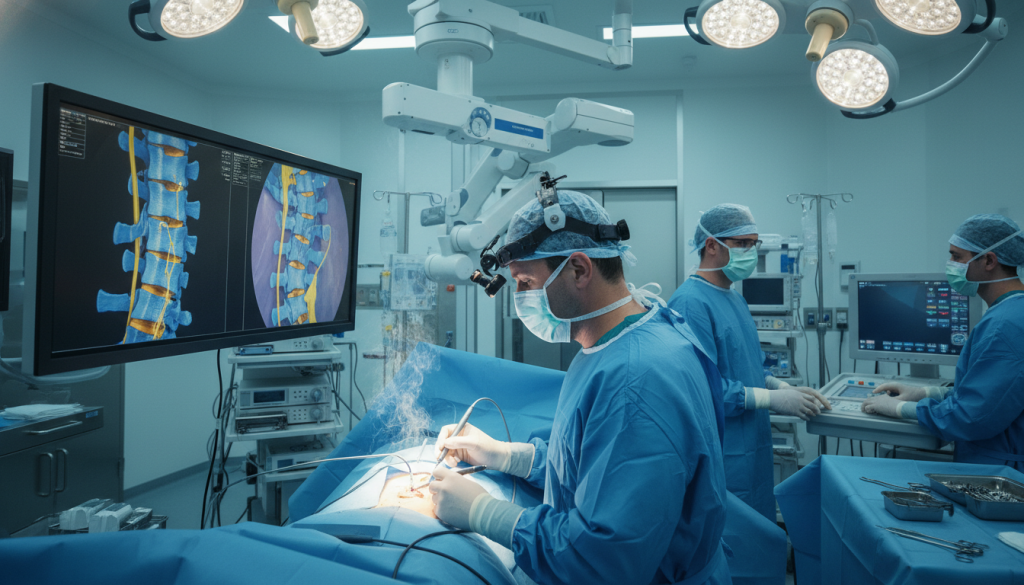
Robotic orthopedics is a big step forward in spinal procedures. It brings advanced technology to the operating room. This means our surgeons can do their work with precision like never before.
This technology combines real-time imaging with robotic help. It lets our teams see the patient’s body clearly during surgery. This makes it easier for surgeons to work on the spine with more confidence.
Using robotic orthopedics means better accuracy in placing implants. Getting implants right is key for patient comfort and long-term health. These tools help reduce mistakes, making surgery safer.
We’re all about using the latest technology to improve healthcare. We think cutting-edge technology is key to giving our patients the best care. Our goal is to make spinal health better for everyone.
Integrating Arthroscopic Surgery Techniques for Better Results
Precision and minimal tissue disruption are key in complex spinal procedures. By using arthroscopic surgery, we offer a better surgical experience. This method aims for the best stabilization while keeping the spine’s natural shape.
The main benefit of these techniques is less damage to soft tissues. Traditional open procedures need big cuts, causing longer recovery times and more pain. Our minimally invasive methods let surgeons work with great accuracy, saving muscles and ligaments.
We see technological innovation as key to patient care. With special cameras and tools in arthroscopic surgery, our teams can see details clearly. This ensures the fusion process is safe and efficient.
| Feature | Traditional Surgery | Minimally Invasive Approach |
|---|---|---|
| Incision Size | Large (4-6 inches) | Small (less than 1 inch) |
| Tissue Trauma | Significant muscle retraction | Minimal disruption |
| Recovery Speed | Extended hospital stay | Accelerated mobilization |
| Surgical Precision | Standard visualization | High-definition arthroscopic surgery |
We focus on our patients’ long-term health. By using these advanced techniques, we aim for excellence in orthopedic medicine. We’re committed to sustainable healthcare solutions that enhance life quality for everyone we help.
Navigating the Initial Phase of Bone and Joint Care
The first few days after surgery are key in your bone and joint care plan. We know these early days can be tough for many. Our team offers a structured roadmap to help you feel comfortable and support your health long-term.
Starting to move gently soon after surgery is important. It helps avoid stiffness and keeps blood flowing well. This early movement is key to a good recovery.
Watching the healing sites closely is a big job for our staff. We use the latest tools to check if you’re healing right. This personalized guidance makes sure you get the care you need to get back to normal.
The table below shows what we focus on in the early recovery days. It helps you see how we’re committed to your bone and joint care excellence.
| Recovery Focus | Clinical Objective | Patient Action |
|---|---|---|
| Early Mobilization | Improve blood flow | Follow physical therapy cues |
| Site Monitoring | Prevent complications | Report changes immediately |
| Pain Management | Ensure comfort | Adhere to medication schedule |
| Institutional Support | Provide clarity | Engage with care team |
Our team is here to support you every step of the way. We believe that informed patients are better equipped to recover. Together, we make sure your recovery is safe and effective.
Managing Expectations During the Early Recovery Window
The first days after spinal fusion surgery are very important. They are key for both physical healing and getting used to the new situation. Patients start to move around more slowly as they get better.
It’s normal to feel better one day and worse the next. This is because your body is working hard to fix itself.
We focus a lot on managing pain during this time. We want to be clear with you. We tell you that some pain is okay and will go away.
By taking your medicine as told and not overdoing it, you can feel better. This helps keep you safe and comfortable.

Following your doctor’s advice is the best way to get better. It takes time for your body to heal after such a big surgery. If you rush, you might make things worse.
Our team helps you set goals for the first month. This helps you know what to expect. It also helps you feel less worried.
It’s important to trust the healing process. And to talk openly with your doctors. This helps you on your way to better spinal health.
The Critical Importance of a Structured Rehabilitation Program
A structured rehabilitation program is key to getting back on your feet after complex spinal surgery. We know surgery is just the start of your healing journey. Our institutional commitment means we create a plan just for you, based on your body’s needs.
Our team works together to make a physical therapy plan that fits your recovery goals. We use proven methods to help you regain your independence. This careful planning is vital for the best results in the long run.
Going from surgery to active recovery needs expert help and regular checks. Just like after total knee replacement surgery, our spinal fusion patients get a step-by-step approach. This structured rehabilitation program helps you build strength without overdoing it.
We think comprehensive support is the secret to a smooth return to everyday life. With a strict yet flexible rehabilitation program, we’re with you every step of the way. Our aim is to give you top-notch care that lets you live your life to the fullest.
Lessons Learned from Sports Medicine and Injury Clinics
We’ve learned a lot from a sports injury clinic about spinal fusion recovery. Our team sees spinal surgery recovery as similar to elite athlete rehab. We use these top-level methods to help patients get strong and mobile fast.
The mix of sports medicine and spinal surgery leads to faster healing. We use advanced biomechanical analysis to create custom rehab plans. This shows our dedication to using the best orthopedic practices.
Our sports medicine protocols give patients a clear plan for success. They focus on moving early and strengthening muscles for spinal stability. Every sports injury clinic in our network aims to get people back to their daily lives with proven, intense recovery methods.
| Recovery Metric | Traditional Approach | Sports-Informed Approach |
|---|---|---|
| Mobilization Start | Delayed (48-72 hours) | Immediate (24 hours) |
| Focus Area | General Rest | Functional Biomechanics |
| Goal Setting | Pain Management | Performance Restoration |
| Outcome Tracking | Subjective Reports | Data-Driven Metrics |
We keep improving our care by learning from top physical environments. By linking athletic performance with clinical recovery, we offer a superior patient experience. This promise ensures top-notch care for everyone on their healing path.
Addressing Secondary Concerns Like Hip Pain Relief
Many patients find that hip pain relief is key to their recovery. Even when focusing on the spine, the body might change how it moves. This can put extra stress on the hips and other joints.
Our team does detailed checks to catch these issues early. We aim to fix these problems as seriously as the main surgery. We think everyone deserves real comfort while healing. Spotting these problems early helps avoid long-term pain and helps recovery balance out.
We take a complete approach to care, focusing on all comfort aspects during healing. We use the latest tools to figure out where pain comes from. Helping with hip pain relief lets our patients do better in physical therapy.
We pay attention to every detail that affects your life. We work with you to make your rehab plan better. Your path to wellness is our main goal, and we’re all in for your full recovery.
Insights into Joint Replacement Recovery Parallels
We see big similarities between spinal fusion and joint replacement recovery. These similarities help us understand the healing process better. They show us what to expect during recovery.
Rehabilitation for any surgery requires a lot of discipline. This is true for both spinal and joint replacement surgeries. Early movement and physical therapy are key. They help patients get back to their normal lives faster.
By looking at these recovery paths, we can help people get ready for their own joint replacement recovery or spinal fusion. Here’s a table showing the common healing phases we see in our medical centers.
| Recovery Phase | Spinal Fusion Focus | Joint Replacement Focus | Key Objective |
|---|---|---|---|
| Initial Phase | Pain management | Early mobilization | Stabilization |
| Intermediate | Core strengthening | Range of motion | Functional gain |
| Advanced | Activity integration | Strength building | Full recovery |
The key to success in surgery is consistent, evidence-based care. We’re committed to helping every patient through their recovery. We provide the support they need to feel confident and supported.
The Long-Term Commitment to Spinal Health
Getting long-term spinal health is a team effort that goes beyond surgery. We see the end of a spinal fusion as just the start of a lifelong wellness journey. Our team is here to support your body’s health at every stage of your life.
Preventative maintenance is key to our ongoing care. By sticking to healthy habits, you can keep your surgery results safe and move well. We help you make these habits a part of your daily life.
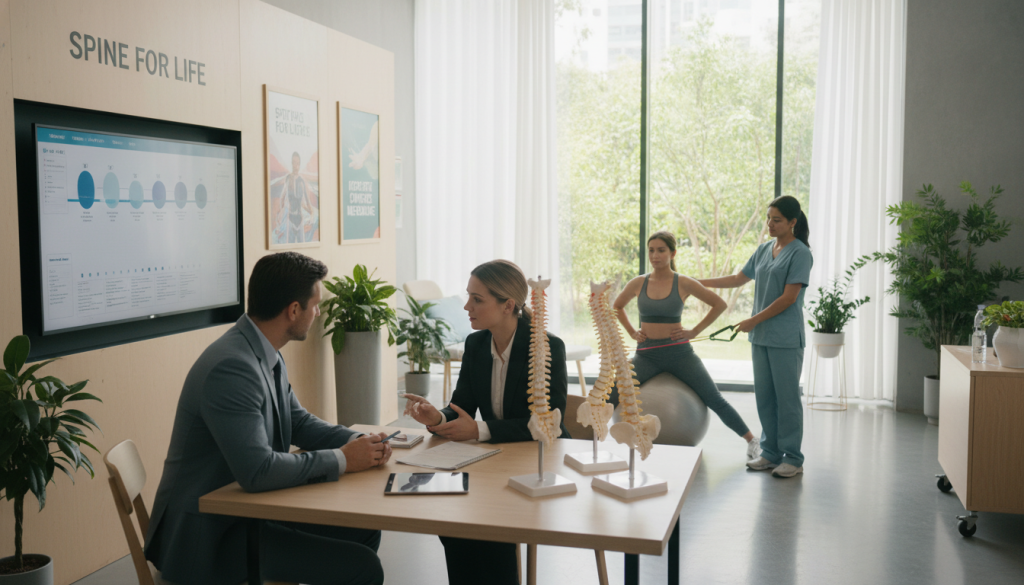
Regular check-ups are important to keep your fusion working well. These visits let our experts track your progress and fix small problems before they get big. Early detection and intervention are the best ways to keep you comfortable for a long time.
Our medical team is always with you on your health journey. We think continuity of care shows we’re a top-notch medical place. You can count on us to help you with spinal health for years ahead.
Psychological Adjustments During the Healing Process
After complex spinal procedures, we focus on the mental side of healing. We know that true healing goes beyond the surgery. The emotional journey of recovery is just as important as the physical one.
We believe in the mind-body connection in healthcare. Patients may feel many emotions after spinal surgery. Our teams work hard to support these feelings, making sure everyone feels cared for.
We offer many resources to help patients become resilient. By focusing on mental health, we help patients manage their recovery. This approach turns recovery into a time for growth and healing.
Here are some ways to keep emotions balanced during healing:
| Support Strategy | Primary Benefit | Implementation Method | Expected Outcome |
|---|---|---|---|
| Mindfulness Training | Stress Reduction | Guided Daily Sessions | Improved Mental Clarity |
| Peer Support Groups | Shared Experience | Facilitated Weekly Calls | Reduced Isolation |
| Cognitive Reframing | Positive Outlook | Clinical Counseling | Enhanced Motivation |
| Progress Tracking | Goal Alignment | Digital Health Portals | Increased Confidence |
We see each patient as a whole person, not just symptoms. We make sure mental health is as important as physical health. Our supportive environment helps patients face recovery with confidence and grace.
The Evolution of Patient Advocacy in Leading Medical Centers
We are deeply committed to empowering patients at every step of their care. We see the journey to spinal health as a personal experience, not just a physical one. So, our policies have changed to put the patient’s voice at the center of all decisions.
Our centers have moved away from old, top-down medical models. Now, we focus on transparency and making decisions together. We give clear, easy-to-understand information. This way, everyone feels informed and sure about their treatment.
We create personalized care plans for each patient. This lets our teams work closely with patients. It builds a partnership based on trust and respect. We find that when patients are involved, they do better.
We make sure every patient feels supported from start to finish. We create a space for open talk, easing worries about big surgeries. Your voice is our guide as we keep improving in orthopedic care.
Comparing ACL Recovery Timelines to Spinal Fusion
Looking at recovery times helps us see how different spinal surgery and ligament repair are. Many know about ACL recovery steps, but spinal fusion is more complex. It’s important to know these differences to have the right expectations during healing.
Ligament repair mainly works on soft tissue and movement. Spinal fusion, on the other hand, involves bone grafting and stabilizing the spine. These procedures affect different parts of the body, so success looks different for each.
We track each patient’s progress with specific, proven markers. ACL recovery often means moving early, but spinal fusion needs a slower start to keep the fusion safe. Here’s a table showing the main differences in recovery goals and times.
| Feature | ACL Reconstruction | Spinal Fusion |
|---|---|---|
| Primary Focus | Ligament Stability | Vertebral Fusion |
| Early Phase | Range of Motion | Structural Protection |
| Recovery Goal | Return to Sport | Pain-Free Mobility |
| Typical Timeline | 6 to 9 Months | 12 to 18 Months |
Our care is all about the individual. We know ACL recovery and spinal fusion have different goals. This helps patients understand why their rehab is so important. Our team is here to support you for a successful recovery.
Technological Advancements Shaping Future Patient Experiences
Innovation is key to our top-notch orthopedic care. We’re using AI-driven diagnostics to give our medical teams clear plans for complex spinal surgeries. This digital precision leads to treatments that fit each patient’s unique needs.
We’re also focused on a sustainable infrastructure for our facilities. They now use energy-saving systems and green materials to lessen our environmental impact. We think healthcare should be both high-tech and eco-friendly.
We’re making our medical centers future-ready. By investing in flexible technology, we can easily add new medical advancements. This means our patients get the latest treatment options without delay.
| Technology Category | Primary Benefit | Patient Impact |
|---|---|---|
| AI Diagnostics | Enhanced Accuracy | Reduced Surgical Risk |
| Sustainable Infrastructure | Lower Carbon Footprint | Responsible Care Environment |
| Modular Systems | Rapid Upgrades | Access to Latest Innovation |
Our ongoing tech investments show our steadfast dedication to quality. We’re always improving to make sure every patient’s experience is safe, efficient, and innovative. By blending human skill with digital tools, we’re raising the bar for orthopedic care worldwide.
Embracing a New Standard of Quality of Life After Surgery
Recovery is the start of a new chapter, focusing on physical freedom and long-term health. Patients who get arthrodesis at Acibadem Hospital see how modern medicine helps restore daily functions. This journey highlights the need for ongoing movement and wellness habits.
We are dedicated to excellence and innovation for everyone. Our world-class facilities support patients from start to finish. This ensures our international community gets top-notch care in modern medicine.
Choosing our medical centers means having a partner in your long-term health. We focus on your comfort and mobility to help you live an active life. Our teams work hard to create lasting healthcare solutions for you.
Your recovery journey shows our mission of delivering top clinical results. We encourage you to work with our specialists to keep your spinal health and vitality strong. Together, we aim for a future where quality of life is our main goal.
FAQ
Q: What distinguishes the approach to fusion treatment at premier medical centers like Mayo Clinic or Cleveland Clinic?
A: At top hospitals, the journey starts with a deep commitment to advanced surgery and personalized care. Patients learn that fusion treatment is more than a procedure. It’s a journey that combines the highest clinical standards with world-class care to ensure the best outcomes.
Q: How does modern spinal fusion surgery maintain safety and regulatory compliance?
A: Modern surgery at high-volume centers focuses on safety and following the latest standards. Our teams use evidence-based medicine for spinal stability. This approach ensures patients understand the surgery’s goals and our dedication to their safety.
Q: What role does robotic orthopedics play in enhanced surgical precision?
A: Robotic orthopedics uses advanced systems like Medtronic’s Mazor or Stryker’s Mako. These technologies provide real-time imaging and robotic guidance. This helps our surgeons achieve better accuracy in hardware placement, reducing complications and showing our commitment to innovation.
Q: Why is arthroscopic surgery integrated into spinal fusion protocols?
A: Arthroscopic techniques minimize tissue damage and preserve anatomy. This approach is key to our patient-centered care. It often leads to faster healing and less discomfort after surgery.
Q: What can I expect during the initial phase of bone and joint care after surgery?
A: The early phase focuses on early movement and close monitoring. We ensure patients are supported every step of the way. Our guidance helps build confidence from the start.
Q: How are patient expectations managed regarding the early recovery window?
A: We are open about the realities of early healing. By setting realistic expectations for pain and mobility, we help patients understand the healing process. This ensures they follow medical advice closely.
Q: Why is a structured rehabilitation program considered essential for recovery?
A: A multidisciplinary rehab program is key for restoring function and strength. Our team creates customized plans for each patient. This ensures every stage of recovery is supported by clinical expertise.
Q: How does expertise from a sports injury clinic benefit spinal fusion patients?
A: Our clinicians use sports medicine knowledge to improve recovery. By applying high-performance training to rehab, we help patients recover faster and safer.
Q: Can spinal surgery provide secondary benefits like hip pain relief?
A: Yes, spinal surgery can also address hip pain. Our holistic approach treats all musculoskeletal issues seriously. This ensures total comfort for our patients.
Q: What are the similarities between spinal fusion and joint replacement recovery?
A: There are similarities in bone healing between spinal fusion and joint replacement. By studying joint replacement recovery, we help patients understand their healing process. This demystifies the journey and reinforces the need for consistent care.
Q: What is the institution’s long-term commitment to spinal health?
A: We are committed to your health beyond surgery. We focus on long-term wellness and regular check-ups. We see ourselves as a lifelong partner in your health journey.
Q: How does the center support psychological adjustments during the healing process?
A: We recognize the mind-body connection for a successful recovery. We offer resources and support for emotional challenges. Our guidance helps patients feel empowered and supported throughout their healing.
Q: How has patient advocacy evolved within leading medical institutions?
A: At places like Massachusetts General Hospital, patient advocacy has changed. We put the patient’s voice at the center of decisions. We ensure transparency and shared decision-making, empowering patients with personalized care plans.
Q: How does ACL recovery compare to the timeline of a spinal fusion?
A: ACL recovery has a specific timeline for ligament maturation. Spinal fusion has a different timeline for bone integration. We provide these comparisons to help patients understand their progress against clinical benchmarks.
Q: What technological advancements are shaping the future of the patient experience?
A: We are investing in AI diagnostics and sustainable healthcare. Our goal is to lead in quality and environmental responsibility. We aim to provide care in a future-proof, technologically advanced environment.
Q: What is the ultimate goal for quality of life after spinal fusion surgery?
A: The goal is to improve patients’ lives by restoring function and well-being. By choosing a top institution, patients get access to excellence. This ensures a lasting improvement in their quality of life.