






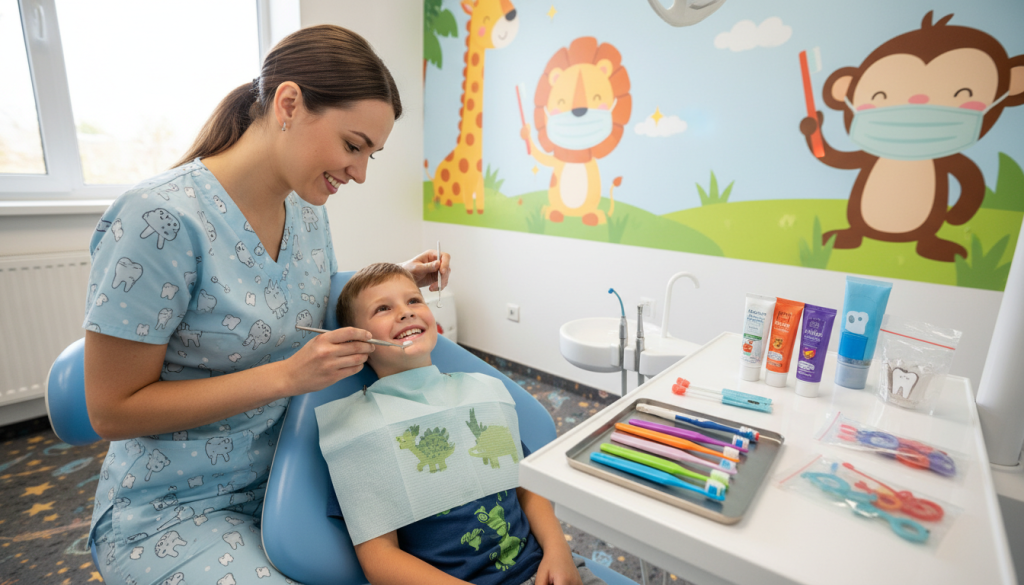
Welcome to our guide on Pediatric Periodontics, a field that focuses on your child’s gum health. We think early care is key to a lasting, healthy smile.
We work to prevent and treat gum problems in kids. This helps them avoid bigger issues later. Our team aims to give top-notch care that makes your child feel comfortable and ensures their long-term health.
We see every visit as a collaborative partnership with your family. We want to give you the knowledge to make smart choices about your child’s teeth. Working together, we can help your child have a lifetime of healthy, confident smiles.
Key Takeaways
- Early diagnosis of gum conditions prevents future dental complications.
- Professional care focuses on both prevention and gentle treatment methods.
- Building a collaborative relationship helps parents feel confident in their choices.
- Oral health in childhood serves as the foundation for adult dental wellness.
- Our team provides expert guidance tailored to your child’s unique developmental needs.
Understanding Pediatric Periodontics
Pediatric periodontics is a key part of dentistry that focuses on the teeth’s supporting structures. This includes the gums, bone, and ligaments that keep teeth in place. Keeping children’s gum health in check is critical for the growth of both baby and permanent teeth.
A healthy start is key for teeth to grow and line up right as kids get older. By focusing on children’s gum health, we protect their teeth’s future. Early action and regular care lead to the best results for their health.
We use our expertise in a caring way to make sure kids feel at ease. We aim to make every visit a positive experience. This way, kids develop good feelings about dental visits that last forever.
Anatomy of Children’s Gums and Supporting Tissues
Looking into the periodontium shows how children’s gum health changes as they grow. The periodontium is a special system of hard and soft tissues that holds teeth in place. In kids, these tissues are always changing to help with growth.
Children’s gums are different from adults’. They might look redder or feel softer. This is because kids have more vascularity, or blood vessels, to support their fast-growing mouths.
Knowing about these tissues helps parents spot when something’s off. Kids’ gums are thinner and more sensitive, so they react differently to problems. Keeping an eye on children’s gum health is key.
The table below shows the main differences between kids’ and adults’ gums. It helps you know what’s normal for your child’s gums.
| Feature | Pediatric Gingiva | Adult Gingiva |
|---|---|---|
| Color | More reddish/vascular | Pale pink |
| Texture | Softer and thinner | Firm and stippled |
| Attachment | Dynamic/Changing | Stable/Mature |
| Blood Supply | High vascularity | Moderate vascularity |
By watching these signs, we can help keep kids’ smiles healthy for years. Regular dentist visits are important. They help catch any gum problems early and keep teeth strong as they grow.
Common Signs of Gum Disease in Kids
Parents often miss small changes in a child’s mouth. These can be the first signs of gum disease in kids. It’s a common myth that only adults get gum problems. But kids can get them too. Spotting these signs early helps fix your child’s mouth health fast.
Persistent bad breath is a big clue. It means bacteria are hiding along the gumline. If your child’s gums look bright red or swollen, not the usual pink, it’s a warning. Bleeding when brushing or flossing means the gums are upset and need a doctor’s help.
Spotting problems early is key to good dental care for kids. By keeping an eye out, we can stop small issues from getting worse. This helps your child’s teeth stay strong for years to come.
| Symptom | What It Indicates | Recommended Action |
|---|---|---|
| Bleeding Gums | Active inflammation | Schedule a dental exam |
| Persistent Bad Breath | Bacterial buildup | Improve flossing habits |
| Swollen/Red Tissue | Early gum disease in kids | Professional cleaning |
| Gum Recession | Advanced tissue loss | Consult a specialist |
The Role of Genetics in Juvenile Gum Health
Daily brushing is key, but genetics also play a role in a child’s gum health. Some kids might face more gum inflammation, even with good habits. Understanding these hereditary factors is important for juvenile gum care.
Genetics affect how a child’s immune system fights mouth bacteria. If a parent had gum disease, their child might be more at risk. This doesn’t mean gum disease is certain, but knowing it early helps prevent it.
Families with dental history should be proactive about their child’s health. Working with a pediatric dentist helps create a personalized juvenile gum care plan. This might include more frequent cleanings or special gum checks.
Being watchful helps catch problems early. Your partnership with our clinical team ensures your child gets the right care. We’re here to guide you through these genetic factors with confidence.
Impact of Oral Hygiene Habits on Pediatric Gum Health
Good oral health starts with simple daily habits at home. Keeping up with these habits is key to your child’s dental health. It helps prevent gum problems.
Plaque, a sticky film of bacteria, forms on teeth all the time. If not cleaned off, it can make gums red and swollen. Teaching your child to remove this buildup is a vital step in their journey toward independence.
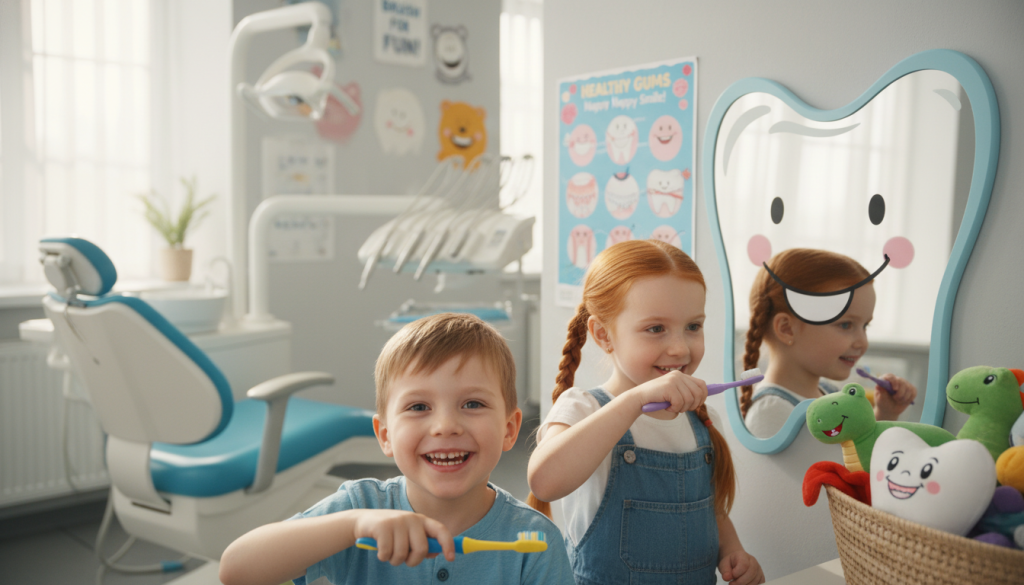
Good kids’ oral health means knowing how to brush and floss right. Use a soft-bristled toothbrush to clean along the gum line. Flossing is also important to clean between teeth.
| Habit | Frequency | Primary Benefit |
|---|---|---|
| Brushing | Twice Daily | Removes surface plaque |
| Flossing | Once Daily | Cleans between teeth |
| Rinsing | As Needed | Flushes away debris |
Teaching your child about oral hygiene is very important. When parents and kids work together, they can fight off harmful bacteria. This care today means a healthier smile for your child tomorrow.
Gingivitis in Children: Causes and Early Intervention
Many parents are surprised to learn that gum disease in kids can start even at a very young age. It’s not just for adults. When caught early, this condition is often entirely reversible.
The main cause of gingivitis in children is plaque. This is a sticky film of bacteria that forms on teeth. If not brushed away, it irritates the gums, causing redness, swelling, and bleeding.
We think early intervention is key to stopping gum disease. By acting fast, we can get the gums back to health. Consistent oral hygiene is the main way to do this.
To fight gum disease in kids, there are simple steps at home. Make sure your child brushes twice a day with fluoride toothpaste. Also, floss regularly to clean between teeth. If bleeding or sensitivity persists, get a professional check-up to keep your child’s smile bright.
Aggressive Periodontitis in Adolescents
Aggressive periodontitis is a serious gum disease that needs quick attention. It’s not common but can happen fast in teens. Early intervention is key to keeping a young person’s smile healthy.
This disease makes gums and bone around teeth fall off quickly. It’s different from regular gum disease, even if you brush well. Regular dental check-ups are vital to catch it early.
We look for signs of this disease in teens. Watch for teeth moving or gums bleeding without reason. If you see these signs, specialized dental care is needed to fix the problem.
| Feature | Healthy Gums | Aggressive Periodontitis |
|---|---|---|
| Gum Color | Firm and pink | Red or swollen |
| Attachment | Strong and stable | Rapid loss of support |
| Bone Health | Intact density | Visible bone reduction |
| Progression | Stable | Fast and destructive |
Keeping a teen’s smile strong is our main goal. We use advanced dental tools and quick action to stop the disease. We urge families to make dental visits a regular part of their routine.
Diagnostic Procedures for Pediatric Gum Conditions
Our approach to checking gum health in kids is both detailed and gentle. We know that accurate diagnosis is the key to treating young patients well. Spotting problems early helps us guide them toward better oral health for life.
First, we do a full check-up to see how the gums are doing. We look for signs like swelling, color changes, or unusual textures. We do this with a reassuring touch to make sure the child feels at ease.
To really understand the gums, we might do periodontal probing. This uses a small tool to measure the space between the tooth and gum. We track these measurements to see if the gums are attached well to the teeth.
For a closer look, we use digital imaging. These tools help us see bone levels and find hidden problems. Digital imaging is safe and quick, giving us the info we need to make good decisions.
We always talk things through during visits. We explain what we’re doing in a way that kids and parents can understand. Our aim is to make the whole experience collaborative and positive for your family.
| Diagnostic Tool | Primary Purpose | Patient Experience |
|---|---|---|
| Clinical Exam | Visual health assessment | Gentle and non-invasive |
| Periodontal Probing | Measuring tissue attachment | Quick and precise |
| Digital Imaging | Evaluating bone structure | Fast and low-radiation |
Pediatric Dental Cleanings and Professional Maintenance
Pediatric dental cleanings are key to fighting off harmful substances on teeth. Kids often can’t reach all parts of their teeth, even with good brushing. This can cause hardened plaque, or tartar, which needs special tools to remove.
At a professional visit, we do a deep clean to get rid of these tough deposits. This is crucial for stopping inflammation and keeping gums healthy. We also check your child’s gum health for any signs of trouble.
These regular visits help us watch your child’s teeth grow. We teach you and your child how to keep their smile bright. By making these cleanings part of your routine, you’re helping your child stay healthy and confident for years to come.
Non-Surgical Gum Treatments for Children
When kids get gum inflammation, we focus on gentle, non-surgical care. Our main goal is to fight off bacteria without surgery. Choosing a pediatric gum treatment helps manage early disease signs in a way that’s good for your child.
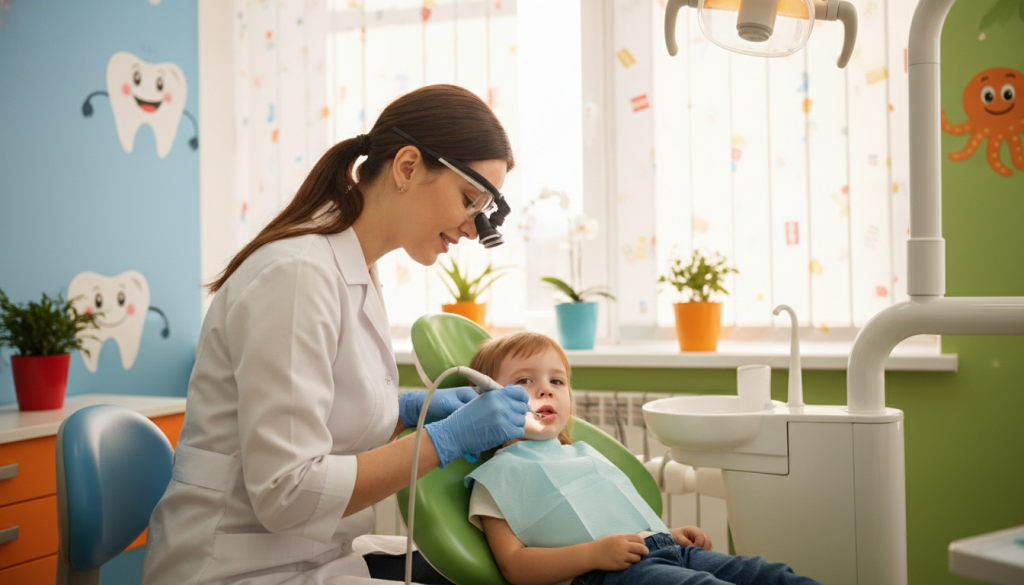
Scaling and root planing is a common treatment we do. It’s a deep clean that gets rid of plaque and tartar below the gum line. We know dental visits can be scary, so we make sure your child is safe and calm during the treatment.
We work hard to build trust with our young patients. This helps them feel comfortable during the pediatric gum treatment. By smoothing the roots, we help the gums stick to the teeth better. This stops further irritation and keeps your child’s smile healthy for a long time.
Surgical Interventions for Severe Gum Issues
We always try to avoid surgery first. But sometimes, it’s the best way to fix serious gum problems in kids. When other treatments don’t work, a pediatric gum treatment is needed to fix their teeth.
Our main goal is to make sure every child gets the care they need. We focus on making sure they are comfortable and can chew well again. This way, we fix the real problems.
Some surgeries include removing extra gum tissue and grafting new tissue. A gingivectomy removes extra gum caused by some medicines or braces. Tissue grafting helps fix gum recession, protecting the tooth and making it stable.
Thinking about surgery can be scary for families. Our team explains everything, from why it’s needed to how long it takes to heal. Informed parents are empowered partners in their child’s healing journey.
Healing well is key after any surgery. We give clear instructions to help your child heal at home. Choosing the right surgery at the right time helps your child have a healthy smile for years to come.
Managing Systemic Health Conditions Affecting Gum Tissue
We know that a child’s health and their mouth are closely linked. Conditions like diabetes or puberty changes can affect their gums. This makes proactive juvenile gum care key for kids with health issues.
Systemic inflammation can make gums more sensitive and prone to infection. We see this as a partnership between dental teams, kids, and doctors. By working together, we cover all health bases.
Our team creates a plan that helps with both health and oral care. We work with doctors to see how treatments affect the mouth. This approach is vital for juvenile gum care, helping kids stay healthy.
We teach families to watch for signs of gum inflammation. Keeping in touch with your child’s health team is important. Your child’s health is our top priority, and we’re here to help.
Nutritional Strategies for Healthy Gums in Children
We think a balanced diet is key for kids’ oral health. It does more than just give energy. It also helps keep gums strong and the immune system ready to fight off sickness.
When kids eat whole foods, they can better fight off bad bacteria. But, too much sugar can make gums get sick sooner.
To keep gums healthy, focus on vitamins. Vitamin C helps make collagen, which keeps gums firm. Vitamin D is important for strong teeth and bones.
Choosing healthy foods at home is a great way to help your child. Avoid sugary snacks and choose foods full of nutrients. This helps your child have a healthy smile for years to come.
| Nutrient | Primary Benefit | Food Sources |
|---|---|---|
| Vitamin C | Supports collagen and gum tissue | Oranges, strawberries, bell peppers |
| Vitamin D | Strengthens bone and oral immunity | Fortified milk, eggs, fatty fish |
| Calcium | Promotes strong teeth and jaw bone | Yogurt, cheese, leafy greens |
| Fiber | Stimulates saliva for kids’ oral health | Apples, carrots, celery |
Orthodontics and Its Relationship to Gum Health
Braces make smiles beautiful, but they can make gum health for children harder to keep. The brackets, wires, and bands create spots for food and plaque to hide. If not cleaned, this can cause pain and swelling during treatment.
Parents should teach their kids specialized cleaning techniques. Using interdental brushes, water flossers, and orthodontic-friendly floss is key. These tools help clean areas a regular toothbrush can’t reach, keeping the gums safe.
Keeping gum health for children good during orthodontics means more dentist visits. Regular check-ups help us see how the gums react to the teeth moving. We can also do deep cleanings to get rid of tough plaque around the braces.
We aim to make sure orthodontics doesn’t hurt the gums. By working together, we can keep your child’s mouth healthy and comfortable during treatment. Taking care of gum health for children means their smile will be not just straight, but also healthy and bright.
When to Consult a Pediatric Periodontist
It’s important to know when to seek specialized care for your child’s oral health. Your family dentist handles routine cleanings and check-ups. But, some gum issues need the expertise of a Pediatric Periodontist. Early detection of gum problems is key to a healthy smile.
Look for signs like frequent bleeding when brushing, gums pulling away from teeth, or bad breath that won’t go away. If your dentist is worried about your child’s gums, getting a specialist’s opinion is a smart move.
Our team is ready to offer a second opinion or create a specialized treatment plan for your child. We know dental health can be confusing. We’re here to help and provide the right care. By focusing on Pediatric Periodontics, we can tackle problems early and prevent bigger issues.
Here’s a table showing when to see a specialist to protect your child’s teeth and gums.
| Symptom or Condition | Potential Concern | Recommended Action |
|---|---|---|
| Persistent gum bleeding | Early-stage inflammation | Schedule a professional exam |
| Visible gum recession | Loss of attachment | Consult a specialist immediately |
| General dentist referral | Complex periodontal needs | Book a specialized assessment |
| Chronic bad breath | Bacterial buildup | Request a diagnostic evaluation |
Conclusion
Keeping your child’s gum health in check is a big deal for their future. It helps them feel good about themselves for years to come.
Join forces with the experts at Acıbadem Healthcare Group to safeguard your child’s smile. Our team offers top-notch care at every stage. We aim to equip your family with the tools to keep your child’s gums healthy.
Regular dental visits and early action can stop problems before they start. Contact our clinic to book a consultation. We’re excited to help your family achieve lasting oral health.
FAQ
Q: What is Pediatric Periodontics and why is it important?
A: Pediatric Periodontics is a special branch of dentistry. It focuses on the health of a child’s teeth and gums. At Acıbadem Healthcare Group, we stress this area because it’s key for kids’ teeth to grow right.
By catching problems early, we help kids have healthy teeth for life.
Q: What are the common signs of gum disease in kids?
A: Spotting gum disease in kids is key to stopping it. Look for bad breath, red or swollen gums, and bleeding when brushing. If you see these signs, get your child checked right away.
Q: Can genetics affect my child’s gum health?
A: Yes, genetics play a big part in juvenile gum care. Daily cleaning is important, but genes can affect how well gums fight off plaque. Families with a history of gum problems should watch closely and get help early.
Q: What is gingivitis in children and can it be reversed?
A: Gingivitis in children is a gum inflammation that can be fixed. It’s caused by plaque buildup. With better brushing and pediatric dental cleanings, it can go away, making gums healthy again.
Q: How do pediatric dental cleanings differ from at-home care?
A: Daily brushing and flossing are key for kids’ oral health. But, pediatric dental cleanings remove tough plaque that brushing can’t. We also check how teeth are coming in during these visits.
Q: What are the non-surgical pediatric gum treatment options?
A: For gum inflammation, we use non-surgical pediatric gum treatment. The most common is scaling and root planing. This deep clean removes harmful bacteria. We do it gently to make sure kids are comfortable.
Q: What is aggressive periodontitis in adolescents?
A: Aggressive periodontitis is a fast-moving gum disease in teens. It can quickly damage gums and bone. We stress regular check-ups to catch it early and save their smile.
Q: How does orthodontic treatment affect gum health for children?
A: Orthodontic treatments can make it harder to keep gums healthy. Braces trap food and plaque. We teach special cleaning methods and may need to see them more often to keep gums healthy.
Q: Can systemic health conditions impact a child’s gums?
A: Yes, conditions like diabetes can hurt juvenile gum care. We work with other doctors at Acıbadem Healthcare Group to help kids with health issues. This way, we protect their gums and overall health.
Q: What role does nutrition play in maintaining healthy gums?
A: Good nutrition is key for strong gums. We suggest a diet full of Vitamins C and D for immune and bone health. Eating less sugar and acidic foods also helps prevent gum problems.
Q: When should I consult a specialist in Pediatric Periodontics?
A: See a specialist if you notice bleeding, receding gums, or if your dentist finds problems. Our team is ready to help with any pediatric gum treatment your child needs.