





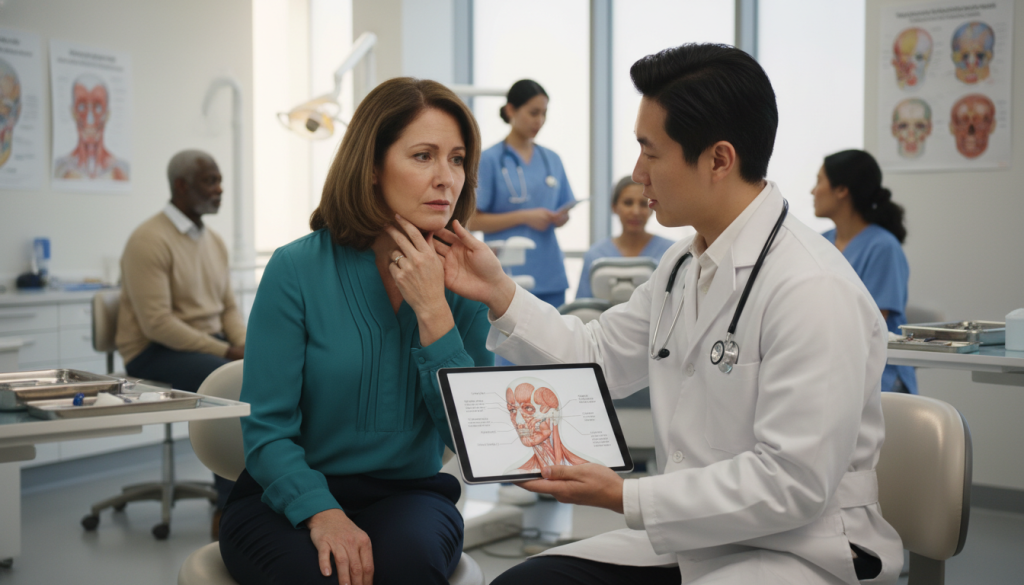
Dealing with discomfort in the head, face, and neck can be overwhelming. Orofacial Pain is a complex health issue. It often needs a multidisciplinary approach to get a correct diagnosis.
Managing this condition requires specialized care because it involves many anatomical structures. Our aim is to give you the basic knowledge. This will help you navigate your healthcare journey with confidence and clarity.
Learning about this condition is the first step towards relief. We’re here to help you understand your symptoms. We want to improve your quality of life with informed medical guidance.
Key Takeaways
- This condition affects the complex structures of the head, face, and neck.
- A multidisciplinary approach is essential for successful long-term management.
- Early diagnosis helps in creating a personalized and effective treatment plan.
- Patient education is a vital component of the recovery process.
- We prioritize your comfort and clarity throughout every stage of care.
Understanding Orofacial Pain
We define orofacial pain syndrome as a wide range of conditions affecting the face’s sensory and motor systems. This includes everything from simple toothaches to complex nerve problems. The face’s dense network of nerves and muscles makes diagnosis a specialized task.
Symptoms often come from different causes. These can be simple dental problems or complex neurological issues. Identifying the specific source of your discomfort is key in our evaluation process.
We sort these symptoms to create personalized treatment plans for each patient. By understanding the nature of your pain, we can target the root cause, not just the symptoms. Our aim is to give you clear relief and a structured, evidence-based assessment.
Anatomy and Physiology of the Facial Region
The human face is a marvel of biological engineering. It houses a complex network that can sometimes cause discomfort. This region has bones, muscles, nerves, and blood vessels working together.
When this system is disrupted, it often shows as facial pain. Without understanding the underlying structures, it can be hard to pinpoint the source.
The trigeminal nerve is at the heart of this system. It’s the largest cranial nerve and the main sensory pathway for the face. It sends important information about touch, temperature, and pressure to the brain.
Because this nerve branches into three areas, it’s often the key player in facial pain.
Understanding the anatomy helps patients see why pain can seem to come from nowhere. For example, pain in the jaw or neck can feel like it’s in the cheek or temple. This happens because nerve pathways overlap, confusing the brain about where the pain is coming from.
We want to make these complex concepts easier to understand. This way, you can better tell our medical team about your facial pain. By knowing exactly where the pain is, we can create a more accurate treatment plan. Clear communication between you and your provider is key to getting you comfortable again.
Common Causes of Orofacial Pain
Understanding why you feel pain in your face is key to finding relief. Many things can cause facial pain. By looking at these causes, we can find what’s bothering you.
We divide these causes into dental, muscular, neurological, and joint-related problems. This helps us figure out if your pain comes from a tooth, nerve, or muscle. Knowing the source is important for treating it right.
Jaw pain is a common problem we see. It can be caused by stress, injury, or health issues. When you have jaw pain, it means your body is under a lot of stress.
How we live affects our pain too. Bad posture, grinding teeth, or not eating well can make pain worse. Watching when your pain gets worse helps your doctor help you.
| Category | Primary Symptoms | Common Triggers |
|---|---|---|
| Dental | Tooth sensitivity, gum swelling | Infection, decay, trauma |
| Muscular | Jaw pain, muscle fatigue | Stress, clenching, poor posture |
| Neurological | Sharp, electric-like shocks | Nerve compression, inflammation |
| Joint-Related | Clicking, locking, limited motion | Arthritis, disc displacement |
Temporomandibular Joint (TMJ) Disorders
Understanding TMJ disorder is key to easing facial pain. The temporomandibular joint is a complex hinge. It connects your jaw to your skull, making it easy to speak, chew, and yawn.
When this joint goes wrong, you might feel clicking, popping, or locking. Many people also get jaw pain that comes and goes. This pain often happens during meals or when you’re stressed.
Temporomandibular joint pain needs a careful check to find the cause. Our team uses gentle methods to fix the joint. We aim to ease your pain without surgery.
The table below shows signs and what might be causing them:
| Symptom | Potential Origin | Clinical Focus |
|---|---|---|
| Jaw Clicking | Structural/Disc Displacement | Joint Alignment |
| Muscle Soreness | Myofascial/Muscular Tension | Physical Therapy |
| Limited Opening | Structural/Inflammatory | Range of Motion |
| Ear/Temple Pain | Referred Pain | Neuromuscular Evaluation |
We focus on gentle care to improve your life. Early treatment stops serious problems. It keeps your jaw working well for a long time.
Trigeminal Neuralgia and Neuropathic Pain
Patients often tell us about sudden, electric-shock feelings in their face. We look into trigeminal neuralgia when they do. This pain is different from usual muscle aches. It comes in brief, intense waves, even from simple things like brushing teeth or eating.
This pain comes from the trigeminal nerve being irritated or compressed. This nerve handles face sensations. Even a little pressure can cause debilitating episodes. We use special MRI scans to find where the nerve is being pressed.
Dealing with chronic facial pain needs a special approach. It’s not just about dental or muscle issues. We know how hard it can be to deal with these symptoms. Our goal is to help you understand what’s going on and find a care plan that works for you.
We’re all about finding new ways to help you feel better. We use special medicines and sometimes advanced treatments. Your comfort is our priority as we work through these tough challenges together.
If you’re having ongoing or sharp facial pain, you need to see a professional. It’s important to tell the difference between muscle pain and trigeminal neuralgia. We’re here to help you find relief and live without pain, with expert advice and care.
Dental-Related Facial Pain
Do you sometimes feel facial pain without knowing why? It might be related to your teeth. Pain in your jaw or cheeks could be coming from your teeth or the structures around them. This is because the nerves in your face are connected, making pain spread easily.
Pulpitis, or inflammation of the tooth pulp, can cause a lot of pain. So can deep abscesses. Advanced periodontal disease also leads to deep, aching pain. This dental facial pain is often mistaken for sinus problems or nerve issues, causing frustration.
We think a thorough oral examination is key to finding the cause of your pain. By checking your teeth and gums, we can usually find the source of your symptoms. This way, we avoid wrong diagnoses and give you the right treatment.
| Condition | Primary Symptom | Pain Distribution |
|---|---|---|
| Pulpitis | Sharp, throbbing toothache | Localized to jaw/temple |
| Dental Abscess | Constant, intense pressure | Radiates to cheek/neck |
| Periodontal Disease | Dull, persistent ache | General jaw discomfort |
We team up with dental specialists to tackle any oral health problems quickly. This teamwork is key to managing dental facial pain well. By combining dental knowledge with our exams, we aim to give you lasting relief from facial pain.
Musculoskeletal and Myofascial Pain
Chronic facial pain often comes from tight spots in the head and neck muscles. These spots, or trigger points, can cause pain in other areas. When these muscles stay tight, it can be very painful.
Facial muscle pain often starts in the masseter or temporalis muscles. These muscles help us chew and move our jaws. If they get too tense, they can hurt and spread pain across the face.
Actions like grinding your teeth at night can cause this pain. These actions keep the muscles tight, not letting them relax. This leads to persistent discomfort.
To tackle chronic facial pain, we need a full plan. We suggest physical therapy, massage, and special exercises. These help relax the muscles and keep pain away.
| Muscle Group | Common Trigger | Primary Symptom |
|---|---|---|
| Masseter | Jaw Clenching | Deep cheek aching |
| Temporalis | Teeth Grinding | Temple-based headaches |
| Pterygoid | Stress/Tension | Ear or joint pain |
We want to help you spot these pain causes early. By working on facial muscle pain with care and advice, you can feel better. This will improve your life a lot.
Diagnostic Procedures and Clinical Evaluation
We believe that an accurate diagnosis is the essential foundation for any effective treatment plan. When you present with symptoms of an orofacial pain syndrome, our primary goal is to identify the specific source of your discomfort. We do this through a structured and compassionate clinical process.
Our evaluation starts with a detailed patient history. We listen closely to your experiences, noting the frequency, intensity, and triggers of your pain. This narrative provides us with vital clues that guide the rest of our investigation.
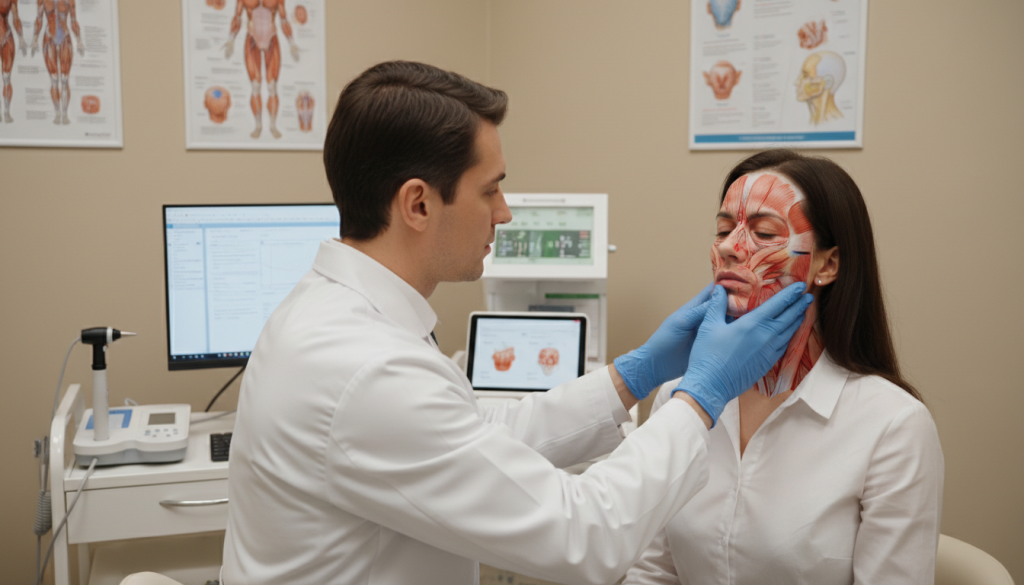
Next, we conduct a thorough physical examination of the head, neck, and jaw structures. We may also use advanced imaging techniques, such as MRI or CT scans, to visualize deep tissues and joints. These tools help us rule out structural abnormalities and confirm the presence of an orofacial pain syndrome with high precision.
By gathering this data, we can create a tailored care plan that addresses your unique physiological needs. We ensure that every step of this process remains comfortable and transparent. We keep you informed throughout your journey to recovery.
| Diagnostic Tool | Primary Purpose | Clinical Benefit |
|---|---|---|
| Patient History | Symptom Mapping | Identifies pain triggers |
| Physical Exam | Structural Assessment | Detects muscle tenderness |
| MRI Imaging | Soft Tissue View | Visualizes joint discs |
| CT Scan | Bone Analysis | Checks for orofacial pain syndrome |
Conservative Management Strategies
We think the best way to get better starts with gentle management. Our team uses non-surgical methods as the first line of defense against pain. These methods help reduce swelling and heal naturally, avoiding surgery.
For those with a TMJ disorder, we suggest a mix of therapies. We might recommend custom oral splints to protect your teeth and ease jaw strain. Physical therapy is also key, helping to loosen up face and neck muscles.
Changing your habits is also important for lasting success. We help you spot habits like teeth grinding that make your TMJ disorder worse. Knowing these triggers lets you control your symptoms every day.
Teaching you to manage your health is our goal. We see ourselves as your health partners, guiding you to lasting relief. Using these methods consistently can greatly improve your life quality.
Pharmacological Interventions
Medications can help when you’re dealing with facial pain that won’t go away. We use special drugs to tackle the root causes of long-term facial pain. Our team focuses on proven methods to help you manage your daily life better.
For those with trigeminal neuralgia, we often recommend certain medications. These drugs help control the pain signals from the trigeminal nerve. This can make the sharp, sudden pain episodes less intense.
We watch how these drugs work closely to make sure they’re effective but not too harsh. We aim to find the right amount of medication that helps a lot but doesn’t harm you. Regular check-ups let us tweak your treatment as needed.
| Medication Class | Primary Use | Common Examples |
|---|---|---|
| Anticonvulsants | Trigeminal neuralgia | Carbamazepine, Gabapentin |
| Tricyclic Antidepressants | Neuropathic pain | Amitriptyline, Nortriptyline |
| Muscle Relaxants | Myofascial pain | Cyclobenzaprine, Tizanidine |
| NSAIDs | Inflammatory pain | Ibuprofen, Naproxen |
Surgical and Advanced Therapeutic Options
When simple treatments don’t work, we look into more advanced surgical options for facial pain. We know how hard it is to live with ongoing pain. Our goal is to help you get back to a better life with evidence-based care.
For serious temporomandibular joint pain, we might talk about special procedures. Arthrocentesis is one, which cleans the joint to lessen swelling and boost movement. In very tough cases, we might suggest joint replacement surgery as a last resort to keep the joint working well.
We make sure every surgery suggestion is supported by solid research. You should know what to expect and how you’ll recover before deciding. Our team is here to help you every step of the way, making sure you’re informed and secure.
Deciding on surgery is a big choice that needs careful thought. We’ll work with you to consider the good and bad sides, making sure your treatment fits your health goals. Your comfort and long-term health are our highest priority as we help you manage temporomandibular joint pain.
Lifestyle Modifications and Self-Care
We think that taking care of yourself is key to feeling better for a long time. Simple daily habits can really help with facial muscle pain and make you feel more comfortable. By making smart choices, you can help your body heal and do well.
Stress can make you clench your teeth without even realizing it. We suggest trying stress-reduction techniques like mindfulness or deep breathing. Also, gently stretching your neck and shoulders can stop muscle tension from getting worse.

Changing what you eat can also help your jaw and face. Try to avoid hard, crunchy, or chewy foods that make you chew hard. Eating softer foods lets your muscles relax and heal, which is important when you have facial muscle pain.
Making your workspace better can also help a lot. If you work at a desk, make sure your monitor is at eye level. This stops you from leaning forward, which can hurt your jaw. Keeping your spine straight and shoulders relaxed also helps avoid extra strain.
These self-care steps are a big part of our plan for your health. By using these tips, you can take charge of facial muscle pain. We’re here to help you create a routine that focuses on your health and comfort.
When to Seek Professional Medical Help
Spotting early signs of complex facial issues can greatly help your health. Minor pains might go away by themselves. But, if you have dental facial pain that doesn’t stop, it’s a sign you need a doctor.
Keep an eye on your symptoms and see a doctor if they get worse. Your health and comfort are our primary focus. We’re here to help you through these tough times.
Don’t wait if you see swelling in your jaw or face. Or if you feel numbness or tingling. These signs might mean you have a serious problem that needs early detection and intervention.
Taking care of dental facial pain early can make a big difference. We’re here to support you every step of the way. We make sure you get the care you need to feel better.
Conclusion
Managing orofacial pain is a team effort between you and your doctors. We think informed patients make the best choices for their health.
Acıbadem Healthcare Group is committed to helping you. Our experts work with you to find the cause of your pain. Then, they create a care plan just for you.
By staying active in your care, you can improve your life. Talking regularly with your doctors keeps your treatment on track.
If you’re dealing with ongoing pain, contact our clinics. Early action often leads to better results for complex orofacial pain.
Your path to a pain-free life begins with one step. We’re here to support your health goals every day.
FAQ
Q: What exactly is orofacial pain and how is it managed?
A: Orofacial pain is discomfort in the head, face, and neck. At Acıbadem Healthcare Group, we manage it with a team approach. We aim to empower you with knowledge to improve your life.
Q: What are the primary causes of orofacial pain syndrome?
A: Orofacial pain comes from dental, muscular, and neurological issues. Finding the source is key to our treatment. We create plans tailored to each patient.
Q: How does the trigeminal nerve influence facial pain?
A: The trigeminal nerve is key for face sensations. It can send pain signals from other areas. Understanding this helps us better diagnose and treat facial pain.
Q: What are the most common causes of persistent jaw pain?
A: Jaw pain often comes from stress, trauma, or health issues. We look at dental, muscular, neurological, and joint causes. This helps us understand how lifestyle and health affect pain.
Q: What are the common symptoms of a TMJ disorder?
A: TMJ disorder affects the jaw joint, causing clicking, locking, or soreness. We assess if it’s muscular or structural. This helps us find the best non-invasive treatments.
Q: How is trigeminal neuralgia different from other types of chronic facial pain?
A: Trigeminal neuralgia causes sudden, severe pain. It’s due to nerve irritation or compression. We use precise imaging and a targeted approach to treat it.
Q: Can dental issues cause pain that radiates throughout the face?
A: Yes, dental problems can cause facial pain. Issues like pulpitis or abscesses can spread pain. We include oral exams in our diagnostic process.
Q: What is the best way to manage facial muscle pain and myofascial triggers?
A: Facial muscle pain often comes from muscle tension. We use physical therapy, massage, and exercises to help. Our goal is to restore muscle balance.
Q: How do you accurately diagnose orofacial pain syndrome?
A: Accurate diagnosis is key. We use patient histories, physical exams, and imaging like MRI or CT scans. This ensures a detailed care plan for you.
Q: What conservative treatments are available for TMJ disorder?
A: We start with non-surgical treatments. For TMJ disorder, we might suggest oral splints, physical therapy, or behavioral changes. These help reduce inflammation and promote healing.
Q: What medications are typically prescribed for trigeminal neuralgia?
A: For trigeminal neuralgia, we use specific medications. We monitor these closely to ensure they work well without harming you.
Q: When should I consider surgery for temporomandibular joint pain?
A: Surgery is a last resort. For severe TMJ pain, we might discuss arthrocentesis or joint replacement. We explain the expected outcomes clearly.
Q: What lifestyle changes can help reduce facial muscle pain?
A: Lifestyle changes are important. We suggest stress reduction, stretching, and ergonomic changes. These can help prevent muscle tension.
Q: What are the warning signs that I should seek professional help for facial pain?
A: Seek help for persistent pain, swelling, or sudden changes. Early treatment is key to preventing chronic pain. We’re here to help.
Q: Why is a partnership between the patient and the medical team important?
A: Managing orofacial pain is a team effort. By being informed and proactive, you can manage your health. We’re committed to your well-being.