

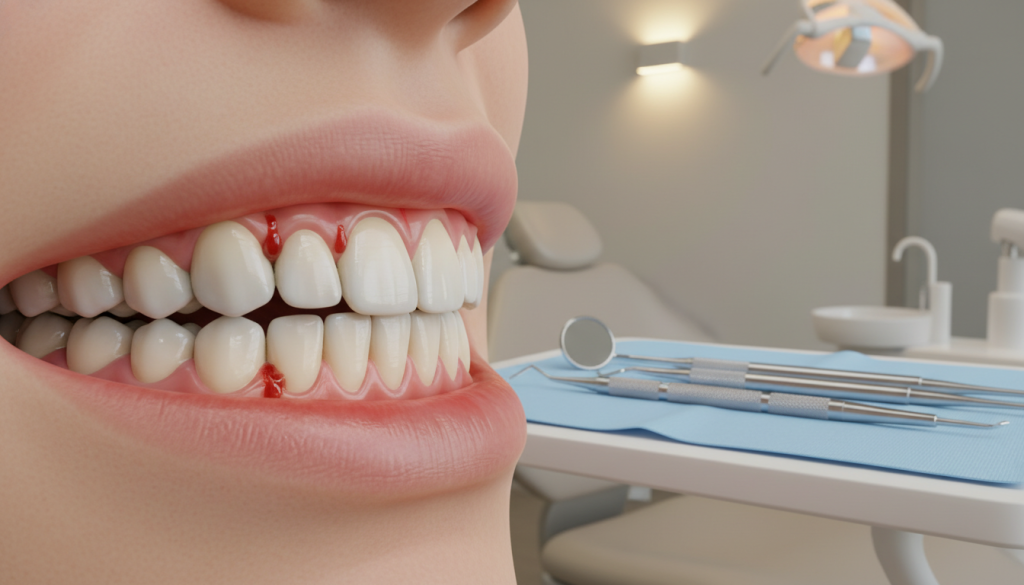
Keeping your mouth healthy is key to your overall health. Seeing Bleeding Gums can be scary or worrying. But, it’s a common issue for many.
We’re here to support you on your health journey. We want to help you feel better about your dental care.
This symptom means your body might need some extra care. But, it’s usually something you can handle. We aim to give you the info you need to understand your mouth better.
Knowing why your gums bleed can help you take better care of them. We think knowing more about your dental health can make you feel more confident and happy.
Key Takeaways
- Oral health is a fundamental pillar of your general physical wellness.
- Seeing blood while brushing is a common symptom that often requires professional attention.
- We act as your collaborative partner to help you navigate dental concerns with clarity.
- Most cases of oral irritation are highly manageable with the right guidance and care.
- Empowering yourself with clinical knowledge leads to better long-term health outcomes.
Understanding the Anatomy of Healthy Gums
Your gums are more than just a frame for your teeth; they are vital for your health. To keep your gums healthy, we need to understand the periodontium. This system includes the gingiva, the periodontal ligament, and the alveolar bone. They work together to keep your teeth in place.
The gingiva, or gum tissue, protects the base of each tooth. When your gums are healthy, they look firm and pale pink. They fit tightly around the tooth, stopping bacteria from getting to the sensitive parts underneath.
Knowing about these parts helps you spot problems early. Healthy Gums don’t bleed when you brush or floss. They also don’t look swollen or bright red. By noticing these signs, you can act fast to protect your smile.
| Feature | Healthy State | Warning Sign |
|---|---|---|
| Color | Pale Pink | Bright Red |
| Texture | Firm | Soft or Puffy |
| Attachment | Tight Seal | Receding Gums |
Common Causes of Bleeding Gums
Your gums protect your teeth, and bleeding is a warning sign. It’s not just a minor issue. It often means there’s a problem that needs your attention. Knowing what causes it is the first step to better oral health.
Most often, it’s because of plaque along the gumline. Plaque is a sticky film of bacteria that forms on teeth. If you don’t brush and floss well, it turns into tartar, which hurts your gums.
Plaque buildup makes your gums swell, become tender, and weak. This makes them bleed easily when you brush or floss, even with a soft brush.
Seeing bleeding gums as a sign of inflammation is key. By fighting bacteria buildup, you can stop the irritation. This can prevent bigger dental problems. Watch for these signs closely, as they tell you a lot about your health.
The Connection Between Oral Hygiene and Gum Bleeding
Keeping your mouth clean is the best way to stop Gum Bleeding. Skipping brushing or flossing lets food and bacteria stay. They form plaque, a sticky film that clings to teeth and gums.
Plaque turns into tartar if not cleaned off. Tartar is hard and can’t be brushed away. It irritates the gums, causing persistent inflammation and pain.
Patients who brush and floss regularly see big health improvements. Use a soft toothbrush and gentle, circular motions. This way, you clean without hurting your gums. Consistency is the key to stopping early gum problems.
Flossing is as important as brushing. It gets into tight spaces between teeth. Removing bacteria from these spots stops gum irritation.
If your gums are sore or bleed, try brushing better. Be thorough but gentle. Simple daily habits keep your smile healthy. Taking care of your mouth today stops Gum Bleeding and keeps your teeth healthy for years.
Systemic Health Conditions Linked to Gum Issues
We see the mouth as a mirror of your body’s health. Studies show that oral health is linked to your overall systemic wellbeing. If your gums bleed or feel sensitive, it could be a sign of bigger health problems.
Diabetes is closely tied to gum health. High blood sugar weakens your body’s fight against infections. This makes your gums more likely to get inflamed and bleed. Patients with controlled blood sugar levels tend to have healthier gums.
Cardiovascular disease also affects your gums. Gum inflammation can let bacteria into your blood, harming your heart. Good dental hygiene helps keep your heart healthy too.
Hormonal changes can make your gums more sensitive. This is true during pregnancy or puberty. Your gums may get red, swollen, or bleed more easily, even with regular brushing.
| Systemic Condition | Primary Oral Symptom | Underlying Mechanism | Clinical Focus |
|---|---|---|---|
| Diabetes | Persistent Bleeding | Impaired immune response | Blood sugar control |
| Heart Disease | Gum Inflammation | Systemic inflammatory load | Bacterial management |
| Pregnancy | Increased Sensitivity | Hormonal vascular changes | Enhanced oral hygiene |
| Autoimmune Issues | Tissue Irritation | Systemic immune dysregulation | Professional monitoring |
Understanding these links helps us offer better care for your whole health. We ask you to share your medical history with us. This way, we can tackle the real cause of your symptoms, not just the symptoms themselves.
Medications That May Contribute to Gum Sensitivity
Some medicines can make your gums more sensitive or prone to bleeding. These drugs are important for your overall health. But, they can change how your mouth reacts to things like plaque or bacteria.
Many people don’t know about these side effects. It’s crucial to remember that your body is one big system. Your mouth health is connected to your body’s health.

Medicines like blood thinners can make your blood less likely to clot. This means you might bleed more when your gums get irritated. Drugs for high blood pressure can also make your gums grow too much or get inflamed. This makes it easier for bleeding to happen when you brush or floss.
Remember, you should never stop or change your medication without talking to your doctor first. Your doctor can help you see if the good of the medicine outweighs the bad for your mouth. They might suggest ways to take care of your mouth better while you’re on these drugs.
| Medication Category | Common Purpose | Potential Oral Effect |
|---|---|---|
| Anticoagulants | Prevent blood clots | Increased bleeding tendency |
| Antihypertensives | Lower blood pressure | Gum tissue overgrowth |
| Immunosuppressants | Manage immune response | Increased risk of infection |
| Anticonvulsants | Control seizures | Gum inflammation sensitivity |
Talking regularly to your dentist and doctor is key to keeping your smile bright. By staying informed, you can take steps to keep your gums healthy, even with medication.
Nutritional Deficiencies and Oral Health
A balanced diet is key for strong gums. Many people focus on cleaning their teeth, but what you eat matters too. What you eat every day affects how well your gums fight off irritation and injury.
Vitamins are very important, like Vitamin C and Vitamin K. Vitamin C helps make collagen, which is important for your gums. If you don’t get enough, your gums might get sore and bleed more.
Vitamin K helps your body stop bleeding. Without enough, your gums might bleed a lot, even from small injuries. Getting enough of these vitamins helps keep your mouth healthy.
Without these nutrients, your body can’t fight off infections well. This makes it hard for your gums to heal after daily wear and tear. Eating foods rich in nutrients helps keep your mouth healthy and your smile bright.
| Nutrient | Primary Function | Impact of Deficiency |
|---|---|---|
| Vitamin C | Collagen Synthesis | Weakened gum structure |
| Vitamin K | Blood Clotting | Increased bleeding risk |
| Calcium | Bone Density | Reduced jaw support |
Identifying Symptoms Beyond Bleeding
Your gums might be trying to tell you more than just about bleeding. While bleeding is a sign of inflammation, it’s not the only warning sign. There are other symptoms that can show your oral health is at risk.
It’s important to notice any small changes in your mouth. Early identification of these symptoms is key. It helps you catch and manage dental health problems early on.
Persistent bad breath, or halitosis, is a common warning sign. Even with regular brushing, bad breath can mean bacteria are hiding in deep gum pockets.
Watch for receding gumlines too. If your teeth look longer or more of the tooth root is showing, it’s a sign of a problem. This usually means the gums are pulling away from the teeth.
Tooth sensitivity is another sign. If your teeth hurt more when you eat hot or cold foods, it could mean your gums are not protecting them well. This happens when gums recede, exposing the tooth root.
These symptoms can mean your gum disease has gotten worse. Knowing these signs helps you see when you need to see a dentist.
| Symptom | Potential Meaning | Action Required |
|---|---|---|
| Persistent Bad Breath | Bacterial buildup | Schedule a cleaning |
| Receding Gums | Tissue loss | Consult a dentist |
| Tooth Sensitivity | Exposed roots | Use sensitive toothpaste |
By being alert, you can stop problems before they get worse. Your proactive approach is the best way to fight gum disease.
Professional Diagnosis and Dental Examinations
Getting Dental Care for Bleeding Gums is key to keeping your mouth healthy. If your gums bleed a lot, it might mean there’s a bigger problem. We do detailed checks to keep your smile bright and strong.
We use special tools to check your gum health. A periodontal probe measures the space between your teeth and gums. These precise measurements tell us if your gums are healthy or if they’re pulling away from your teeth.
Our exams help us tell if you have a simple gum issue or something more serious. Finding out early lets us make a plan just for you. Our team is here to give you a clear diagnosis and help you move forward.
Here’s what we look for during your dental check-up:
| Diagnostic Metric | Healthy Gums | Gingivitis/Periodontitis |
|---|---|---|
| Pocket Depth | 1-3 mm | 4 mm or greater |
| Tissue Color | Firm and Pink | Red or Swollen |
| Bleeding Tendency | None | Frequent/Spontaneous |
| Professional Focus | Preventative Care | Targeted Treatment |
We think knowing what’s going on is powerful. By understanding your exam results, you can help yourself get better. We’re here to support you with compassionate care and expert advice on your path to better oral health.
Effective Treatment for Bleeding Gums
Restoring your smile starts with clinical procedures to get rid of harmful bacteria. If you have Bleeding Gums, getting professional help is key to avoid more problems. We use proven methods to keep you comfortable and your mouth working well.
The main Treatment for Bleeding Gums is a deep cleaning called scaling and root planing. A dental expert carefully removes plaque and tartar from above and below the gumline. This meticulous cleaning is key to reduce inflammation and help the tissue heal.
After removing bacteria, the root surfaces are smoothed to prevent future buildup. This helps the gum tissue reattach to the tooth, stopping the bleeding. We aim to make your gums strong and resilient again.
We take a detailed and comforting approach for every patient. Knowing your Treatment for Bleeding Gums helps you manage your health. Together, we make sure your gums stay healthy and irritation-free.
Home Remedies and Natural Care Strategies
While seeing a dentist is key, you can also help at home. These Bleeding Gums Remedies support your dental care. Remember, they’re extra help, not a full replacement for dental visits.
A warm salt water rinse can soothe sore gums. It cuts down on bacteria and helps your gums heal. Doing this daily can help with minor soreness.

To stop bleeding gums at home, keep your hygiene gentle and consistent. Use a soft-bristled toothbrush to avoid hurting your gums. Brush in small circles to clean well without stressing your gums.
Good oral health also means watching your daily habits. Flossing and rinsing right are key for long-term gum health. Using these Bleeding Gums Remedies helps your gums heal better and keeps you healthy.
If you’re looking to stop bleeding gums, here are some easy steps to help your oral health.
| Strategy | Primary Benefit | Frequency |
|---|---|---|
| Warm Salt Water Rinse | Reduces inflammation | Twice daily |
| Soft-Bristled Brushing | Prevents tissue trauma | After every meal |
| Gentle Flossing | Removes hidden plaque | Once per day |
| Hydration | Maintains saliva flow | Throughout the day |
Lifestyle Adjustments to Prevent Gum Bleeding
A healthy body and a healthy mouth go hand in hand. Your lifestyle is key to this connection. While brushing and flossing are important, Prevention of Gum Bleeding also depends on your choices outside the bathroom. Focusing on overall wellness can greatly reduce oral inflammation risk.
Quitting tobacco is a big step towards better gum health. Smoking cuts off blood flow to the gums, hiding early disease signs. This reduced blood flow also slows down healing, making infections harder to recover from.
Managing stress is also critical in Prevention of Gum Bleeding. High stress weakens your immune system, making gums more susceptible to bacteria. When stressed, your body finds it harder to fight off inflammation that causes Gum Bleeding.
Living a balanced life helps keep your body’s defenses strong. Here’s a table showing how certain habits affect your gums:
| Lifestyle Factor | Impact on Gums | Recommended Action |
|---|---|---|
| Tobacco Use | Restricts blood flow | Complete cessation |
| Stress Levels | Increases inflammation | Daily relaxation techniques |
| Hydration | Reduces dry mouth | Drink water consistently |
| Sleep Quality | Supports immune function | Aim for 7-9 hours nightly |
See these changes as long-term investments in your health. By making these lifestyle shifts, you’re actively fighting Gum Bleeding. Your dedication to a healthier lifestyle will show in your gums’ strength and vitality for years.
Choosing the Right Dental Products
Learning how to stop bleeding gums starts with the right products. Many people face irritation from tools that are too harsh. This can harm their delicate oral tissues.
Switching to a soft-bristled toothbrush is a must. These brushes clean well without hurting your gums. They let your gums heal by being gentle.
Using a high-quality fluoride toothpaste is also key. Fluoride makes your enamel stronger. It’s a big part of keeping your gums healthy.
| Product Type | Recommended Feature | Primary Benefit |
|---|---|---|
| Toothbrush | Soft Bristles | Reduces Tissue Trauma |
| Toothpaste | Fluoride Formula | Strengthens Enamel |
| Floss | Waxed/Gentle | Cleans Between Teeth |
Our team is here to guide you through dental products. We want you to find the perfect match for your needs. This way, you can keep a healthy, bright smile for years.
When to Seek Emergency Dental Care
Knowing when to get Dental Care for Bleeding Gums is key. Minor irritation is normal, but some signs mean you need urgent care. Spotting these early can prevent a lot of pain and damage.
Get help right away if bleeding doesn’t stop after pressing for a few minutes. Swelling in the gums or face that comes out of nowhere is a sign of infection. Also, if you hit your mouth or get a deep cut, see your dentist fast.
Watch out for pain that keeps you awake or stops you from doing things. This is a sign you need Dental Care for Bleeding Gums fast. We care about your health and comfort. Getting help quickly is best for your smile.
Long-Term Maintenance for Healthy Gums
We believe that keeping your smile vibrant requires a partnership between you and your dental team. Achieving optimal Gum Health is a lifelong commitment. It thrives on consistent daily habits and professional oversight. By working together, we can ensure your oral tissues remain resilient for years to come.
Developing a routine is the foundation of maintaining Healthy Gums. This process involves more than just brushing; it requires a personalized strategy. We recommend scheduling regular cleanings to remove hidden plaque that standard brushing might miss.
Your personalized home care plan serves as a roadmap for success. We encourage you to monitor your mouth for subtle changes. Discuss them during your routine visits. This proactive communication is essential for preserving your Gum Health over the long term.
Consistency remains the most powerful tool in your dental arsenal. By prioritizing these preventative measures, you protect your smile against future complications. We are here to support your journey toward achieving and keeping Healthy Gums throughout every stage of your life.
Conclusion
Managing gum health is a journey that starts with awareness and daily habits. You can protect your smile by watching for early signs and getting expert help when needed.
We think informed patients make the best choices for their health. Combining regular dental visits with good home care is key to your health.
At Acıbadem Healthcare Group, we’re here to help you keep your mouth healthy. Our team supports you on your journey to better health and a brighter future.
Don’t wait to schedule a dental specialist consultation. Your effort in oral hygiene today will lead to a healthier, more confident you tomorrow.
FAQ
Q: What are the primary causes of bleeding gums during routine brushing?
A: Bacterial plaque buildup along the gumline is the main cause. If not removed, it causes inflammation. This makes gums weak and prone to bleeding. At Acıbadem Healthcare Group, we focus on early detection to improve gum health.
Q: How can I distinguish between healthy gums and those that are inflamed?
A: Healthy gums are firm and pale pink. They fit tightly around teeth. Swollen, red, or bleeding gums indicate inflammation or infection. Knowing the periodontium’s anatomy helps you spot when to seek dental care.
Q: Can inconsistent oral hygiene lead to permanent gum damage?
A: Yes, neglecting brushing and flossing lets plaque turn into tartar. This can’t be cleaned at home. It causes bleeding and may lead to serious gum disease. Regular, gentle cleaning is key to preventing damage.
Q: Are there systemic health conditions that impact gum health?
A: Oral health reflects overall health. Conditions like diabetes and heart disease can cause mouth sensitivity or bleeding. Managing these conditions is vital for gum health.
Q: Which medications might increase the likelihood of gum bleeding?
A: Blood thinners and high blood pressure meds can make gums more sensitive. If you’re on these, talk to your doctor at Acıbadem Healthcare Group. They can help adjust your treatment.
Q: How do nutritional deficiencies affect the prevention of gum bleeding?
A: A balanced diet is essential for oral health. Lack of Vitamin C and K weakens gums. Eating right is a key part of preventing bleeding gums.
Q: What symptoms should I look for beside bleeding?
A: Watch for bad breath, receding gums, or sudden tooth sensitivity. These signs suggest gum disease has worsened. Catching it early is critical for effective treatment.
Q: What is the clinical process for a professional diagnosis?
A: We use special tools to measure gum pocket depths. This helps us diagnose gum disease accurately. It ensures we provide the right care for your gums.
Q: What is the most effective treatment for bleeding gums?
A: Treatment starts with scaling and root planing. This removes bacteria and helps gums reattach to teeth. At Acıbadem Healthcare Group, we use proven methods to restore your gums’ health.
Q: Are there any effective bleeding gums remedies I can use at home?
A: Home remedies like warm salt water rinses can help. But, for lasting results, combine these with regular dental cleanings and expert advice.
Q: How do lifestyle choices like smoking affect gum health?
A: Smoking and stress harm your body’s fight against oral infections. Tobacco reduces blood flow to gums, hiding disease symptoms. Changing your lifestyle can boost your gum health.
Q: How do I choose the right dental products for sensitive gums?
A: Use a soft-bristled toothbrush and fluoride toothpaste. These are gentle yet effective against plaque. Choosing the right products is important for gum care.
Q: When does bleeding become a dental emergency?
A: Seek urgent care for severe, persistent bleeding, intense pain, or sudden swelling. These signs may indicate a serious infection needing immediate treatment.
Q: What is required for the long-term maintenance of gum health?
A: Keeping gums healthy requires daily care and regular dental visits. With a personalized plan and help from Acıbadem Healthcare Group, your gums can stay healthy for years.