





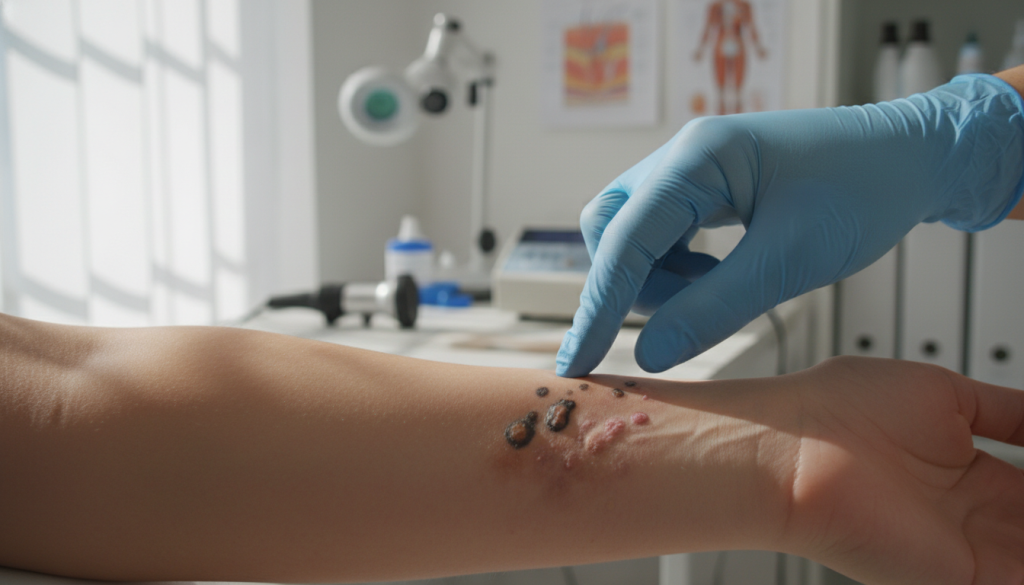
At Acıbadem Healthcare Group, we believe that informed patients are the best partners in their own wellness journey. Our mission is to provide clear, expert-led medical education. This helps you navigate complex health topics with confidence and total clarity.
Understanding the nuances of malignant growths is the essential first step toward proactive health management. By recognizing early warning signs, you take control of your future. This ensures timely medical intervention when it matters most.
This article explores the complexities of Skin Cancer, providing reliable insights into prevention and modern treatment options. We are here to support your wellbeing through every stage of your healthcare experience. We ensure you feel empowered and well-informed.
Key Takeaways
- Prioritizing medical education leads to better health outcomes.
- Early detection remains the most effective tool for managing health risks.
- Acıbadem Healthcare Group provides expert guidance for your unique journey.
- Proactive management helps you navigate complex diagnoses with confidence.
- Understanding your body is the foundation of long-term wellness.
Understanding Skin Cancer
To tackle skin cancer, we need to know how it starts. It’s the most common cancer in the U.S. and is a big health issue.
It happens when skin cells grow out of control. Normally, our skin cells divide and renew in a set cycle. But when this cycle gets messed up, cells start growing wildly and form tumors.
The epidermis, our skin’s outer layer, is where these changes happen. It has different layers, each with its own job to protect us. DNA damage in these layers can lead to skin cancer in different forms.
Seeing how skin cancer develops shows why catching it early is key. If not stopped, these bad cells can spread and harm more tissues or even other parts of the body. Knowing this helps us take better care of our skin.
| Feature | Healthy Skin Cells | Cancerous Skin Cells |
|---|---|---|
| Growth Rate | Controlled and regulated | Rapid and uncontrolled |
| Cell Function | Maintains skin barrier | Disrupts normal tissue |
| Life Cycle | Predictable turnover | Persistent survival |
Understanding skin cancer helps us spot skin changes early. Knowledge is our greatest tool in keeping our skin healthy and stopping cancer.
Types of Skin Cancer
We divide skin cancers into different types to help you understand your health better. Knowing how these conditions vary is key. It lets you talk about your skin health with doctors.
Most skin cancers are either non-melanoma or melanoma. Non-melanoma cancers are the most common. They usually start in the skin’s upper layers.
Basal Cell Carcinoma is the most common skin cancer. It starts in the basal cells, which are in the skin’s lower layer. These growths look like pearly bumps or flat, flesh-colored spots. They might bleed or crust over time.
Squamous Cell Carcinoma is the second most common. It starts in the squamous cells, which are in the skin’s middle and outer layers. It looks like a firm, red nodule or a flat, scaly spot. Finding these cancers early is important for treatment.
Melanoma is a serious and aggressive cancer. It starts in the melanocytes, which make pigment. Because it can spread, seeing a doctor quickly if you notice changes in a mole is critical.
| Type | Origin Cell | Behavior |
|---|---|---|
| Basal Cell Carcinoma | Basal cells | Slow-growing, rarely spreads |
| Squamous Cell Carcinoma | Squamous cells | Can grow deep, has a chance to spread |
| Melanoma | Melanocytes | Aggressive, high risk of spreading |
Skin Cancer Risk Factors
Some things we can’t control, but knowing about Skin Cancer Risk Factors helps us take care of our health. We see your skin health as a team effort. Understanding your unique situation helps us protect your skin better.
Ultraviolet (UV) radiation is a big environmental factor affecting your skin. It comes from the sun or tanning beds. This radiation damages your skin cells’ DNA over time. This damage can cause skin cancer.
Your genes also play a big role in your skin health. If you have a family history of skin cancer or are fair-skinned, you’re at higher risk. These traits mean your skin has less natural protection against harmful rays.
How you live and your environment also affect your skin. Exposure to harsh chemicals or living in high places can weaken your skin. By knowing these factors, we can create a safety plan just for you.
| Category | Primary Factor | Impact Level |
|---|---|---|
| Environmental | UV Radiation | High |
| Biological | Genetic Predisposition | Moderate |
| Lifestyle | Sun Exposure Habits | High |
Knowing about these Skin Cancer Risk Factors is key to staying healthy. Regular skin checks and talking to experts are important. Your dedication to health now means a safer future.
Recognizing Skin Cancer Symptoms
Your skin tells a story, and knowing how to read it is vital for your health. We encourage you to perform regular self-examinations to stay familiar with your body’s unique landscape. By checking your skin monthly, you become the best advocate for your own well-being, making it easier to identify Skin Cancer Symptoms before they progress.
When examining your moles, we recommend using the ABCDE guide. This simple framework helps you distinguish between harmless spots and those that require a professional medical evaluation.
| Letter | Criteria | What to Look For |
|---|---|---|
| A | Asymmetry | One half of the mole does not match the other. |
| B | Border | Edges are ragged, notched, or blurred. |
| C | Color | Variations in shade, such as brown, black, or red. |
| D | Diameter | Growth larger than a pencil eraser. |
| E | Evolving | Changes in size, shape, or symptoms like itching. |
Beyond moles, keep an eye out for textural changes on your skin. Look for sores that do not heal, persistent red patches, or shiny bumps that seem to grow over time. These Skin Cancer Symptoms often appear in areas frequently exposed to the sun, such as the face, neck, and hands.
If you notice any suspicious changes, please do not panic. Many skin abnormalities are benign, but a professional assessment provides the peace of mind you deserve. We are here to support you in monitoring your health and ensuring that any concerning Skin Cancer Symptoms receive the expert attention they require.
The Importance of Early Detection
Catching skin changes early can save your life. Early action is key to successful treatment for our patients. By focusing on Skin Cancer Awareness, you protect your health for the long run.
Early diagnosis of melanoma leads to a 99% survival rate after five years. This shows why staying alert is essential for your skin’s health.
Make regular skin screenings a part of your health care. Regular checks help spot problems early. Early detection turns a serious issue into a manageable one.
We aim to help you make smart health choices through education. By promoting Skin Cancer Awareness, we help you spot skin changes easily. Your commitment to regular check-ups is a big step towards a healthy future.
Skin Cancer Diagnosis Procedures
Getting a skin cancer diagnosis can seem scary, but knowing the steps helps. We want to make it clear so you know what to expect. Our team works together to make sure you’re informed and supported every step of the way.
The first step is a visual inspection of your skin. Our specialists look for any moles or lesions that seem off. They check for shape, color, and size changes. Sometimes, they use a dermatoscope to get a closer look at your skin.
If a spot looks suspicious, we do a biopsy to confirm skin cancer. This is a small procedure where we take a skin sample. We numb the area first to make sure you don’t feel any pain.
After we take the sample, it goes to a lab for testing. This is the step that tells us what kind of cells we’re dealing with. We know waiting for results can be hard, so we’ll let you know when to expect to hear from us.
| Diagnostic Method | Purpose | Patient Experience |
|---|---|---|
| Visual Exam | Initial screening | Quick and painless |
| Dermoscopy | Detailed magnification | Non-invasive observation |
| Punch Biopsy | Tissue collection | Local anesthesia used |
| Excisional Biopsy | Full lesion removal | Requires minor stitches |
We aim to make your diagnostic experience as easy and clear as possible. We use the latest technology and care with kindness. If you have any questions, please don’t hesitate to contact our team.
Staging and Prognosis
After a diagnosis, doctors use a detailed method to find out how far the disease has spread. This is called staging. For Melanoma, knowing the stage is key to making a personalized treatment plan just for you.
Doctors look at the tumor size, nearby lymph nodes, and if the cancer has spread to other parts of the body. This information helps your healthcare team understand your situation better. We want to help you understand and feel better about your health as you move forward.
Knowing the stage of Melanoma helps us find the best treatment for you. Here’s a table showing how doctors classify skin cancers based on their spread.
| Stage Category | Description | Clinical Focus |
|---|---|---|
| Stage I & II | Localized disease | Primary tumor removal |
| Stage III | Regional spread | Lymph node assessment |
| Stage IV | Distant metastasis | Systemic therapy options |
We are here to help you understand these results and support you every step of the way. Early intervention is key to better outcomes. We aim to give you the knowledge to make informed health choices. Your journey is unique, and we’re here to guide you towards long-term health.
Skin Cancer Treatment Options
Choosing the right skin cancer treatment is important. We help you understand your options. Getting a diagnosis can be tough, but we’re here to guide you.
The treatments for skin cancer are many and specific. Our team looks at the type, size, and where the cancer is. Your health and long-term well-being are our main focus when deciding on treatment.
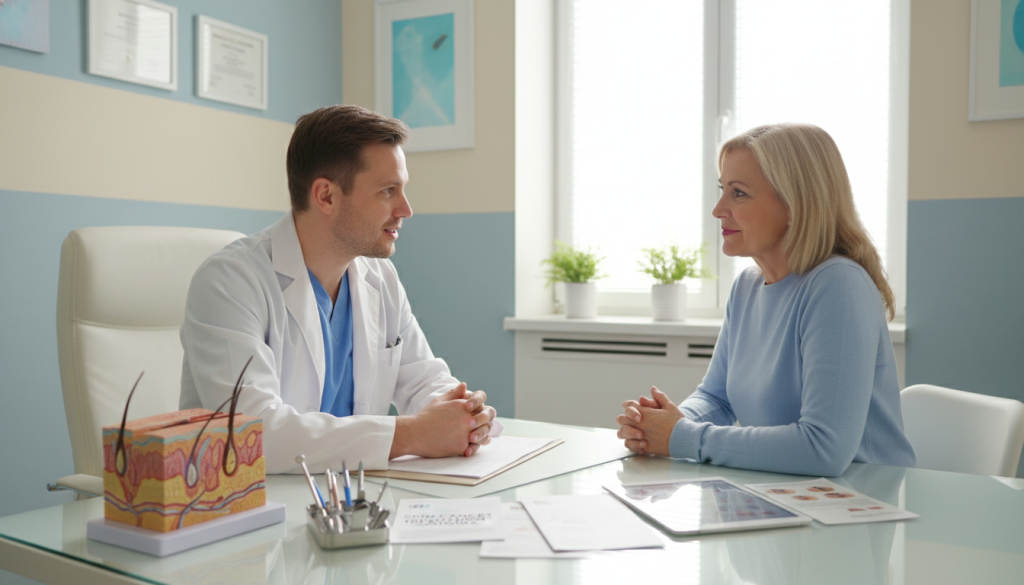
We offer many treatments, from small procedures to advanced therapies. We tailor each skin cancer treatment to fit you. This approach helps reduce side effects and improves your chances of success.
Knowing what your doctors can do is empowering. Whether it’s a simple procedure or a complex treatment, we’re here to help. You are never alone in making these big decisions.
Modern medicine keeps getting better, with new ways to treat skin cancer. We use the latest research and standards in your care. Our team works together to make sure you’re informed and supported on your journey to recovery.
Surgical Interventions
Surgery is often the best way to treat skin cancer. We aim to remove the cancer completely while keeping as much healthy skin as we can. This approach helps us get the best results for both health and looks.
For many, Basal Cell Carcinoma and Squamous Cell Carcinoma are treated with surgery. These surgeries are done in a clinic with local anesthesia. By taking out the tumor and some healthy skin around it, we lower the chance of it coming back.
Mohs surgery is a precise method we use. It involves taking off the cancer layer by layer and checking it right away. We keep doing this until there’s no more cancer, which is great for tumors in tricky spots like the face.
Choosing the right surgery depends on the tumor’s size, where it is, and how deep it is. Whether it’s Basal Cell Carcinoma or Squamous Cell Carcinoma, we aim to reduce scarring and help you heal fast. We’re here to help you understand and support you every step of the way.
| Surgical Method | Primary Use | Key Advantage |
|---|---|---|
| Standard Excision | General skin tumors | Fast and effective |
| Mohs Surgery | High-risk facial areas | Maximum tissue preservation |
| Curettage and Electrodessication | Superficial lesions | No stitches required |
Non-Surgical Therapies
At Acıbadem Healthcare Group, we offer many non-invasive Skin Cancer Treatment options. We know each patient is different, so we provide various treatments. These options help manage or remove cancer cells without surgery.
Topical medications are often used for skin cancers. We apply creams or gels to the affected area. They help your immune system fight cancer or destroy it. This method is gentle on the surrounding healthy skin, making it a good choice for some cases.
Radiation therapy is also a key part of our Skin Cancer Treatment. It uses beams to target and shrink tumors. It’s great for patients who can’t have surgery due to where the cancer is or their health.
Immunotherapy is a big step forward in medicine. It helps your immune system fight cancer better. By boosting your body’s defenses, we can help you achieve long-term remission in some cases.
We want you to know all about the care we offer. These non-surgical options are important for treating skin cancer. Our team will help you choose the best treatment for your needs and health.
Skin Cancer Prevention Strategies
We believe in taking proactive steps for Skin Cancer Prevention. Simple, daily habits can greatly reduce your UV radiation exposure. These actions today are an investment in your health tomorrow.
A high-quality, broad-spectrum sunscreen is your best defense. Apply it generously to all exposed skin every day, even on cloudy days. Consistency is truly the key to protecting your skin from UVA and UVB rays all year.
Your clothing choices also play a big role in Skin Cancer Prevention. Wear tightly woven fabrics, wide-brimmed hats, and UV-blocking sunglasses outside. These physical barriers offer reliable protection that lasts longer than topical lotions.
Be careful about when you go outside. UV radiation is strongest between 10:00 a.m. and 4:00 p.m. Whenever possible, do your outdoor activities in the early morning or late afternoon to avoid the strongest sun.
By adopting these habits, you take charge of your skin health. Prioritizing Skin Cancer Prevention not only protects your skin but also boosts your confidence. Small daily changes can lead to big benefits for your body over time.
Living with a Diagnosis and Support
Getting a diagnosis can be tough, but you’re not alone. You might feel anxious or unsure as you try to understand. It’s key to remember that your mental health matters as much as your physical health.
We focus on your whole well-being, not just your body. It’s okay to talk about your feelings with your doctors. We want you to feel supported, heard, and valued every step of the way.
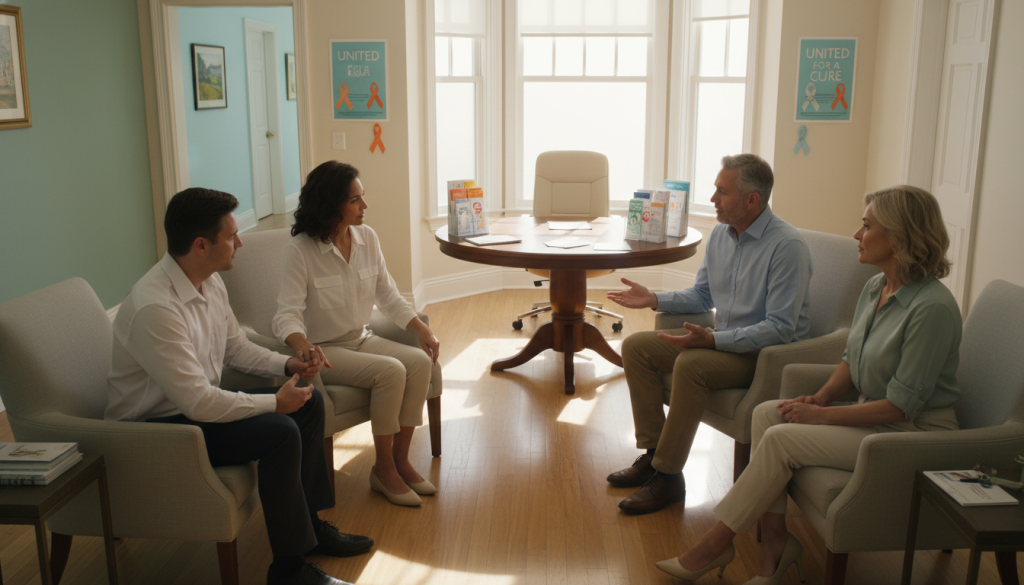
Having a strong support system is essential for healing. This could be family, friends, or counselors who know about cancer support. Talking to others who’ve gone through similar things can offer comfort and advice you might not find elsewhere.
Keeping your mind healthy takes effort and patience. Doing things that calm you, like gentle exercise or mindfulness, can really help. By focusing on Skin Cancer Awareness and taking care of yourself, you’re investing in your long-term health and emotional strength.
| Support Type | Primary Benefit | How to Access |
|---|---|---|
| Professional Counseling | Emotional processing | Referral from your doctor |
| Support Groups | Shared experiences | Hospital or community centers |
| Family & Friends | Daily encouragement | Open communication |
Conclusion
Managing your health starts with proactive habits and understanding your body. Skin cancer is serious, but awareness and screenings can help many.
We think knowledge is your strongest tool against skin cancer. By watching for changes in moles or patches, you protect your health.
At Acıbadem Healthcare Group, we aim to give you the knowledge to make good health choices. Our medical teams offer support and guidance for any diagnosis.
Your well-being is our main goal. If you have skin concerns, contact our specialists. Early action leads to better results, and we’re here to help you.
FAQ
Q: What exactly is skin cancer and how does it develop?
A: Skin cancer happens when skin cells mutate. This leads to uncontrolled growth. It usually starts in the outer skin layer.
When these cells grow too fast, they form tumors. These can stay in one place or spread to other parts of the body.
Q: What are the primary types of skin cancer I should be aware of?
A: There are three main types: Basal Cell Carcinoma (BCC), Squamous Cell Carcinoma (SCC), and Melanoma. BCC and SCC are less dangerous and rarely spread. But Melanoma is aggressive and can spread.
Knowing the type helps us find the best treatment for you.
Q: What are the leading skin cancer risk factors?
A: The biggest risk is UV radiation from the sun or tanning beds. People with fair skin, a history of sunburns, or a family history of skin cancer are at higher risk. Moles can also be a sign.
Knowing these risks helps us watch your skin more closely.
Q: What are the most common skin cancer symptoms to look for during a self-exam?
A: Use the ABCDE method to spot melanoma: Asymmetry, Border irregularity, Color changes, Diameter larger than a pencil eraser, and Evolving size or shape. Look for sores that don’t heal, new growths, or scaly patches.
Q: Why is skin cancer awareness and early detection so important for prognosis?
A: Early detection saves lives. Catching melanoma early means a 99% survival rate. Regular checks at Acıbadem Healthcare Group help catch problems early.
Q: How is a definitive skin cancer diagnosis confirmed by a specialist?
A: We start with a clinical check and may use a dermoscope. If it looks bad, we take a biopsy. This removes a small piece of tissue for a pathologist to check.
Q: What is Mohs surgery and when is it recommended?
A: Mohs surgery is for BCC and SCC, often in sensitive areas. We remove tissue layer by layer, checking each under a microscope. This method has a high success rate and saves healthy skin.
Q: What non-surgical skin cancer treatment options are available?
A: We offer non-invasive treatments like radiation, topical medications, or immunotherapy. These are good for those who can’t have surgery.
Q: What are the best skin cancer prevention strategies for daily life?
A: Prevent skin cancer by using sunscreen, wearing protective clothing, and avoiding sun during peak hours. Stay away from tanning beds to avoid skin damage.
Q: How does Acıbadem Healthcare Group support patients following a diagnosis?
A: We offer support for body and mind. This includes treatment plans, counseling, and support groups. Our goal is to make you feel empowered and cared for.