
Ever thought about what it takes to get your dream body? It’s not just about the surgery. The real work starts when you’re healing. Successful healing needs patience, following doctor’s orders, and taking care of yourself.
Knowing what’s happening in your body is key. It’s like a guide for recovering from tumor removal. Your tummy tuck needs a careful plan for the best outcome. Rest well and stick to your surgeon’s advice to reach your goals.
Key Takeaways
- Prioritize rest to allow your body the necessary time to heal effectively.
- Follow all post-operative medical instructions provided by your healthcare team.
- Maintain a proactive approach to self-care to minimize possible complications.
- Understand that physiological changes are a normal part of the healing process.
- Stay patient, as full results develop gradually over several months.
Understanding the Plastic Surgery Healing Process
The plastic surgery healing process is complex and takes time. It’s important to know that healing is a gradual process, not something that happens overnight. Understanding how your body heals can help you through the recovery period.
Right after surgery, your body starts a detailed repair process. This process has three main stages: the inflammatory, proliferative, and remodeling phases. Each stage plays a key role in fixing your tissues and skin.
In the first stage, your body protects the surgery area and removes damaged cells. You might feel swelling or tenderness, which are normal responses to the surgery. As you enter the second phase, your body starts rebuilding deep tissues and closing wounds. You might feel unusual sensations as nerves and tissues adjust.
The final stage, remodeling, lasts the longest, often months. Here, your body refines scar tissue and strengthens the area for lasting results. It’s vital to listen to your body and follow your surgeon’s advice during these stages.
| Healing Phase | Primary Focus | Typical Duration |
|---|---|---|
| Inflammatory | Protection and cleaning | Days 1–5 |
| Proliferative | Tissue reconstruction | Weeks 1–6 |
| Remodeling | Maturation and strengthening | Months 3–12 |
By understanding the plastic surgery healing process in these stages, you can have realistic expectations for your recovery. Always listen to your body and follow your surgeon’s advice as you go through each stage.
Preparing Your Home for a Smooth Recovery
Making your home supportive is key for a smooth recovery after a tummy tuck. Organizing your space before surgery helps reduce strain on your body. This lets you focus on healing without extra stress.
Make sure your home doesn’t need you to bend, reach, or lift heavy things for two weeks. Put things like your phone, remote, and chargers where you can easily see them. This keeps you from moving too much and hurting your incision.
Setting up a special recovery area is also important. Use a recliner or a bed with pillows to keep your upper body up. This helps reduce swelling and improves blood flow.
Have your medicines, water, and snacks close to your recovery spot. This makes it easy to stay hydrated and comfortable without getting up often. Preparing your home helps you recover safely and efficiently.
Immediate Post-Operative Care in the First 48 Hours
The first 48 hours after your tummy tuck are critical for your recovery. Your body starts repairing tissues, so it’s key to follow your surgeon’s advice. Using post tummy tuck recovery tips early helps keep you stable and avoids complications.
Keeping your upper body slightly raised is important. Use pillows to elevate your upper body. This reduces tension on your tummy incision. It also makes you more comfortable.
Moving gently is also vital in your early recovery. Avoid hard activities but take short walks with help. These post tummy tuck recovery tips help you move safely without harming your surgery site.
| Action | Purpose | Frequency |
|---|---|---|
| Semi-Fowler Positioning | Reduces incision tension | Constant while resting |
| Assisted Walking | Promotes circulation | Every 2-3 hours |
| Hydration | Supports tissue repair | Frequent small sips |
Watching your symptoms closely is important in these first two days. You and your care team should keep an eye on your comfort. Following these post tummy tuck recovery tips helps you heal well and achieve a good outcome.
How to Recover from Plastic Surgery Tummy Tuck: Managing Pain and Discomfort
Learning how to recover from plastic surgery tummy tuck starts with managing pain. It’s key to stay ahead of discomfort for a smooth healing. Always follow the medication schedule given by your surgeon.
Using prescribed medication as directed keeps pain levels steady. This is vital for your comfort. Managing pain early helps your body repair tissues better. Rest is also critical for a good recovery.
There are also non-medical ways to feel better. Cold therapy reduces swelling and eases pain. Also, keeping your knees bent while lying down helps ease tension in your belly.
Using these methods helps you recover well from a tummy tuck. By following medical advice and these tips, you support your body’s healing. This way, your body can heal safely and quickly.
| Method | Primary Benefit | Frequency |
|---|---|---|
| Prescribed Medication | Systemic pain control | As directed by surgeon |
| Cold Therapy | Reduces swelling/numbing | 15-20 minutes per hour |
| Proper Positioning | Relieves abdominal tension | Whenever resting |
| Hydration | Supports tissue recovery | Throughout the day |
Strategies for Managing Tummy Tuck Swelling
Managing tummy tuck swelling is key for your comfort and recovery. Swelling, or edema, is a natural part of healing. It happens as your body fixes the tissues and muscles under the skin. Seeing your belly look puffy can be tough, but it’s a normal part of healing.
Swelling usually peaks in the first few weeks after surgery. Your belly might feel tight or firm. While most of the swelling goes down quickly, some small changes can last for months as your body adjusts.
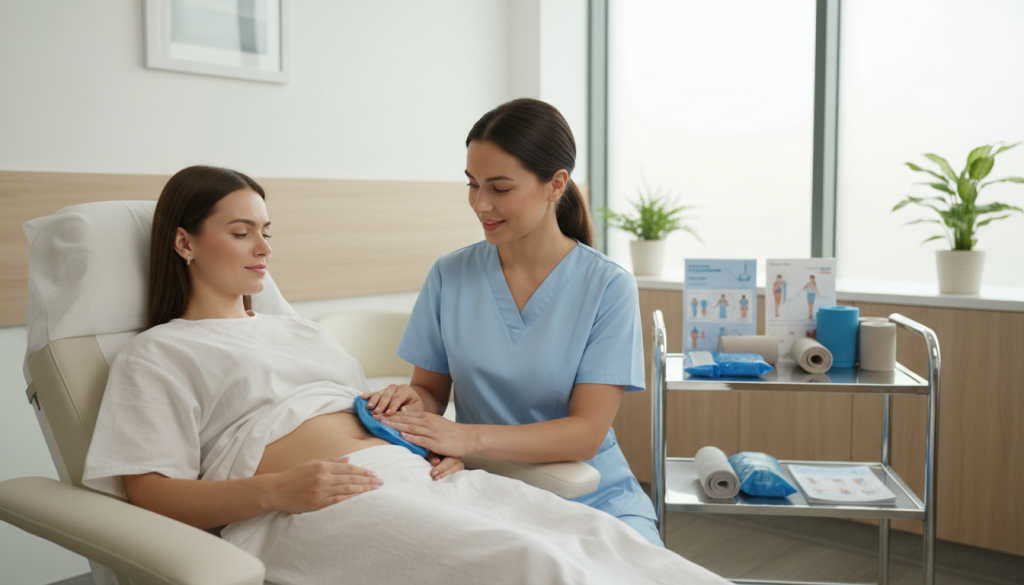
There are several ways to manage tummy tuck swelling. Wearing your compression garments as directed is very important. These garments support the area and help reduce fluid buildup.
Your diet also affects your recovery. Eating a low-sodium diet helps prevent fluid retention. Drinking lots of water helps your body get rid of excess fluids better.
Keep an eye on how you’re healing. Some swelling is normal, but watch for signs of trouble. If you see sudden, severe swelling, redness, or warmth, call your surgeon right away. By following these tips for managing tummy tuck swelling, you can help your body heal well and get the best results.
The Importance of Compression Garments and Surgical Drains
We focus on your comfort and safety by guiding you on using compression garments and surgical drains. These tools are key to your recovery. They help your body heal in the right shape. Following our tummy tuck aftercare instructions supports your tissues during healing.
Compression garments apply constant pressure to your abdomen. This pressure minimizes dead space where fluid might gather. It also reduces the risk of complications. These garments help shape your new look as you heal.
Surgical drains remove extra fluid from the incision site. They prevent fluid buildup, which is key to preventing infection and a smooth recovery. We’ll give you specific tummy tuck aftercare instructions for managing these drains at home.
It’s important to take care of your medical equipment for a good outcome. Keeping your garments clean and drains emptied regularly is essential. Check the table below for care tips for your recovery tools.
| Tool | Primary Function | Care Requirement |
|---|---|---|
| Compression Garment | Tissue support and contouring | Wear as directed for optimal fit |
| Surgical Drain | Fluid removal | Empty and record output daily |
| Incision Site | Healing and closure | Keep clean and monitor for changes |
If you have questions about your recovery plan, don’t hesitate to ask. Following these tummy tuck aftercare instructions keeps you comfortable and safe. Your dedication to these steps is vital for the best results.
Nutrition and Hydration for Optimal Tissue Repair
Eating the right foods is key to speed up tummy tuck recovery. Your body needs lots of energy to fix cuts and rebuild tissues. Eating foods rich in nutrients helps your immune system work well.
Protein is very important after surgery. It helps fix tissues and make collagen. Eat lean proteins like chicken, fish, tofu, or beans with every meal.
Vitamins and minerals also help. Vitamin C is great for collagen, and zinc keeps skin healthy. Eating colorful fruits and veggies gives you these important nutrients.
Drinking water is also very important. It helps get rid of toxins and keeps blood flowing well. Drinking enough water helps nutrients and oxygen get to the healing area.
| Nutrient Category | Primary Function | Recommended Sources |
|---|---|---|
| Protein | Tissue Repair | Lean meats, eggs, beans |
| Vitamin C | Collagen Synthesis | Citrus fruits, bell peppers |
| Zinc | Immune Support | Nuts, seeds, whole grains |
| Water | Circulation & Detox | Filtered water, herbal tea |
Eat small meals often to keep your energy up. This stops blood sugar from rising too high. Eating this way helps your body heal faster.
Safe Movement and Activity Restrictions During Early Recovery
Finding the right balance between rest and movement is key for recovery. Your body needs time to heal, but too much rest can lead to problems like blood clots. Gentle, controlled movement is vital for a safe plastic surgery recovery.
In the first six weeks, your main goal is to keep your surgical repair safe. Avoid heavy lifting, hard exercise, and activities that stretch your belly too much. These steps help your tissues heal without too much strain.
Take short walks around your home often. These walks help keep your blood flowing and prevent muscle and joint stiffness. Gentle movement supports your body’s healing and keeps you independent.
Following these rules is the best way to ensure a safe plastic surgery recovery. Here’s a table to help you understand what activities are okay during your early healing phase.
| Activity Type | Status | Recommended Frequency |
|---|---|---|
| Light Walking | Encouraged | Every 2-3 hours |
| Heavy Lifting | Prohibited | Avoid for 6 weeks |
| Strenuous Exercise | Prohibited | Avoid for 6 weeks |
| Abdominal Stretching | Restricted | Avoid until cleared |
Tummy Tuck Scar Care and Long-Term Incision Management
Your journey to a new shape continues after surgery. Taking good care of your scar is key. It helps your skin heal well and look better.
We give you detailed tummy tuck aftercare instructions. These include using special silicone sheets to make the scar less noticeable. Also, using certain creams keeps your skin soft and stretchy.
It’s important to avoid the sun to prevent darkening of your scar. We suggest wearing clothes that cover the area or using sunscreen with high SPF for a year after surgery.
Watch your scar for any signs of trouble. If it gets too red, hot, or thick, call us right away. Quick action can prevent bigger problems.
Scars usually get lighter in 12 to 18 months. Following our tummy tuck aftercare instructions helps your scar blend in. With time and care, your scar will look better.
| Care Method | Primary Benefit | Usage Frequency |
|---|---|---|
| Silicone Sheets | Flattens and softens scar tissue | Daily (12+ hours) |
| Scar Massage | Improves blood flow and flexibility | Twice daily |
| Sun Protection | Prevents hyperpigmentation | Whenever exposed |
| Hydrating Creams | Maintains skin moisture | Once or twice daily |
Recognizing Warning Signs and When to Call Your Surgeon
It’s important to know the difference between normal recovery symptoms and warning signs. Most people heal well after surgery, but it’s good to stay alert. Knowing when to call our team for help is key to a safe plastic surgery recovery.
Some discomfort, bruising, or swelling are normal in the first weeks. But, some symptoms mean you might need extra care. If you see any of these, call us right away to keep your health on track.

Watch for a fever over 101°F, which could mean an infection. Also, look out for redness or warmth around your incisions. Any bad smell or pain that won’t go away with meds needs a call to our team.
We think talking openly is key to a safe plastic surgery recovery. Our team is here to check on you and answer any questions. Here’s a table to help you know when to call us.
| Symptom Type | Typical Recovery | Requires Medical Call |
|---|---|---|
| Incision Appearance | Mild pinkness or bruising | Spreading redness or pus |
| Body Temperature | Normal or slight elevation | Fever above 101°F |
| Pain Levels | Managed by medication | Sudden, sharp, or worsening |
| Drainage | Clear or light red fluid | Foul odor or thick discharge |
Your safety is our top priority during your recovery. By staying informed and talking openly, you help keep yourself safe. If you’re worried about anything, don’t hesitate to reach out to us.
Returning to Work and Daily Responsibilities
Going back to work is a big step in your recovery. You might want to get back to normal fast, but your body needs time to heal. Knowing the plastic surgery recovery timeline helps you plan better and avoid rushing.
Most people need at least two to four weeks off from work. This lets your cuts heal and your energy come back. If your job is hard or requires lifting, you might need more time to keep your results safe.
If you sit at a desk all day, you might be able to go back to work sooner. But, you must follow all doctor’s orders about lifting, bending, and heavy work. We help you make a personalized recovery plan that fits your job and health needs.
Talking to your boss is key during this time. Being open about what you can and can’t do helps you get back to work smoothly. Remember, your health is the most important thing. A good plastic surgery recovery timeline means sticking to rest and doctor’s advice.
| Job Type | Estimated Time Off | Key Considerations |
|---|---|---|
| Sedentary/Office | 2 – 3 Weeks | Avoid heavy lifting; use ergonomic support. |
| Light Physical | 3 – 4 Weeks | Limit repetitive bending and reaching. |
| Strenuous/Manual | 6+ Weeks | Full clearance required for heavy labor. |
Gradual Reintroduction of Exercise and Physical Fitness
Getting back into your fitness routine after a tummy tuck takes time and a careful plan. You might want to speed up tummy tuck recovery, but your body needs time to heal. Jumping into hard workouts too fast can harm your incisions and slow down your healing.
Start with gentle walking to improve blood flow and avoid complications. Avoid heavy lifting or hard core exercises until your doctor says it’s okay.
When you feel stronger, move to low-impact activities. Always listen to your body and stop if you feel pain or swelling. Trying to speed up tummy tuck recovery by ignoring pain can harm your healing.
Here’s a general guide for getting back to physical activities. Remember, everyone heals differently, and always follow your doctor’s advice.
| Recovery Phase | Recommended Activity | Intensity Level |
|---|---|---|
| Weeks 1-2 | Gentle indoor walking | Very Low |
| Weeks 3-6 | Increased walking distance | Low |
| Weeks 6-8 | Light cardio/Stationary bike | Moderate |
| Post 8 Weeks | Full fitness routine | As Tolerated |
When your doctor says it’s okay for more intense exercise, start with controlled, low-intensity exercises. This helps your abdominal muscles get ready. By doing this, you can safely get back to your favorite workouts and keep your results.
Mental Health and Managing Expectations During Recovery
While we often focus on physical results, your mental health is just as important. You might feel frustrated or experience “post-op blues” as you deal with the plastic surgery healing process.
It’s key to have realistic expectations during your recovery. Remember, the final results of a tummy tuck take time. Your body needs patience to reach its best state.
By focusing on self-compassion and the long-term benefits, you can stay positive. Taking care of your mental health is a big part of a successful plastic surgery healing process. It helps you feel supported and confident as you get used to your new look.
Long-Term Results and Maintaining Your New Silhouette
After the plastic surgery recovery timeline ends, you start working on keeping your new look. This journey is just starting, and it’s a chance to live a healthier life. Think of it as the start of a new chapter.
It’s important to eat well and stay active. As your body heals, you’ll see your new shape take form. This change takes time and effort, but it’s worth it for your health.
Keeping your new look is easier with good habits. Exercise keeps your core strong, and eating right stops big weight changes. Taking care of your health keeps your results looking great for a long time.
After the plastic surgery recovery timeline, you can handle your health better. We’re here to help you enjoy your new body for years. Here’s a guide to help you stay on track.
| Lifestyle Factor | Primary Benefit | Frequency |
|---|---|---|
| Balanced Nutrition | Prevents weight gain | Daily |
| Core Strengthening | Supports muscle tone | 3-4 times weekly |
| Hydration | Improves skin elasticity | Throughout the day |
| Weight Management | Protects surgical contours | Ongoing monitoring |
Embracing Your Final Results and Sustaining Your Health
Reaching the end of your recovery journey is a big deal. You’ve shown patience and dedication in healing. Now, enjoy the physical improvements you’ve worked for.
To keep your new shape, commit to a balanced lifestyle. See your body as a system that needs good food and exercise. Our team at Acıbadem Healthcare Group is here to help you stay well.
Check out our recovery resources for tips on keeping healthy long-term. Learning is key to success after surgery. We offer the expert advice you need to feel good every day.
Your energy shows the care you put into healing. We’re grateful for the trust you gave us. Move forward with a new sense of self, knowing your health is our top priority.
## FAQ
### Q: What should I expect during the plastic surgery healing process for a tummy tuck?
The healing process has three stages: inflammatory, proliferative, and remodeling. You’ll first see swelling and find it hard to move. But as time goes on, your body will fix the deep tissues and skin.
At Acıbadem Healthcare Group, we say this is a slow process. It’s not something that happens overnight. You need to be patient as your body gets back to normal and the tissues settle.
### Q: How can I properly prepare my home to ensure a safe plastic surgery recovery?
To make your home safe for recovery, organize it to avoid strain. Set up a recovery area with pillows for elevation. Keep your meds, water, and healthy snacks close to avoid bending or lifting.
### Q: What are the most effective strategies for managing tummy tuck swelling?
Managing swelling involves using compression garments and a low-sodium diet. Swelling peaks in the first few weeks. Our team will help you track it and know when it’s normal or a problem.
### Q: Why are compression garments and surgical drains necessary in my tummy tuck aftercare instructions?
These tools are key for a good outcome. Garments support your belly and prevent fluid buildup. Drains remove extra fluid from the incision site. Following these steps helps prevent complications and ensures the best results.
### Q: Are there specific ways to speed up tummy tuck recovery through nutrition?
Yes, eating right can help. Focus on protein, vitamins, and minerals for collagen. Stay hydrated to flush toxins and support blood flow. A diet rich in tissue repair and immune support is best.
### Q: How should I manage pain and discomfort in the first 48 hours?
Managing pain is critical for recovery. Stick to your meds and use non-medical methods like body positioning and cold therapy. This helps you sleep well and stay comfortable.
### Q: What does the typical plastic surgery recovery timeline look like for returning to work?
Every recovery is different, but most can go back to office work in two to four weeks. If you do physical labor, you’ll need more time. We’ll help you plan your return to work safely.
### Q: What is the best approach for tummy tuck scar care?
Good scar care is vital for a nice result. Use silicone sheets, moisturizers, and protect from the sun. We’ll teach you how to massage your scars to make them less noticeable over time.
### Q: When can I safely resume exercise and physical fitness?
Start with gentle walking to promote blood flow. Avoid heavy lifting and core exercises for six weeks. We’ll guide you back to exercise safely and slowly.
### Q: Which warning signs should I be aware of during my recovery?
Watch for signs of infection or complications like fever, redness, foul-smelling drainage, or sudden pain. If you notice anything unusual, contact us right away. Staying alert and talking to us about any issues is key to a safe recovery.