





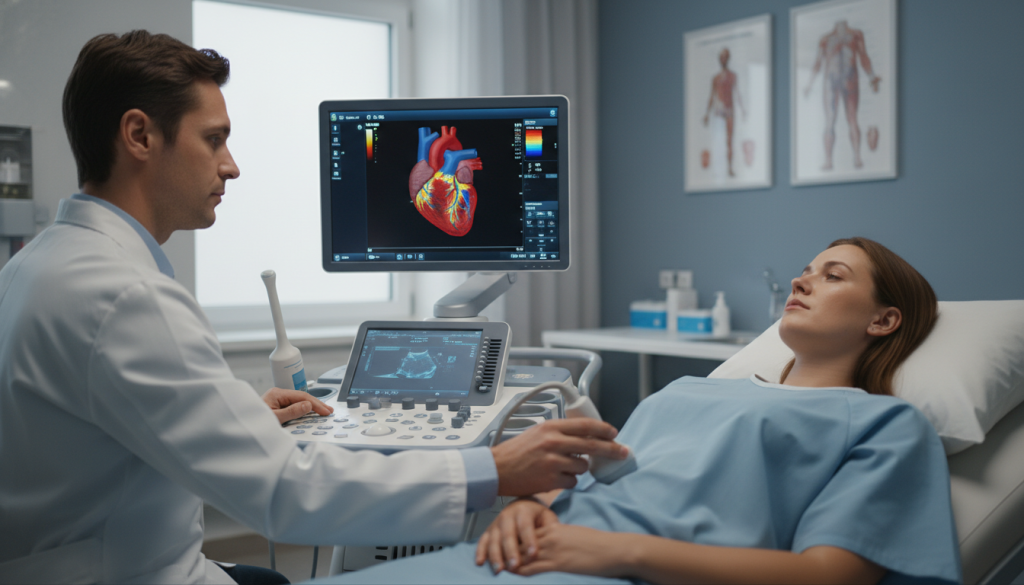
In the field of modern cardiology, Echocardiography is a key tool for accurate diagnosis. It lets our team see your heart’s structure and function in real-time.
Using sound waves, we make detailed images of your heart’s chambers and valves. This non-invasive method gives you a clear view of your heart health with little discomfort.
We think educating patients is vital for heart health. Knowing how your heart works helps you make better choices for your health. We aim to make complex procedures easy to understand, giving you the clarity you need.
Whether you’re dealing with a condition or just need a check-up, this technology is key. We’re here to help you every step of the way to a healthier life.
Key Takeaways
- Echocardiography provides a real-time, non-invasive view of your heart’s anatomy.
- The procedure uses safe sound waves to capture detailed images of valves and chambers.
- Patient education is a fundamental part of our approach to long-term heart health.
- This diagnostic tool helps us detect issues early for better outcomes.
- We prioritize your comfort and understanding throughout the entire medical process.
Understanding the Basics of Echocardiography
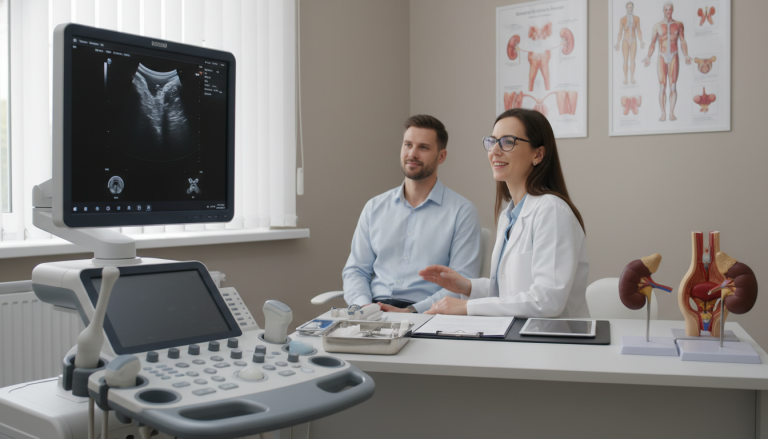
Echocardiography is a detailed way to check your heart’s health. It uses sound waves to create clear pictures of your heart. These pictures show how your heart works with each beat.
A small device called a transducer sends and receives sound waves. As it moves over your chest, it turns these waves into images we use to diagnose.
This procedure is painless and non-invasive. It uses sound waves, not harmful radiation. So, it’s safe for everyone, no matter their age.
We suggest echocardiography for a full view of your heart. It’s perfect for anyone, young or old. It helps us understand your heart health without any downtime.
The Science Behind Cardiac Imaging
Modern heart scans rely on acoustic physics. We use sound waves that humans can’t hear to map your heart. This cardiac imaging lets us see your heart live without surgery.
A special probe sends sound pulses into your chest. These pulses hit different parts of your heart. When they bounce back, they give us the data to see your heart’s shape.
Our machines turn these echoes into moving images. This tech helps us see how your heart works with high diagnostic accuracy. It gives us a clear look at your heart’s health without surgery.
Why Doctors Order an Echocardiogram
Understanding why a doctor orders an echocardiogram can make you feel better about your health. This test is non-invasive and lets doctors see your heart in real-time. It gives them a clear look at how your heart works.
If you have unusual symptoms, your doctor might recommend an echo test. They might do this if you have chest pain, trouble breathing, or hear a heart murmur during a check-up.
The main purpose of an echocardiogram is to check how well your heart pumps and if your valves are okay. Doctors watch how blood moves through your heart. They look for blockages, defects, or signs of heart failure early on.
The table below shows common reasons for an echocardiogram and what doctors look for:
| Clinical Indication | Primary Focus | Diagnostic Goal |
|---|---|---|
| Heart Murmur | Valve Function | Detecting leaks or narrowing |
| Chest Pain | Pumping Strength | Evaluating muscle wall motion |
| Shortness of Breath | Chamber Size | Assessing fluid or pressure |
| Routine Echo Test | Overall Health | Establishing a baseline record |
Different Types of Echocardiography Procedures
We use several types of echocardiography to see your heart’s details. Each patient is different, so we pick the best cardiovascular ultrasound for you. This ensures we get the most accurate information.
The transthoracic echocardiogram is the most common. It’s a safe test where a technician moves a transducer over your chest. This sends sound waves into your heart, showing blood flow and valve movement in real-time.
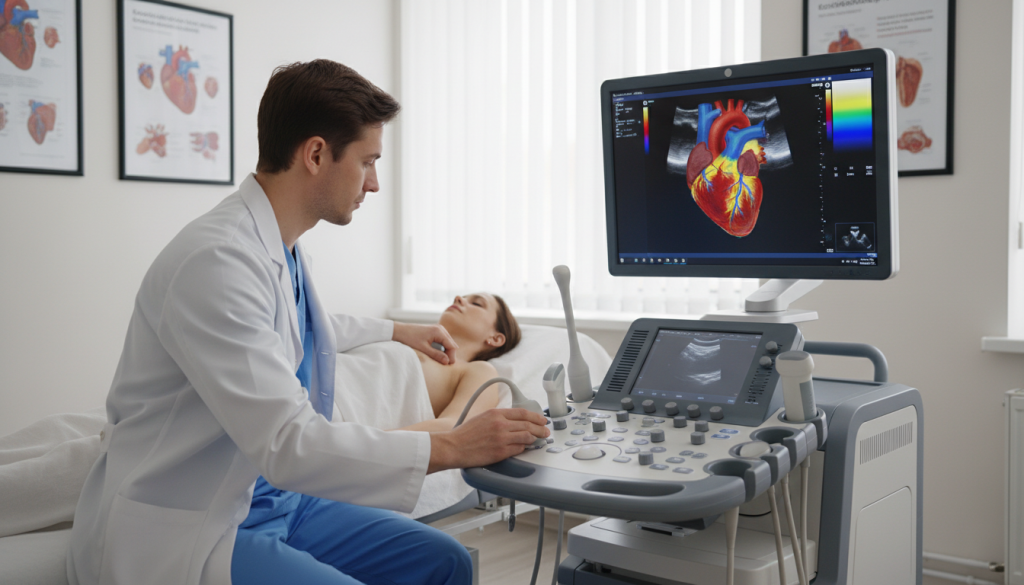
For a clearer view of the heart’s back, we do a transesophageal echocardiogram. A small probe is guided down your esophagus. This gets past the ribs and lungs for a better look.
Stress echocardiography checks how your heart works when you’re under pressure. We take pictures before and after you exercise. This helps find problems that might not show up when you’re resting.
| Procedure Type | Primary Purpose | Invasiveness |
|---|---|---|
| Transthoracic | General heart structure | Non-invasive |
| Transesophageal | Detailed valve/atrial view | Minimally invasive |
| Stress | Function under exertion | Non-invasive |
Each cardiovascular ultrasound type is important for your care. Knowing about these options helps you understand your heart health plan better.
Preparing for Your Heart Ultrasound
Getting ready for a heart scan might seem daunting, but with the right steps, it’s easier. Just a few simple actions before your visit can help your doctors get the best images.
Usually, you don’t need to change your daily routine much. A standard heart ultrasound often doesn’t require fasting. Just keep taking your usual medicines unless your doctor tells you to stop.
Wear something comfortable for your visit. A two-piece outfit is best, as you’ll need to change into a hospital gown. This makes it easier for our techs to place the sensors and probe on your chest.
Arrive at the clinic about 15 minutes early for your heart scan. This gives you time to fill out any paperwork and get settled. Bringing your recent medical records or a list of your medicines is also a good idea.
We aim to make your heart ultrasound as stress-free as possible. If you have health concerns or questions, ask our staff when you get here. We’re here to support you and make sure you’re well-informed and confident.
What Happens During the Procedure
Learning about an echo test can ease your worries before your visit. At our clinic, a caring team welcomes you. They aim to make you feel at ease and well-informed.
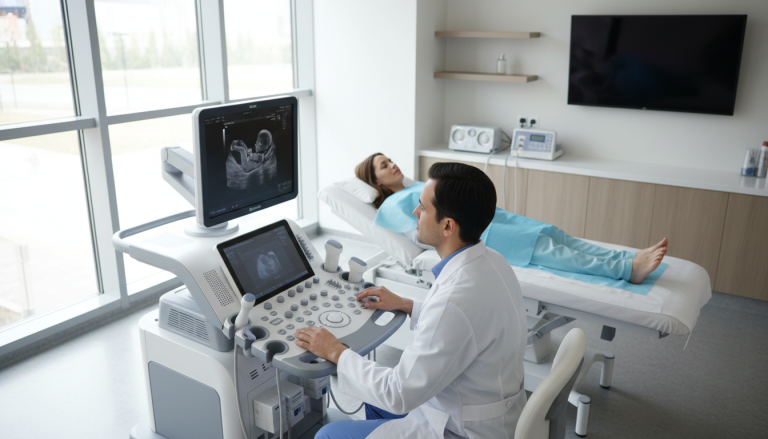
When you lie down, the sonographer will put a special gel on your chest. This gel is key for clear sound waves. It might feel cool, but it’s safe and easy to clean up after the heart ultrasound.
The sonographer then uses a small device to scan your heart. They move it around to get precise images of your heart. You might hear sounds, which are just your blood flow being turned into sound by the machine.
This is a team effort. We might ask you to move or hold your breath for better views. Together, we make sure the heart ultrasound is accurate for your doctor.
The whole echo test takes about 30 to 60 minutes. You can go back to your day right after, as there’s no downtime. We focus on your comfort and safety at every step.
| Procedure Phase | Patient Action | Clinical Goal |
|---|---|---|
| Preparation | Lie on the exam table | Ensure optimal positioning |
| Gel Application | Remain steady and calm | Improve sound wave conduction |
| Imaging | Follow breathing instructions | Capture clear cardiac views |
| Completion | Clean skin and depart | Finalize diagnostic data |
Interpreting Results and Normal Ranges
Understanding your heart ultrasound results is key to your care. After the diagnostic procedure is done, a cardiologist checks the images. They look at how well your heart works.
The ejection fraction is a critical measurement. It shows how much blood your heart pumps out with each beat. A healthy heart pumps a certain percentage of blood, showing its strength.
Remember, “normal” ranges vary from person to person. Your doctor will look at your age, gender, and health when reviewing your echocardiogram report. What’s normal for one might not be for another, due to their medical history.
Here’s a table to help you understand how different factors affect heart measurements:
| Metric | Typical Focus | Clinical Importance |
|---|---|---|
| Ejection Fraction | Pumping Efficiency | Assesses heart failure risk |
| Valve Function | Blood Flow Direction | Checks for leaks or narrowing |
| Wall Thickness | Muscle Structure | Identifies strain or enlargement |
It’s important to ask your healthcare provider about your results. Talking about your findings helps you understand your heart health. Clear communication ensures you’re confident in your care plan.
Identifying Abnormalities in Heart Structure
An echocardiogram lets us see the heart’s inner workings. It’s a non-invasive way to check the heart’s health. Our team can see how the heart moves and its condition.
This tool helps us find problems like valve stenosis and regurgitation. These issues can harm the heart if not caught early. Spotting them early helps avoid serious damage.
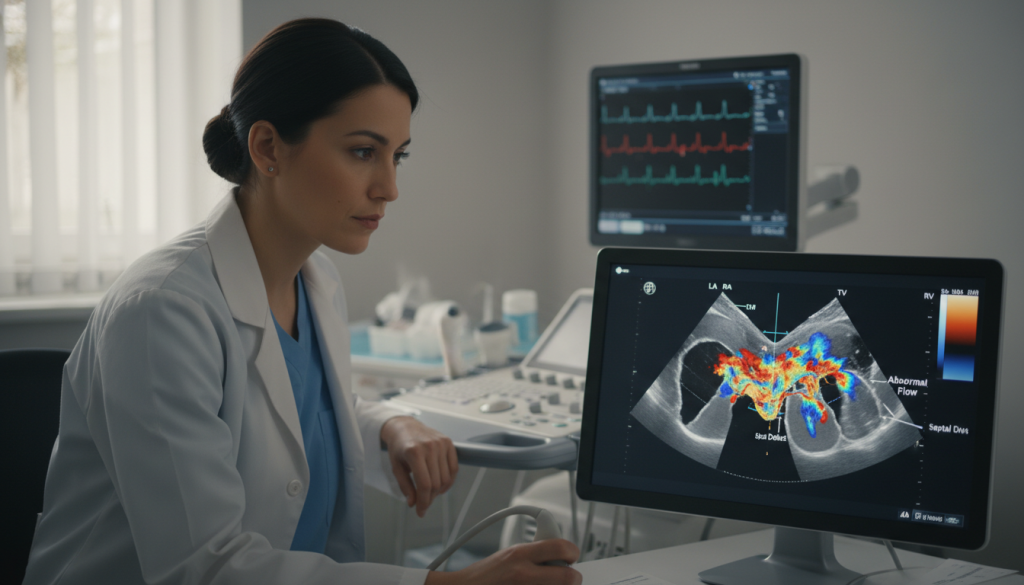
An echocardiogram also finds heart defects that might have been missed. It shows the heart’s walls in detail. This helps us understand the heart’s size and thickness.
When we find a problem, we create a targeted treatment plan for you. This plan is made just for your needs. Early detection is key to managing heart issues and keeping you healthy.
Risks and Safety Considerations
Your safety is our top priority during every cardiac check we do. We know that getting a medical test can be scary. That’s why we follow rigorous safety standards in all our clinics.
A standard cardiovascular ultrasound is known to be very safe and non-invasive. It uses sound waves, not harmful radiation. So, it’s safe for most people.
There are no bad side effects from this imaging. It’s different from tests that use dyes or radiation. This diagnostic procedure is easy and safe for everyone.
We aim to give you the best info and make you feel at ease. Choosing a cardiovascular ultrasound means you’re picking a safe way to check your heart. It’s a reliable method without risks.
Comparing Echocardiography to Other Diagnostic Tools
Echocardiography is a key part of cardiac imaging, but it’s not the only tool. We look at many options to find the best one for you. Each tool gives us different views of your heart’s health.
Choosing the right diagnostic procedure depends on what we need to know. Ultrasound is great for seeing how your heart moves and valves work. But, other tests might be better for looking at heart muscle or blood vessels.
Cardiac MRI and CT scans are also important. A cardiac MRI shows great detail of your heart without radiation. On the other hand, a CT scan is best for quick, clear views of your coronary arteries.
We think carefully about these choices to give you the best care. By comparing them, we find the best cardiac imaging for your needs. Here’s a table showing the main differences between these heart tests.
| Procedure | Primary Strength | Best Used For |
|---|---|---|
| Echocardiogram | Real-time motion | Valve and wall movement |
| Cardiac MRI | Tissue characterization | Muscle scarring and inflammation |
| Cardiac CT | High-resolution anatomy | Coronary artery blockages |
Our main goal is to use the safest, most effective technology. We want to make sure you’re comfortable and get the exact info we need for your heart health.
Advancements in Cardiovascular Ultrasound Technology
We are in an exciting time for cardiovascular ultrasound. New tech lets us see the heart in ways we couldn’t before. This gives us a clearer view of your health.
One big leap is 3D imaging. It makes three-dimensional models of the heart. This helps us see complex structures and how they work in real-time. It makes our cardiac imaging reports more accurate.
Strain imaging is another key tool. It measures how the heart muscle changes. This helps us spot issues early that might be missed by old methods. Using this heart ultrasound technique, we can find problems sooner.
We’re dedicated to using these new tools every day. Our aim is to give you the best care with precise cardiac imaging. With these advancements, every heart ultrasound we do helps plan your treatment better.
The future of cardiovascular ultrasound looks even brighter. We’re always getting new software and hardware. We think keeping up with tech is key to your long-term health and heart wellness.
The Role of Echocardiography in Long-Term Heart Health
We see echocardiography as key for watching your heart health over years. It’s not just for one-time checks. It’s a big part of keeping your heart healthy for the long run.
By doing these tests again and again, we can see small changes in your heart. This helps us spot trends that might not show up in just one visit. Catching these changes early is key to keeping your heart healthy and avoiding problems later.
When we find changes with echocardiography, we can fine-tune your treatment. This keeps your care up to date with your body’s changing needs. We think regular checks help you stay in charge of your health.
| Monitoring Type | Primary Goal | Frequency | Clinical Benefit |
|---|---|---|---|
| Baseline Scan | Establish normal anatomy | Once | Provides a reference point |
| Serial Monitoring | Track heart health trends | Periodic | Early detection of decline |
| Acute Assessment | Identify immediate issues | As needed | Rapid intervention support |
We’re here to help you at every stage of your heart health. With these advanced tests, we help you make smart choices about your future. Your health is a journey, and we’re here to guide you every step of the way.
Finding a Qualified Specialist for Your Heart Scan
When you need an echo test, finding a qualified specialist is key. Your heart health needs the best care from a skilled team. Choosing the right professional is a big step in your wellness journey.
When looking for a heart scan provider, seek out board-certified cardiologists. Make sure the sonographer has a credential from the American Registry for Diagnostic Medical Sonography. These credentials show the team’s high standards.
Also, check if the facility is accredited by the Intersocietal Accreditation Commission. This means they follow strict quality control. Knowing your team is expert lets you focus on getting better and staying healthy.
| Specialist Role | Primary Responsibility | Key Qualification |
|---|---|---|
| Cardiologist | Interpreting the heart scan | Board Certification |
| Cardiac Sonographer | Performing the echo test | RDCS Certification |
| Facility Manager | Ensuring safety standards | Accreditation Oversight |
Conclusion
Echocardiography is key in modern medicine for heart health. It’s a non-invasive way to see how your heart is doing. You don’t need surgery or radiation to get these insights.
Understanding your medical tools is the first step in your health journey. A heart scan is a key tool for checking your health. It lets you and your doctors track changes closely.
Talk to your doctor or a cardiologist at places like Acıbadem Healthcare Group. They can help decide if a heart scan is right for you. Open talks lead to better health and peace of mind.
Regular screenings are important for your long-term health. Being informed helps you make smart choices for your future. Contact a specialist today to book a check-up and take control of your heart health.
FAQ
Q: What exactly is echocardiography and how does it help me?
A: Echocardiography is a key tool in cardiology. It lets us see your heart in real-time. At Acıbadem Healthcare Group, we use it to understand your heart’s health. This helps us tackle complex heart issues and keep your heart healthy for the long term.
Q: Is a heart ultrasound safe and does it involve radiation?
A: Yes, heart ultrasounds are safe for everyone. They don’t use harmful radiation like X-rays. Instead, they use sound waves to create images of your heart. This makes it a painless and safe way to check your heart.
Q: How does the science of cardiac imaging turn sound into pictures?
A: Cardiac imaging uses ultrasound technology. Sound waves bounce off your heart and return to the machine. This data is then turned into moving images of your heart. It’s a precise way to see your heart without surgery.
Q: Why might my doctor recommend an echo test?
A: Doctors might suggest an echo test for symptoms like chest pain or shortness of breath. It helps us understand your heart’s strength and valve health. This information guides us in finding the right treatment for you.
Q: What are the different types of echocardiogram procedures available?
A: We offer various echocardiograms, like standard and transesophageal tests. There’s also a stress test to see how your heart handles activity. Each type helps diagnose different heart conditions accurately.
Q: How should I prepare for my upcoming heart scan?
A: For a standard scan, you can eat and take your meds as usual. For special tests, we’ll give you specific instructions. This ensures you’re ready and comfortable for your scan.
Q: What can I expect to experience during the cardiovascular ultrasound?
A: During the ultrasound, a sonographer will apply gel and move the transducer. It’s a comfortable process in a supportive setting. We aim to get the best views of your heart.
Q: How do you interpret the results and what is a “normal” range?
A: We look at measurements like ejection fraction to assess your heart’s function. “Normal” ranges vary by age, gender, and health. We’ll discuss your results with you to tailor your care plan.
Q: Can an echocardiogram identify structural abnormalities like valve defects?
A: Yes, echocardiography can spot issues like valve problems or congenital defects. Seeing these problems early helps us create effective treatment plans.
Q: Are there any risks associated with this diagnostic procedure?
A: Echocardiograms are very safe because they use sound waves and don’t involve radiation or surgery. We follow strict safety standards to ensure your comfort and safety.
Q: How does cardiac imaging compare to a cardiac MRI or CT scan?
A: While MRI and CT scans offer detailed images, echocardiograms are often the first choice. They’re portable, cost-effective, and show your heart in real-time. We choose the best imaging method for your needs.
Q: What are the latest advancements in cardiovascular ultrasound technology?
A: New technologies like 3D imaging and strain imaging have improved cardiac imaging. They allow us to see your heart in detail and assess muscle function. This gives us more accurate reports.
Q: Why is an echo test important for long-term heart health monitoring?
A: Regular echo tests are key for patients with chronic conditions. They help us track your heart’s function over time. This allows us to adjust your treatment plan as needed, supporting your heart health at every stage.
Q: How do I find a qualified specialist for my heart scan?
A: Choosing a skilled specialist is important for accurate results. At Acıbadem Healthcare Group, we offer world-class expertise. Look for board-certified cardiologists and experienced sonographers who use the latest technology for the best care.